 Skagit County
 New-Construction Windows vs. Replacement Windows: Why the Job Is Different
New-construction window installation is not the same job as swapping out an old window in an existing wall. On a new build in Burlington, the window goes into a rough opening that has never had a window in it before. There's no old frame to remove, no old flashing to work around, and no interior finish to protect — but there's also no room for error, because the window becomes part of the building's water management system from day one. Get the flashing and sealing wrong at this stage, and the problem doesn't show up as a drafty room. It shows up years later as rot inside the wall, usually after the siding and trim are already on.
That's the real difference: a replacement window has to work with what's already there. A new-construction window has to be installed correctly the first time, because it's the foundation everything else — siding, trim, interior finish — gets built around. On homes going up in Skagit County, where the weather doesn't give a wall assembly much of a break, that first install matters more than it does in drier parts of the state.
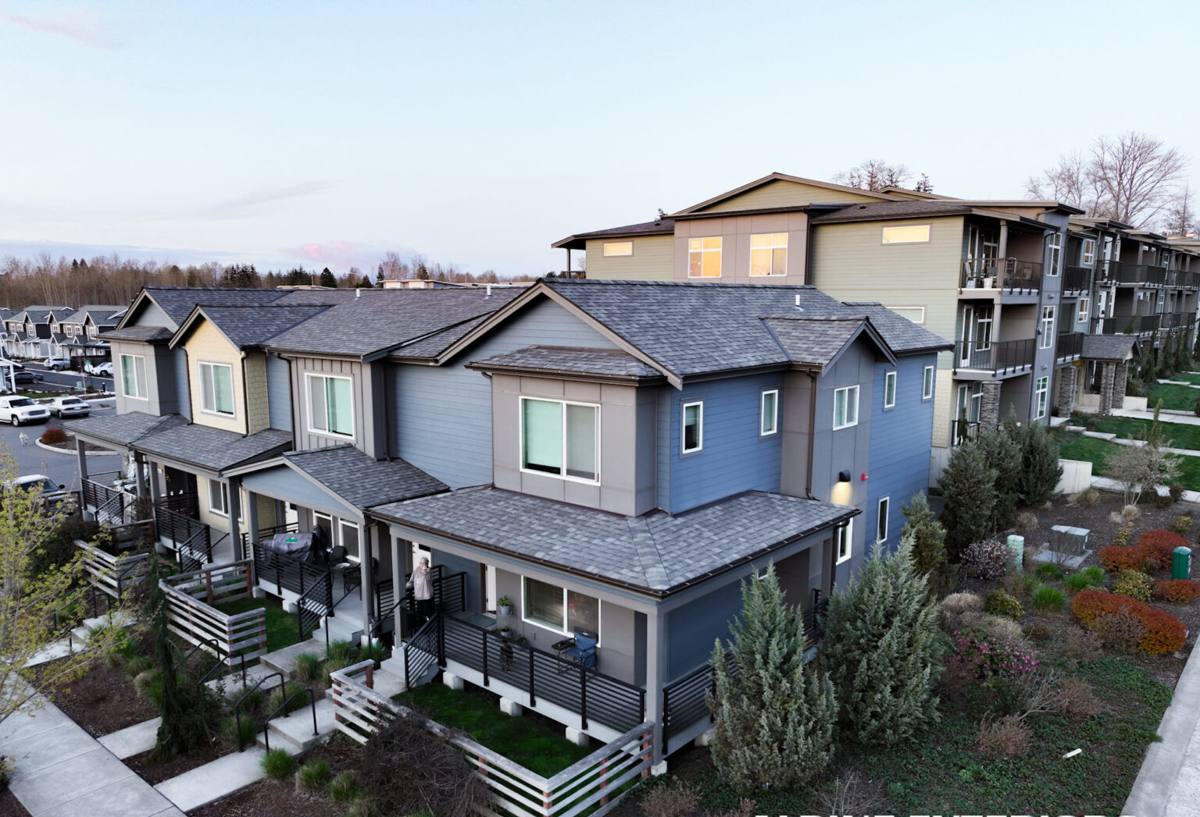
What Skagit County's Climate Actually Demands From a Window Install
Skagit County sits close enough to Puget Sound that salt-laden air, driving rain off the water, and a long, damp moss season are just part of building here. None of that is exotic weather, but it's persistent, and persistent moisture and airborne salt are exactly what wear down a window installation that was done to a minimum standard rather than a correct one.
Salt Air and Corrosion at the Frame and Hardware
Proximity to salt water accelerates corrosion on fasteners, hinges, cranks, and other exposed hardware. On a new build, that means paying attention to what the nailing flange is fastened with, what flashing tape and metal flashing are made of, and what hardware finish is specified on the window itself. Cutting corners here doesn't fail immediately — it fails slowly, over years, as hardware seizes up or corrosion works its way into the frame at fastener points.
Driving Rain and Water Management
Wind-driven rain doesn't just fall on a window, it gets pushed sideways and upward into any gap that will take it. That's why the flashing detail around a new-construction window matters more here than in a milder climate. Head flashing, jamb flashing, and the sill pan all have to work together in the correct shingle-lap order so that any water that does get behind the trim or siding is directed back out, not trapped against the sheathing.
Moss, Moisture, and the Long Wet Season
Skagit County's moss season is really just a symptom of how long surfaces here stay damp. Moss and algae growth on siding and trim near a window isn't a cosmetic problem by itself, but it's a sign that water is sitting somewhere it shouldn't be — often at a sill or a poorly sealed trim joint. A correct installation sheds water quickly enough that surfaces dry out between storms instead of staying wet for weeks at a stretch.
What a Correct New-Construction Window Install Actually Involves
A window is only as good as the opening it's installed into and the flashing that ties it into the wall. On a new build, we're working directly with the framer's rough opening and the weather-resistive barrier (WRB), which gives us the chance to do this right the first time rather than fight an existing condition.
The Flashing Sequence That Actually Sheds Water
Correct order matters as much as the materials. In general terms, that means: a sloped sill pan is installed first so any water that reaches the sill drains outward instead of pooling; the WRB is integrated with the window flange using a shingle-lap method, meaning each layer overlaps the one below it, so water always moves down and out rather than getting trapped behind a layer above; jamb flashing goes over the sides of the flange; and head flashing goes last, lapping over the top of the window and tucking behind the WRB above it. Skip a step or do them out of order, and you've created a spot where water can get behind the cladding instead of running off it.
Frame Material Choices for This Climate
New-construction windows come in several frame materials, and the right choice depends on budget, exposure, and how much upkeep the homeowner wants to take on.
| Frame Material | Performance in Salt Air & Driving Rain | Maintenance | Typical Fit |
|---|---|---|---|
| Vinyl | Good — won't corrode or rot, handles moisture well | Low; occasional cleaning | Most budget and mid-range new builds |
| Fiberglass | Very good — dimensionally stable, resists warping in wet-dry cycles | Low | Homes wanting longer service life or larger window sizes |
| Wood-clad | Depends heavily on the quality of the exterior cladding and installation detail | Higher; cladding and joints need periodic inspection | Homeowners prioritizing an interior wood look |
| Aluminum | Prone to condensation and corrosion near salt air unless thermally broken | Moderate to high | Less common on residential new builds in this climate |
We'll walk through these trade-offs honestly during the estimate rather than pushing whatever happens to be in stock. The right frame material is the one that matches the home's exposure and the homeowner's tolerance for upkeep, not the cheapest option on the truck.
Our New-Construction Window Process in Burlington
We work directly with builders, general contractors, or homeowners acting as their own GC. The process stays consistent whether it's one custom home or a multi-lot project:
- Plan and product review — we confirm window sizes, egress requirements, and performance ratings against the framing plans before anything is ordered.
- Rough opening verification — every opening gets checked for square, plumb, and correct size before the window shows up on site. Catching a framing issue now is far cheaper than catching it after the window's been ordered to the wrong dimension.
- Sill pan and flashing installation — sloped sill pans and flashing tape go in ahead of the window itself, following the shingle-lap sequence described above.
- Window setting and shimming — the unit is set, shimmed level and plumb, and fastened per the manufacturer's schedule so the frame isn't racked or bowed, which affects both operation and long-term seal integrity.
- Head flashing and WRB integration — the top flashing is tied into the weather-resistive barrier so the whole assembly sheds water as one system, not a window sitting inside a separate wall.
- Interior air sealing and insulation — the gap between the frame and rough opening gets sealed and insulated correctly, which affects both energy performance and condensation risk at the frame.
- Final inspection — we check operation, seal continuity, and flashing laps before the crew moves on to trim and siding.
Common Mistakes We See on New Builds in Skagit County
Most window problems on new construction don't come from a bad window — they come from a rushed or out-of-sequence installation. Things worth confirming before your siding and trim go on:
- Sill pan sloped to drain outward, not sitting flat or sloped inward toward the house
- Flashing tape and WRB layers overlapped in the correct shingle-lap order, not just taped on however was fastest
- No caulk or sealant used as a substitute for proper flashing at the sill or head
- Nailing flange fully fastened per the manufacturer's schedule, not just tacked at the corners
- Shims placed at structural load points, not just wherever the window happened to sit
- Weep holes and drainage paths left clear, not sealed shut or blocked by insulation
- Interior gap between frame and rough opening insulated with a low-expansion product rated for window use, not standard canned foam that can bow the frame
Cost Factors for New-Construction Windows in Burlington
Costs for a new-construction window package vary by project, but a few factors consistently drive the price up or down:
| Factor | Why It Affects Cost |
|---|---|
| Number and size of openings | Larger units and more openings mean more material, more flashing detail, and more install time |
| Frame material | Fiberglass and wood-clad generally cost more than vinyl for the same size and configuration |
| Glass package | Double-pane vs. triple-pane, and Low-E or gas-fill upgrades, change unit cost and long-term energy performance |
| Performance rating required | Higher wind and water ratings for exposed elevations can cost more but matter for driving-rain resistance |
| Site access and timing | Coordinating install around the framing and WRB schedule on a busy build site affects labor efficiency |
We give straightforward, itemized estimates so you can see what's driving the number, rather than a single lump figure that's hard to evaluate against another bid.
Why Hiring a Crew That Already Works in Burlington Matters
A window installed correctly on paper can still fail in practice if the crew doesn't understand how the local climate actually behaves against a building. A crew that regularly works new construction in Skagit County has already seen how driving rain finds the weak point in a flashing detail, how quickly moss and algae take hold on a surface that stays damp too long, and how salt air affects hardware and fasteners over time. That experience shows up in small decisions — flashing tape selection, hardware finish, sealant choice — that don't show up on a spec sheet but do show up ten years later.
It also matters for coordination. New-construction window work has to sync with the framing crew, the WRB installer, and the siding crew that comes in right after. A local crew that's used to working alongside other Skagit County trades on active job sites keeps the schedule moving instead of becoming the bottleneck.
If you're building in Burlington or elsewhere in Skagit County and want a straightforward look at your window package, we're happy to walk the plans with you and put together a free, no-pressure estimate — just fill out the form below.