 Skagit County
 Windows in Cedardale Work Harder Than Windows Almost Anywhere Else
Cedardale sits close enough to the water that homes here deal with a combination most inland Washington towns never see: salt-laden air moving off the bay, wind-driven rain that hits windows sideways instead of straight down, and a long, damp moss season that keeps everything outdoors wet for months at a time. A window that performs fine in a drier part of the state can start failing early here — not because it was a bad window, but because it was never really matched to this climate.
When we talk about "energy-efficient windows" for a Cedardale home, we're not just talking about a U-factor sticker. We're talking about a window and installation package that keeps salt air out of the seals, sheds driving rain instead of letting it work backward under the trim, and doesn't give moss and mildew a foothold on the frame. Get those three things right and the energy performance mostly takes care of itself. Get them wrong and you'll be dealing with fogged glass, soft trim, or drafts within a few years, no matter what the window was rated to do on paper.
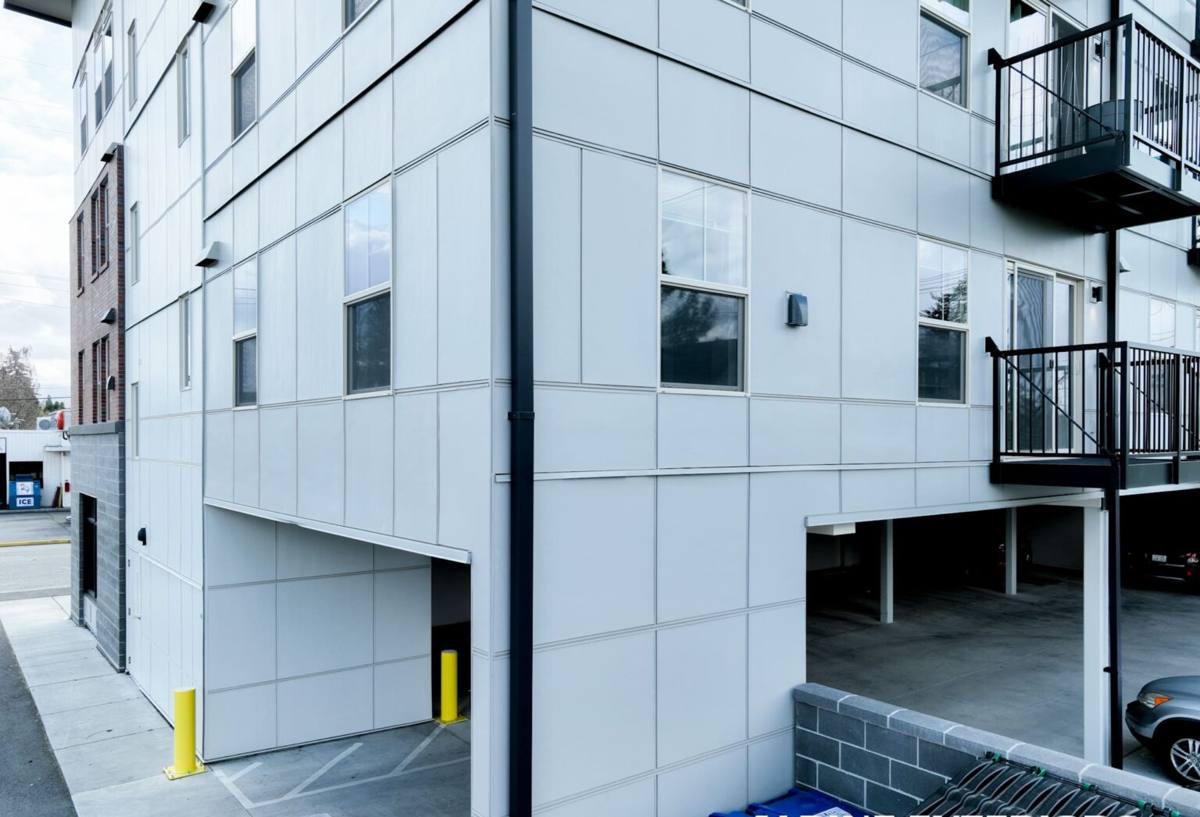
What Salt Air, Driving Rain, and Moss Season Actually Do to a Window
Salt air
Salt in the air settles on exterior hardware, weep holes, and unfinished metal components. Over time it accelerates corrosion on cheaper hinges, balances, and locking hardware, and it can degrade certain finishes faster than the manufacturer's warranty assumes for a "typical" installation. This is a bigger factor closer to the water, and Cedardale is close enough that it matters.
Driving rain
Rain that comes in mostly sideways behaves differently than rain that falls straight down. It gets pushed up under sills, into corner joints, and behind trim that isn't properly flashed. A window can be perfectly well-built and still leak if the flashing and sill pan underneath it weren't detailed for wind-driven exposure. This is one of the most common causes of "why is my new window leaking" calls we get in Skagit County — the window itself is fine, but the water management around it wasn't.
Moss and sustained moisture
Skagit County's moss season isn't just a roof problem. Moss and algae will colonize any exterior surface that stays damp and shaded long enough, including window sills, exterior trim, and the top of casings. Left alone, that sustained moisture accelerates wood rot on trim, holds water against caulk joints until they fail, and creates a damp microclimate right at the window opening — exactly where you don't want ongoing moisture.
Signs Your Cedardale Home's Windows Are Underperforming
Most window failures don't announce themselves with a dramatic leak. They show up as small, easy-to-dismiss symptoms first. Worth checking for:
- Condensation or fogging between the panes of a double- or triple-pane window (a sign the seal has failed)
- A noticeable draft near the frame on windy, rainy days
- Soft, discolored, or spongy trim or sill material around the window
- Moss or dark green/black growth building up on the sill or lower casing
- Hardware — locks, cranks, balances — that's stiff, corroded, or doesn't operate smoothly
- Visible daylight or gaps where the frame meets the siding or trim
- A noticeably higher heating bill compared to similarly sized homes nearby
- Paint that's bubbling or peeling specifically around the window opening, not the wider wall
Any one of these on its own might not mean much. Two or three together, especially on the sides of the house that take the weather straight on, usually means it's worth having someone look before it turns into a rot or moisture repair.
What "Energy-Efficient" Should Actually Mean for This Climate
Energy performance and weather performance aren't separate issues here — they're the same issue. A window that's properly sealed against wind-driven rain is also a window that's not leaking conditioned air. A frame that isn't corroding or swelling from moisture is also a frame that keeps closing and locking tightly for years. The things that make a window durable in Cedardale's climate are largely the same things that make it efficient.
That means we look at a few things together, not in isolation:
- Glass package — the number of panes, the gas fill between them, and any low-emissivity (Low-E) coating, which affects both heat retention and how much the interior fades from UV exposure
- Frame material — how it holds up to sustained moisture and salt exposure over 10, 20, or 30 years, not just how it looks on day one
- Weatherstripping and hardware — the parts that actually seal the window shut, which matter as much as the glass itself for keeping drafts and moisture out
- Installation detailing — flashing, sill pans, and sealant work, which determine whether the window stays dry no matter how good the window itself is
Frame and Glass Options for Skagit County Homes
There isn't one universally "correct" material — the right choice depends on the home's exposure, existing trim style, and budget. Here's how the common options generally compare for a marine-influenced climate like Cedardale's:
| Material | Moisture & Salt Air Behavior | Maintenance | Typical Fit |
|---|---|---|---|
| Vinyl | Doesn't corrode or rot; performs consistently in damp, salty air | Low — occasional cleaning, no repainting | Most homes; strong value for the climate |
| Fiberglass | Very stable dimensionally; resists moisture and salt exposure well | Low — durable finish, minimal upkeep | Homes wanting extra strength or larger window sizes |
| Wood (clad exterior) | Interior wood look with a protective exterior shell; exposed wood alone struggles in this climate | Moderate — exterior clad needs less care than solid wood, but joints need periodic checks | Homes prioritizing interior wood aesthetics |
| Aluminum | Prone to corrosion in salt air unless finished specifically for coastal exposure; also a weaker thermal performer | Higher — finish and hardware need closer monitoring near the water | Limited use; we're selective about where we recommend it here |
We're upfront when a material isn't a good match for a given exposure. That's not a knock on any manufacturer — it's about being honest that some materials need more attention than others once they're facing Cedardale's mix of salt, rain, and moss, and we'd rather tell you that up front than have you find out in year five.
Why the Installation Matters More Than the Window Label
We've said it above, but it deserves its own section because it's the single biggest factor in whether a window performs well here: a great window installed poorly will underperform a mid-range window installed correctly. In driving rain, the details that actually keep water out are the sill pan flashing, the way the housewrap or weather-resistant barrier is integrated with the window flange, and how the joints and corners are sealed — not the brand name on the glass.
On every window we install, that means:
- Removing and inspecting the opening for existing rot or moisture damage before the new window goes in — not covering up a problem
- Installing a proper sloped sill pan so any water that does get past the exterior sealing drains back out, not into the wall
- Integrating flashing tape and the water-resistant barrier in the correct shingle-lap order so water is always directed outward and down
- Sealing and insulating the gap between the window frame and the rough opening correctly — not overpacked, not left gappy
- Finishing exterior trim and caulking in a way that sheds water instead of holding it against the frame
Our Process, Start to Finish
We keep this straightforward because window replacement shouldn't feel like a mystery:
- Walkthrough and assessment. We look at each window's exposure — which sides take the worst of the wind-driven rain, where moss and moisture have already caused damage, and what condition the surrounding trim and framing are in.
- Honest recommendation. We'll tell you where a straightforward window swap makes sense and where we're finding rot or damage that needs to be addressed first — no surprises added on mid-project that weren't discussed.
- Written estimate. Clear pricing by window, material, and glass package, so you can see where the cost is coming from and make trade-offs if needed.
- Installation. Careful removal, opening inspection, proper flashing and sealing, and correct trim-out — done by people who install windows in this climate regularly, not occasionally.
- Final walkthrough. We check operation, sealing, and finish work with you before we consider the job done.
Living With New Windows in a Moss-Prone, Salt Air Climate
Even a correctly installed, well-matched window benefits from a little seasonal attention in this climate. A short list worth keeping on the fridge:
- Rinse salt residue and grime off exterior glass and frames periodically, especially after storms off the water
- Keep sills and lower trim clear of moss, leaves, and standing debris so moisture doesn't sit against the frame
- Check caulk lines once a year for cracking or separation, particularly on the sides of the house that face the weather
- Operate locks and hardware a few times through the winter so they don't seize up from disuse and moisture
- Watch for any new soft spots in trim after a hard winter, and address them early rather than waiting
None of this is heavy maintenance — it's the kind of light upkeep that keeps a good installation performing the way it's supposed to for the long haul.
Why a Crew That Already Works Cedardale Makes a Difference
A lot of window problems we get called out to fix aren't really window problems — they're climate-mismatch problems. Someone installed a window or a material that works fine in a drier part of the state, without accounting for what Skagit County's salt air, wind-driven rain, and moss season will do to it over time. A crew that works this area regularly already knows which sides of a Cedardale home typically take the worst weather, which materials hold up and which struggle, and how to detail flashing for driving rain rather than just following a generic installation manual.
That local pattern-recognition doesn't show up on a spec sheet, but it's usually the difference between windows that are still performing well in fifteen years and windows that need attention in five.
If you're weighing whether it's time to replace windows on your Cedardale home, or just want a straight answer about what's causing a draft or a moisture issue, we're happy to take a look. Reach out for a free, no-pressure estimate using the form below — we'll walk the exterior, give you an honest read on what's going on, and lay out your options clearly.