 Skagit County
 Why Cedardale Homes Need Siding That Can Take a Beating
Cedardale sits in one of the more demanding pockets of Skagit County for exterior materials. Homes here deal with a three-part problem most siding products were never designed to handle at once: salt-laden air drifting in off the surrounding waterways, driving rain that hits walls sideways during fall and winter storms, and a long, damp shoulder season where shade and moisture combine to grow moss and algae on anything that stays wet too long. Any one of those on its own is manageable. Together, year after year, they expose weak points in siding fast — especially at seams, fastener heads, and anywhere water can sit against a wall instead of shedding off it.
We install James Hardie fiber cement siding exclusively, and Cedardale is a good example of why. It's not that other products can't survive here for a while — it's that the failure modes we see on vinyl, LP SmartSide, and unfinished wood in this specific climate are the ones fiber cement was engineered to avoid. This page covers what that actually means for a Cedardale home: what the climate demands, what a correct fiber cement install looks like, and what our process involves from first look to final walkthrough.
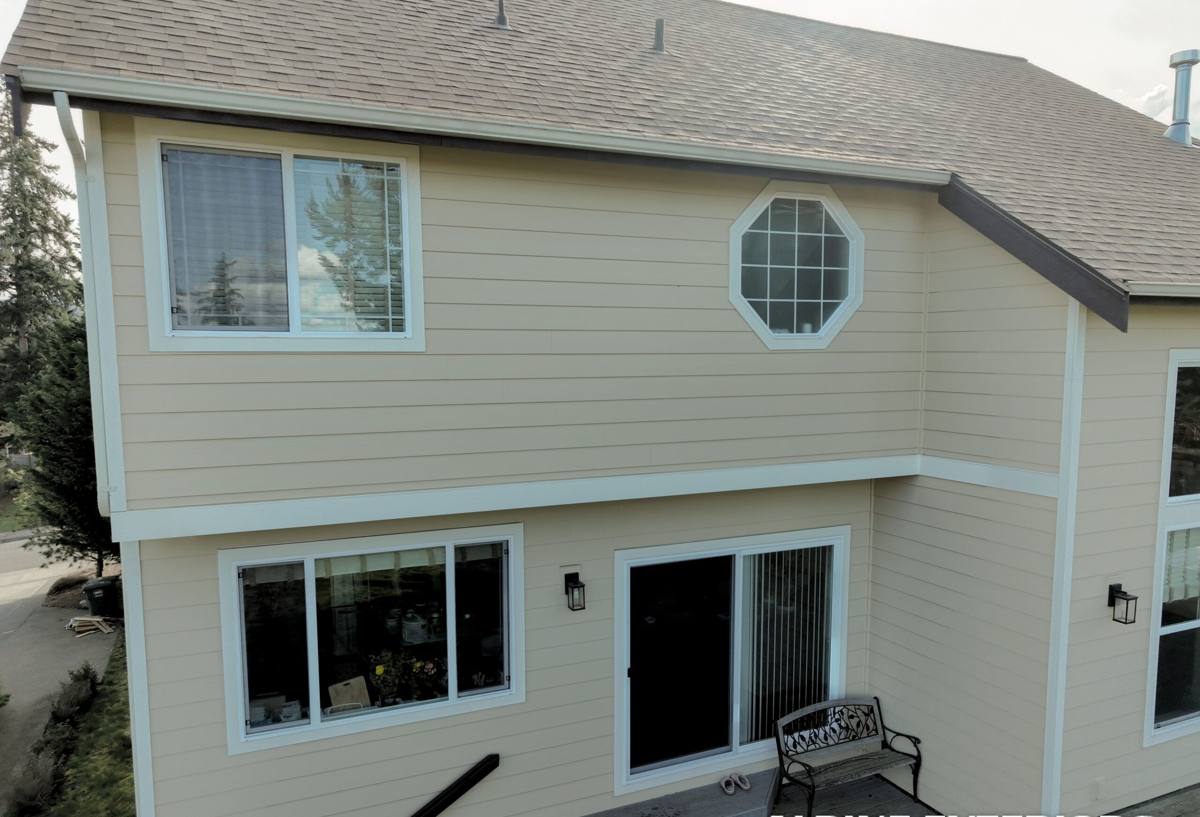
What Salt Air, Driving Rain, and Moss Actually Do to Siding
Salt Air
Salt-laden moisture is corrosive to metal fasteners, flashing, and trim, and it accelerates the breakdown of finishes that aren't formulated to resist it. On engineered wood products, salt exposure combined with moisture cycling speeds up edge swelling and finish failure. Vinyl doesn't corrode, but it does become brittle faster under UV and salt exposure than manufacturers' marketing tends to suggest, and it can't be repainted once it fades or chalks.
Driving Rain
Wind-driven rain doesn't just wet a wall's surface — it pushes water sideways and upward, testing every joint, seam, and penetration. A siding system is only as good as its weakest transition point: window and door flashing, butt joints between panels, inside and outside corners, and the bottom edge near grade. Get those details wrong and it doesn't matter how good the siding material itself is; water gets behind it.
Moss and Algae Season
Skagit County's damp, mild winters and shaded lots (especially on north- and east-facing walls, or homes tucked under trees) create long stretches where siding stays wet and never fully dries between rain events. That's exactly the condition moss and algae need. Porous, uncoated, or poorly finished siding surfaces give organic growth something to grab onto; growth then holds moisture against the wall even longer, compounding the problem.
Why Fiber Cement Is the Right Answer for This Climate
James Hardie fiber cement is a cement, sand, and cellulose fiber composite — it doesn't rot, it isn't a food source for moss or algae the way wood is, and it doesn't warp, swell, or delaminate at the edges the way engineered wood panel products can when moisture gets in. It's also non-combustible, which matters less for salt air and rain specifically but is part of why we standardized on it as our one product line rather than carrying multiple systems with different trade-offs.
The factory-applied ColorPlus finish is a meaningful piece of the climate story too. Field-painted siding is only as good as the paint job and the maintenance schedule behind it — and paint is exactly the kind of upkeep that gets pushed back a season, then another, in a climate where it always feels like it's about to rain again. ColorPlus is baked on in a controlled factory environment with a finish warranty backing it, so the color and protective layer aren't dependent on site conditions the day it was applied or how well anyone keeps up with repainting later.
Hardie's HZ5 product line is engineered specifically for climates like the Pacific Northwest's — the freeze-thaw cycling, sustained moisture, and marine-influenced air that define western Washington. That's not a marketing distinction; it affects the moisture-management engineering built into the board itself.
How Fiber Cement Compares for Cedardale's Conditions
| Factor | James Hardie Fiber Cement | Vinyl Siding | LP SmartSide / Engineered Wood |
|---|---|---|---|
| Moss/algae resistance | Dense, non-organic surface; ColorPlus finish sheds growth better than porous materials | Resists rot but algae/mildew still grow on the surface film | Wood-based surface is a food source for organic growth if finish is compromised |
| Driving rain / moisture behavior | Doesn't swell, warp, or absorb water into the board | Sheds water on the surface but seams and panel movement can let water track behind | Edges are the vulnerable point — swelling and softening if water gets into cut ends or seams |
| Salt air / coastal exposure | Composite material and factory finish resist salt-driven finish breakdown | Can become brittle and fade faster under salt/UV exposure over time | Finish and edge sealing are more sensitive to salt-accelerated wear |
| Fire resistance | Non-combustible | Combustible, can melt/deform near heat sources | Combustible |
| Finish maintenance | Factory ColorPlus finish, no repainting on the standard replacement cycle | No repainting, but color cannot be refreshed and fading is permanent | Requires repainting/resealing on a maintenance schedule to protect edges and seams |
What a Correct Fiber Cement Install Requires in This Climate
Fiber cement siding performs the way it's supposed to only if it's installed to spec. In a climate like Cedardale's, the details that get skipped on a rushed job are exactly the ones that cause problems two or three winters later.
- Proper clearance (typically 1-2 inches) between the bottom of the siding and roof lines, decks, and grade so water and debris don't wick moisture into the board
- Correctly lapped and sealed house wrap or weather-resistive barrier behind the siding, with a drainage plane so any incidental moisture can escape
- Flashing installed above windows, doors, and any horizontal trim — not caulk used as a substitute for flashing
- Panel and plank joints properly sealed or flashed per Hardie's installation instructions, not just butted and caulked
- Corrosion-resistant fasteners, sized and placed correctly, driven flush without over-driving (which cracks the fiber cement and creates a water entry point)
- Careful attention to any cut edges — factory edges are pre-primed, but field cuts need proper sealing or touch-up before installation
- Adequate fastening and blocking at corners and around penetrations (vents, hose bibs, light fixtures) where driving rain concentrates
None of this is exotic. It's the difference between an installer who's done a handful of Hardie jobs and a crew that installs it as the only product they hang, day in and day out, in exactly this kind of weather.
Our Process for Cedardale Homes
1. On-Site Assessment
We walk the home and look specifically at the conditions that matter most locally — shaded walls prone to moss, areas showing signs of past moisture intrusion, existing flashing condition, and any siding that's already failing so we understand what caused it before we replace it.
2. Scope and Product Selection
We talk through Hardie's plank, panel, and shingle options, HZ5 climate engineering, and ColorPlus color choices, and put together a scope that addresses both the siding itself and any trim, flashing, or sheathing repair the assessment turned up.
3. Prep and Removal
Old siding comes off, the wall is inspected for hidden moisture damage, and any compromised sheathing or framing is addressed before anything new goes up — installing new siding over a wet or damaged wall just hides the problem.
4. Installation to Spec
Weather-resistive barrier, flashing, and fastening are done to Hardie's published installation requirements, not shortcuts. This is the stage where the climate-specific details above actually get executed.
5. Final Walkthrough
We go over the finished job with the homeowner, check caulking and touch-up work, and make sure everything is buttoned up before we consider the job done.
What Affects the Cost of a Fiber Cement Job in Cedardale
| Cost Factor | Why It Matters Here |
|---|---|
| Home size and wall complexity | More corners, gables, and trim details mean more cutting, flashing, and labor time |
| Condition of existing sheathing/framing | Moisture damage found during removal (more likely on shaded or rain-exposed walls) adds repair scope |
| Existing siding removal and disposal | Tear-off adds labor and disposal cost versus new construction |
| Plank vs. panel vs. shingle profile | Different Hardie profiles have different material and labor costs |
| Trim and accessory scope | Corner boards, window trim, and fascia work are often bundled with a siding project |
| Access and site conditions | Story height, landscaping, and setbacks affect scaffolding/staging time |
We don't quote prices sight unseen — every Cedardale property has a different mix of these factors, which is exactly what the on-site assessment is for.
Why a Crew That Already Works Cedardale Matters
Skagit County isn't uniform. A crew that mostly works drier, more sheltered inland areas won't necessarily think twice about moss-prone shaded walls or the specific way driving rain hits a wall facing open exposure. Working this area regularly means we already know to flag shaded north walls for extra attention, to check flashing on homes that have had past moisture issues, and to sequence a job around the region's rain windows instead of fighting them. That local pattern-recognition doesn't replace following Hardie's install spec — it's what makes sure the spec gets applied to the parts of a specific home that actually need it most.
Maintenance After Installation
Fiber cement is low-maintenance, not no-maintenance. A few basics keep a Cedardale installation performing the way it's designed to:
- Rinse siding periodically, especially shaded or north-facing walls where moss and algae are more likely to take hold
- Keep gutters clear and downspouts directed away from the wall so water isn't concentrating against the siding
- Trim back vegetation and tree cover that keeps walls shaded and damp longer than necessary
- Inspect caulking at trim and penetrations every year or two and touch up as needed
- Address any impact damage or chipping promptly so it doesn't become a moisture entry point
If you're weighing a siding replacement for a Cedardale home and want to know what it would actually take — and cost — to do it right, we're happy to come take a look. The estimate is free, there's no pressure, and you'll walk away with a clear picture of your options either way.