 Skagit County
 Building a Deck That Can Handle Skagit Valley Weather
A deck in Mount Vernon does a different job than a deck in a dry climate. Between the marine air moving up from Skagit Bay and the Sound, the long stretch of driving rain that settles into the valley most of the year, and the moss season that follows it, an outdoor deck here is under near-constant moisture pressure for months at a time. Composite decking was built for exactly this kind of exposure, but only when it's installed correctly on a substructure that's built to match. This page covers what that actually looks like for a Mount Vernon home.
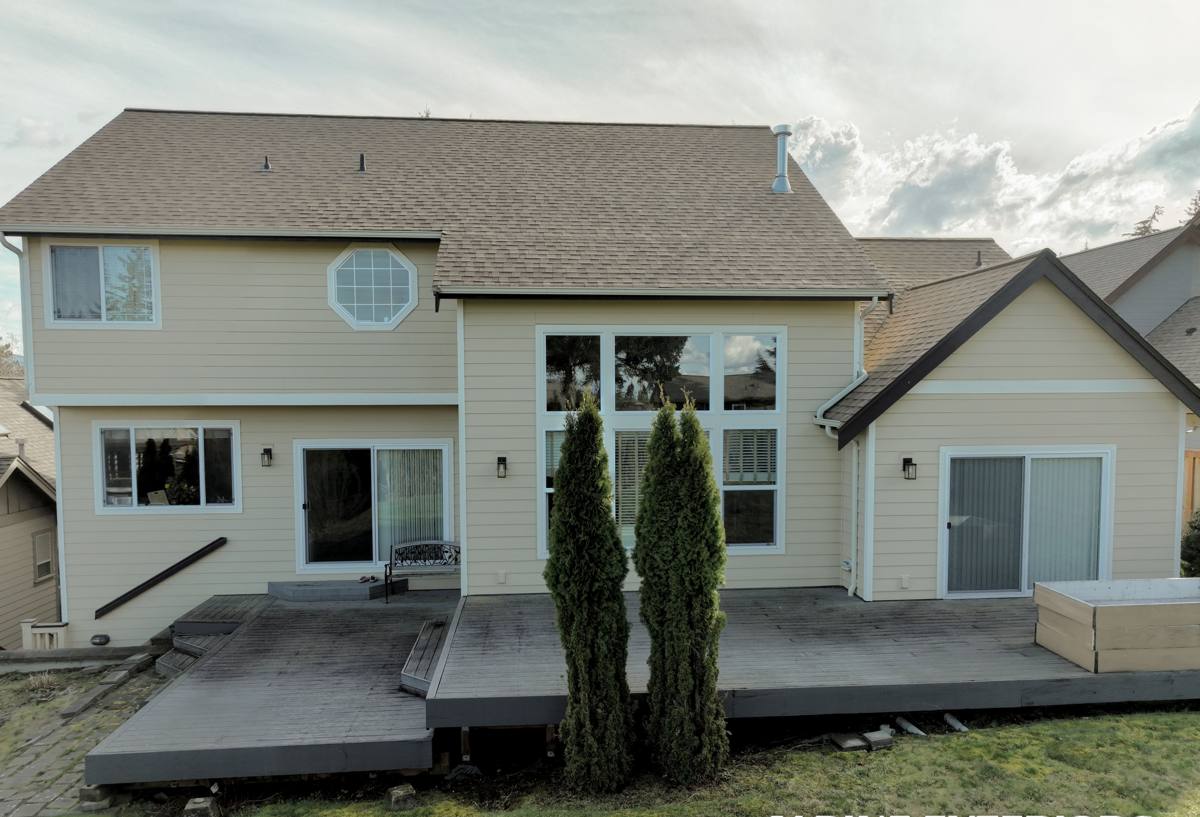
What Skagit County's Wet Climate Does to a Deck Over Time
Before talking about materials, it helps to understand what's actually working against a deck in this area. It isn't one big storm that causes damage — it's the slow, repeated cycle of wet and dry, warm and cold, that happens week after week for most of the year.
Moisture at the Frame and Fasteners
Rain doesn't just hit the top of a deck. It runs off the boards, splashes back up from grade, and gets driven sideways into gaps and joints by wind off the valley. Over time, that moisture finds its way to ledger boards, joists, and fasteners. On a poorly built deck, this is where rot and corrosion start — not on the visible surface, but underneath it, where nobody looks until there's a problem.
Moss, Algae, and Slip Risk
Skagit County's moss season isn't a minor cosmetic issue — it's a real slip hazard on any horizontal wood or wood-alternative surface that stays damp and shaded. Boards that don't drain well, or that sit too close to grade or nearby landscaping, will grow moss and algae faster than boards with proper airflow underneath and around them.
Salt Air and Metal Fasteners
Homes closer to the water get a steady dose of salt-laden air, which speeds up corrosion on lower-grade fasteners, brackets, and connectors. Standard hardware that might be fine in a drier inland climate can start to streak and weaken faster here if it isn't rated for coastal exposure.
What a Correct Composite Decking Installation Involves
Composite boards are more forgiving than wood in a lot of ways, but they don't fix a poorly built substructure — they just sit on top of one. A correct installation pays as much attention to what's underneath the boards as to the boards themselves.
Framing and Substructure
Joist spacing, ledger attachment, and framing lumber all need to be sized and treated correctly for a wet climate, then set up so composite boards can expand and contract with temperature and moisture changes without buckling or gapping. On older homes, this often means addressing an undersized or aging substructure before the new decking ever goes down.
Fastening and Board Layout
Hidden fastener systems or approved face-screwing patterns matter for both appearance and long-term board performance. Layout also matters — board runs should be planned around drainage, expansion gaps, and how water will actually move across the surface once the deck is in daily use.
Drainage and Airflow Underneath
This is the step that gets skipped most often, and it's the one that matters most in this climate. Proper spacing off grade, ventilation under the joists, and attention to how water exits the structure keeps moisture from pooling underneath the deck where it can't dry out between storms.
Composite Decking vs. Other Materials for This Climate
Every decking material has trade-offs. In a climate with this much sustained moisture and moss pressure, some of those trade-offs matter more than they would somewhere drier.
| Material | Moisture Resistance | Moss/Algae Resistance | Ongoing Maintenance |
|---|---|---|---|
| Pressure-treated wood | Moderate — needs sealing | Low without regular cleaning | Annual sealing/staining recommended |
| Cedar | Moderate — natural oils help | Low to moderate | Periodic sealing, prone to graying |
| Uncapped composite | Good | Moderate — surface can stain | Occasional cleaning |
| Capped composite / PVC | Very good | Good with routine rinsing | Low — rinse and light cleaning |
Wood isn't a bad material — it's just a higher-maintenance one in this climate. It needs to be sealed and re-sealed on a schedule, and if that schedule slips even one season, moisture and moss get a foothold that's hard to fully undo. Composite shifts more of that burden to the manufacturing process instead of a homeowner's maintenance calendar.
Choosing the Right Composite Board for a Mount Vernon Deck
Not all composite decking is built the same, and the differences matter more here than they would in a dry climate.
Capped Composite
Capped composite boards have a protective outer shell wrapped around a wood-plastic composite core. That cap is what resists moisture absorption, staining, and fading, which is a real advantage against the moss and algae pressure common in Skagit County. It's our standard recommendation for most local decks.
PVC Decking
Fully PVC boards contain no wood fiber at all, which gives them the highest resistance to moisture absorption and organic growth. They tend to cost more, and some homeowners prefer the look and feel of wood-composite boards, so this comes down to budget and preference as much as performance.
Uncapped Composite
Older or lower-tier composite products without a protective cap can absorb more moisture at the surface over time, which shows up as staining or a duller finish faster in a wet climate. We're upfront with homeowners about this trade-off rather than installing a product we don't think will hold up well here.
What Affects the Cost of a New Composite Deck
Every deck is priced around the specifics of the project, but a few factors consistently move the number the most.
| Factor | Why It Matters |
|---|---|
| Deck size and shape | Square footage and complex angles both add material and labor |
| Substructure condition | Repairing or upgrading an existing frame adds cost before decking even starts |
| Board tier | Uncapped, capped composite, and PVC all sit at different price points |
| Railing and stairs | Composite or metal railing systems and multi-level stairs add scope |
| Height off grade | Taller decks need more substantial framing and code-required railing |
We give homeowners a real, itemized number after seeing the site and the existing structure — not a generic square-footage guess that doesn't account for what's actually under the current deck or patio.
Our Process From Estimate to Finished Deck
- On-site assessment of the deck location, existing structure (if any), and drainage around the area
- Discussion of board type, layout, and railing options based on your home and budget
- A written estimate that breaks out substructure work, decking, and any railing or stair scope separately
- Permit handling where required for the scope of work
- Demolition of the old structure (if applicable) and framing correction or replacement
- Composite board installation with attention to fastening, gapping, and drainage
- Final walkthrough so you know how the deck was built and what, if anything, it needs from you going forward
Living With a Composite Deck in a Moss-Prone Climate
Composite decking cuts down maintenance significantly compared to wood, but "low-maintenance" isn't the same as "no-maintenance" in a climate like this one. A little seasonal attention keeps a properly installed deck looking and performing the way it should for years.
- Rinse or sweep the deck periodically through the wet months to keep organic debris from sitting on the surface
- Clean up leaves and needles from under railings and in corners where moisture and shade linger
- Keep gutters and downspouts near the deck clear so runoff isn't dumping directly onto or under the structure
- Trim back landscaping that shades the deck surface and slows drying between rain events
- Check that drainage gaps between boards stay clear rather than filling with debris over time
- Address any standing water under the deck promptly rather than assuming it will drain on its own
Why It Matters to Hire a Crew That Already Works in Mount Vernon
A lot of deck problems in this region don't trace back to bad materials — they trace back to a build that wasn't adapted for local conditions. A crew that works Skagit County regularly already knows how to frame for this rainfall, where drainage tends to fail on older homes, and which fastener and hardware choices actually hold up against the area's salt air and moss season. That's not something you get from a generic install written for a drier climate. We build every composite deck around the reality of what Mount Vernon weather does to it, not around a one-size-fits-all approach.
If you're considering a new composite deck or replacing an aging one, we're happy to take a look and put together a straightforward, no-pressure estimate. Use the form below to get started.