 Skagit County
 Windows Built for Concrete's River Valley Climate
Concrete sits up the Skagit River valley, closer to the North Cascades foothills than the lowland towns near the coast. That location matters more than most homeowners realize when it comes to windows. The valley holds moisture longer than the flatter parts of Skagit County, tree cover keeps yards and siding damp well into the day, and driving rain off the river corridor finds its way into any gap in a window's flashing or frame. Windows here don't just need to look good — they need to shed water, resist swelling and rot at the frame, and hold up to a long, wet season that can stretch from fall through spring.
We install and replace custom windows for homes throughout Concrete and the surrounding Skagit County river communities. "Custom" isn't a marketing word for us — it means measuring and fitting to what's actually in the wall, not forcing a stock size into an opening that was framed decades ago by someone working with different lumber and different standards.
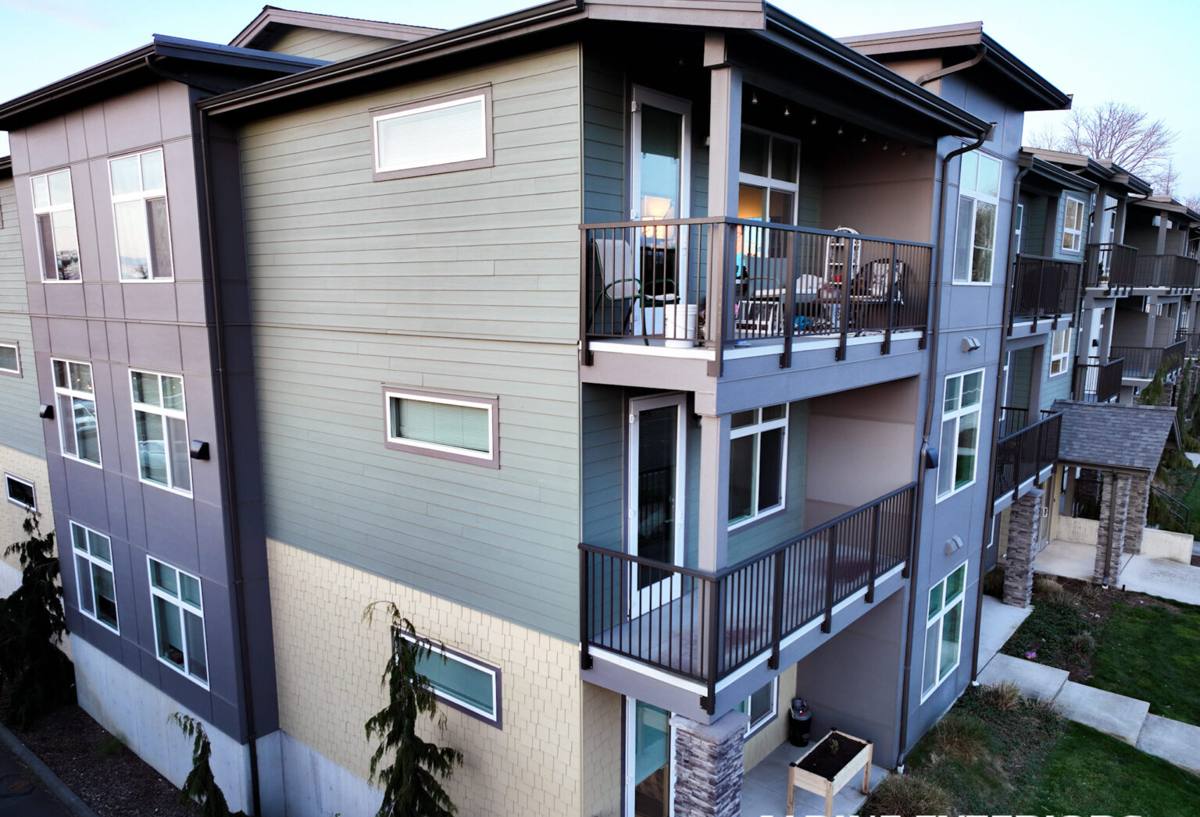
What Concrete Homes Are Up Against
A lot of the housing stock in and around Concrete goes back several decades, some of it tied to the town's history as a cement-manufacturing community. Older homes often carry single-pane or early dual-pane windows, wood frames that have taken on years of moisture cycling, and openings that were never perfectly square to begin with. Add in the region's climate pattern — long stretches of steady rain, heavy humidity, and the moss and algae growth that comes with both — and you get a specific set of failure points:
- Wood frames and sills that have absorbed moisture over years and started to soften or rot at the corners
- Failed seals on older dual-pane glass, showing up as fogging or condensation between the panes
- Gaps around the frame where old caulk or flashing has cracked, letting wind-driven rain track behind the trim
- Moss and algae staining on north- and west-facing walls that traps moisture against the window frame
- Drafts and cold spots near windows in winter, often from failed weatherstripping or settled framing
None of these are unusual for a home in this climate. They're just things that need to be caught and addressed with the right materials and the right installation detail, not painted over or ignored.
Moss and Moisture Are a Package Deal
Skagit County's long wet season keeps north-facing and shaded walls damp for extended stretches, and that's exactly where moss and algae take hold. Once moss establishes itself around a window opening, it holds water against the frame and trim far longer than bare siding would. Over time that constant dampness is what breaks down old caulking and wood trim faster than the rain itself. A correct window installation accounts for this from the start — proper flashing, drainage paths, and materials that don't give moss anything to grip onto right at the window's edge.
What "Custom" Actually Means Here
Custom windows aren't a luxury upgrade — for a lot of homes in Concrete, they're the only way to get a proper fit. Older construction rarely matches today's standard window sizes exactly, and it's common to find openings that are slightly out of square after decades of settling. A custom-fit window is measured to the actual opening, not a catalog size, which means:
- No gaps that need to be shimmed and caulked over to make a stock size work
- Frames and trim that match the home's existing lines instead of looking bolted on
- Proper allowance for older, non-standard framing depths common in homes built before modern lumber sizing
- The ability to match historic or period window styles where that matters to the home's character
We also handle custom shapes and specialty openings — arched windows, larger picture windows for river or mountain views, and replacements where the original opening needs minor reframing to take a modern, properly insulated unit.
Signs It's Time to Replace, Not Repair
Not every window problem means a full replacement. Sometimes new weatherstripping or re-glazing solves it. But there's a point where repair stops making sense. Use this as a general checklist before deciding which direction to go:
- Glass fogs or has visible moisture between the panes — the seal has failed and can't be repaired, only replaced
- Wood at the sill or lower frame is soft, spongy, or visibly rotted
- The window won't stay open, won't latch, or is painted shut from years of moisture and swelling
- You can feel a draft standing near the window on a windy, rainy day
- Energy bills have crept up and the windows are original to a home built before the 1990s
- Moss or algae keeps coming back around the frame no matter how often it's cleaned
If you're only seeing one or two of these, a repair or a resealing job might buy you more years. If several apply at once, replacement is usually the more honest recommendation — both for comfort and for protecting the wall framing behind the window from ongoing water intrusion.
Frame Material Options
There's no single "best" window material — the right choice depends on the home's style, budget, and how much upkeep you want to take on. Here's how the common options compare for a wet, moss-prone climate like Concrete's:
| Material | Moisture Resistance | Maintenance | Best Fit |
|---|---|---|---|
| Vinyl | Very good — won't rot or absorb water | Low; occasional cleaning | Most homes prioritizing value and low upkeep |
| Fiberglass | Excellent — very stable in wet/dry cycling | Low | Homes wanting durability and a paintable finish |
| Wood-clad | Good on the exterior clad face; interior wood still needs care | Moderate to high | Historic-style homes where interior wood trim matters |
| Aluminum | Fair — prone to condensation without thermal breaks | Low | Specific architectural or commercial-style applications |
For most Concrete homes, we steer clients toward vinyl or fiberglass frames on the exterior. Solid wood exterior frames look great when new, but in a climate with this much sustained rain and moss pressure, they demand a repainting and recaulking schedule most homeowners don't want to keep up with indefinitely. That's not a knock on wood as a material — it's a maintenance-burden conversation we have honestly, up front, so you know what you're signing up for either way.
Our Installation Process
A window is only as good as its installation. The best frame in the world will leak if the flashing and sealing around it are done wrong. Here's how we approach every job:
- On-site measurement. We measure the actual opening, not the old window's rated size, and check for square, level, and any framing issues that need attention first.
- Assess the wall behind the window. Before anything goes in, we check the sheathing and framing around the opening for water damage or rot from the old window's failure — this gets addressed before the new window goes in, not covered up.
- Flashing and drainage plane. Proper flashing tape and a drainage path are installed so any water that gets behind the siding has somewhere to go besides into your wall.
- Set and shim the window. The unit is set plumb, level, and square, then shimmed and fastened per the manufacturer's instructions — skipping this step is the single most common cause of early window failure.
- Insulate and seal. The gap between the frame and the rough opening is insulated and sealed correctly — not overfilled with expanding foam, which can bow the frame.
- Interior and exterior trim. Trim is finished to match the home, with caulking detailed to shed water rather than trap it.
- Final check. We test operation, check the seal, and walk the job with you before we call it done.
Cost Factors to Expect
Exact pricing depends on the window, the opening, and the condition of the framing behind the old unit, but these are the main factors that move the price up or down on most jobs:
| Factor | Impact on Cost |
|---|---|
| Window size and quantity | Larger openings and more windows increase material and labor cost proportionally |
| Frame material | Vinyl is typically the most budget-friendly; fiberglass and wood-clad cost more upfront |
| Condition of the existing opening | Rot or framing repair behind the old window adds labor before the new unit can go in |
| Custom shapes or sizes | Non-standard shapes and larger custom units cost more than stock rectangular sizes |
| Glass package | Upgraded glass (low-E coatings, triple-pane) adds cost but improves comfort and efficiency |
We give straightforward, itemized estimates so you can see exactly what's driving the number — no vague lump sums.
Why Hire a Crew That Already Works in Concrete
A window contractor who mostly works closer to the coast or in the bigger Skagit County towns doesn't necessarily know what a house up the Skagit River valley deals with. Concrete's mix of older homes, forested lots, and a wetter microclimate than the lowlands means the details that matter here are a little different — where moss builds up fastest, which frame materials actually hold up under this much sustained moisture, and how to plan a job around a rural area's access and weather windows.
We also know that a job in Concrete isn't the same logistical exercise as a job in a denser subdivision closer to Mount Vernon or Burlington. Material delivery, scheduling around weather, and working efficiently on a property with mature trees and less predictable access all factor into how we plan the work. A crew that's done this before in this specific area plans for it instead of discovering it mid-project.
Maintenance in a Wet Valley Climate
Even a well-installed window needs some basic upkeep in a climate this wet. A short annual routine goes a long way toward getting the full lifespan out of your investment:
- Rinse pollen, dirt, and moss spores off the glass and frame once or twice a year
- Check exterior caulking each spring for cracking or separation and touch up as needed
- Keep gutters clear so overflow doesn't run down the wall and pool at window heads
- Trim back branches or vegetation that keep a window shaded and damp longer than necessary
- Operate each window a few times through the year so hardware doesn't seize up from disuse
None of this takes much time, but skipping it is how a good installation slowly turns into next decade's repair job.
If your windows in Concrete are drafty, fogged, rotting at the sill, or just overdue for an honest look, we're happy to come take a look and talk through real options — no pressure, no upsell. Use the form below to request a free estimate.