 Skagit County
 Siding Concrete, Washington Homes Built to Handle the Skagit Valley Climate
Concrete sits along the Skagit River corridor, tucked against the foothills of the North Cascades, and that location comes with a specific kind of weather punishment: long stretches of driving rain off the valley, damp air that lingers under tree cover, and a moss season that can run most of the year on north-facing walls. Add in the salt-tinged marine air that reaches inland through the Skagit and Puget Sound weather systems, and you have an exterior environment that is genuinely hard on building materials. Homes here need siding that was engineered for exactly this — not siding that merely tolerates it.
We install James Hardie fiber cement siding exclusively, and nowhere in our service area does that decision matter more than it does for homes in and around Concrete. This page walks through what local homes actually need from their siding, what a correct installation involves, and why hiring a crew that already knows this stretch of Skagit County is worth something real.
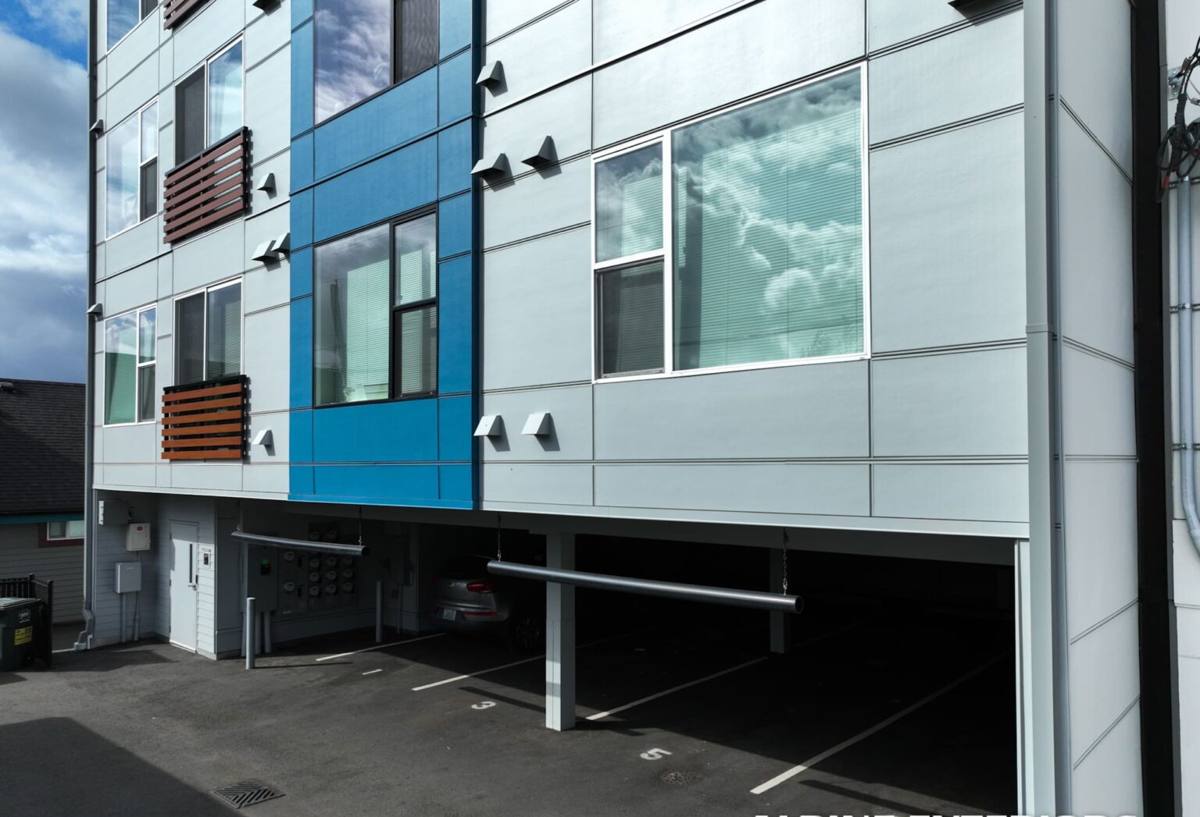
What Concrete's Climate Does to Exterior Siding
Every siding material eventually fails in one of a few predictable ways: it absorbs moisture and swells or rots, it grows moss and algae that trap water against the wall, its finish fades or chalks under UV, or its seams and edges open up and let water behind the cladding. In Concrete, all four of those failure modes are active at once for most of the year.
Driving Rain and Moisture Cycling
The Skagit Valley funnels weather systems through, and homes here see more sideways, wind-driven rain than a typical dry-climate installation has to plan for. That means water is hitting siding at an angle, working its way toward laps, seams, and butt joints. Materials that swell when wet and shrink when dry — wood-based products in particular — go through that cycle over and over, and every cycle is a chance for a seam to open a little wider or a fastener to work loose.
Moss and Algae Season
Shaded, north-facing, and tree-adjacent walls around Concrete stay damp for extended stretches, which is exactly what moss and algae need to take hold. Once organic growth establishes on a wall, it holds moisture against the surface even after the rain stops, which accelerates whatever failure mode the underlying material is prone to. Siding that resists moisture absorption at the material level handles this far better than siding that just has a coating on top.
Salt-Influenced Air
While Concrete is inland, the broader Skagit County air mass carries marine influence that reaches well up the valley, especially with the prevailing weather patterns off the Sound. Salt-tinged moisture accelerates corrosion on fasteners and hardware and can degrade lower-quality paint finishes faster than a strictly dry inland climate would.
Why We Only Install James Hardie
We made a decision early on to install James Hardie fiber cement siding exclusively — not LP SmartSide, not vinyl, not Cemplank, not Allura, not primed spruce, and not cedar. That is not a marketing position; it is a maintenance and performance position based on how these products actually behave in a climate like this one.
Wood-based and wood-composite sidings can perform well in the right hands, but they are more sensitive to installation detail and ongoing maintenance than most homeowners expect, and they are more forgiving of shortcuts in a dry climate than they are here. Vinyl is inexpensive and low-maintenance in the sense that it doesn't need painting, but it flexes, fades unevenly over time, and does not hold up to impact the way fiber cement does. Other fiber cement brands exist, and some are reasonable products, but we standardized on James Hardie specifically because of its HZ5 formulation engineered for cold, wet Pacific Northwest climates, its ColorPlus factory finish, and the depth of its installation documentation and warranty backing. Standardizing on one product also means our crews install it constantly, on every job, which is where real installation quality comes from.
James Hardie's HZ5 Line: Engineered for This Exact Climate
James Hardie manufactures regionally engineered product lines, and the HZ5 line is built for the wet, freeze-prone climates of the Pacific Northwest. The fiber cement formulation is designed to resist moisture-driven swelling and cracking through the seasonal wet-dry cycling that's routine in Skagit County. That matters more in Concrete than in a lot of other places we serve, given how long the wet season runs and how much moss and shade coverage many properties have.
ColorPlus Factory Finish
Most Hardie siding we install uses the ColorPlus finish system — baked-on color applied and cured at the factory rather than painted on site. It carries its own finish warranty separate from the substrate warranty, and it holds color and resists fading, chalking, and chipping far better than field-applied paint, which is a real advantage on a wall that's going to see UV exposure between rain events for years.
| Factor | Why It Matters in Concrete |
|---|---|
| Moisture resistance | Long wet season and shaded, damp wall sections need a material that doesn't swell or rot when saturated repeatedly |
| Moss/algae resistance | North-facing and tree-shaded walls stay damp for extended periods; material shouldn't feed organic growth |
| Finish durability | UV and moisture cycling both stress the finish; factory-cured finish outlasts field-applied paint |
| Fastener corrosion resistance | Marine-influenced air reaching up the valley accelerates hardware corrosion if the wrong fasteners are used |
| Non-combustibility | Fiber cement doesn't contribute fuel to wildfire embers, a growing consideration for foothill and forest-adjacent properties |
What Correct Installation Looks Like
James Hardie siding performs to spec only when it's installed to spec — the material itself is not the whole story. A rushed or improperly detailed installation can undercut everything the product is engineered to do, and moisture problems from bad installation often don't show up for a year or more, by which point they're expensive to fix.
The Details That Actually Matter
- Correct water-resistive barrier and flashing behind every seam, window, and door opening — this is what actually keeps water out, not the siding surface alone
- Proper clearance between the bottom of the siding and grade, decks, and roof lines, so splash-back and standing moisture don't sit against the material
- Manufacturer-specified fastener spacing, type, and penetration depth — corrosion-resistant fasteners matter given the marine-influenced air
- Correct joint treatment and caulking at butt joints and trim, sized and sealed per Hardie's published installation guidelines
- Proper nailing and fastening pattern so panels can move slightly with temperature and moisture changes without cracking
- Ventilation behind the cladding where the wall assembly calls for it, so any incidental moisture can dry out rather than being trapped
Skipping any one of these doesn't usually cause an immediate visible problem — it causes a slow one, which is worse, because by the time it's visible the sheathing behind it may already be compromised.
Our Process for a Concrete Siding Project
1. On-Site Assessment
We walk the property and look at the specific exposure of each wall — which sides take the worst weather, which stay shaded and damp, where moss and algae are already established, and where the existing siding or trim is showing early signs of moisture damage.
2. Product and Finish Selection
We help you choose the right Hardie profile and ColorPlus color for the home, factoring in how the finish will read against Concrete's tree-cover and light conditions, and confirming the HZ5 formulation is specified for the project.
3. Tear-Off and Substrate Check
Old siding comes off and we inspect the sheathing and water-resistive barrier underneath before anything new goes up. If there's hidden moisture damage from a prior installation, this is where we find it and address it before it's covered again.
4. Installation to Manufacturer Spec
Flashing, fastening, joint treatment, and clearances are all installed per James Hardie's published specifications — not shortcuts, not "close enough." This is the step that determines whether the siding actually performs for its expected lifespan.
5. Final Walkthrough
We walk the finished job with you, confirm the details, and make sure you understand what routine maintenance — if any — the finish requires going forward.
Why a Crew That Already Works Concrete Matters
Concrete is a smaller community, and the housing stock, lot conditions, and weather exposure here differ in real ways from siding jobs closer to Puget Sound or in drier parts of Skagit County. A crew that's worked here before already understands the moss and shade patterns typical of the area, knows how the wet season affects scheduling and drying time between install stages, and isn't guessing at flashing details for the first time on your home. That familiarity shows up in fewer surprises during the job and a better outcome once the siding is up.
What Homeowners Should Watch For
If you're evaluating your current siding or getting quotes for a replacement, a few warning signs are worth taking seriously rather than waiting on:
- Soft or spongy spots when you press on the siding, especially near the bottom courses or under windows
- Persistent moss or algae growth that keeps coming back after cleaning
- Visible gaps opening at seams, joints, or trim that weren't there a few years ago
- Peeling, bubbling, or chalking paint on wood-based or previously painted siding
- Staining or discoloration running down from window heads or roof lines, which usually points to a flashing problem rather than a siding problem alone
Any of these is worth a proper look before it turns into a sheathing or framing repair rather than a siding job.
If you're weighing a siding replacement or repair for a home in Concrete, we're happy to walk the property with you and give you a straight, no-pressure assessment of what it needs — just fill out the form below to request a free estimate.