 Skagit County
 Metal Roofing in Concrete: What This Corner of Skagit County Deals With
Concrete sits up the Skagit River valley, tucked in against the timber and foothills that lead into the North Cascades. It's a different world from the flat farmland closer to Mount Vernon or the salt air along Fidalgo Island and the coast, but the roofing challenges overlap more than people expect. Across Skagit County, roofs deal with driving rain that comes sideways in a windstorm, a moss season that can run eight or nine months out of the year, and near-constant shade from evergreen canopy that keeps roof surfaces damp long after the rain stops. In Concrete specifically, the tree cover is heavier and closer to most rooflines, which means more needle and cone debris, more shade-driven moss growth, and more moisture sitting on a roof surface than a home out in open farmland would ever see.
Metal roofing holds up well against that combination when it's installed correctly, but "installed correctly" is doing a lot of work in that sentence. A metal roof is not more forgiving of sloppy underlayment work or bad flashing than asphalt — in some ways it's less forgiving, because water that gets past a panel seam or a poorly flashed penetration can travel a long way before it shows up as a stain on a ceiling. This page covers what a metal roof installation actually needs to hold up in Concrete's climate, what our process looks like, and why local experience matters more than most homeowners realize until something goes wrong.
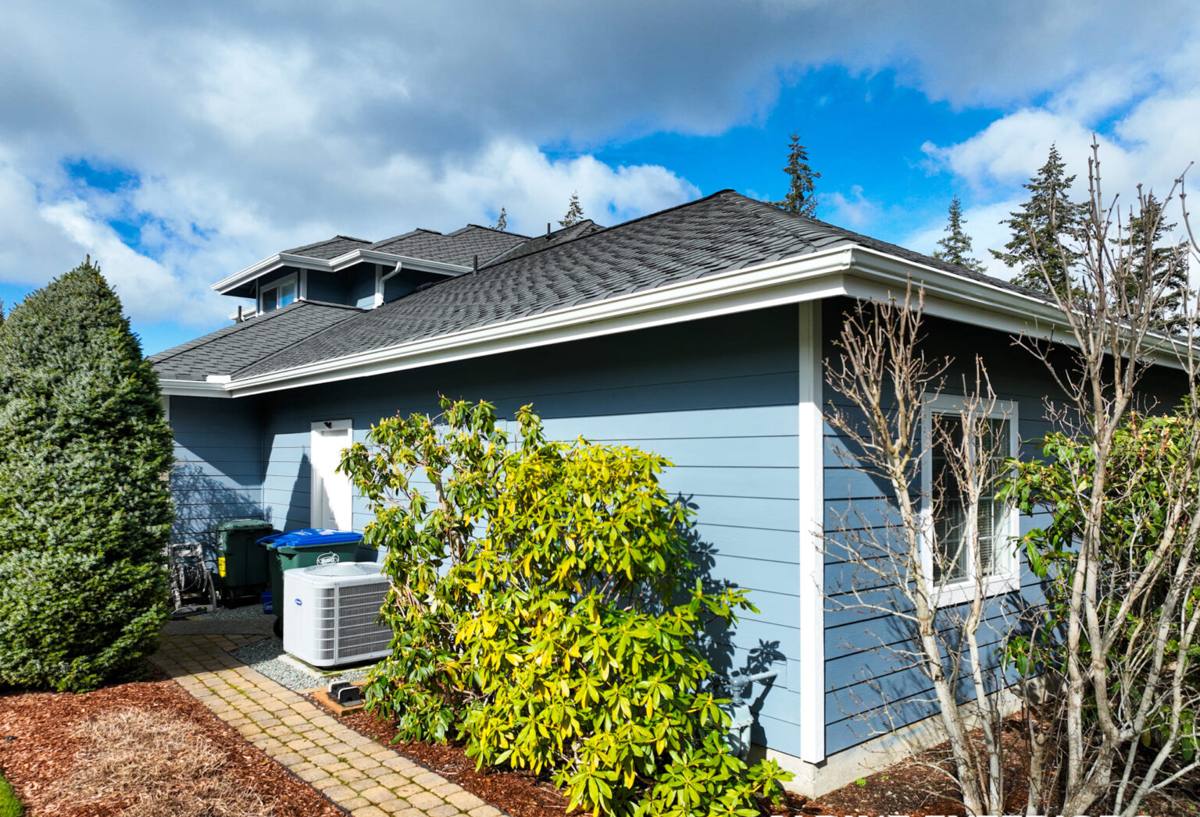
What Concrete's Climate Demands From a Metal Roof
Three things drive most of the roofing problems we see in this part of Skagit County, and a metal roof has to be installed with all three in mind:
- Sustained moisture. Long stretches of rain, combined with tree shade that slows drying time, mean any weak point in the roof system stays wet longer than it would in a sunnier, more open location.
- Moss and organic buildup. Shaded, moisture-holding roof surfaces are exactly where moss and lichen take hold. On metal, this shows up less as structural damage and more as fastener and seam issues if debris is allowed to pack in around flashing.
- Wind-driven rain. Storms coming up the valley push rain at an angle, which tests lap seams, flashing details, and fastener seals harder than a straight-down rain ever would.
None of these are exotic problems. They're the same forces every Skagit County roof deals with, just concentrated a bit more in a forested river valley setting like Concrete's. The fix isn't a different material so much as installation details that respect what the site is actually doing to the roof year-round.
What a Correct Metal Roof Installation Involves
Underlayment and Moisture Barrier
A metal panel is the visible layer, but the underlayment underneath it is what actually keeps a home dry when wind pushes rain under a lap seam or a panel edge. In a wet, shaded environment we treat underlayment as a real waterproofing layer, not an afterthought — that means synthetic or self-adhered membrane at eaves, valleys, and any low-slope transition where water has time to sit before it drains.
Panel Type and Fastening
Standing seam panels use concealed clips with no exposed fasteners, which removes the most common long-term failure point on a metal roof — fastener backing out or the sealant washer degrading over years of freeze-thaw and UV exposure. Exposed-fastener panels cost less up front but rely on gasketed screws that need periodic checking. In a climate with this much sustained rain, we're upfront with homeowners about that trade-off rather than glossing over it.
Flashing and Penetrations
Chimneys, plumbing vents, skylights, and valleys are where the vast majority of roof leaks actually start — on metal roofs even more than asphalt, because a poorly fitted flashing detail on a metal roof is harder to "self-heal" the way granule-covered shingles sometimes can. Correct flashing means custom-formed pieces that match the panel profile, not generic trim stretched to fit.
Metal Roofing Options for Concrete Homes
Not every metal roofing system fits every home or budget. Here's how the common options compare for a wet, forested-valley property:
| System | Best For | Trade-Offs |
|---|---|---|
| Standing seam | Long-term, low-maintenance ownership | Higher upfront cost; requires skilled installation |
| Exposed-fastener steel | Budget-conscious projects, outbuildings, shops | Fasteners need periodic inspection and occasional replacement |
| Stone-coated steel | Homeowners wanting a shingle-like look with metal durability | More seams and fasteners than standing seam; higher labor time |
For primary residences in a heavy-shade, heavy-moisture setting like Concrete, we lean toward recommending standing seam more often than not — fewer penetration points means fewer places for water to find a way in over a twenty- or thirty-year service life. That said, exposed-fastener panels are a legitimate choice for shops, garages, and outbuildings where the budget math is different and the consequences of a future fastener issue are lower.
Moss, Debris, and Ongoing Maintenance
Metal roofs shed moss more easily than asphalt shingles because there's no granule texture for spores to grip, but "more easily" doesn't mean "never." In a property surrounded by conifers, needle and cone debris can accumulate in valleys and along the base of any wall-to-roof transition, holding moisture against the panel and creating the same damp conditions that let moss establish anywhere else. The fix is straightforward and doesn't require harsh chemical treatments:
- Keep overhanging branches trimmed back so less debris lands on the roof in the first place
- Clear valleys and gutters of needles and cones at least once or twice a year
- Rinse embedded debris off with a garden hose rather than a pressure washer, which can drive water under seams
- Check sealant at penetrations every few years as part of routine upkeep
A metal roof installed with the right underlayment and flashing details will tolerate a season or two of neglect without failing, but treating basic debris clearing as part of homeownership — the same way you'd clean gutters — keeps small maintenance items from ever becoming leak calls.
Our Process, Start to Finish
- On-site inspection. We look at the existing roof structure, decking condition, and how water currently moves off the property before recommending a system.
- Honest estimate. You get a clear breakdown of material options and what drives the cost difference between them — no pressure toward the most expensive system if it doesn't fit your situation.
- Tear-off and deck check. We remove the old roofing and inspect the decking underneath for rot or soft spots before anything new goes on, which matters more in a consistently damp climate than in a dry one.
- Underlayment and flashing first. The waterproofing layer and custom flashing go in before a single visible panel is installed — this is the part that actually determines whether the roof stays dry.
- Panel installation. Panels are installed to manufacturer spacing and fastening specs, with attention to consistent seams and clean valley and ridge work.
- Final walkthrough and cleanup. We walk the site with you, check for anything overlooked, and haul away debris and old material.
Cost Factors for a Metal Roof in Skagit County
Every roof is different, but the same handful of factors drive most of the price variation we see on metal roofing projects in this area:
| Factor | Why It Matters |
|---|---|
| Roof pitch and complexity | Steeper roofs and more valleys, dormers, or penetrations increase labor time and flashing work |
| Panel system chosen | Standing seam runs higher than exposed-fastener steel due to material and installation skill required |
| Tear-off vs. overlay | Removing old roofing and inspecting decking adds cost but is the only way to catch hidden rot common in shaded, damp settings |
| Access and site conditions | Tree cover, steep driveways, and limited staging space around a property affect crew time and equipment needs |
We'd rather walk your specific roof and give you real numbers than quote a broad range that doesn't mean much for your situation — but as a general rule, metal roofing costs more upfront than asphalt and less over a full ownership cycle when maintenance and replacement frequency are factored in.
Why a Crew That Already Works in Concrete Matters
Roofing crews that mostly work drier, more open parts of Skagit County sometimes underestimate how much shade and moisture change the job on a property like yours. Underlayment choices that are fine for a sunny, open roof aren't always enough for one that stays damp under tree cover for most of the year. A crew that regularly works in and around Concrete already accounts for that — in the underlayment spec, in how flashing details are handled, and in how the project is scheduled around the area's weather patterns rather than fighting them.
Local experience also means straight answers about what your specific property needs instead of a one-size-fits-all pitch. Not every home needs the top-tier system, and not every budget roof is a bad choice — it depends on the structure, the tree cover, and how long you plan to own the home.
Signs Your Current Roof Needs Attention
Before a small issue turns into an interior repair, watch for these signs — common on older roofs throughout this part of Skagit County:
- Moss buildup thick enough to hold visible moisture, especially on north-facing slopes or shaded valleys
- Rust streaking or discoloration around fasteners on an existing metal roof
- Sagging or soft spots visible from the ground, which often point to decking issues underneath
- Granule buildup in gutters (on asphalt roofs approaching end of life)
- Daylight visible around chimney or vent flashing from inside an attic space
- Water stains on interior ceilings, especially after a windy rainstorm rather than a calm one
If you're seeing any of these, it's worth having someone take a look before the next major storm season rather than after.
If you're weighing a metal roof for a home in Concrete or anywhere else in Skagit County, we're happy to take a look and give you a straight, no-pressure estimate — just fill out the form below and we'll get in touch.