 Skagit County
 Roofing in Conway: A Different Set of Demands
Conway sits low in the Skagit Valley, close to the river and not far from the salt water of Skagit Bay and Puget Sound. That combination matters more than most homeowners realize until they're standing on a ladder looking at a roof that's aged faster than it should have. Salt-laden air corrodes exposed metal fasteners and flashing years before an inland roof would show the same wear. Driving rain off the water pushes moisture sideways under shingles and around penetrations that would stay dry in a calmer climate. And the long, wet moss season here isn't cosmetic — moss holds water against the roof deck for months at a time, and that's exactly the kind of slow, patient damage that turns into a rot problem nobody notices until there's a stain on the ceiling.
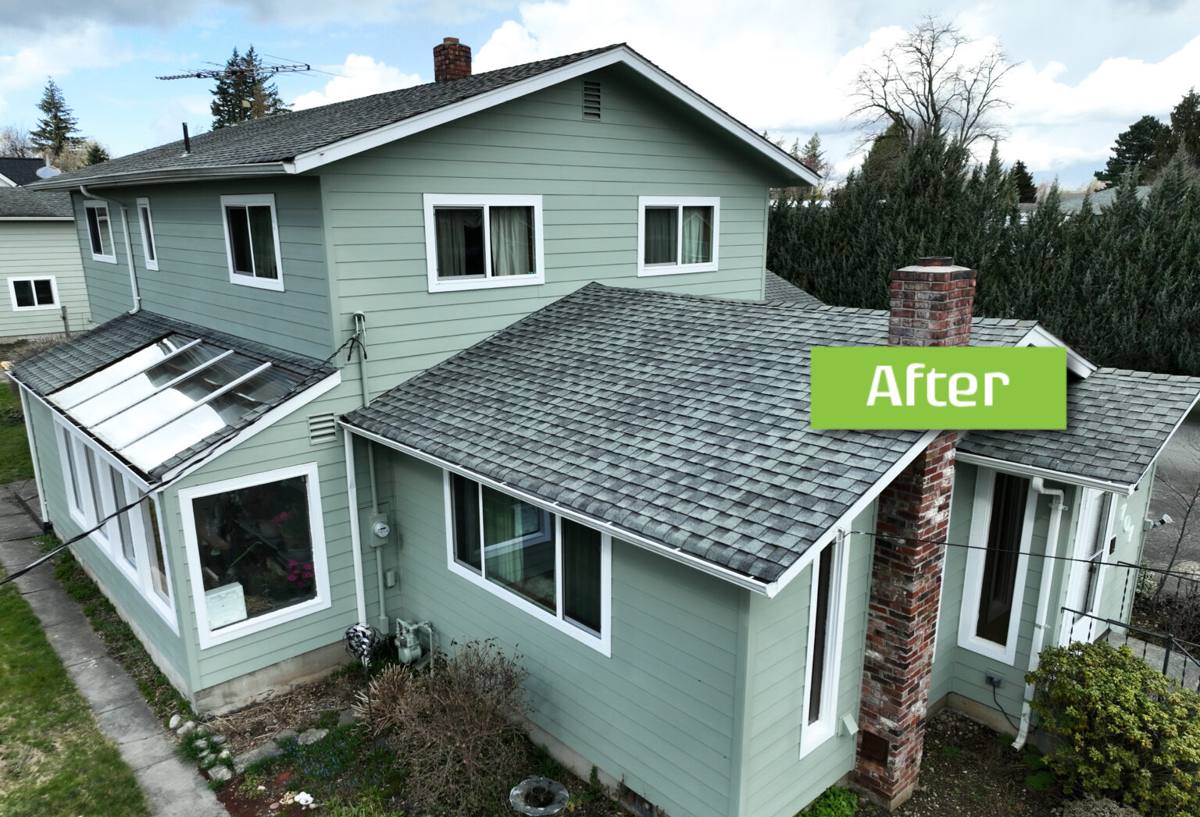
A roof replacement in Conway has to account for all three of these things at once. It's not a generic re-roof job dropped into a different zip code — it's a roof built to handle what this specific stretch of Skagit County throws at it, season after season.
What Conway's Climate Actually Does to a Roof
Salt Air and Corrosion
Even a few miles from open water, airborne salt finds its way onto roofing metal — flashing, drip edge, nail heads, vent caps, and gutter hardware. Standard electro-galvanized fasteners and thin-gauge flashing corrode faster in this environment than they would twenty or thirty miles inland. Once a fastener rusts through or a flashing seam pits and thins, water finds a path in. This is one of the most common reasons we see premature leaks on homes that are otherwise not that old.
Driving Rain
Storms moving in off the water don't just fall straight down — wind drives rain sideways and up under shingle tabs, around chimney flashing, and into any gap where the underlayment or flashing detail was cut short. A roof that would perform fine in a drier, calmer climate can leak here simply because the wind-driven component wasn't planned for.
Moss and Prolonged Moisture
Skagit County's moss season runs long — shade, moisture, and mild temperatures are exactly what moss needs to thrive, and north-facing slopes or roofs under tree cover get hit hardest. Moss doesn't just look bad. It holds a layer of moisture against the shingle surface and roof deck for weeks at a stretch, which accelerates granule loss, softens shingles, and can work its way under tabs and flashing edges over time.
Signs a Conway Roof Needs Replacing, Not Patching
Not every roof problem calls for a full replacement, and we'll tell you honestly when a repair is the right call. But there are signs that point toward a roof at the end of its useful life rather than one with an isolated issue:
- Granule loss heavy enough that you can see bare, shiny patches on shingles from the ground
- Moss growth that returns quickly after cleaning, especially on shaded or north-facing slopes
- Multiple past repairs in different areas of the roof rather than one contained problem
- Soft or spongy spots when walked, which usually means the deck underneath has taken on moisture
- Rusted or heavily corroded flashing, vent boots, or fasteners
- Daylight visible through the roof deck from inside the attic
- Shingles curling, cracking, or lifting at the edges, especially on rain-exposed slopes
- Interior ceiling stains that reappear after drying, suggesting an ongoing rather than one-time leak
What a Correct Roof Replacement Involves Here
Full Tear-Off, Not Layering
Given how much moisture this climate pushes at a roof, we don't recommend installing new shingles over an old layer. A full tear-off lets us actually see the deck, catch any rot or soft spots before they're buried under new material, and start with a clean, dry surface for the new system.
Deck Inspection and Repair
Once the old roofing is off, we inspect the decking board by board. Any area that's soft, delaminated, or water-stained gets replaced before anything new goes down. Skipping this step is how a brand-new roof ends up with a soft spot within a few years — the surface looks fine, but the structure underneath was already compromised.
Underlayment Built for Wind-Driven Rain
We install synthetic underlayment across the full roof and use self-adhered, waterproof membrane at the vulnerable spots — eaves, valleys, around chimneys and skylights, and any low-slope transitions. These are the areas where wind-driven rain and ice most often find a way in, and they're the areas where a thin or minimal underlayment detail shows up as a leak later.
Corrosion-Resistant Flashing and Fasteners
Because of the salt air exposure around Conway, we use flashing and fastener materials chosen to hold up to that corrosion, not just whatever meets minimum code in a drier region. This is one of the clearest ways a roof replacement here should differ from the same job done further inland.
Ventilation That Matches the Home
Proper intake and exhaust ventilation keeps the attic space dry and temperature-balanced, which matters for both moisture control and shingle lifespan. A roof that traps humid attic air underneath it will age from the inside out, regardless of how good the shingles on top are.
Roofing Material Comparison for Conway Conditions
| Material | Moisture & Moss Behavior | Salt Air Durability | Typical Lifespan |
|---|---|---|---|
| Architectural asphalt shingle | Good with proper underlayment and moss-resistant granules; needs periodic moss removal | Good when paired with corrosion-resistant flashing and fasteners | 25-30 years |
| Standard 3-tab asphalt shingle | More prone to curling and granule loss under prolonged moisture | Fair; thinner profile ages faster in coastal exposure | 15-20 years |
| Metal panel roofing | Sheds moisture quickly, resists moss growth well | Depends heavily on coating quality; needs a coastal-rated finish | 40-50 years |
| Composite/synthetic shake | Good moisture resistance, holds up well under sustained wet conditions | Good; low-corrosion material by design | 30-50 years |
We don't push one product on every home. The right choice depends on your roof's pitch, slope orientation, budget, and how much shade or moss exposure the property gets. We'll walk through the honest trade-offs for your specific roof rather than defaulting to whatever's easiest to install.
Our Process for a Conway Roof Replacement
- On-site inspection — we walk the roof, check the attic from inside where accessible, and identify moss patterns, flashing condition, and any soft decking before quoting anything.
- Straight written estimate — what needs replacing, what materials we recommend and why, and what it costs, with no vague allowances that turn into surprise change orders.
- Scheduling around weather — we plan tear-off days around Skagit Valley weather windows so your deck isn't exposed to rain longer than necessary.
- Full tear-off and deck repair — old roofing removed, deck inspected and repaired where needed, debris hauled off site.
- Underlayment, flashing, and material installation — installed to the standard this climate actually requires, not just minimum code.
- Final walkthrough — we go over the finished roof with you, including ventilation and any maintenance notes specific to your property's shade and moss exposure.
Cost Factors Homeowners Should Understand
Every roof is different, and we're not going to quote a number without seeing yours. But the factors that move a Conway roof replacement price up or down are consistent:
- Roof size and number of slopes, valleys, and penetrations (chimneys, skylights, vents)
- Extent of deck repair needed once the old roofing is removed
- Material choice — asphalt shingle versus metal versus composite
- Pitch and accessibility, which affect labor and safety setup
- Amount of moss-related deterioration found underneath the existing roofing
- Ventilation upgrades needed to bring an older attic system up to a working standard
We'd rather walk your roof and give you real numbers than throw out a broad range that doesn't mean much until we've actually seen the deck condition.
Why Local Experience in Conway Matters
A crew that already works this stretch of Skagit County knows what to look for the moment they get on the roof — where moss builds up fastest, which flashing details tend to fail first in wind-driven rain off the water, and what fastener and flashing materials actually hold up against the salt air rather than just meeting a minimum spec sheet. That's not something you get from a crew that mostly works drier, inland jobs and treats Conway as just another stop. It shows up in the details: how the valleys are flashed, what underlayment goes down at the eaves, and whether the ventilation plan accounts for how wet this attic air actually gets for months at a time.
It also means we're not guessing at what "normal" wear looks like here. A roof with heavy moss and some granule loss at twelve years old isn't unusual in this climate — the question is whether the underlying deck and flashing are still sound, and that's exactly what we check before recommending replacement over repair.
Maintenance After Your New Roof Goes On
A correctly installed roof still benefits from a little upkeep in this climate. Keep an eye on:
- Moss regrowth on shaded or north-facing slopes — early removal keeps it from taking hold
- Gutters and downspouts staying clear, especially during fall and winter storms
- Any tree limbs overhanging the roof that hold moisture and shade against the surface
- Flashing around chimneys and vents after major windstorms
We're happy to talk through a simple maintenance schedule when we finish the job, so the roof performs the way it's supposed to for its full lifespan.
If your Conway roof is showing its age or you're just not sure whether you're looking at a repair or a replacement, we're glad to come take a look. There's no pressure and no cost for the estimate — just a straight assessment of what your roof actually needs.