 Skagit County
 Skyline sits close enough to the water that its homes take a different kind of weathering than houses ten miles inland. Salt-laden air, wind that drives rain sideways into west- and south-facing walls, and a moss season that can run most of the year on shaded elevations all put real, ongoing stress on window openings. Custom windows in this setting aren't a cosmetic upgrade — they're a moisture-management decision, and getting the installation right matters as much as picking the right product.
What Skyline Homes Ask of Their Windows
Most of the window problems we see in Skyline don't start with the glass. They start at the edges — the flashing, the sill, the sealant joints, and the gap between the window unit and the framing around it. In a climate where wind pushes rain into the wall assembly rather than letting it run off, any weak point at those edges eventually finds water. Add salt air near the shoreline and you also get accelerated corrosion on hardware, fasteners, and lower-quality cladding finishes that weren't built for coastal exposure.
Homeowners in Skyline are also dealing with a long stretch of gray, humid months where a house doesn't get much of a real drying-out period. That means condensation control and glazing performance matter more here than they would in a drier climate — a window that fogs between panes or sweats heavily on the interior in winter isn't just an annoyance, it's a sign the unit isn't managing moisture the way it should.
Signs a Window Isn't Holding Up
A few patterns show up consistently on homes in this area when windows are past their service life or were installed without enough attention to detail:
- Soft or discolored trim and sill material around the window opening
- Fogging or visible moisture between glass panes on double- or triple-pane units
- Drafts or a noticeable temperature difference near the window on windy days
- Paint or finish failure concentrated on one side of the house — usually the side that takes the most wind-driven rain
- Difficulty opening, closing, or latching a window that used to operate smoothly
- Visible corrosion on hardware, hinges, or exterior cladding fasteners
Any one of these on its own might just mean a window needs adjustment or minor repair. Several of them together, especially on the weather-exposed side of a house, usually mean water has been getting past the seal for a while.
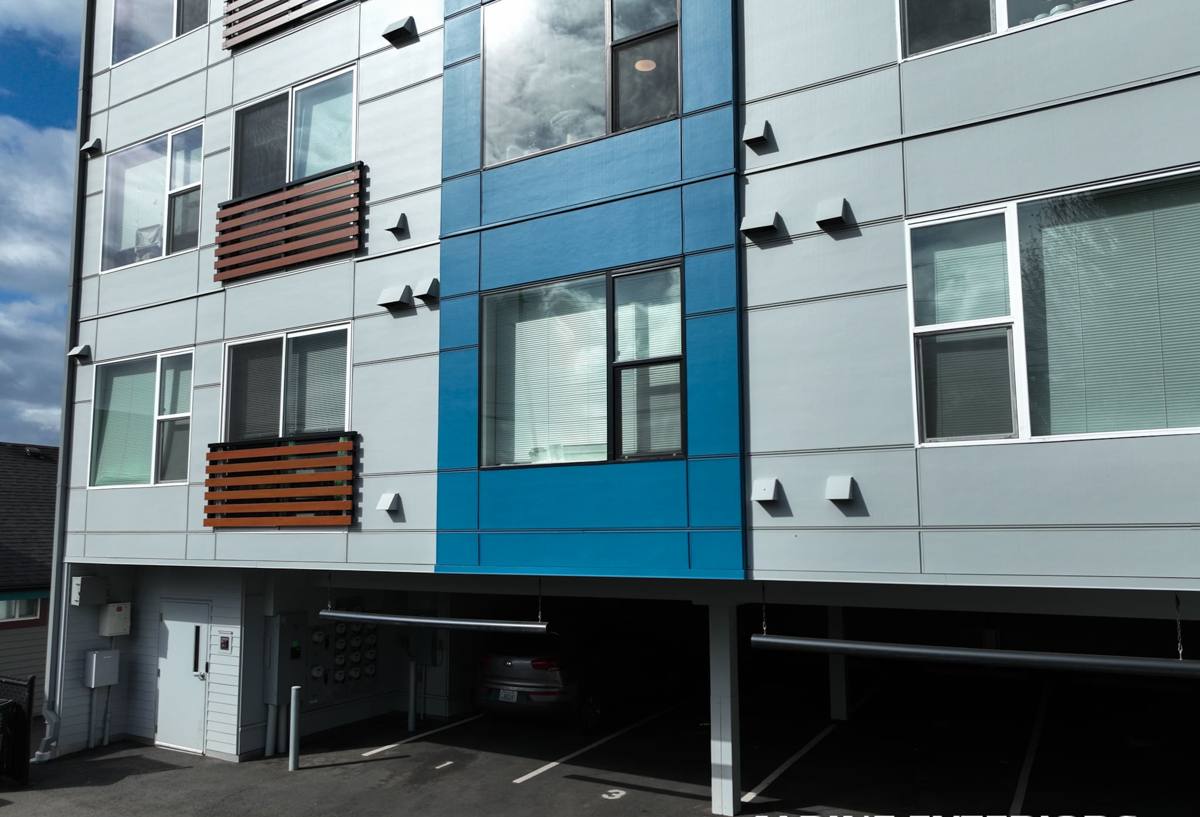
What a Correct Custom Window Job Actually Involves
"Custom" in this context means the window is built to the exact rough opening rather than forced into a standard size, and it means the installation is adapted to the specific wall assembly and exposure of that house — not a one-size-fits-all approach. In Skyline, that adaptation matters more on some elevations than others.
Sill Pans and Flashing
The single most important detail in any window installation here is what happens at the sill and the rough opening before the window ever goes in. A sloped sill pan, properly lapped house wrap or weather-resistive barrier, and flashing tape integrated in the correct shingle-lap order are what actually keep wind-driven rain from working its way into the wall cavity. Skip or rush this step and no amount of caulking on the visible trim will make up for it over time.
Glazing and Frame Performance
For this climate, we look at whole-unit U-factor and solar heat gain coefficient together, not just glass rating in isolation. Double-pane with a good low-E coating and argon fill is the baseline most homeowners land on; triple-pane adds value mainly on north-facing or particularly exposed elevations where comfort and condensation resistance matter more than the marginal energy savings alone would justify.
Sealant and Cladding Integration
Around the finished window, sealant joints need to be backed properly (not just caulked over a gap) and the surrounding cladding — siding, trim, or stucco — needs to be integrated back into the water management system, not just butted up against the new frame. This is where a lot of lower-cost installations cut corners, because it takes more time and more attention to the specific wall assembly than a fast reinstall does.
Frame Material: What Actually Holds Up Near the Water
Frame material choice matters more in a salt-air, high-moisture environment than it does inland. Here's how the common options compare for this specific setting.
| Frame Material | Moisture/Salt Air Behavior | Maintenance | Typical Fit for Skyline |
|---|---|---|---|
| Vinyl | Won't rot or corrode; UV exposure can affect color and rigidity over decades | Low — no painting required | Solid, budget-friendly choice for most elevations |
| Fiberglass | Very stable in moisture and temperature swings; strong resistance to warping | Low | Good upgrade for higher-exposure walls and larger units |
| Aluminum | Prone to corrosion in salt air unless properly coated and isolated from dissimilar metals | Moderate — coating maintenance matters near the shoreline | Workable but needs the right finish and detailing here |
| Wood/wood-clad | Exterior cladding protects the wood core, but any breach exposes it to rot risk | Higher — finish and seal upkeep over time | Best reserved for protected elevations, not the wettest exposures |
None of these is automatically wrong for every house — the right call depends on which elevation the window sits on, how much direct weather it takes, and what the homeowner wants to maintain over the next 15 to 20 years. We'll talk through that trade-off honestly rather than defaulting to whatever's easiest to install.
How We Approach a Skyline Window Project
The process is straightforward, but each step is there for a reason:
- Walk the house. We look at every window opening, not just the ones the homeowner flagged, and check for hidden moisture damage at sills and trim before quoting anything.
- Assess exposure by elevation. The side of the house catching the prevailing wind and rain gets treated differently than a protected, covered elevation — different flashing detail, sometimes different frame material recommendations.
- Measure and order to the exact opening. Custom sizing avoids the gaps and shim-heavy installs that come with forcing a stock size into an irregular or older rough opening.
- Remove and inspect. Old windows come out carefully so we can see the condition of the framing and sheathing underneath — this is where hidden rot or past water intrusion actually gets found.
- Repair before rebuilding. Any soft framing, damaged sheathing, or compromised weather barrier gets addressed before the new window and flashing system goes in. Installing a good window over a bad opening just hides the problem.
- Install with proper flashing sequence. Sill pan, jamb flashing, head flashing, and integration with the existing weather-resistive barrier, done in the correct order so water sheds outward at every layer.
- Finish and test. Trim, sealant, and cladding tie-in completed, then operation and seal checked before we call the job done.
What to Ask Before Hiring Anyone for This Job
- Will you inspect and repair the framing and sheathing if you find damage, or just install over it?
- What's your flashing detail at the sill, and can you explain it in plain terms?
- Are you recommending frame material based on which elevation this window is on, or the same answer for every window in the house?
- What warranty covers the installation itself, separate from the manufacturer's product warranty?
- Have you worked on homes in this specific area before, and do you understand the exposure this house gets?
A contractor who answers these specifically, rather than with a generic sales pitch, is usually the safer bet — especially in a climate where a poor installation doesn't show its consequences for a year or two.
Why a Crew That Already Works Skyline Matters
Skagit County isn't uniform — a window detail that's fine on a protected inland lot can be inadequate on a shoreline-exposed wall a few miles away. A crew that's already worked in Skyline has seen how these specific homes take weather: which elevations need the most attention, how salt air has treated hardware and finishes on nearby houses over time, and what the moss and moisture patterns look like on shaded sides of a lot in this particular pocket of the county. That local pattern recognition doesn't replace good installation practice, but it does mean fewer surprises and fewer callbacks down the road.
It also means a shorter distance to travel for follow-up if something needs adjustment after the install — worth something on its own when you're dealing with a coastal climate that can expose an installation flaw faster than a drier one would.
Getting This Right the First Time
Window replacement isn't a job most homeowners want to repeat in ten years because the first installation didn't account for how this climate actually behaves. The materials, the flashing detail, and the frame choice all matter less on their own than how well they work together at the specific opening they're going into. That's the standard we hold every custom window job to, whether it's one window or a full-house replacement.
If you're weighing window replacement on a home in Skyline, we're glad to walk the property, look at exposure and condition window by window, and give you a straight assessment — no pressure, no upsell. Reach out for a free estimate and we'll tell you honestly what we'd do and why.