 Skagit County
 Building a Deck in Bow: What the Climate Actually Demands
Bow sits close enough to Samish Bay and Padilla Bay that salt-laden air is a real factor in how a deck ages, not just a talking point. Add in Skagit County's long wet season, frequent driving rain off Puget Sound, and the shade from mature fir and cedar that keeps north-facing decks damp well into spring, and you have a set of conditions that punishes shortcuts fast. A deck built the same way you'd build one in a dry inland climate will show rot, corroded fasteners, and moss buildup years before it should.
That doesn't mean decks don't work well here — they do, and a well-built one will give you decades of use. It means the build has to account for moisture management from the footings up, not just at the surface. That's the lens we use on every Bow project.
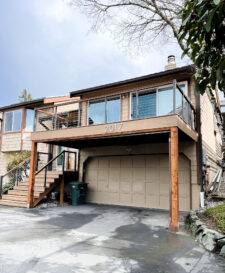
What a Correct Deck Build Involves
A deck is a system, not a stack of boards. Get any one layer wrong and the rest suffers. The core pieces we're always thinking about:
- Footings sized and set below frost depth, on undisturbed or properly compacted soil
- Framing lumber rated for ground contact where it's close to grade, with pressure-treated or naturally durable species used correctly
- Ledger attachment that's properly flashed against the house — this is the single most common failure point on older decks in wet climates
- Joist spacing and beam sizing matched to the actual span and the decking material you choose, not a generic table
- Drainage that gets water away from the structure instead of letting it pool under the deck or run behind the ledger
- Fasteners and hardware rated for the environment, not standard interior-grade hardware
Skip any of these and you're not saving money — you're deferring a repair bill, usually a bigger one than doing it right the first time would have cost.
Footings, Framing, and Drainage — Getting the Bones Right
Footings
Skagit County soils vary block to block — some areas near Bow have decent drainage, others hold water longer than you'd expect. We dig to the required frost depth and confirm the soil will actually support the footing before we pour, rather than assuming a standard depth is enough everywhere.
Framing and Ledger Flashing
The ledger board — where the deck attaches to the house — is where most rot problems start in this climate. Water gets behind an unflashed or poorly flashed ledger, the house sheathing and rim joist stay damp, and by the time it's visible from inside, real damage has already happened. We flash this connection properly every time, with the flashing lapped correctly over the house's water-resistive barrier, not just caulked and hoped for.
Drainage Under the Deck
A deck that traps standing water underneath it stays damp long after the rain stops, which accelerates rot in the framing and gives moss a place to establish. Grading the ground under the deck to shed water, and keeping vegetation from growing up against the framing, both matter more here than in drier parts of the state.
Decking Material Options for Bow's Conditions
There's no single "best" decking material — there's a best fit for your budget, your maintenance appetite, and how exposed the deck is to sun, shade, and salt air. Here's how the common options compare for this specific climate:
| Material | How it handles our climate | Maintenance | General cost position |
|---|---|---|---|
| Pressure-treated wood | Good if properly sealed and re-sealed; can hold moisture in shaded, poorly ventilated spots | Annual cleaning, periodic staining/sealing | Lowest upfront |
| Cedar | Naturally moisture- and insect-resistant, ages to gray if left unfinished | Regular sealing to keep color, otherwise low | Mid-range |
| Composite decking | Doesn't rot, but can be prone to moss and mildew film in shaded, damp spots without airflow | Periodic washing, no staining/sealing | Higher upfront, lower long-term labor |
| PVC decking | Fully moisture-resistant surface, performs well in wet, salt-air conditions | Occasional washing | Highest upfront |
We install all of these. Our job is to walk you through the honest trade-offs for your specific site — how much sun the deck gets, how close it is to salt air, and how much upkeep you actually want to do — rather than push one product because it's easier to sell.
Fasteners, Flashing, and the Details That Prevent Rot
This is where a lot of decks in this climate go wrong even when the big-picture design is sound. Standard galvanized fasteners can corrode faster than expected near the water and with the amount of moisture this area sees. We use fasteners and structural hardware rated for the treated lumber and exposure conditions involved, and we flash every horizontal surface that meets a vertical one — ledger, stair stringers where they meet a landing, any built-in bench or planter framing — because that's where water finds its way into end grain and fastener holes.
We also pay attention to gapping between boards. Too tight and boards can't dry between rain events, which is exactly the setup that lets moss and mildew take hold. Too wide and you lose the clean look and comfort underfoot. Getting that spacing right, and accounting for how each material expands and contracts when wet, is a detail that separates a deck that stays clean for years from one that's green by the second winter.
Our Process, Start to Finish
1. On-Site Assessment
We look at your site's actual sun exposure, drainage patterns, soil, and how close you are to open water or exposed to prevailing weather. This shapes material and structural recommendations more than a catalog ever could.
2. Design and Material Selection
We talk through layout, decking material, railing, and any features like stairs or built-ins, with honest input on how each choice performs here long-term.
3. Permitting
We handle the permit application and inspections required for the project so you don't have to navigate that process yourself.
4. Construction
Footings, framing, ledger flashing, decking, and railing — built in that order, with each stage inspected before the next begins.
5. Final Walkthrough
We go over the finished deck with you, including what maintenance it needs and on what schedule, so there are no surprises down the road.
Permits and Code in Skagit County
Most new decks and many significant deck rebuilds in unincorporated Skagit County — which includes Bow — require a building permit, particularly once you're above a certain height off grade or attaching structurally to your house. Requirements can also shift depending on setbacks from property lines and, in some areas near water, shoreline regulations. Rather than guess at what applies to your specific lot, we pull the actual permit for your project and build to what's approved, which protects you if you ever sell the house or need an inspection down the line.
Maintenance Checklist for a Bow Deck
A well-built deck still needs some seasonal attention in this climate. Here's what we recommend to homeowners after installation:
- Sweep debris and standing leaves off the deck surface regularly through fall, especially under trees
- Check that gaps between boards stay clear so water can drain and boards can dry
- Rinse off moss or algae film as soon as it appears, before it gets established and stains the surface
- Inspect the ledger flashing area annually for any sign of water staining on the house siding above or below it
- Re-seal or re-stain wood decking on the manufacturer's recommended schedule, not just when it looks faded
- Confirm under-deck drainage paths haven't been blocked by soil buildup, planting beds, or stored items
Why a Crew That Already Works Bow Matters
A deck built for a dry-climate region and one built for the Salish Sea corridor aren't the same project, even if the plans look identical on paper. Knowing how local soils drain, how much moisture a shaded, salt-air-exposed deck will see through a Skagit County winter, and which flashing and fastener choices actually hold up here isn't something you get from a general contractor working the region for the first time. We build decks in this area regularly, which means the ledger flashing detail, the footing depth, and the material recommendation you get are based on what we've seen actually perform here — not a generic spec sheet.
If you're planning a new deck or replacing one that's showing its age, we're happy to take a look and give you a straightforward, no-pressure estimate — just fill out the form below.