 Skagit County
 Deck Repair Built for Lyman's Valley Weather
Lyman sits low in the Skagit River valley, tucked between timbered hillsides that hold moisture close to the ground long after a storm has passed through. That geography is part of what makes the area beautiful, and it's also exactly what wears a deck down faster than homeowners expect. Marine air pushes inland off Puget Sound and settles in the valley, river humidity lingers through the mornings, and tree cover keeps decks shaded and damp well into the afternoon. A deck here does not fail because it was built wrong. It fails because Skagit County's combination of driving rain, valley fog, and a long moss season is relentless on wood, fasteners, and finish in ways a drier climate never tests.
We repair decks in Lyman regularly enough to know which parts fail first and why. This page covers what actually goes wrong, what a correct repair involves, and how we decide between a repair and a rebuild.
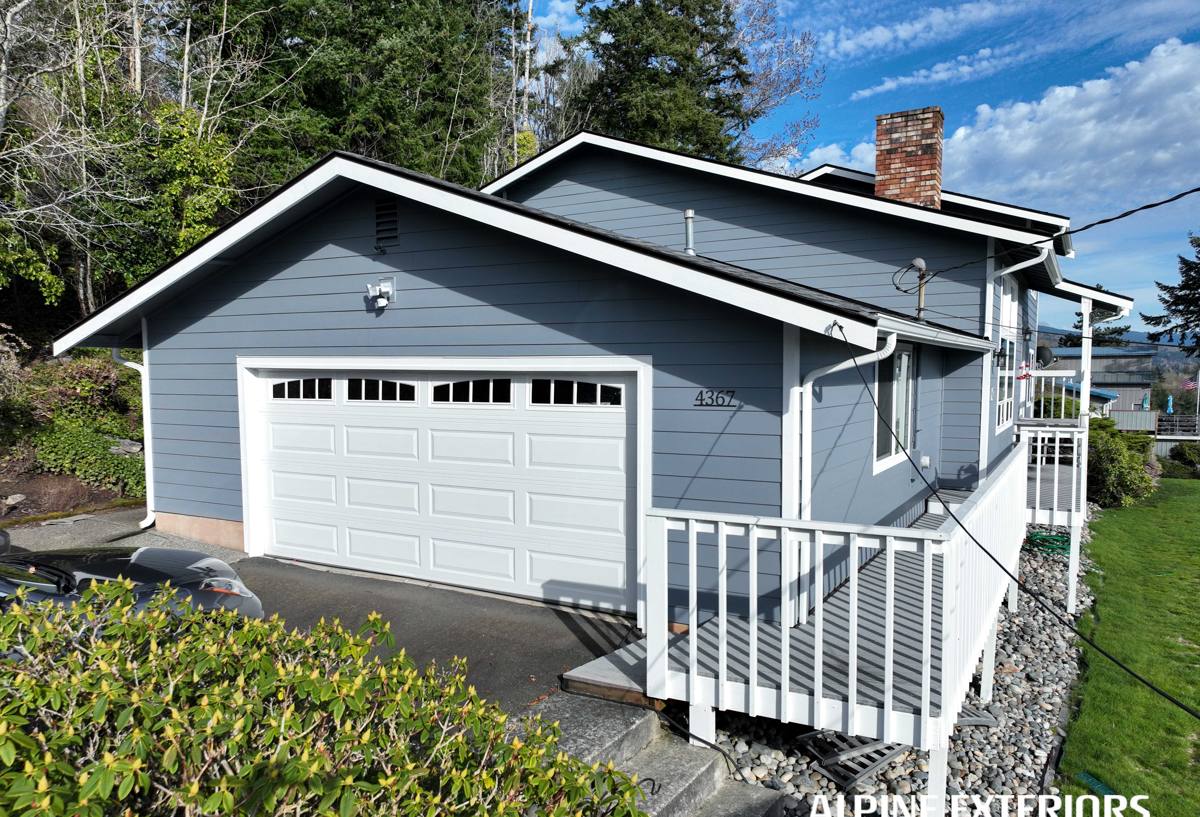
Why Local Decks Take This Kind of Beating
Every deck problem we see in this area traces back to the same handful of causes, repeated in different combinations:
- Standing moisture. Valley fog and shade from surrounding trees mean deck surfaces often stay wet for hours after the rain stops, especially on the north or east side of a house.
- Moss and algae growth. A long, cool, damp season gives moss time to establish on boards, railings, and stair treads, holding water against the wood surface and creating a slip hazard.
- Fastener corrosion. Nails, screws, and joist hangers that aren't rated for sustained moisture exposure rust, weaken, and eventually let connections shift or fail.
- Ledger board exposure. The board that ties the deck to the house is the single most common failure point we find, because it sits against the siding where runoff and splashback concentrate.
None of this means a deck in Lyman can't last for decades. It means the repair has to account for moisture the way the original build sometimes didn't.
Signs Your Deck Needs Repair, Not Just a Wash
A pressure wash and a coat of sealer solves a cosmetic problem. It does not solve a structural one. Homeowners often call us after noticing something that looks minor, only to find the real issue is underneath. Watch for:
- Boards that feel spongy, soft, or give slightly underfoot
- Green or black staining that comes back within weeks of cleaning
- Gaps opening up between the ledger board and the house
- Visible rust streaks below joist hangers or fastener heads
- Railings or stair rails that flex or wiggle when you lean on them
- Standing water that takes more than a day to dry after rain
- Fasteners backing out or heads that have sheared off
If you're seeing any of these, the deck is telling you something is happening below the surface. Catching it early is almost always cheaper than waiting.
Why Moss Is More Than Cosmetic
Moss on a deck isn't just an appearance issue. It holds moisture directly against the board surface for days at a time, which is exactly the condition that accelerates rot in untreated or under-sealed wood. On shaded lots or homes backed up against trees, moss can reestablish within a single season if the underlying moisture problem isn't addressed alongside the cleaning.
What a Proper Deck Repair Actually Involves
A repair that only replaces the board you can see, without checking what's underneath, tends to fail again within a year or two. We work through the whole structure, not just the surface.
Ledger Board and Flashing
The ledger board and its flashing are the first thing we inspect, because a failure here affects the entire deck's connection to the house. We check for rot behind the board, confirm flashing is directing water away from the house rather than trapping it, and correct any gaps that let moisture track behind the siding.
Framing and Joists
We check joists, beams, and posts for soft spots, checking (splitting), and corrosion at every hanger and bolt. Any hardware that isn't rated for ground contact or sustained wet exposure gets upgraded, since mismatched fasteners are one of the most common causes of early hardware failure we find on repair calls.
Decking Surface
Individual boards get replaced where they're soft, cupped, or split rather than resurfacing over a compromised board. Spacing between boards matters here too — tight, moss-clogged gaps trap water, while proper spacing lets a deck actually dry between storms.
Railings and Guards
Railings take constant hand pressure and lateral load, and loose posts are a safety issue, not just a maintenance one. We re-anchor or rebuild any railing section that flexes, and confirm guard height and baluster spacing meet current code if the section is being rebuilt.
Repair vs. Replace: How We Decide
Not every deck problem calls for a full rebuild, and not every deck is worth patching. We look at the extent of the damage, the age and condition of the framing, and whether the underlying structure is sound enough to build on.
| What We Find | What It Usually Means | Likely Path |
|---|---|---|
| A few soft or split boards, framing is solid | Localized surface damage | Board replacement |
| Rust at hangers, minor ledger gap | Hardware and flashing failure | Hardware upgrade, flashing repair |
| Soft framing in multiple areas | Widespread moisture intrusion | Partial framing replacement |
| Rot at ledger connection to house | Structural connection compromised | Ledger rebuild, possible siding repair |
| Deck is 20+ years old with recurring issues | Original materials at end of service life | Full rebuild often more cost-effective |
When a deck is close to the line between repair and rebuild, we'll walk you through the reasoning and the honest cost trade-off rather than defaulting to the bigger job.
Our Deck Repair Process
- On-site inspection. We check the deck from the ground up — framing, ledger, hardware, and surface — not just what's visible from the top.
- Written scope and estimate. You get a clear breakdown of what's being repaired and why, before any work starts.
- Repair or rebuild. We replace only what needs replacing, matching materials and hardware to the moisture conditions of your specific site.
- Hardware and fastener upgrade. Any corroded or undersized connectors are brought up to current standard as part of the repair, not left in place.
- Final check. We confirm railings are secure, boards are properly spaced, and drainage is directing water away from the house and framing.
Material Considerations for This Climate
Material choice matters more in a valley climate like Lyman's than it does in a drier part of the state. There's no single right answer for every deck — it depends on your budget, how much upkeep you want to do, and how the deck is shaded or exposed.
| Material | How It Handles This Climate | Trade-Off |
|---|---|---|
| Pressure-treated lumber | Good rot resistance when properly sealed and maintained | Needs periodic resealing to stay ahead of moss and moisture |
| Cedar | Naturally resists decay, ages well in damp conditions | Higher upfront cost, still benefits from regular finish maintenance |
| Composite decking | Doesn't rot or need sealing, resists moss staining better | Higher material cost, framing underneath still needs wood-standard protection |
Whatever the surface material, the framing underneath is almost always wood, which means ledger flashing, joist protection, and fastener quality matter just as much on a composite deck as a wood one.
Permits and Code Considerations
Deck work that involves structural framing, the ledger connection, or railing height and spacing often falls under Skagit County building code, and larger repairs can require a permit even when the original deck was built without one. We handle that process as part of the job when it applies, so you're not left guessing whether a repair is up to code. This matters most on ledger rebuilds and railing reconstruction, where safety and resale value are both on the line.
Why Hire a Crew That Already Works in Lyman
A deck repair crew that mostly works drier inland areas can miss what's specific to a river valley property — the shade patterns, the moss regrowth cycle, the way fog sits low on a lot backed by trees. Working in Skagit County day to day means we're used to sizing up moisture damage accurately the first time, recommending hardware and finishes that actually hold up here, and not overselling a rebuild when a targeted repair will do the job. That local familiarity saves you money on the estimate and saves you a repeat repair a few years down the road.
If your deck has soft spots, rust stains, recurring moss, or just feels less solid than it used to, we'll come take a look and give you a straight answer on what it needs. Reach out for a free, no-pressure estimate — the form below only takes a minute.