 Skagit County
 Why Decks in Cedardale Wear Out Faster Than the Manual Says
Every deck material comes with a lifespan estimate printed somewhere on the packaging or warranty card. Those numbers are written for average conditions, and Cedardale doesn't have average conditions. Sitting near the water in Skagit County means homes here deal with a steady mix of salt-laden air, long stretches of driving rain off the Sound, and a moss season that can run most of the year in shaded yards. None of those factors show up in a manufacturer's lifespan chart, but all of them show up in the decks we replace.
Salt air accelerates corrosion in fasteners, joist hangers, and any exposed metal hardware, even hardware rated for outdoor use. Driving rain doesn't just fall straight down here — wind pushes it sideways under railings, into ledger boards, and into any gap where flashing was skipped or installed wrong the first time. And moss doesn't just look bad on a deck surface; it holds moisture against the boards long after a dry afternoon, which is exactly the condition that rots wood and delaminates composite decking from the inside out.
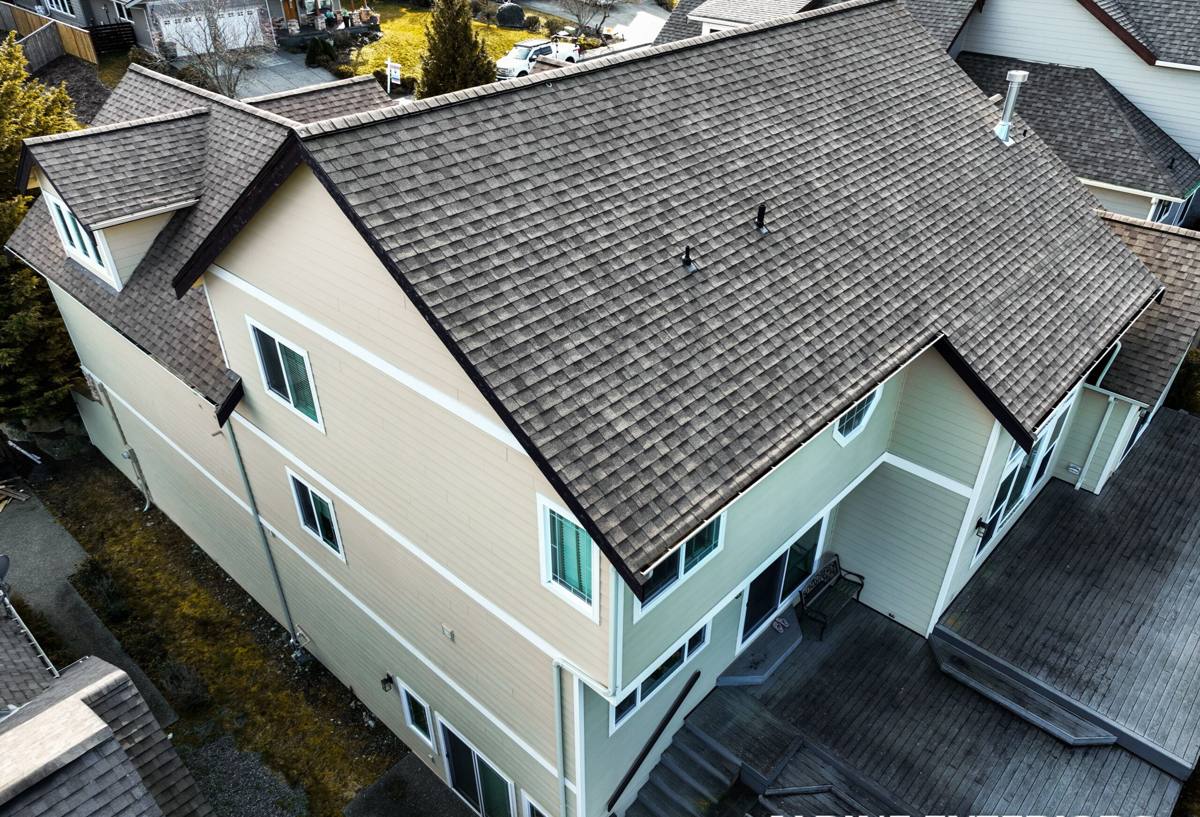
Signs a Cedardale Deck Needs Replacement, Not Another Repair
Not every tired-looking deck needs to come out. But there's a point where patching boards or resealing the surface is just delaying a bigger problem — and sometimes hiding one. We look for a few specific things before recommending full replacement over repair.
- Soft or spongy decking, especially near the house or in shaded corners where moss holds moisture
- Rust streaks running down from fasteners or joist hangers, a sign the hardware underneath is failing
- A ledger board that's separated even slightly from the house, or shows dark staining behind it
- Railing posts that flex or wiggle when pushed, which usually means rotted framing below the surface
- Consistent moss growth that keeps returning within weeks of cleaning
- A deck older than 15-20 years that has never had the substructure inspected
If what you're seeing is limited to a few cracked boards on an otherwise sound frame, repair is the honest answer and we'll say so. Replacement makes sense when the framing, ledger connection, or footings are compromised — because at that point you're not fixing the deck, you're just delaying the failure.
What a Correct Deck Replacement Actually Involves
Starting Below the Surface
A deck is only as good as what's underneath it, and in a climate like Skagit County's, that's where most failures start. A proper replacement means checking or replacing footings, confirming post spacing meets current code, and using framing lumber and connectors rated for the moisture exposure this area actually sees — not just whatever met minimum code when the original deck went in.
Ledger Flashing Is Not Optional
The single most common failure point we find on older decks isn't the decking boards — it's the ledger board, where the deck attaches to the house. Driving rain finds its way behind an unflashed or poorly flashed ledger and rots the rim joist behind it, sometimes for years before anyone notices from the outside. Correct ledger flashing, properly lapped with the house's water-resistive barrier, is non-negotiable on every replacement we do.
Hardware That Matches the Environment
Given the salt air near the water in this part of Skagit County, we use fasteners and structural connectors rated for coastal or high-corrosion exposure, not standard galvanized hardware. It costs a little more up front and it's the difference between hardware that lasts the life of the deck and hardware that's rusting through in five years.
Choosing a Decking Material That Actually Fits This Climate
There's no single "best" decking material — there's a best material for your budget, your maintenance appetite, and how much sun or shade your deck actually gets. In a moss-prone, high-moisture area, that last factor matters more than most homeowners expect.
| Material | How It Handles Moisture & Moss | Maintenance | Typical Lifespan |
|---|---|---|---|
| Pressure-treated wood | Needs consistent sealing to resist moisture; moss gains a foothold quickly if neglected | Annual cleaning and resealing recommended | 10-15 years with upkeep |
| Cedar | Naturally moisture- and insect-resistant, but still needs care in constant shade or salt air | Periodic cleaning and oil/sealant | 15-20 years with upkeep |
| Composite decking | Resists rot but can trap surface moisture and grow moss if not cleaned in shaded areas | Occasional washing, no sealing required | 25-30 years |
| PVC/capped polymer | Fully moisture-resistant surface, least hospitable to moss buildup | Minimal — occasional rinse | 25-30+ years |
We install all of these, and we'll tell you honestly which one fits your situation rather than steering you toward whatever has the best margin. A shaded, tree-covered lot in Cedardale is a different conversation than a deck that gets full afternoon sun — the moss risk alone can change which material makes sense.
Our Deck Replacement Process
- On-site assessment — we inspect the existing deck, ledger connection, and framing to confirm replacement is the right call, not just an upsell
- Design and material selection — sizing, railing style, and decking material chosen around your budget and how the space gets used and shaded
- Permit and code check — deck replacements involving structural changes typically require a permit through Skagit County; we handle that process rather than leaving it on you
- Demolition and disposal — full removal of the old deck, including any hidden rot in framing or the ledger area that wasn't visible from the surface
- Framing and flashing — footings, posts, joists, and ledger flashing built to handle the rain and salt air this area sees, not just to meet minimum code
- Decking and railing installation — installed to the manufacturer's spec, which matters most for composite and PVC products where improper fastening voids the warranty
- Final walkthrough — we go over the finished deck with you, including what maintenance it actually needs based on the material and your yard's sun/shade pattern
What Actually Drives the Cost
Every deck replacement quote is different because every deck's underlying condition is different. Here's what tends to move the number most, in rough order of impact.
| Cost Factor | Why It Matters |
|---|---|
| Framing and footing condition | Hidden rot or undersized footings found during demo often means more structural work than the surface suggested |
| Decking material | Pressure-treated wood costs the least upfront; composite and PVC cost more but need far less long-term maintenance |
| Deck size and shape | Multi-level decks, curves, and built-in features add labor beyond straightforward square footage |
| Railing style | Cable, glass, and composite railing systems cost more than basic wood or metal baluster designs |
| Ledger and flashing work | Correcting a poorly flashed original ledger, or rot behind it, is common on older decks and adds to the scope |
| Permitting requirements | Structural changes or larger footprints may require engineering or additional permit steps |
We'd rather walk your existing deck and give you real numbers than throw out a broad range that doesn't reflect what's actually under your boards. Most homeowners are surprised by which factor ends up mattering most, and it's usually not the one they expected.
Why Hiring a Crew That Already Works in Cedardale Matters
A deck built without accounting for this area's climate is a deck you'll be dealing with again sooner than you should. Crews that don't regularly work in Skagit County's coastal-influenced conditions often default to standard hardware, standard flashing details, and standard maintenance advice — the kind that works fine in a drier inland climate and falls short here. We work in Cedardale and the surrounding area regularly, which means we've already seen how the salt air, the rain patterns, and the moss cycle here actually affect a deck over time, and we build accordingly instead of guessing.
That local familiarity also means a smoother permitting process, since we know what Skagit County typically expects for deck replacement projects, and a more realistic timeline, since we're not learning the local weather patterns on your project.
Keeping a New Deck in Good Shape
Whatever material you choose, a little seasonal attention goes a long way in this climate. A few habits make a real difference:
- Sweep or rinse off standing debris and moss growth before it has a chance to establish, especially in shaded corners
- Keep gutters and downspouts clear so runoff isn't dumping extra water directly onto or under the deck
- Check the ledger flashing area once a year for any staining or gaps
- Reseal wood decking on the schedule the product actually calls for, not "whenever it looks dry"
- Trim back overhanging branches that keep sections of the deck shaded and damp longer than the rest
If you're weighing whether your Cedardale deck needs a repair or a full replacement, we're happy to take a look and give you a straight answer either way. Reach out for a free, no-pressure estimate using the form below.