 Skagit County
 Hamilton Decks Face a Different Kind of Wear
Hamilton sits along the Skagit River, tucked into a valley that holds onto moisture longer than homes closer to open, sunny ground. Between the river's humidity, long stretches of driving rain, and a moss season that can run from October into May, a deck here works harder than the same structure would in a drier climate. The moving, marine-influenced air that pushes up the Skagit Valley also carries salt and fine mineral content that settles on fasteners and metal hardware over time, which is part of why decks in this part of Skagit County corrode and rot from the inside before they show much on the surface.
None of that means a deck in Hamilton has to fail early. It means the framing, fasteners, and drainage details have to be built for this climate specifically, not treated the same as a deck going in on the dry side of the state. That's the difference between a deck that needs real work again in eight years and one that holds up for two or three decades.
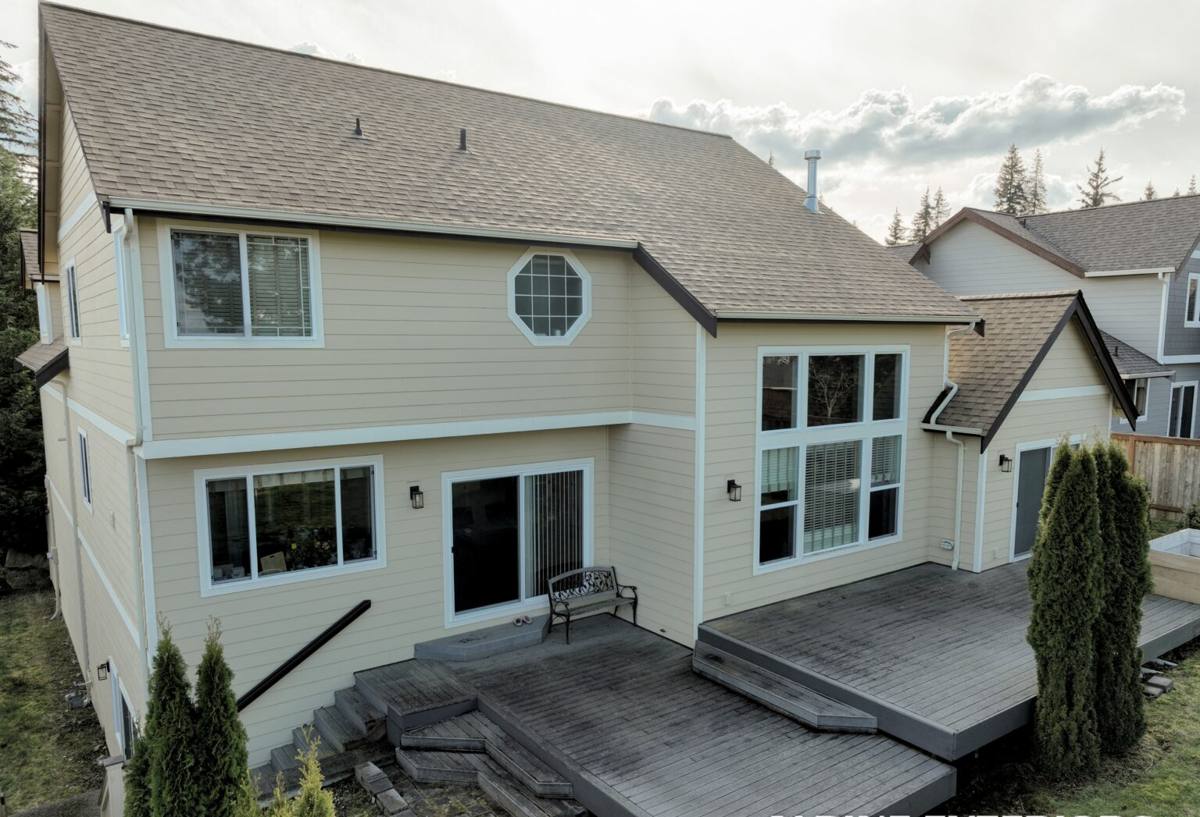
Signs a Hamilton Deck Needs Replacement, Not Just Repair
Homeowners often call us thinking they need a few boards swapped out, and sometimes that's true. But there's a point where patching stops making sense and full replacement is the honest answer. Look for these signs before deciding which one you actually need:
- Soft or spongy spots in the decking that go beyond one or two boards
- Rot or discoloration at the ledger board where the deck meets the house
- Wobble in the railing posts or stairs, especially after wet weeks
- Rust streaks below joist hangers or fastener heads
- Persistent moss or algae growth that comes back within weeks of cleaning
- Gaps opening up between decking boards and the frame twisting slightly
If it's just surface graying or a few loose screws, repair is usually the right call and we'll say so. If the framing or ledger connection is compromised, patching over it just delays a bigger problem — and in a climate like this one, that problem tends to arrive faster than homeowners expect.
The Ledger Board Is the Real Tell
The ledger board — the piece that bolts the deck to the house — is the single most important structural connection on any deck, and it's also the piece most exposed to trapped moisture in a wet climate. If flashing was installed incorrectly or skipped entirely, water works its way behind the ledger and rots both the deck framing and the house's rim joist behind it. This is the most common failure we find on older Hamilton decks, and it's rarely visible until the wood is already soft.
What a Correct Deck Replacement Actually Involves
A deck replacement isn't just pulling up old boards and nailing down new ones. Done right, it touches every layer of the structure:
- Footings and posts — checked or replaced to current frost depth and load requirements, not just reused because they're "still standing"
- Ledger flashing — proper metal flashing and self-adhered membrane behind the ledger board so water sheds away from the house instead of collecting behind it
- Framing — joists sized and spaced for the actual span and load, with joist tape or flashing tape on top to keep moisture out of the end grain
- Fasteners and hardware — corrosion-rated for coastal and marine-influenced climates, not standard interior-grade hardware
- Decking material — matched to how much sun, shade, and moisture exposure that specific deck actually gets
- Drainage and grading — making sure water moves off the deck and away from the foundation instead of pooling underneath
Skip any one of these and the deck may look fine for a few seasons while the real damage builds underneath, hidden until it isn't.
Decking Material Options for This Climate
There's no single "best" decking material — there's the material that fits your budget, your maintenance appetite, and how much sun and moisture that particular deck sees. Here's an honest comparison for a Skagit County setting:
| Material | Moisture Behavior | Maintenance | Typical Lifespan |
|---|---|---|---|
| Pressure-treated wood | Absorbs and releases moisture; needs sealing to resist rot and moss | Annual cleaning and re-sealing recommended | 10–15 years with upkeep |
| Cedar | Naturally rot-resistant but still needs sealing in wet, shaded areas | Periodic cleaning and finish renewal | 15–20 years with upkeep |
| Composite | Doesn't absorb water like wood; can still grow surface moss if never cleaned | Occasional washing, no sealing needed | 20–30 years |
| PVC / capped polymer | Fully moisture-resistant surface, best for shaded, damp locations | Lowest maintenance of the group | 25–30+ years |
For decks in shaded, tree-covered yards near the river — common in and around Hamilton — composite or capped polymer boards usually make more sense than raw wood, simply because they don't give moss and algae the same foothold. That said, plenty of homeowners prefer the look and feel of real wood and are happy to keep up with sealing on a schedule. We'll walk through the honest trade-offs for your specific yard rather than push one product line.
Our Deck Replacement Process
Every deck replacement we do follows the same sequence, adjusted for the specific site:
- On-site assessment of the existing deck, ledger connection, footings, and surrounding drainage
- Honest conversation about repair-versus-replace, with material options that fit your budget
- Permit filing where required by Skagit County or local jurisdiction
- Removal of the old deck, with a check of the house's rim joist and siding behind the ledger for hidden damage
- New footings, framing, ledger flashing, and structural connections built to current code
- Decking, railing, and stair installation
- Final walkthrough covering maintenance expectations for the material you chose
We don't skip the removal-and-inspection step even when a homeowner just wants new boards on an existing frame. Too many hidden problems live behind the old decking, and finding them before they become an insurance claim is part of doing the job right.
Fasteners, Flashing, and Hardware — Why the Details Matter Here
This is the part of a deck replacement that's invisible once the job is done, and it's exactly where cheap work fails first in Skagit County's climate. Standard interior fasteners and unprotected metal connectors corrode faster here than in drier parts of the state, especially with the moisture that sits in the valley through the fall and winter. We use stainless or hot-dip galvanized fasteners and connectors rated for exterior, moisture-heavy environments, and we flash every ledger connection with a proper membrane rather than relying on caulk alone. It costs a little more upfront. It's the difference between hardware that's still solid at year twenty and hardware that's rusting through by year seven.
Permits and Code Considerations
Deck replacement in Skagit County typically requires a permit once the structure exceeds a certain size or height above grade, and requirements can vary depending on whether the property is inside city limits or in unincorporated county land — which describes much of the Hamilton area. Permitting isn't paperwork for its own sake; it's what triggers an inspection of footings and framing before the decking goes down, which is exactly the stage where problems are cheapest to catch. We handle the permit filing as part of the job so homeowners aren't left figuring out county requirements on their own.
What Drives the Cost of a Deck Replacement
Every deck is different, but the same handful of factors move the price up or down on almost every job:
| Factor | Why It Matters |
|---|---|
| Deck size and shape | More square footage and more cuts around angles or curves means more material and labor |
| Height above grade | Taller decks need more substantial footings, posts, and often guardrails that meet code |
| Decking material chosen | Composite and PVC cost more upfront than wood but need far less long-term maintenance |
| Ledger and framing condition | Hidden rot behind the ledger or in the rim joist adds repair work discovered mid-project |
| Site access | Decks over slopes, near water, or with tight yard access take longer to build safely |
| Railing and stair complexity | Custom railing systems and multi-level stairs add both material and labor time |
We give a written estimate that breaks these out so you know exactly what you're paying for, rather than one flat number with no explanation behind it.
Why a Crew That Already Works Hamilton Matters
A deck replacement built by a crew that only shows up once and disappears is a different product than one built by a crew that works this area regularly. Knowing how the Skagit Valley's rain patterns and moss season actually behave on a deck — not in theory, but from having pulled up dozens of them — changes what gets flagged during inspection, what fastener spec gets used without being asked, and what gets flashed a little more carefully than the minimum code requires. It also means when something needs a warranty call two years down the road, there's a local crew that's still around to take it, not a company that worked the area for one season and moved on.
Here's a short checklist worth going through with any contractor before you sign a deck replacement contract, whether it's us or someone else:
- Do they inspect and discuss the ledger board and rim joist condition, not just the visible decking?
- Are they pulling the required Skagit County permit, or asking you to skip it?
- What fastener and hardware spec are they using — standard or corrosion-rated for coastal/marine climates?
- Do they explain material trade-offs honestly, or push one product regardless of your yard's sun and shade?
- Can they point to other decks they've built in this specific area?
If you're weighing a deck replacement in Hamilton, we're happy to take a look and give you a straight answer on whether it's repair or replacement, what it would take to do right, and what that actually costs — no pressure, no obligation. The form below gets you a free estimate.