 Skagit County
 Siding That Can Actually Handle Edison's Weather
Edison sits low in Skagit County, close enough to Samish Bay and the surrounding tidal flats that salt-laden air is part of daily weather, not an occasional event. Add in driving rain that comes off the water and gets pushed sideways into wall assemblies, plus a long moss season that thrives in the shaded, damp corners of farmland and tree-lined lots, and you get a climate that's genuinely hard on exterior materials. Siding here doesn't just need to look good for a season or two — it needs to hold up year after year against salt, standing moisture, and biological growth without constant homeowner intervention.
We install James Hardie fiber cement siding exclusively, and this page focuses on one thing: what a correct fiber cement siding job looks like for a home in Edison, why the climate here makes some installation details non-negotiable, and how our process works from first look to finished wall.
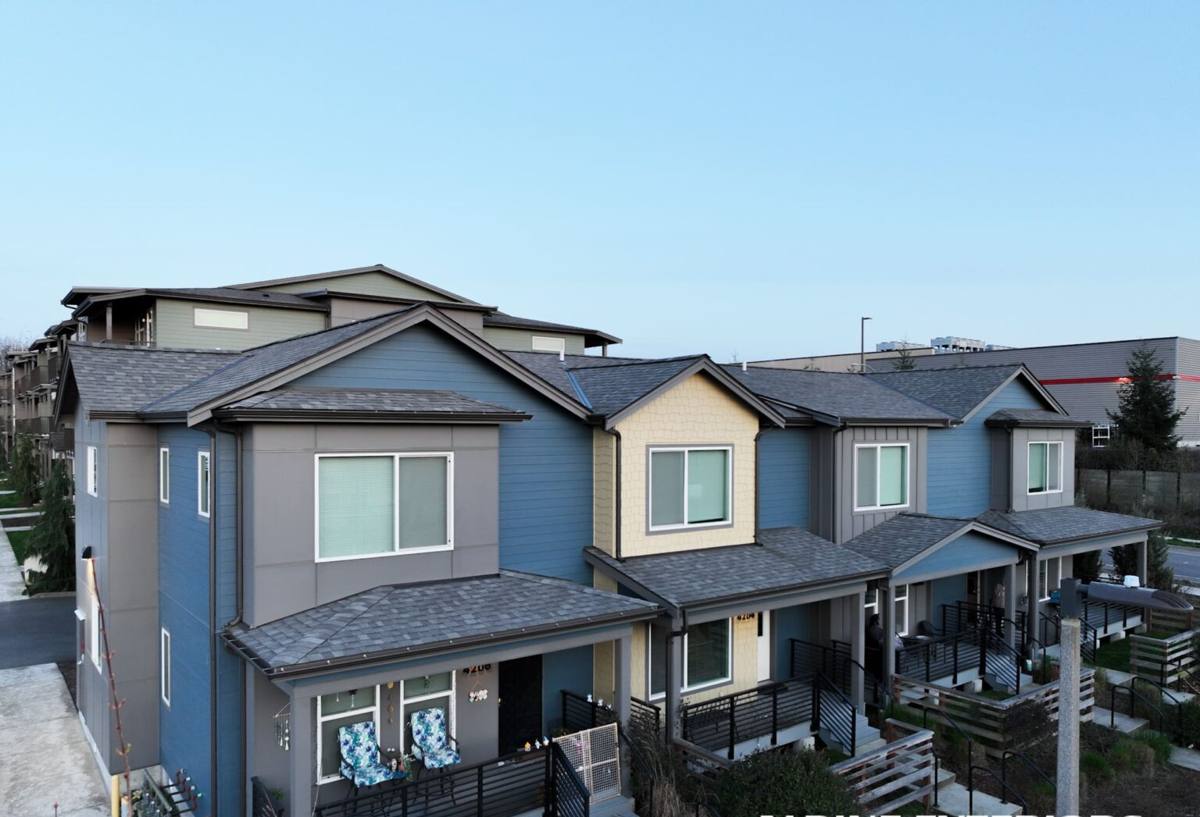
What Edison Homes Specifically Need From Their Siding
Salt Air and Fastener Corrosion
Salt-laden air off Samish Bay doesn't just affect the siding surface — it works on every piece of metal in the wall assembly over time, including fasteners, flashing, and trim connectors. A siding product that resists moisture but gets installed with the wrong fastener grade will still fail early, because the corrosion starts at the connection points, not the face of the board. This is one of the most overlooked details in siding work near the water, and it's one we treat as a fixed requirement rather than an upgrade option.
Wind-Driven Rain
Rain in this part of Skagit County rarely falls straight down for long. Storms moving in off the water tend to push rain at an angle, which means it's testing horizontal laps, butt joints, and every penetration in the wall — not just the field of the siding itself. A product and installation method that only performs well under vertical rainfall isn't a good match for Edison's actual weather pattern.
A Long, Real Moss Season
Low-lying, shaded, and often near standing water or irrigated farmland, many Edison lots stay damp longer into the year than homes further inland. That extended dampness is exactly what moss and mildew need to establish themselves on a north-facing wall or a shaded gable end. Siding that can't shed water quickly, or that has an organic component moss can actually take hold in, ends up needing pressure washing and maintenance on a schedule most homeowners don't want to keep up with.
Why We Install Only James Hardie Fiber Cement
James Hardie siding is a cement-based composite — portland cement, sand, and cellulose fiber, cured into planks or panels. The core material is inorganic, so it doesn't absorb water and swell the way wood-based products can, and it doesn't give moss, mildew, or insects an organic food source to work with. Most of what we install carries the factory-applied ColorPlus finish, a baked-on coating that resists fading and moisture intrusion at the coating level far better than paint applied on site after installation.
For a climate like Edison's, we specify Hardie's HZ5 product line, engineered for regions with sustained moisture exposure and freeze-thaw cycling rather than a generic formulation built for a drier part of the country. It's also non-combustible, which matters for household safety and can matter for insurance conversations as well. We don't install LP SmartSide, vinyl, Cemplank, Allura, primed spruce, or cedar — not because those are bad products in every context, but because we've settled on one system we can install correctly, warranty confidently, and stand behind on every job, and fiber cement built for this climate is that system.
What a Correct Installation Actually Involves
The material only performs as well as the installation behind it. A lot of siding problems we get called out to inspect trace back to installation shortcuts, not the product itself. On a correct fiber cement job, that means:
- A properly detailed weather-resistant barrier behind the siding, with seams lapped and sealed to shed water downward and outward
- Flashing at every window, door, and roofline penetration, installed to direct water away from the wall assembly rather than trapping it
- Correct fastener placement and spacing, using fasteners rated for the exposure this location actually gets
- Proper clearance between the bottom of the siding and grade, decks, or roof lines, so the board isn't sitting in standing moisture
- Field-cut edges primed or sealed before installation, since an unsealed cut edge is one of the most common points where moisture gets into the board
- Correct joint and gap spacing at butt joints and trim, allowing for the material's normal expansion and contraction without forcing water intrusion points
Skip any one of those details and you can end up with a wall that looks fine from the curb for a couple of years while moisture works its way in behind the surface. That's a hard thing for a homeowner to catch on their own, which is part of why the installation crew's habits matter as much as the product on the truck.
Common Installation Mistakes We See on Service Calls
| Detail | Correct Practice | Common Shortcut |
|---|---|---|
| Cut edges | Primed or sealed before install | Left raw, exposed to moisture |
| Clearance to grade | Held to manufacturer minimum | Siding set too close to soil or hardscape |
| Fasteners | Corrosion-rated for coastal exposure | Standard-grade fasteners that rust prematurely |
| Flashing at penetrations | Integrated with the water-resistive barrier | Caulk used in place of proper flashing |
| Joint spacing | Set per manufacturer specification | Boards butted too tight, no room to move |
Factors That Affect the Cost of a Siding Job in Edison
Every home is different, so we don't quote off a generic price sheet, but a few factors consistently move the number on a fiber cement job in this area:
| Factor | Why It Matters |
|---|---|
| Condition of the existing wall assembly | Hidden moisture damage found during tear-off adds substrate repair before new siding goes on |
| Home size and wall complexity | More corners, gables, and penetrations mean more flashing detail and labor time |
| Siding profile and finish selection | Lap width, panel style, and ColorPlus color options carry different material costs |
| Trim and accessory scope | Fascia, soffit, and trim work bundled into the project changes both material and labor totals |
| Access and site conditions | Setbacks, landscaping, or limited access around the home can affect labor time |
We walk the property before giving a real number, because those variables show up differently on every home.
How Our Process Works
1. On-Site Assessment
We start by walking the home, looking at the existing siding's condition, checking for signs of moisture damage or past shortcuts, and talking through what you actually want out of the project.
2. Tear-Off and Substrate Check
Once old siding comes off, we check the sheathing and framing underneath for rot or moisture damage before anything new goes up. This is the point where hidden problems get found and addressed, not covered over.
3. Weather Barrier and Flashing
We install the water-resistive barrier and flashing details first, since this layer does the real work of keeping water out of the wall long-term, siding included.
4. Siding Installation
Fiber cement goes up to manufacturer specification — correct fastening, correct spacing, sealed cut edges, and proper clearance at grade, rooflines, and penetrations.
5. Final Walkthrough
We walk the finished job with you, point out the details we handled and why, and make sure you're clear on what maintenance, if any, the product actually needs going forward.
Why It Matters That We Already Work Edison
A siding crew that mostly works drier, inland areas can still do competent work here, but Edison's proximity to Samish Bay and its low-lying, often-shaded lots create conditions that come up more consistently in this part of Skagit County than elsewhere — salt exposure on fasteners and trim, wind-driven rain testing horizontal joints, and moss pressure that starts earlier in the year and lasts longer. Working this area regularly means we're not guessing at fastener grade, flashing detail, or clearance requirements on your project. We've already worked through those decisions on homes like yours nearby, which means a more accurate estimate up front and fewer surprises once the job is underway.
Questions Worth Asking Before You Hire
- Ask which specific fiber cement product line is being quoted, since performance varies within a manufacturer's own catalog
- Ask how cut edges and field joints will be sealed, since that's where most moisture problems start
- Ask what fastener grade will be used and whether it's rated for coastal or salt-air exposure
- Ask how the crew handles substrate repair if tear-off reveals hidden rot or moisture damage
- Ask to see the contractor's current Washington State licensing and confirm it's active before signing anything
If you're weighing a siding project for a home in or around Edison, we're glad to walk the property, look at the actual condition of your walls, and give you a straight answer about what we'd recommend and why. Reach out using the form below to schedule a free, no-pressure estimate.