 Skagit County
 Siding Installation Built for Edison's Climate
Edison sits low against the tidal flats and farmland of Skagit County, close enough to Samish Bay and Padilla Bay that salt-laden air is simply part of daily weather, not an occasional event. Add the driving, wind-pushed rain that comes off the water in fall and winter, plus a moss season that can run eight months or longer in the shaded, damp pockets common to this part of the county, and you have one of the tougher small-scale climates in Western Washington for exterior siding. Homes here don't fail because owners neglect them. They fail because the siding installed on them was never engineered to shed that combination of moisture and salt in the first place.
This page is about one job done right in one place: installing siding on Edison homes so it actually holds up to what Edison throws at it. We install James Hardie fiber cement exclusively, and we'll explain why below — but the bigger point is that installation quality matters as much as material choice. A great product installed poorly will fail early. A good installation on the right product is what actually protects a house for decades.
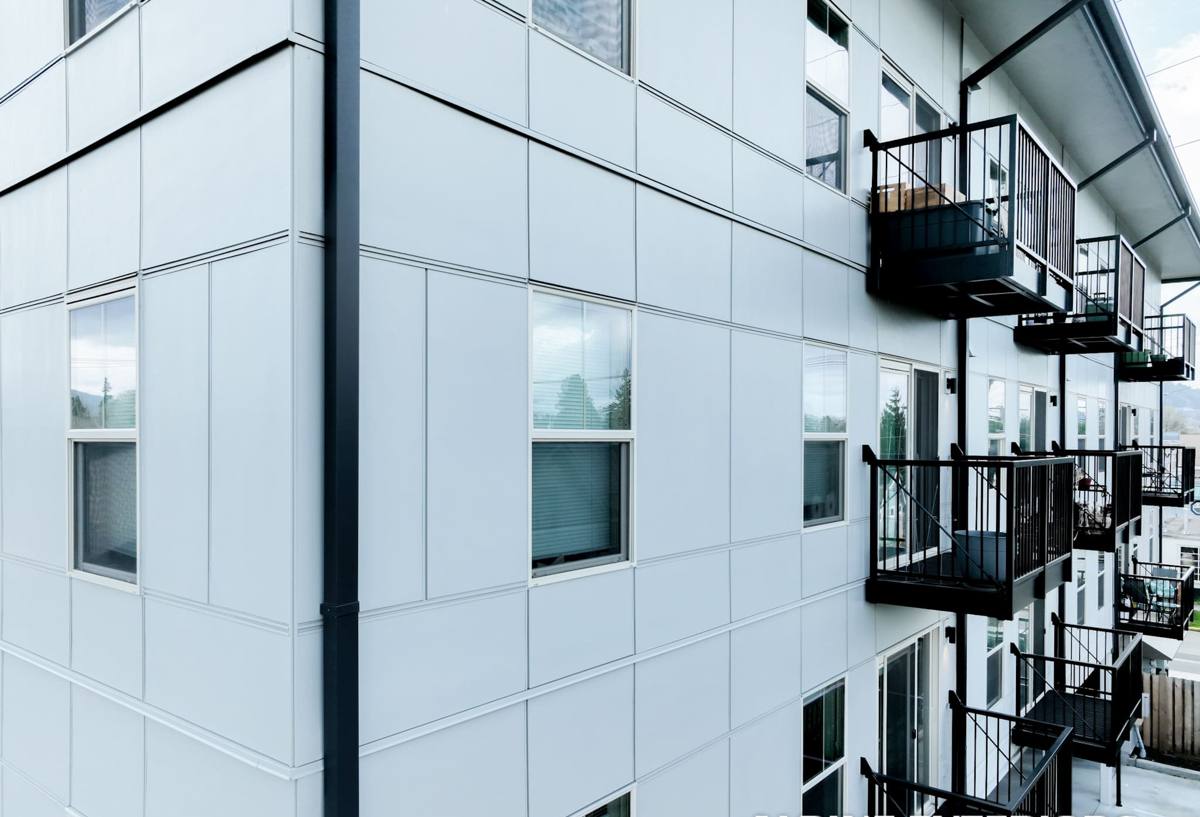
What Edison's Climate Does to Siding Over Time
Salt Air
Airborne salt from the bay doesn't just sit on the surface — over years it works into fasteners, trim seams, and any exposed cut edge of siding material. Untreated or under-finished materials can chalk, pit, or corrode faster near Edison than they would twenty miles inland. Fastener choice and factory finish quality matter more here than in a dry-side climate.
Driving Rain
Rain that falls straight down is manageable for almost any siding. Rain that's pushed sideways by wind off open water finds every gap in flashing, every short lap, and every place where house wrap wasn't properly integrated with window and door openings. Edison's exposure to wind off the flats means water management behind the siding is not optional — it's the difference between a 30-year siding job and a 10-year one.
Extended Moss Season
Moss needs shade and sustained moisture, and Edison's tree cover, low elevation, and marine humidity supply both for most of the year. Moss holds water against whatever it's growing on. On wood-based products that moisture eventually reaches fibers that swell, rot, or delaminate. On siding without a proper drainage gap, trapped moisture behind the moss has nowhere to go but into the wall assembly.
What Correct Siding Installation Actually Involves
Siding is a system, not a single layer. The visible board is the last piece installed and the first thing anyone notices, but the parts nobody sees are what actually keep a home dry.
Water-Resistive Barrier and Drainage
Every installation starts with a continuous water-resistive barrier (house wrap or equivalent) installed shingle-style so water always drains outward and downward, never into a seam. In a climate like Edison's, we build in a drainage gap behind the siding so any moisture that does get past the cladding has a clear path down and out instead of sitting against the wall sheathing.
Flashing at Every Penetration
Windows, doors, hose bibs, vents, and light fixtures are the most common points of water entry on any home. Correct flashing — installed in the right order, lapped correctly, and sealed with compatible materials — is what stops wind-driven rain from tracking backward through these penetrations. This is detail work that takes time, and it's the step most often shortchanged on rushed jobs.
Fastening and Clearances
James Hardie siding has specific fastener spacing, embedment depth, and clearance requirements from grade, roofing, and decks. Getting these wrong doesn't show up immediately — it shows up as cracking, popped nails, or moisture intrusion two or three winters later. We follow manufacturer fastening schedules exactly, not "close enough."
Proper Caulking and Paint Lines
Factory-primed cut edges get sealed in the field. Butt joints get caulked with a product rated for the exposure. Bottom edges are kept clear of soil, mulch, and hardscape so the siding isn't sitting in a wet environment against grade. Small details, but they're the difference between siding that ages evenly and siding that shows moisture staining within a few years.
Comparing Siding Options for an Edison Property
Homeowners in Edison ask us about several materials before deciding, so here's an honest comparison focused specifically on salt air, wind-driven rain, and moss exposure.
| Material | Salt Air Behavior | Wind-Driven Rain Behavior | Moss/Moisture Behavior |
|---|---|---|---|
| Vinyl siding | Doesn't corrode, but can fade and become brittle with UV and temperature swings over time | Panels can flex and allow water behind them at seams; relies heavily on correct overlap and drainage | Moss grows on the surface easily in shaded spots; doesn't rot but traps grime |
| Cedar siding | Naturally rot-resistant species, but finish and fasteners still face salt exposure | Performs well when detailed and finished correctly, but is unforgiving of gaps | Moss retains moisture against wood fibers; requires diligent maintenance to prevent decay |
| Primed spruce/wood composite | Finish quality is critical; any breach exposes wood substrate to salt-laden moisture | Swelling and edge failure common if water reaches unsealed cut ends | High risk — wood-based cores are vulnerable to sustained moss contact |
| LP SmartSide (engineered wood) | Factory treatment helps, but any coating breach exposes a wood-strand substrate | Performs adequately with correct installation; edge sealing is essential | Wood-strand core can swell or delaminate if moss holds moisture at seams long-term |
| James Hardie fiber cement | Fiber cement core does not corrode or feed on moisture; ColorPlus finish is engineered for UV and marine exposure | Dense, dimensionally stable material holds tight tolerances at laps and joints | Non-organic core means moss sitting on the surface isn't feeding on the material itself |
Why We Install James Hardie Only
We don't install vinyl, LP SmartSide, Cemplank, Allura, primed spruce, or cedar on the homes we work on — not because those products can't be installed correctly, but because we've made a professional decision to standardize on one system we can stand behind fully, in this exact climate.
The Core Material
James Hardie siding is fiber cement — a mix of cellulose fiber, sand, and cement. It's non-combustible, which matters for wildfire-adjacent risk in dry summer months, and it doesn't have an organic wood core that can rot, swell, or feed insects the way wood-based products can.
ColorPlus Factory Finish
Rather than field-painting siding after installation, Hardie's ColorPlus finish is baked on at the factory in a controlled environment, which gives more consistent, durable color adhesion than most job-site paint applications — a real advantage against Edison's UV and salt exposure.
Climate-Engineered HZ Product Lines
Hardie manufactures HZ5 product formulated for wetter, colder climate zones like the Pacific Northwest, engineered specifically to handle sustained moisture exposure rather than a one-size-fits-all national spec.
Warranty Structure
James Hardie backs its siding with a transferable limited warranty, which matters to Edison homeowners who may sell in the years ahead — a strong, well-documented warranty is a selling point, not just a hedge.
Our Installation Process for Edison Homes
- On-site assessment — we inspect existing siding, sheathing condition, and any moisture or moss damage before quoting anything.
- Tear-off and sheathing check — old siding comes off and we inspect the wall assembly underneath for rot or damage that needs addressing before new siding goes on.
- Water-resistive barrier and drainage gap installation — installed continuously and integrated with window and door flashing.
- Flashing at every penetration — windows, doors, vents, and fixtures get properly lapped, sealed flashing before siding installation begins.
- James Hardie panel or lap installation — fastened to manufacturer spec with correct spacing, embedment, and clearances from grade and roofing.
- Trim, caulking, and edge sealing — all cut edges sealed, joints caulked with an exposure-rated product.
- Final walk-through — we review the completed work with the homeowner before calling the job done.
Signs an Edison Home May Need New Siding
- Persistent moss or algae growth that returns quickly after cleaning
- Visible warping, buckling, or soft spots when pressed
- Paint that's peeling, bubbling, or failing faster than a normal repaint cycle
- Water staining or discoloration near seams, corners, or beneath windows
- Gaps opening at butt joints or trim where caulking has failed
- A musty smell or visible moisture damage on interior walls that back onto exterior siding
- Siding that's original to a home built more than 20-25 years ago and has never been replaced
Maintenance in a Salt Air and Moss Climate
Even the right material benefits from basic upkeep in Edison's environment. A yearly rinse to remove salt residue and moss spores, especially on north- and west-facing walls that stay shaded and damp longest, keeps growth from establishing. Trimming back vegetation that shades siding and keeps airflow blocked reduces moss pressure significantly. Caulking should be checked every few years, since UV and temperature cycling eventually break down even good sealants. None of this is heavy labor — it's the kind of light, regular attention that keeps a correctly installed siding system performing for its full lifespan instead of needing early intervention.
Why Local Experience in Edison and Skagit County Matters
Installing siding correctly requires knowing the specific conditions a home will face, not just following a generic spec sheet. A crew that regularly works Edison and the surrounding Skagit County shoreline communities already understands where wind-driven rain hits hardest on a given lot orientation, which sides of a house hold moss longest, and how salt exposure differs even within a few miles depending on proximity to open water. That local pattern recognition shapes real decisions — where extra flashing attention goes, which drainage details get emphasized, how a job gets sequenced around the region's wetter months. It's not a substitute for following manufacturer installation specs correctly; it's what makes sure those specs get applied to the actual risks a specific home faces.
What a Cost Estimate Depends On
Every siding job is priced around the specifics of the home, but the same handful of factors drive most of the variation we see on Edison properties.
| Factor | Why It Matters |
|---|---|
| Home size and wall complexity | More corners, gables, and dormers mean more cutting, flashing, and labor time |
| Condition of existing sheathing | Rot or moisture damage found during tear-off requires repair before new siding goes on |
| Siding profile chosen | Lap siding, panel systems, and shingle-style Hardie products differ in material and labor cost |
| Access and site conditions | Tight lot lines, landscaping, or multi-story sections affect staging and labor time |
| Trim and detail work | Window and door surrounds, corner boards, and fascia detailing add time and material |
We walk every property in person before quoting, because none of these factors can be accurately judged from a photo or a phone call — especially when the goal is a job that holds up to Edison's specific weather, not a generic estimate.
If your Edison home's siding is showing its age, or you're planning ahead of a Skagit County winter, we're happy to take a look and give you a straightforward, no-pressure estimate — just fill out the form below.