 Skagit County
 "Energy-efficient" gets printed on the label of almost every window sold today, which makes it a nearly meaningless word unless you know what's actually behind it. For a Big Lake homeowner, the real question isn't whether a window is labeled efficient — it's whether it's rated correctly for a shaded, moisture-heavy, lake-adjacent property, and whether it's installed in a way that actually delivers on that rating. A window with excellent published numbers that's installed with a gap in the flashing or a poorly sealed rough opening will underperform an honest, mid-range window installed correctly. Both the product and the install have to be right.
What "Energy-Efficient" Actually Means for a Big Lake Window
Every window sold in the U.S. carries performance ratings set by the National Fenestration Rating Council (NFRC), printed on a sticker most homeowners never read past the price tag. The two that matter most here are U-factor, which measures how well the window resists heat flow — lower is better — and Solar Heat Gain Coefficient (SHGC), which measures how much solar heat passes through the glass. Air leakage rating matters too, though it gets less attention than the other two. Together, these numbers tell you far more about how a window will actually perform on your house than the marketing copy on the box.
In a climate like ours, U-factor tends to matter more than SHGC for most of the year, since heat loss through the glass and frame in a cool, damp climate is a bigger year-round issue than solar overheating. That said, a west- or south-facing wall with more open sky exposure can still benefit from managing solar gain, so the right balance depends on which direction the wall faces and how much shade the lot already provides — something we assess room by room rather than applying one blanket recommendation to the whole house.
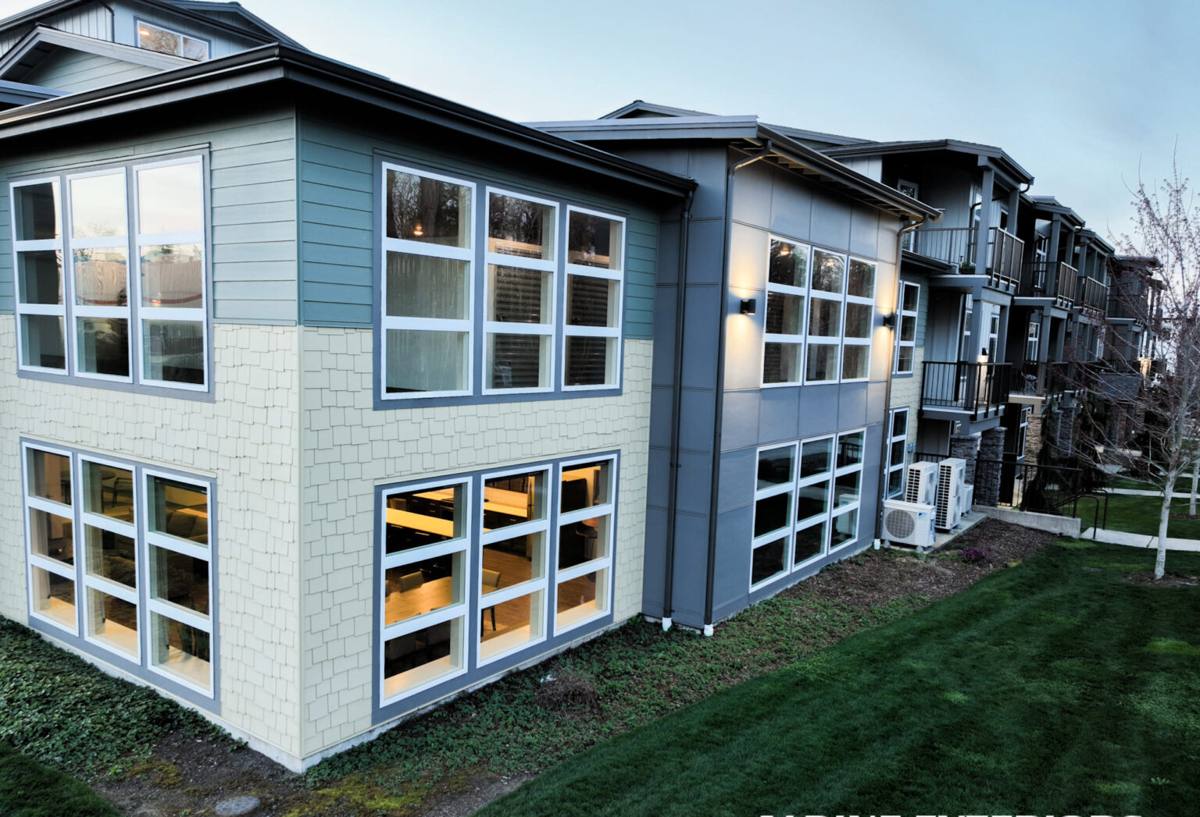
Why Big Lake's Setting Puts Extra Demands on Windows
Shade, Moisture, and a Long Wet Season
Big Lake sits inland from Skagit County's saltwater shoreline, but it shares the same marine-influenced weather pattern that brings driving rain and a long stretch of overcast, damp months to the whole region. Add the tree cover and lakeside humidity common on properties around the lake, and you get conditions that keep siding, trim, and window sills wetter for longer than a drier inland location would see. Homes tucked under fir and cedar canopy, or sitting close to the water, deal with a moss and mildew season that can run most of the year in shaded corners — and that moisture doesn't stay on the surface. It works into any gap in a window's flashing or sealant over time.
Where Heat and Moisture Actually Escape
On an older or poorly installed window, the glass itself is rarely the weak point. Heat and moisture typically find their way in and out through the frame-to-wall junction, worn weatherstripping, degraded sealant at the sill, and gaps behind the trim that never get inspected because they're hidden. An energy-efficient glass package installed into an opening with any of those problems will still leak air and let moisture track in — which is why we treat the opening and the flashing as being just as important to efficiency as the glass rating itself.
The Ratings That Actually Matter Here
| Rating | What It Measures | Why It Matters for Big Lake |
|---|---|---|
| U-factor | How well the window resists heat transfer through glass and frame | The biggest driver of comfort and heating cost in our cool, overcast climate — lower is better year-round |
| Solar Heat Gain Coefficient (SHGC) | How much solar heat passes through the glass | Matters most on more open, sun-exposed walls; less critical on heavily shaded or tree-covered elevations |
| Air Leakage (AL) | How much air passes through the window assembly | Directly tied to drafts and moisture intrusion — a low rating on paper doesn't help if the install leaks air anyway |
| Condensation Resistance | How well the window resists interior condensation forming | Relevant in our humid, cool months where indoor-outdoor temperature swings can fog or sweat poorly rated glass |
We walk homeowners through these numbers on the specific units we're proposing rather than pointing at a generic brochure, because the right balance shifts depending on which wall of the house you're replacing and how much natural shade that wall already has.
Frame and Glass Options for Big Lake Homes
Frame Materials
Frame material affects both energy performance and how much upkeep the window needs in a damp climate. Vinyl frames are a common, cost-effective choice with good insulating properties and low maintenance. Fiberglass frames cost more but hold their shape and seal integrity longer under repeated wet-dry cycling, which matters on a shaded, moisture-prone property. Wood frames offer a traditional look and can perform well, but they demand more consistent maintenance to keep moisture from working into the frame over years of exposure to our wet season — a trade-off worth discussing honestly rather than glossing over, especially on a heavily shaded lot near the lake.
Glass Packages
Double-pane glass with a low-emissivity (low-E) coating is the standard baseline for energy-efficient replacement today, and it's a meaningful upgrade over older single-pane or early-generation double-pane units. Triple-pane glass adds another layer of insulating air (or gas-filled) space and can make sense on north-facing walls, rooms with high heating demand, or homes where noise from wind and rain is also a concern — though it adds cost and weight, which affects frame and hardware requirements. Argon or krypton gas fills between panes, along with warm-edge spacers instead of older metal spacers, both improve insulating performance modestly and are standard on most quality energy-efficient units today.
What a Correct Energy-Efficient Installation Involves
Assessment and Opening Prep
Before any window comes out, we check the existing opening for rot, old flashing failures, and out-of-square framing — all more common finds on lakeside or heavily shaded properties where moisture has had more opportunity to work into the wall assembly over time. Any of that gets addressed before a new window goes in, not discovered after the fact.
Removal Without Collateral Damage
Old units come out carefully to avoid damaging the surrounding siding, trim, or sheathing, since a rushed removal often creates new repair work that didn't need to happen.
Flashing and Sealing
This is the step where a window's on-paper performance either holds up or falls apart. We flash and seal the opening in a sequence that sheds water outward and downward — never relying on caulk alone to do a flashing detail's job. In a climate that sees sustained wet weather for a large part of the year, a sealant-only shortcut is one of the fastest ways to end up with hidden rot behind a window that looks fine from the outside.
Setting, Shimming, and Insulating
The window gets set level and square, shimmed correctly so the frame isn't under stress that can throw off its seal over time, and the gap between the frame and the rough opening is properly insulated — not overpacked with expanding foam, which can bow the frame and affect how well the window operates.
Trim and Final Weatherproofing
Exterior trim is reinstalled or replaced to match the surrounding siding, with final sealant details finished so the whole assembly sheds water as one continuous system rather than a patchwork of separate parts.
Our Process, Start to Finish
- On-site assessment — we inspect existing windows, openings, and any signs of moisture or rot specific to your property's shade and exposure
- Honest recommendation — frame material, glass package, and U-factor/SHGC balance suited to each wall's orientation, not a one-size answer for the whole house
- Written estimate — clear pricing and a realistic timeline before you commit to anything
- Removal and opening prep — old units come out carefully, and any hidden rot or flashing issues get corrected first
- Installation — new units are set, shimmed, insulated, and flashed to shed water correctly
- Trim and finish — exterior trim matched to the rest of the house, with final weatherproofing completed
Costs and Trade-Offs
We won't give you a number without seeing the house, but the factors that consistently move price on a Big Lake window project are the same ones worth understanding before you start shopping.
| Factor | Why It Matters |
|---|---|
| Frame material | Vinyl is typically the most budget-friendly; fiberglass costs more but holds up longer under repeated wet-dry cycling |
| Glass package | Double-pane low-E is the standard baseline; triple-pane adds cost but can be worth it on high-exposure or noise-sensitive walls |
| Number of units | A full-house replacement typically has better per-window economics than piecemeal single swaps |
| Opening condition | Rot or old flashing failures found during removal add repair work before the new window can go in |
| Size and configuration | Larger units, or operable styles like casements with more hardware, cost more than a standard fixed or double-hung unit |
| Site access | Second-story or hard-to-reach windows on sloped, wooded lots near the lake can add labor time |
A Practical Checklist Before You Hire
- Ask to see the NFRC label or documented U-factor and SHGC for the specific product being quoted, not a generic brand claim
- Confirm whether the estimate includes full flashing and sealing work, or just the window unit and basic install
- Ask how they handle a rotted or out-of-square opening if one turns up during removal
- Get a written warranty that spells out what's covered on the product versus the installation labor
- Ask about lead time for the specific frame material and glass package you're choosing
- Confirm how they'll match trim and finish to the rest of your home's exterior
Why Local Experience with Big Lake Homes Matters
Manufacturer installation guides are written for average conditions, not for a shaded, lake-adjacent lot in Skagit County where a wall can stay damp for days after a storm and moss can hold moisture against a sill far longer than in a drier setting. A crew that has actually installed windows on homes around Big Lake knows which openings tend to have hidden rot before they even open them up, understands how much extra attention flashing needs on a heavily shaded elevation, and doesn't treat this climate's demands as an afterthought. That experience shows up in the details that don't make it into a sales pitch — how much lap a flashing course gets at a sill, when foam insulation is too much versus too little, which walls on a lake-facing home need the most conservative approach to water management.
It also means a more realistic conversation from the start. We'll tell you honestly if a particular frame material or glass package isn't the right fit for a specific wall's exposure, rather than defaulting to whatever's easiest to sell. That kind of straight talk is worth more over the life of the window than a slightly lower quote up front.
Ready When You Are
If your windows are drafty, fogging between the panes, or just old enough that you're not sure what's really behind the glass, it's worth having someone look at the actual openings before you start comparing quotes. We offer free, no-pressure estimates for energy-efficient window replacement in Big Lake and the surrounding Skagit County area — use the form below to get a time on the schedule.