 Skagit County
 Burlington Windows Face a Different Climate Than the Sales Brochures Assume
Most window marketing is written for a generic American house — dry summers, mild winters, occasional rain. That's not Burlington. Sitting near Padilla Bay in Skagit County, homes here deal with salt-laden air moving in off the water, long stretches of driving rain that hits siding and glazing sideways rather than straight down, and a moss season that can run eight months out of the year on anything that stays damp and shaded. Windows that look fine on paper can still underperform here if they weren't specified and installed with this climate in mind.
Energy efficiency in Burlington isn't just about a lower heating bill, though that matters. It's about whether the window keeps performing after five winters of coastal weather — whether the seals hold, whether condensation stays under control, and whether the frame resists the kind of slow moisture and salt exposure that shortens the life of lesser products. A window that's efficient on day one but degrades by year six isn't actually efficient.
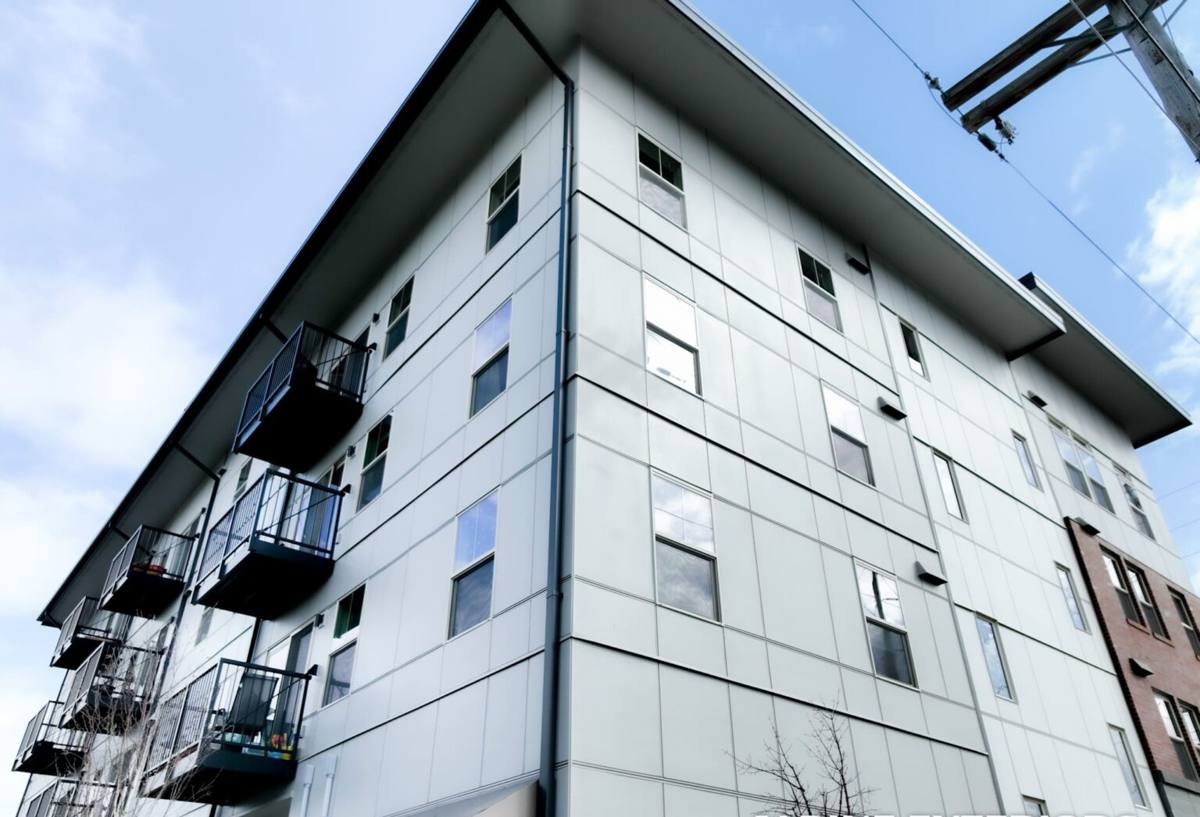
What "Energy-Efficient" Actually Means for a Skagit County Home
Efficiency ratings are only useful if they're matched to the right conditions. For Burlington, we care about three numbers on the label most homeowners have never been walked through:
- U-factor — how well the window resists heat transfer. Lower is better, and it matters more here than in drier climates because temperature swings combine with moisture to stress a poorly insulated frame.
- Solar Heat Gain Coefficient (SHGC) — how much solar heat passes through the glass. Western Washington doesn't need aggressive heat rejection like a desert climate does, but the wrong SHGC can still mean cold, clammy rooms in winter or overheated afternoon sun on south and west exposures.
- Air infiltration rating — how much air leaks around the sash even when it's closed and locked. In a region with sustained wind-driven rain, a poor air-infiltration rating usually means a poor water-infiltration rating too. The two go hand in hand.
We size these numbers to the specific wall of the house, not just the house in general. A north-facing window catching prevailing weather off the bay needs a different balance than a sheltered window on a covered porch elevation.
Glass Packages Worth Discussing
Double-pane, low-E, argon-filled glass is the practical baseline for this climate — it's a meaningful step up from older single-pane or basic double-pane units without pushing the budget into triple-pane territory, which is rarely necessary at Skagit County's coastal, temperate elevation. Triple-pane can make sense on a home with unusual noise exposure or a north wall that never sees sun, but for most Burlington homes it adds cost without a proportional return.
Frame Materials: What Actually Holds Up to Salt Air and Driving Rain
Frame material selection matters more in a marine-influenced climate than almost anywhere else, because salt air accelerates corrosion and moss thrives on any surface that stays damp. Here's how the common options compare for a Burlington installation specifically.
| Frame Material | Salt Air / Moisture Behavior | Maintenance Burden | Our Take for Burlington |
|---|---|---|---|
| Vinyl (quality, welded corners) | Doesn't corrode; won't rot; handles sustained moisture well | Low — occasional cleaning | Strong default choice for most homes |
| Fiberglass | Excellent dimensional stability in temperature and moisture swings | Low | Good upgrade where budget allows, especially larger openings |
| Wood (clad or unclad) | Vulnerable to moisture intrusion at joints and sills without diligent upkeep | High — regular refinishing and sealant checks | We install it when a homeowner wants the look, but we're upfront about the maintenance schedule this climate demands |
| Aluminum | Conducts heat and cold readily; can pit over time near salt air without a quality finish | Moderate | Rarely our first recommendation for this region's efficiency goals |
None of these are "bad" products in the abstract — each has a place. Our job is matching the frame to Burlington's specific combination of salt exposure, rain volume, and moss pressure, and being honest about what upkeep each choice actually requires once it's installed.
Signs Your Current Windows Are Already Costing You
Homeowners often assume a window is "fine" as long as it opens and closes. In this climate, a window can be failing quietly for years before it's obvious. Worth checking for:
- Fogging or a hazy film between the panes — the seal has failed and the insulating gas is gone
- Visible moss or dark streaking building up on the sill or frame exterior
- Soft or discolored wood or trim around the window opening
- A noticeable draft when standing near the window on a windy day
- Condensation forming on the inside of the glass regularly in cooler months
- Difficulty opening, closing, or locking the sash — frames can swell or warp with moisture cycling
- Rooms near the window that feel noticeably colder or hotter than the rest of the house
Any one of these on its own isn't necessarily urgent. Several together, especially on a wall exposed to prevailing weather, usually means the window is past the point where efficiency upgrades alone will fix it.
The Installation Details That Matter More Than the Window Itself
A high-performance window installed poorly will underperform a modest window installed correctly — this is especially true here, where wind-driven rain finds any gap in the flashing and moss takes hold wherever water is allowed to sit. The parts of the job that actually determine long-term performance rarely show up in a sales pitch:
Flashing and Water Management
Every opening needs proper flashing integration with the existing wall system — sill pan flashing, correctly lapped house wrap, and a drainage path for any water that does get past the exterior cladding. This is the single most common point of failure we find when replacing older windows in Skagit County homes, and it has nothing to do with the window brand.
Air Sealing and Insulation
The gap between the window frame and the rough opening needs to be sealed and insulated correctly — not just caulked on the outside and called done. Gaps left loosely filled or overstuffed with the wrong material both hurt efficiency and give moisture a place to collect.
Fastening and Structural Fit
Windows need to be plumb, level, and square before they're fastened, with shims placed to manufacturer spec so the frame doesn't rack over time. A slightly out-of-square install is often the real reason a "good" window starts leaking air or water within a few years.
Our Process for a Burlington Window Replacement
- On-site assessment — we look at each opening individually, not just the house as a whole. Sun exposure, wind exposure, existing moisture damage, and current frame condition all factor into what we recommend.
- Product selection — we walk through frame material, glass package, and hardware options based on that specific assessment, with honest trade-offs on cost and maintenance for each.
- Removal and inspection — once the old window is out, we inspect the rough opening and sheathing for hidden moisture damage before anything new goes in. This is often the point where a homeowner learns about an issue that had been hidden behind trim for years.
- Flashing and air sealing — done to a consistent standard on every opening, not just the ones that are easy to reach.
- Installation and finish work — window set, fastened, insulated, and trimmed out to match the home's existing interior and exterior finishes as closely as practical.
- Final walkthrough — operation, locking, and seals checked with the homeowner before we consider the job done.
Why a Crew That Already Works Burlington Matters
Window installation isn't identical from region to region. A crew that mostly works inland or in drier climates may not think twice about flashing details that are non-negotiable here, because they've never had to answer for a leak during a real Skagit County storm. Working Burlington and the surrounding area regularly means we've already seen how local homes — their siding types, their wall assemblies, their sun and wind exposures — actually behave over time, not just how they're supposed to behave on a spec sheet.
It also means we're not guessing at permitting expectations or typical construction in the area. Familiarity with the housing stock in and around Burlington lets us flag issues — old flashing, prior water damage, non-standard rough openings — before they turn into surprises mid-project.
Living With Your New Windows: Moss Season and Ongoing Care
Even a well-installed, quality window benefits from a little seasonal attention in this climate. Keeping weep holes clear so water can drain out of the frame, rinsing salt residue off exterior surfaces near the coast periodically, and keeping an eye on caulking at the trim joints will extend the life of any window system. None of this is heavy maintenance — it's the kind of thing that takes a few minutes a couple of times a year and prevents the slow moss and moisture buildup that shortens the life of a poorly maintained window.
If you're weighing whether it's time to replace aging windows, or you just want a straight answer on what a correct installation looks like for your specific home, we're happy to take a look. Reach out for a free, no-pressure estimate — we'll walk the exterior with you, check your current windows, and give you an honest read on what your home actually needs.