 Skagit County
 Fiber Cement Siding in Avon: Why the Climate Demands the Right Product
Avon sits in the flat, low-lying delta country of the Skagit Valley, close enough to Padilla Bay and the Salish Sea that salt-laden air is a fact of life, not an occasional nuisance. Add in Skagit County's driving winter rain and a moss season that can stretch from October into April, and you have a climate that is genuinely hard on exterior building materials. Siding here doesn't just need to look good on installation day — it needs to hold up through decades of damp, salty, shaded conditions without rotting, delaminating, or feeding a constant moss and algae problem.
This page is about one thing: fiber cement siding, installed correctly, on homes in Avon. We'll walk through what the local climate actually does to siding, what a correct fiber cement installation involves, how our process works on Avon projects, and why we standardized on James Hardie specifically rather than treating "fiber cement" as a generic category.
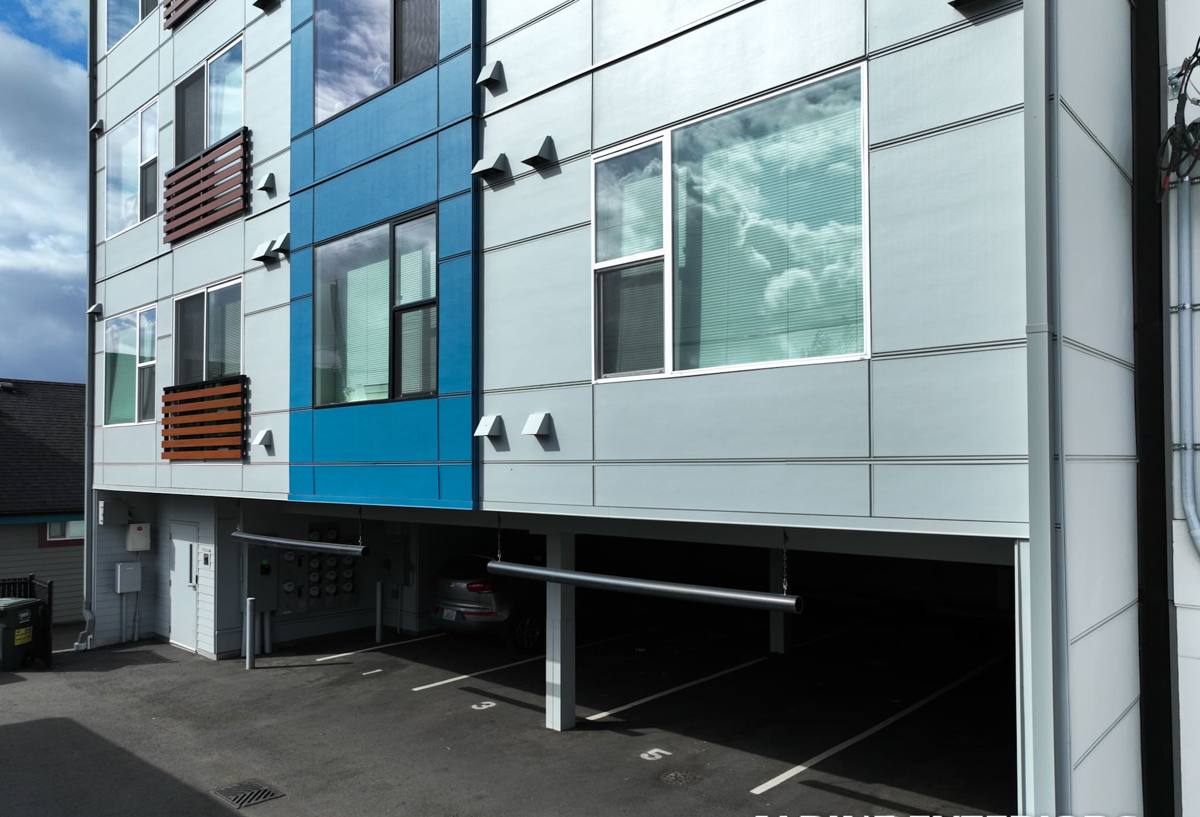
The Skagit Valley Climate Challenge
Salt Air and Driving Rain
Homes closer to Padilla Bay and the broader Salish Sound get a steady, low-grade dose of salt air carried in on marine winds. Salt is corrosive to fasteners and hard on paint films, and combined with wind-driven rain off the water, it accelerates wear on any siding product that isn't built to handle sustained moisture exposure. Wood-based products absorb that moisture; the wrong fastener corrodes; a factory finish that isn't formulated for coastal exposure chalks and fades faster than it should.
A Long Moss Season
The Skagit Valley's mix of marine humidity, mild temperatures, and heavy tree cover on many Avon-area lots creates ideal conditions for moss and algae growth on north-facing and shaded walls. Moss holds moisture against the siding surface for extended periods, which is a problem for any material that can absorb water or that has seams and edges where trapped moisture can work its way in. The siding itself needs to resist that moisture, and the installation details — flashing, clearances, drainage — need to give water somewhere to go instead of somewhere to sit.
Why We Only Install James Hardie Fiber Cement
"Fiber cement" describes a category of products, not a single brand, and the differences between brands matter more than most homeowners realize. We install James Hardie exclusively — not LP SmartSide, not vinyl, not Cemplank, not Allura, not primed wood species. Here's the honest reasoning behind that decision, specifically as it relates to conditions like Avon's.
Non-Combustible Core
James Hardie siding is made from cement, sand, and cellulose fiber, which means it doesn't burn, rot, or provide a food source for insects. That's a material-level advantage that has nothing to do with brand marketing — it's the physical composition of the product.
Engineered for Coastal and Marine Exposure
Hardie manufactures regional product lines engineered for specific climate zones, and their HZ5 formulation is built for areas that see the kind of cold, wet, marine-influenced weather common throughout Western Washington. That's a meaningful distinction from a generic fiber cement board — it's a product formulated with moisture cycling and coastal exposure in mind, which lines up directly with what a home in Avon deals with every winter.
ColorPlus Factory Finish
Rather than relying on field-applied paint, Hardie's ColorPlus finish is baked on at the factory under controlled conditions, which produces a more consistent, more UV- and fade-resistant finish than most job-site paint jobs can match. In a location with salt air and constant marine moisture working against a painted finish, that factory-cured consistency matters more than it would in a drier inland climate. It also comes with a stronger, better-defined warranty structure than most field-painted alternatives, which we consider a meaningful factor when a homeowner is investing in siding meant to last decades.
We won't pretend other fiber cement products are unusable — some are reasonable materials. But when we evaluated the trade-offs in maintenance burden, moisture performance, finish durability, and warranty backing for the climate we actually work in, James Hardie was the product we were willing to put our name behind. That's a professional standard, not a knock on every competing product.
What a Correct Fiber Cement Installation Involves
Fiber cement siding performs exactly as well as its installation, and no better. A quality board installed with the wrong details will fail in the same ways a cheap product would — trapped moisture, cracked caulk lines, corroded fasteners, and premature paint failure. Here's what we consider non-negotiable on every job, including every Avon project:
| Installation Detail | Why It Matters in Avon's Climate |
|---|---|
| Correct starter strip and clearance from grade/decks | Keeps the bottom edge of the siding away from standing water and splash-back common in a wet climate |
| Proper flashing at windows, doors, and penetrations | Directs driving rain away from the wall assembly instead of behind the siding |
| Corrosion-resistant fasteners, correctly spaced and set | Salt air accelerates corrosion on the wrong fastener type, leading to streaking and loosened boards |
| Manufacturer-specified caulking at joints and seams | Poor caulking is one of the most common ways moisture gets behind fiber cement siding |
| Rainscreen or drainage gap where appropriate | Gives incidental moisture a path to drain and dry instead of sitting against the wall |
| Factory-primed/ColorPlus edges sealed per spec | Cut edges are the most vulnerable point on any fiber cement board if left unsealed |
None of these details are exotic — they're all published in the manufacturer's installation requirements. The issue in the field is that skipping them doesn't show up on day one. It shows up two, five, or ten years later, which is exactly why installation quality matters as much as the product choice itself.
Our Process for Avon Projects
Every Avon home is a little different — some sit close to the water and tree line with heavy moss exposure, others are more open and exposed to wind-driven rain. Our process is built to account for that rather than treat every job the same way.
- On-site assessment — we look at the existing siding condition, wall assembly, moisture damage (if any), and exposure factors specific to the lot, including tree cover and proximity to water.
- Tear-off vs. overlay evaluation — we determine whether the existing sheathing and moisture barrier are sound enough to build on, or whether a full tear-off is the right call given what we find.
- Moisture barrier and flashing plan — before any siding goes up, we plan out flashing details at every window, door, and penetration point.
- Installation to manufacturer spec — fastening, clearances, caulking, and finish detailing done to James Hardie's published requirements, not shortcuts.
- Final walkthrough — we inspect the finished job with the homeowner before considering the project complete.
Cost Factors for Fiber Cement Siding in Avon
Every home and project scope is different, so we won't quote a fake number here — but these are the real factors that move the price on a fiber cement siding job in this area:
| Factor | Why It Affects Cost |
|---|---|
| Tear-off vs. overlay | Full removal of old siding adds labor and disposal cost but may be necessary if sheathing is damaged |
| Home size and wall complexity | More corners, dormers, and trim details mean more cutting, fitting, and flashing work |
| Existing moisture or rot damage | Damaged sheathing found during tear-off needs to be repaired before new siding goes on |
| Siding profile and color selection | Lap width, texture, and ColorPlus color options carry different material costs |
| Access and site conditions | Tree cover, tight lot lines, and difficult access can add labor time |
Maintenance Your Siding Will Actually Need Here
Correctly installed James Hardie siding is low-maintenance, but "low" doesn't mean "none" — especially in a climate that grows moss on north-facing walls and carries salt air off the water. A short, realistic maintenance routine goes a long way:
- Rinse siding periodically to clear salt residue and airborne grime, especially on walls facing prevailing marine winds
- Keep an eye on shaded, tree-covered walls for early moss or algae growth and address it before it spreads
- Trim back vegetation and tree limbs that keep siding shaded and damp longer than necessary
- Inspect caulking at trim, windows, and joints every year or two and re-caulk where it has cracked or pulled away
- Check that gutters and downspouts are directing water away from siding, not spilling onto it
Why Hire a Crew That Already Works in Avon
Siding contractors who only occasionally work this far into the Skagit Valley delta don't always account for the specific combination of salt exposure, tree cover, and heavy winter rain that Avon homes face. A crew that regularly works this area understands which walls need extra attention to flashing and drainage, how local permitting and inspection processes work, and what moisture problems actually show up in this specific stretch of the county — not just generic Pacific Northwest siding advice. That local familiarity shows up in the details: where we pay closer attention to caulking, how we plan drainage on shaded walls, and how we set expectations for maintenance based on what actually happens to siding here, not in a drier or less exposed part of the state.
If you're considering fiber cement siding for a home in Avon, we're happy to take a look and give you a straightforward, no-pressure estimate — no invented urgency, just an honest read on your home's condition and what it needs.