 Skagit County
 Hamilton's Roofing Challenge: Moisture, Shade, and a Long Wet Season
Homes around Hamilton sit in one of the wetter, more shaded pockets of Skagit County. Weather systems move in off the water and push rain up the valley for months at a time, and the tree cover that makes this part of the county so pleasant to live in also means roofs here dry out slower than roofs on an open, sunny lot. That combination of driving rain, salt-tinged coastal air working its way inland, and long stretches of shade adds up to a roofing environment that is genuinely harder on asphalt shingles than what you'd find in a drier region. A shingle roof that's a good fit for eastern Washington isn't automatically a good fit for Hamilton.
None of this means asphalt shingles are the wrong choice — they're still the most practical, cost-effective roofing material for the vast majority of homes here. It means the installation details matter more. A roof that's slightly undersealed or under-ventilated in a dry climate might last for years without an obvious problem. The same shortcuts in Hamilton's climate show up faster, usually as moss, soft decking, or leaks at the valleys and penetrations.
Why Moss Takes Hold Here
Moss needs shade, moisture, and something to grip onto, and a lot of Hamilton roofs offer all three. North-facing slopes and roof planes shaded by mature trees stay damp long after the rest of the roof has dried, which gives moss spores time to establish. Once moss gets a foothold, it works itself under shingle tabs, lifts the edges, and holds water against the granule surface. That trapped moisture is what actually shortens shingle life — the moss itself is mostly a symptom of a roof that isn't shedding water and drying out the way it should.
Driving Rain and Wind-Driven Water
Skagit County's fall and winter storms don't just drop rain straight down — wind pushes it sideways, up under shingle tabs, and into any gap in the flashing that a calmer climate would never expose. Valleys, chimney flashing, and the transitions where a roof meets a wall are the spots that fail first when a roof was installed for average weather instead of Hamilton's weather. Correct lap, correct fastening, and a properly sealed underlayment system are what keep wind-driven rain out, and they're also the details that are easiest to shortcut if a crew is moving fast.
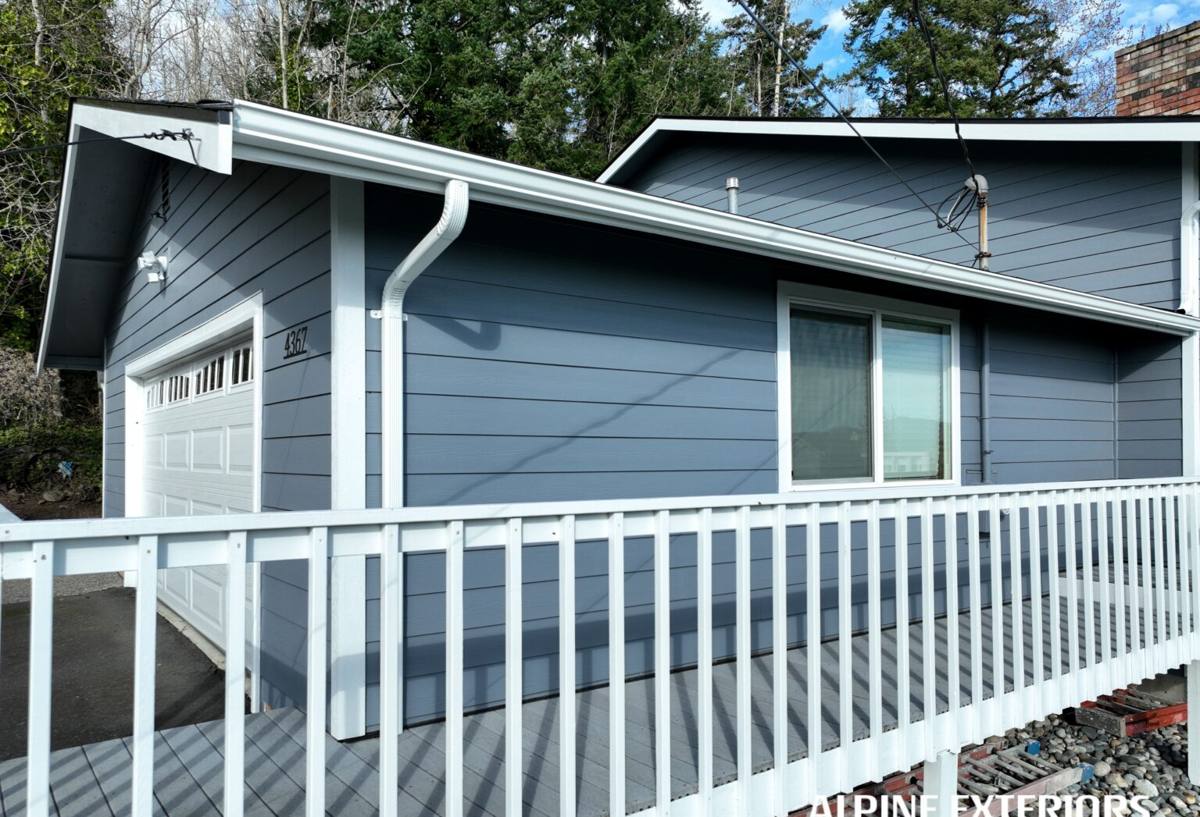
What a Correctly Installed Asphalt Shingle Roof Involves
An asphalt shingle roof is a system, not just a layer of shingles nailed to a deck. Every layer underneath the shingles is doing real work, and in a climate like this one, skipping or skimping on any of them is where problems start.
Underlayment and Ice-and-Water Protection
A synthetic underlayment goes down across the whole deck as the roof's backup barrier, but the eaves, valleys, and any roof penetrations — vent pipes, skylights, chimneys — get a self-adhering ice-and-water membrane on top of that. In a lot of the country that membrane is mainly about ice damming. Here, its real job is standing up to the wind-driven rain and standing water that collect in valleys and at the roof edge during a long winter storm. Skipping it, or using it only where code minimums require it, leaves the roof's weakest points under-protected.
Flashing Details That Get Skipped
Step flashing at walls, counter-flashing at chimneys, and properly formed valley metal are what actually stop water at the places a shingle can't cover by itself. It's common on older or lower-bid re-roofs to see flashing reused instead of replaced, or caulk used to patch a gap that should have been flashed correctly. Caulk fails; metal flashing installed correctly doesn't need to rely on caulk to do the work.
Attic and Roof Ventilation
A shingle roof needs to breathe from underneath. Balanced intake at the eaves and exhaust at the ridge keep the attic close to outdoor temperature and let moisture escape instead of condensing on the underside of the deck. Poor ventilation is one of the most common reasons a roof deck goes soft prematurely in a wet climate — the moisture problem isn't always coming from a leak, it's condensation building up in an attic that can't vent itself.
Choosing the Right Shingle for a Skagit County Home
Not all asphalt shingles are built the same, and in a climate that grows moss and algae readily, the tier of shingle you choose matters more here than it would in a drier region.
| Shingle Type | Typical Lifespan | Algae/Moss Resistance | Best Fit |
|---|---|---|---|
| 3-Tab | 15-20 years | Standard granules only | Budget re-roofs, secondary structures |
| Architectural / Dimensional | 25-30 years | Often available with algae-resistant granules | Most Hamilton homes — best balance of cost and durability |
| Premium / Designer | 30+ years | Algae-resistant granules standard | Steep-slope, highly visible roofs, or homeowners prioritizing longevity |
For most homes in this area, we point people toward an architectural shingle with algae-resistant (copper-infused) granules. The upgrade cost over a basic 3-tab is modest, and in a climate where shaded roof planes stay damp for weeks at a time, that resistance to algae and moss staining is worth more here than it would be somewhere drier.
Signs a Hamilton Roof Needs Repair or Replacement
Because moisture damage tends to build slowly, a lot of homeowners don't notice a shingle roof is failing until it's already leaking. Watch for:
- Granules collecting in gutters or at downspout outlets — a sign shingles are wearing thin
- Dark streaking or thick moss growth, especially on shaded or north-facing slopes
- Shingle tabs that are curling, cupping, or lifting at the edges
- Soft or spongy spots underfoot when a roof is walked (a sign of deck damage beneath)
- Daylight visible through the roof deck from inside the attic
- Water stains or discoloration on ceilings or in the attic, even faint ones
- A roof approaching or past 20-25 years old, regardless of visible damage
Any one of these on its own might just mean a repair. Several at once, or damage concentrated around valleys and penetrations, usually means it's worth having someone look at the whole roof rather than patching one spot.
Our Asphalt Shingle Roofing Process, Start to Finish
- Inspection and estimate. We look at the whole roof — deck condition, ventilation, flashing, and how the roof's exposure and tree cover affect it — and give a written estimate before any work starts.
- Tear-off. Old shingles, underlayment, and any failed flashing come off down to the deck. Roofing over an existing layer hides problems instead of fixing them, so we don't recommend it.
- Deck inspection and repair. Any soft, delaminated, or water-damaged sheathing is replaced before anything new goes down. This is the step that gets skipped when a bid seems too good to be true.
- Underlayment and ice-and-water membrane. Synthetic underlayment across the field, with self-adhering membrane at eaves, valleys, and all penetrations.
- Flashing. New step flashing, counter-flashing, valley metal, and drip edge — not reused from the old roof.
- Shingle installation. Starter strip, field shingles, and hip/ridge cap installed to the manufacturer's nailing pattern and exposure — not a shortcut pattern that voids the warranty.
- Ventilation. Ridge and intake ventilation checked and corrected as part of the job, not treated as an optional add-on.
- Cleanup and magnetic sweep. Debris hauled off and the property swept for stray nails before we consider the job done.
- Final walkthrough. We go over the finished roof with you before we call it complete.
Cost Factors for Asphalt Shingle Roofing in Hamilton
Every roof is different, so we don't quote a number without seeing the job, but these are the factors that move the price up or down:
| Factor | Why It Affects Cost |
|---|---|
| Roof size and number of planes | More square footage and more valleys/hips mean more material and labor |
| Roof pitch and access | Steep or hard-to-access roofs take longer and require more safety setup |
| Layers to tear off | Removing an existing roof (or two) adds labor and disposal cost |
| Deck condition | Rotten or delaminated sheathing found during tear-off requires repair before shingles go on |
| Shingle tier | 3-tab, architectural, and premium shingles carry different material costs |
| Ventilation upgrades | Adding or correcting ridge/intake venting is sometimes needed on older homes |
| Tree cover and site access | Heavily wooded lots can mean more setup, cleanup, and care around limbs and landscaping |
Keeping Moss and Algae From Coming Back
A new roof in Hamilton's climate benefits from a little ongoing attention, and a few habits go a long way toward keeping moss and algae from taking hold again:
- Trim back overhanging branches where practical, to cut down on shade and debris buildup
- Keep gutters clear so water isn't sitting against the roof edge
- Choose algae-resistant shingles up front, especially on shaded slopes
- Have moss physically removed rather than power-washed off, which can strip granules
- Consider zinc or copper strips near the ridge on roof planes that are especially prone to regrowth
None of this is a substitute for correct installation — it's what keeps a well-built roof performing the way it's supposed to for its full lifespan instead of fighting moisture problems that never should have started.
Maintenance Checklist for Skagit County Homeowners
- Have the roof visually inspected once a year, ideally before the fall rains set in
- Clear gutters and downspouts at least twice a year
- Check attic ventilation isn't blocked by insulation or storage
- Look for granule buildup in gutters as an early wear indicator
- Address small leaks or flashing issues promptly rather than waiting for a bigger repair
- Keep an eye on moss regrowth on shaded slopes and have it removed before it spreads
Why Work With a Crew That Already Knows Hamilton
Roofing crews that mostly work drier, sunnier parts of the state don't always price or detail a job the way Hamilton's climate calls for. A crew that already works Skagit County knows which roof planes on a shaded, wooded lot need extra attention to ventilation and ice-and-water coverage, understands how local storms move through the valley, and isn't guessing at what actually holds up here versus what looks fine on paper. That local experience shows up in the details — the flashing choices, the underlayment coverage, the ventilation plan — more than in anything you'd notice just by looking at the finished shingles.
If your roof is showing wear, growing moss it shouldn't, or you're simply due for a replacement, we're happy to take a look and give you a straightforward, no-pressure estimate. Use the form below to get started.