 Skagit County
 Board & Batten in Hamilton's River Valley
Hamilton sits low in the Skagit River valley, tucked between forested hillsides that hold onto shade and moisture longer than open ground. That setting gives board and batten siding a natural home here — the vertical lines and strong shadow reveal suit the area's timber-frame and farmhouse-style homes, and the profile has a long history in river valleys like this one where practical, weather-resistant exteriors mattered more than trends. But the same valley that makes board and batten look right is also what makes it easy to get wrong. Heavy tree cover, slow-draining humidity, and long stretches without direct sun put real demands on any vertical siding system, and those demands don't show up until a few winters have passed.
This page is about board and batten siding specifically for homes in and around Hamilton — what the local climate asks of it, what a correct installation actually involves, and why we install it in exactly one material.
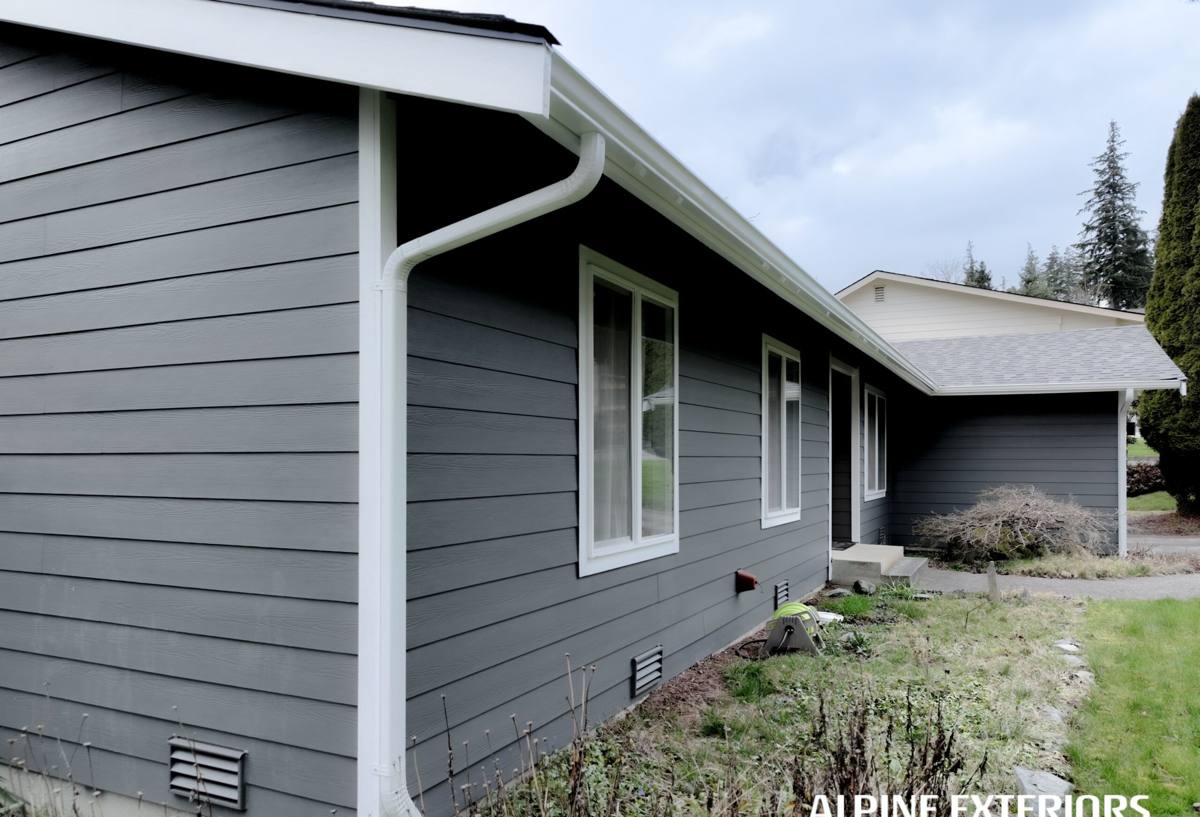
What Skagit County's Climate Demands From Vertical Siding
Skagit County runs from tidal flats near the Salish Sea to inland river valleys like Hamilton's, and while Hamilton isn't on open saltwater, it shares the same broad weather pattern: long wet seasons, driving rain that comes in sideways during winter storms, and marine-influenced humidity that settles into low-lying, tree-shaded ground and doesn't leave quickly. Add Hamilton's dense surrounding forest and a house can go weeks in the fall and winter without a full day of direct sun on its north or east elevations.
Moss and Organic Growth
Shade plus moisture equals moss, algae, and mildew — and board and batten's vertical battens create dozens of narrow ledges and seams where spores can settle and take hold if the material underneath isn't built to resist it. On a home surrounded by trees, this isn't a cosmetic afterthought; it's one of the first things to fail on the wrong siding material.
Driving Rain and Wind-Driven Moisture
Winter storms in this part of the county don't just fall — they push. Wind-driven rain finds every unsealed batten joint, every under-flashed window head, and every place where a fastener wasn't set correctly. Vertical board and batten has more seams per square foot than horizontal lap siding, which means more opportunities for water intrusion if the underlying water-resistive barrier and flashing details aren't done right.
Freeze-Thaw and Seasonal Swelling
Hamilton sees enough cold snaps each winter that any siding material prone to swelling and shrinking with moisture will eventually show it — cupping boards, popped nails, cracked caulk lines at the battens. A material that doesn't move much with moisture holds its lines and its paint far longer.
What a Correct Board & Batten Installation Actually Involves
Board and batten looks simple from the curb — vertical boards, narrow battens covering the seams — but the installation details are where a job either holds up for decades or starts failing within a few winters. A correct installation for a Hamilton home includes:
- A continuous water-resistive barrier behind the entire assembly, lapped correctly at every seam and penetration
- Rainscreen or furring strips where needed to let moisture drain and the wall assembly breathe, rather than trapping damp air behind the siding
- Corrosion-resistant fasteners set to the manufacturer's specified pattern and depth — not just "close enough"
- Properly flashed window and door openings, with head flashing that actually sheds water outward instead of behind the trim
- Batten spacing and fastening that accounts for the material's engineered movement, not generic carpentry guesswork
- Factory-primed or factory-finished material on all cut edges, or field-sealing of every cut edge before it's closed in
Skip any one of these steps and the siding may look fine for a season or two. In a shaded, damp valley like Hamilton's, the shortcuts show up fast — usually as staining, soft spots, or moss lines that trace exactly where water has been sitting.
Why We Install Only James Hardie Board & Batten
We get asked why we don't offer board and batten in wood, LP SmartSide, or vinyl, since all three are common in this region and all three can be made to look like board and batten from the road. Here's the honest answer.
Solid wood board and batten has real character, but it's a maintenance commitment — regular refinishing, vigilance about caulk joints, and real vulnerability to the moss and rot pressure that Hamilton's tree cover and river humidity create. LP SmartSide is an engineered wood product with a factory treatment that helps with moisture resistance, but it's still wood-based at its core, meaning cut edges and any breach in the finish are places moisture can get a foothold over time. Vinyl board and batten is low-maintenance and inexpensive, but it's a thin plastic profile that can warp in temperature swings, fade in UV exposure over the years, and doesn't offer the same fire resistance or resale-value perception as a fiber cement product.
James Hardie fiber cement is the one product in this category that's non-combustible, engineered specifically for Pacific Northwest moisture exposure in its HZ5 product line, and finished at the factory with a baked-on ColorPlus finish rather than a field-applied paint job that starts weathering the day it's sprayed. It holds its shape in freeze-thaw cycles, resists the moss and mildew pressure that a shaded valley setting creates, and carries a strong transferable warranty on both the substrate and the factory finish. That combination is why we standardized on it and don't install the alternatives, even when a customer's budget or preference points toward one of them.
Board & Batten Profile Comparison for Hamilton Homes
| Factor | James Hardie Fiber Cement | Wood / Engineered Wood | Vinyl |
|---|---|---|---|
| Moisture resistance in shaded, damp settings | High — engineered for PNW exposure | Moderate — depends on maintenance | Moderate — doesn't rot but can trap moisture behind it |
| Moss/algae resistance | High with factory finish | Lower — organic material is a food source for growth | Moderate — smooth surface, but seams collect debris |
| Fire resistance | Non-combustible | Combustible | Softens/melts under heat |
| Finish longevity | Factory ColorPlus, long-rated | Field-applied, needs recoating | Color molded in, can fade/chalk |
| Dimensional stability | High — minimal swelling/shrinking | Lower — prone to swelling and cupping | Can warp with heat/cold cycling |
| Ongoing maintenance | Low | Higher — recaulking, refinishing | Low, but limited repairability |
Our Process for Hamilton Projects
Every board and batten project we take on in the Hamilton area follows the same sequence, because skipping steps is exactly how moisture problems start in this climate:
- On-site assessment — we look at sun exposure, tree cover, current siding condition, and any existing moisture or rot damage before quoting anything
- Substrate and sheathing check — any water damage or rot from the old siding gets addressed before new material goes up, never covered over
- Water-resistive barrier and flashing installation — done to manufacturer spec, not shortcut
- Hardie panel or board-and-batten plank installation — fastened and spaced to the engineered pattern for our climate zone
- Trim, corners, and batten detailing — the finish details that determine how clean the reveal lines look for the next 30 years
- Final walkthrough — we go over the work with the homeowner before calling the job done
Maintenance Checklist for Board & Batten in a Moss-Prone Climate
Even with a low-maintenance material, a Hamilton home benefits from a light seasonal check, especially where tree cover keeps siding shaded and damp:
- Rinse off accumulated moss, pollen, or organic debris on shaded elevations once or twice a year
- Keep gutters clear so overflow doesn't run down the siding face and feed moss growth at the battens
- Trim back tree branches and shrubs that keep any wall section in constant shade or contact
- Check caulking at window and door trim annually and have any cracked joints resealed
- Look for staining or discoloration at the base of the wall, which can signal a grading or drainage issue rather than a siding problem
- Have flashing and seams inspected after any unusually severe wind-driven rain event
Why Hiring a Crew That Already Works in Hamilton Matters
Board and batten installation isn't uniform across climates — a crew used to installing in a dry inland region will make different assumptions about flashing, venting, and moisture management than one that works river valleys and marine-influenced weather every week. A contractor who already services Hamilton and the surrounding Skagit County communities knows how much shade a given lot typically holds through the winter, how the local moss pressure behaves against different siding profiles, and which details actually matter in wind-driven rain versus which are just extra steps. That local pattern recognition is hard to replace with a generic installation manual, and it's usually the difference between a board and batten job that still looks sharp in fifteen years and one that needs early intervention.
Get a Straightforward Estimate
If you're weighing board and batten siding for a home in Hamilton, we're glad to take a look and give you a clear, honest picture of what your specific lot and elevation would need — no pressure, no inflated quote to negotiate down from. Use the form below to request a free estimate.