 Skagit County
 Window Replacement Built for Hamilton's River Valley Climate
Hamilton sits in the Skagit River valley, tucked between forested hillsides that hold onto moisture far longer than open areas closer to the coast. Homes here deal with a specific combination of problems: long stretches of driving rain, heavy shade from surrounding timber that slows drying time, and a moss and mildew season that can run most of the year. Add in the salt-tinged air that moves up the valley from Skagit Bay on stronger weather systems, and you have a climate that is genuinely tough on window frames, seals, and the wood trim around them.
Windows in this kind of environment don't usually fail all at once. They fail slowly — a seal loses its grip, moisture works into the frame corner, condensation starts showing up between panes, and by the time it's obvious from inside the house, there's often already damage to the sill or the wall framing behind it. A window replacement done right in Hamilton has to account for all of that, not just swap old glass for new.
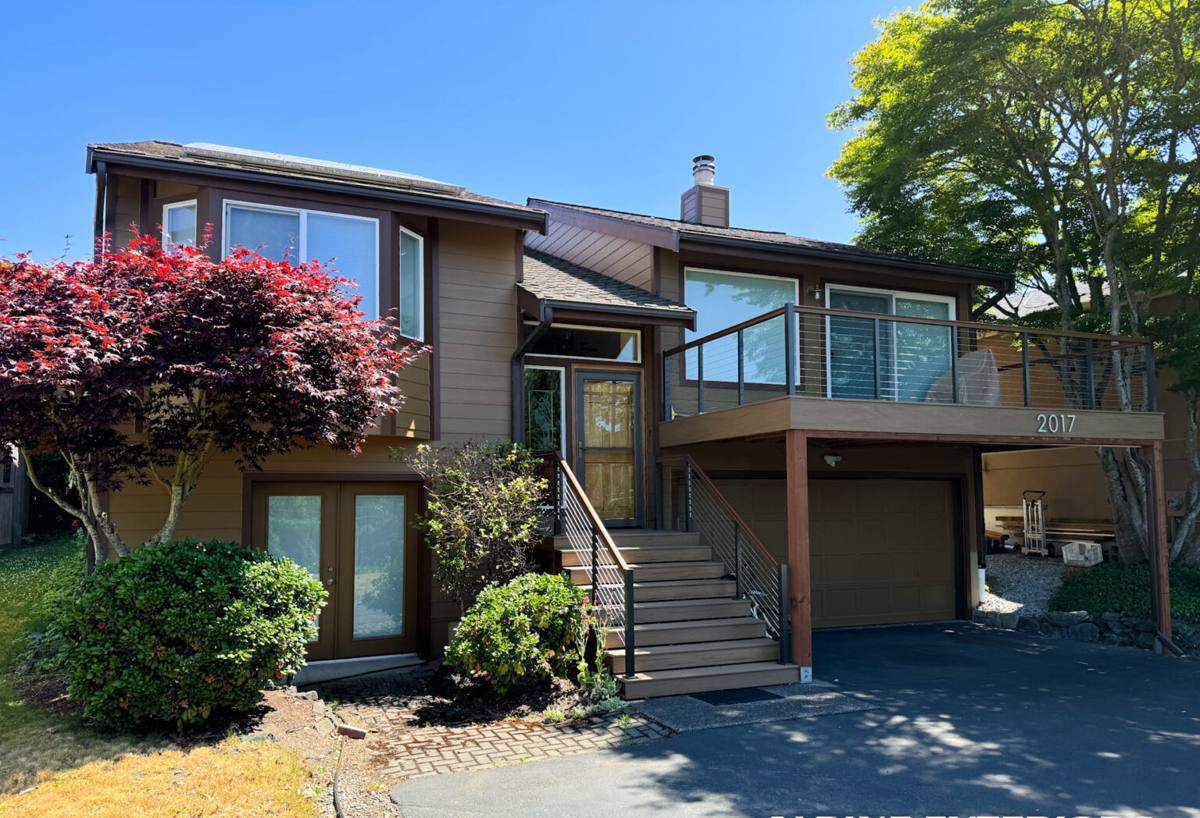
Signs It's Time to Replace Windows in a Hamilton Home
Most homeowners call us after noticing one or two of these issues, but it's worth checking your whole house once you spot the first one — if one window has failed, others of the same age and exposure are usually not far behind.
- Fog or moisture trapped between panes of double-glazed windows — a sign the seal has failed
- Soft or discolored wood at the sill or lower corners of the frame
- Windows that are hard to open, close, or lock, or that no longer sit flush
- Visible gaps or drafts you can feel with your hand near the frame edge
- Moss, algae, or dark staining building up on the exterior trim faster than on the surrounding siding
- A noticeable rise in heating costs with no other explanation
- Paint that keeps failing on the exterior trim no matter how often it's touched up
Any one of these on its own might just need a repair. Several together, especially on a home more than 20-25 years old, usually means it's time to talk about full replacement rather than patching.
What a Correct Window Replacement Actually Involves
Window replacement looks simple from the outside — old window out, new window in — but the parts nobody sees are what determine whether the job lasts 20 years or leaks again in five. In a climate like Hamilton's, this matters more than in drier parts of the state.
Removal and Inspection
Once the old window is out, we check the rough opening, sill, and surrounding framing for rot or moisture damage before anything new goes in. This is often where hidden problems show up — water that's been getting behind an old window for years can soften framing that isn't visible until the unit is removed. Covering that damage with a new window instead of repairing it just resets the clock on the same failure.
Flashing and Water Management
This is the step that decides whether a window replacement actually solves your moisture problem or just delays it. Proper flashing directs water that gets behind the siding or trim back out and away from the framing, rather than letting it pool at the sill. In a valley climate with this much sustained rainfall, corners cut here are the single biggest cause of window failures we see when we're called out to fix someone else's earlier work.
Insulation and Air Sealing
The gap between the new window frame and the rough opening needs to be sealed and insulated correctly — not overfilled with expanding foam, which can bow the frame, and not left with gaps that let cold air and moisture in. Done right, this step is a big part of the energy improvement homeowners notice after replacement.
Trim and Finish
Exterior trim gets re-flashed and finished to shed water, not trap it. In a moss-prone area, we also think about how the trim profile sheds standing moisture rather than holding it against the wood.
Choosing the Right Window Material for This Climate
There's no single "best" window material — the right choice depends on your home's exposure, your budget, and how much upkeep you want to take on. Here's how the common options compare for a home in a wet, shaded, moss-prone setting like Hamilton.
| Material | Moisture Performance | Maintenance | Typical Lifespan |
|---|---|---|---|
| Vinyl | Good — won't rot, low water absorption | Low — occasional cleaning | 20-30 years |
| Fiberglass | Very good — stable in wet/dry cycles, resists warping | Low | 30-40+ years |
| Wood | Requires diligent upkeep — vulnerable to rot if finish fails | High — regular repainting/sealing | Varies widely with maintenance |
| Wood-clad (wood interior, metal or vinyl exterior) | Good if the cladding seal is intact | Moderate | 20-30 years |
We're generally cautious about recommending all-wood exteriors in this specific microclimate — not because wood windows are a bad product, but because the maintenance schedule needed to keep them performing well is demanding when a house sits in shade and moisture most of the year. If a homeowner wants the look of wood, a clad option that keeps painted wood off the weather side is usually the more realistic long-term fit.
Our Window Replacement Process
- On-site assessment. We walk the exterior and interior with you, check existing windows for the signs listed above, and look at drainage and exposure around the house.
- Honest recommendation. We tell you which windows genuinely need replacing now versus which can wait, and why — we don't pad a scope of work.
- Written estimate. Materials, labor, and timeline spelled out, with options if you want to compare tiers of window quality.
- Careful removal. Old units come out without unnecessary damage to surrounding siding or trim.
- Framing repair if needed. Any rot or moisture damage found during removal gets addressed before the new window goes in — not covered up.
- Installation with proper flashing and sealing. This is the step where most of the long-term performance is determined.
- Finish and cleanup. Trim finished, site cleaned, and a final walkthrough so you can see and test the work before we consider the job done.
What Affects the Cost of a Window Replacement
Costs vary by window size, count, material, and what's found once the old windows come out, so we won't quote a number without seeing the house. What we can tell you is what tends to move the price up or down.
| Factor | Effect on Cost |
|---|---|
| Window material (vinyl vs. fiberglass vs. wood-clad) | Fiberglass and wood-clad cost more upfront than vinyl |
| Hidden rot or framing damage | Adds repair cost, usually only discovered after removal |
| Number of windows done at once | Bundling multiple windows typically lowers the per-window cost |
| Window size and shape | Custom or oversized units cost more than standard sizes |
| Trim and siding condition around the opening | Deteriorated trim may need repair or replacement alongside the window |
| Access and site conditions | Upper-story or hard-to-reach windows add labor time |
We'd rather find hidden damage during a quote walk-through or early in the job than surprise you with it later — that's part of why we take the assessment step seriously before writing an estimate.
Why Hire a Crew That Already Works in Hamilton
Skagit County covers a lot of ground, and the conditions on a shaded, riverside lot in Hamilton aren't the same as an open, wind-exposed property closer to the water. A crew that already works this part of the county knows what moisture and moss do to trim and flashing here specifically, not just in general terms. That matters when we're deciding how a window opening should be flashed, how much drainage room to leave, and which materials are worth the extra cost versus which are overkill for a given exposure.
There's also a practical side: we're not driving in from out of area for a callback, a warranty question, or a follow-up adjustment. If something needs a second look after installation, we can get back out to a Hamilton property without it being a special trip.
A Homeowner's Checklist Before You Sign a Contract
Whoever you hire for window replacement, these are worth confirming before work starts:
- Are they licensed and insured to do exterior work in Washington State?
- Does the estimate specify the exact window brand, series, and glass package — not just "vinyl window"?
- Is flashing and water management for the rough opening explicitly included in the scope, not assumed?
- Does the contract cover what happens if rot or damage is found once old windows are removed?
- What's the warranty on both the window product and the labor/installation, and who do you call if a problem shows up later?
- Will the same crew that quotes the job be the one doing the installation?
- Is cleanup and disposal of old windows included?
A contractor who's willing to walk through these points without hesitation is generally a good sign. Vague answers on flashing or warranty coverage are worth pausing over.
Caring for New Windows After Installation
New windows in this climate still need occasional attention to get their full lifespan. Rinse pollen, moss spores, and grime off the glass and frames a couple of times a year, and keep an eye on the exterior trim and caulk lines for cracking or gaps — catching a small seal failure early is a lot cheaper than dealing with water damage later. If you notice condensation forming between panes on any window, even a brand-new one, that's worth a call — it usually points to a manufacturing seal issue covered under warranty rather than an installation problem.
If you're weighing whether it's time to replace windows on a Hamilton home, we're glad to take a look and give you a straight answer — including telling you if a window doesn't need replacing yet. Use the form below to request a free, no-pressure estimate.