 Skagit County
 Why Bow Homes Need Siding That Can Handle Water and Salt
Bow sits close enough to the water that salt air is part of daily life, not an occasional nuisance. Add Skagit County's long wet season, low winter sun angles that keep north-facing walls damp for weeks at a time, and the moss and algae growth that comes with all that moisture, and you've got a climate that is genuinely hard on exterior building materials. Siding here isn't just a cosmetic choice — it's the layer standing between your home and a slow, expensive moisture problem.
We install James Hardie fiber cement siding exclusively. Not as an upsell, not as one option among several, but because after years of doing exterior work in this specific climate, it's the only siding system we're willing to put our name behind. This page covers what that means specifically for a home in Bow.
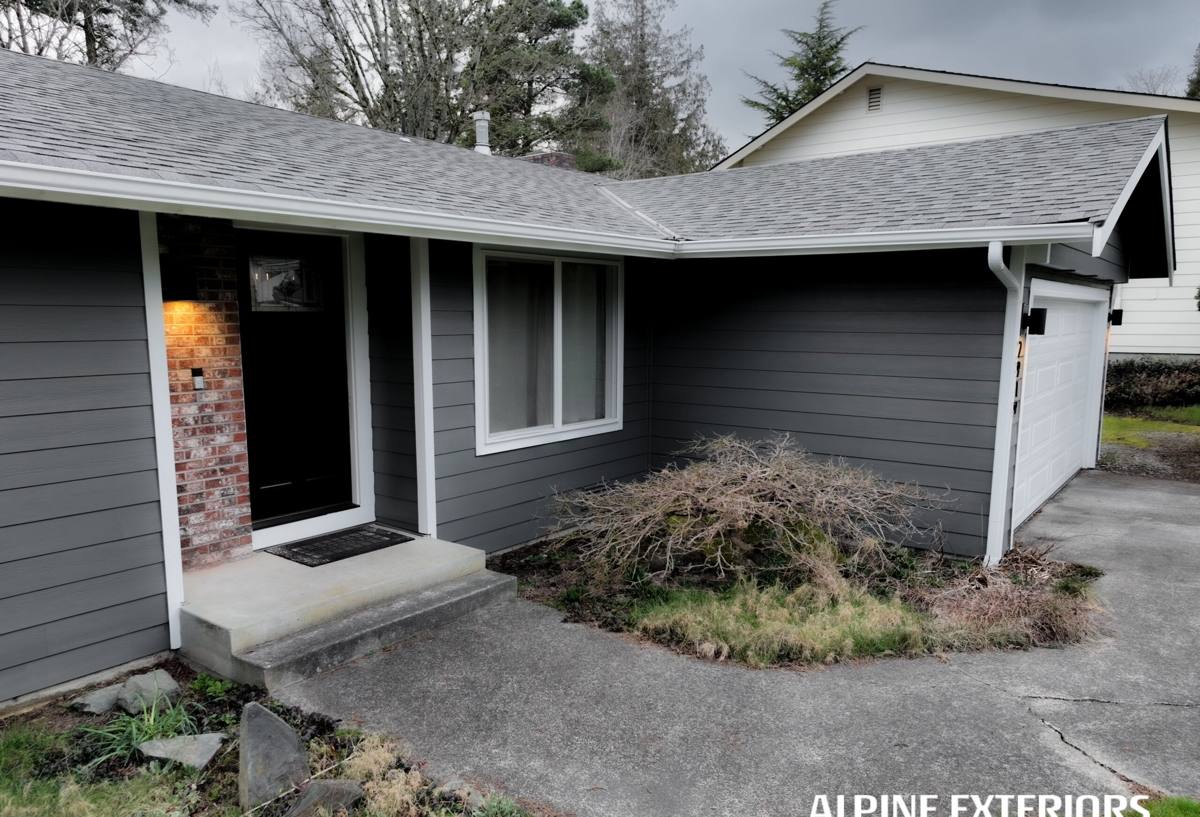
What Salt Air and Driving Rain Actually Do to Siding
Salt Air
Proximity to Samish Bay and the greater Puget Sound means airborne salt settles on every exterior surface in the area, not just homes directly on the water. Salt is corrosive to fasteners and hardware, and it accelerates the breakdown of finishes that aren't formulated to resist it. Paint film that would last a normal service life inland can chalk, fade, or lift years early in a coastal-influenced zone like this.
Driving Rain
Storms coming off the water tend to arrive with wind, which pushes rain sideways into wall assemblies instead of letting it run straight down and off. That means siding laps, butt joints, and penetrations around windows and doors take on water intrusion stress that a calmer climate wouldn't produce. A siding system that depends on paint film alone to stay watertight will eventually fail at these joints.
Moss and Algae Season
Skagit County's wet season stretches long, and shaded or north-facing walls in Bow often stay damp for extended stretches. Organic growth on siding isn't just an appearance issue — moss and algae hold moisture against the wall surface, which keeps the substrate wetter for longer and gives any weak point in the material more time to absorb water.
Why We Only Install James Hardie in This Climate
James Hardie fiber cement is manufactured from cement, sand, and cellulose fiber — a composition that doesn't swell, rot, or delaminate when it gets wet the way wood-based products can. It's also non-combustible, which matters given Washington's increasing wildfire season overlap with typical siding replacement schedules. For a coastal-influenced area like Bow, the properties that matter most are:
- Dimensional stability — Hardie board doesn't expand and contract with moisture the way wood or wood-composite siding does, so joints and fastener lines stay tighter over time.
- ColorPlus factory finish — a baked-on finish system engineered to resist fading and hold up against UV and airborne salt better than field-applied paint.
- Engineered-for-climate product lines — Hardie makes HZ5 boards specifically formulated for wetter, harsher climate zones, which includes western Washington.
- Non-combustible material — a real advantage as fire seasons lengthen even on the wet side of the state.
- A transferable warranty — one that's backed by a manufacturer with a long track record, which matters if you sell the home before the siding's service life is up.
We don't install LP SmartSide, vinyl, Cemplank, Allura, primed spruce, or cedar. Each of those has legitimate uses somewhere, but none of them hold up the way we want in a climate that combines salt exposure, wind-driven rain, and a long damp season, and we'd rather turn down work than install something we don't trust to perform here.
What a Correct James Hardie Installation Involves
The board itself is only part of the equation. Most siding failures we see on older homes in this area trace back to installation shortcuts, not the material itself. A correct install in Bow's climate means:
Water Management Behind the Siding
A weather-resistive barrier and properly integrated flashing at every window, door, and penetration, installed so that any water that does get past the siding has a clear path down and out rather than getting trapped against the sheathing.
Proper Clearances and Gaps
Hardie specifies clearances from roof lines, decks, and grade, plus gaps at butt joints and trim, so that water doesn't wick into the board or pool where it can't dry out. Skipping these clearances is one of the most common shortcuts we see, and it's usually invisible until years later.
Fastener Selection
Corrosion-resistant fasteners, installed at the correct spacing and depth, matter more in a salt-air environment than almost anywhere else. The wrong fastener can rust and stain the siding face or lose holding power years before the board itself would fail.
Caulking and Sealant Discipline
Sealant belongs at specific joints, not everywhere, and it needs to be a product rated for the movement and exposure it will see. Over-caulking traps moisture; under-caulking lets it in. Both are common mistakes on rushed jobs.
Comparing Siding Options for a Bow Property
| Factor | James Hardie Fiber Cement | Vinyl | Wood / Cedar |
|---|---|---|---|
| Moisture resistance | Does not swell or rot; engineered HZ5 line for wet climates | Doesn't absorb water, but can warp and gap at seams, letting water behind it | Absorbs moisture; needs consistent maintenance to resist rot |
| Salt air performance | ColorPlus finish resists fading and chalking | Can become brittle and discolor faster near salt air | Finish breaks down quickly; frequent recoating needed |
| Fire resistance | Non-combustible | Combustible, can melt or deform near heat sources | Combustible |
| Maintenance | Occasional wash; repaint only if desired, not required for protection | Low maintenance but limited repair options when damaged | Regular painting/staining required to prevent rot |
| Typical service life | Decades when installed to spec | Moderate; sun and impact damage common over time | Shorter without consistent upkeep |
Our Process for a Bow Siding Project
The process is the same whether the home is right along Samish Bay or set back on a rural Skagit County property, but the details we pay closest attention to shift based on exposure.
- On-site assessment — we look at wall orientation, roof drainage, existing moisture damage, and how exposed the home is to prevailing wind and rain direction.
- Moisture and substrate check — before any new siding goes up, we check the sheathing underneath for existing rot or damage that needs to be addressed first.
- Water barrier and flashing installation — this is the layer that does the real work of keeping water out, and it's not visible once the siding is up, which is exactly why we don't rush it.
- Hardie board installation — installed to manufacturer spec for fastener pattern, clearances, and joint treatment.
- Trim, caulking, and finish detailing — the visible finish work, done last so it isn't disturbed by later steps.
- Final walkthrough — we go over the completed work with you before we consider the job done.
What to Ask Any Siding Contractor Before You Hire
- Do you install a weather-resistive barrier and flashing system, or just the visible siding?
- What fastener type do you use, and is it rated for coastal or salt-air exposure?
- Have you worked on homes with similar wind and rain exposure to mine?
- What does the manufacturer's warranty actually cover, and is it transferable?
- Can you walk me through your clearance and joint-gap approach before work starts?
Why Hiring a Crew That Already Works Bow Matters
Skagit County covers a lot of ground, and conditions vary block to block depending on how exposed a property is to wind off the water versus how sheltered it is inland. A crew that already does regular work in and around Bow knows which walls tend to take the worst of the driving rain, which sides grow moss fastest, and how much of a role salt exposure should play in fastener and finish decisions. That's the kind of judgment that doesn't come from a spec sheet — it comes from having done the work here before.
It also means faster response if something needs a look after the job is done. A local crew doesn't have to schedule a special trip from out of the area to check on a callback.
Cost Factors for a Bow James Hardie Project
Every home is different, and we don't publish blanket per-square-foot pricing because it depends on too many site-specific factors. What tends to move the number most:
| Factor | Why It Matters |
|---|---|
| Existing substrate condition | Rot or moisture damage found during tear-off adds repair scope before new siding can go on |
| Home size and wall complexity | More corners, dormers, and trim details mean more labor and material cuts |
| Board profile and color choice | Different Hardie product lines and ColorPlus color options carry different material costs |
| Accessibility | Multi-story sections, tight lot lines, or difficult staging can add labor time |
| Trim and accessory scope | Full trim replacement versus reusing sound existing trim changes the total |
The only way to get an accurate number is a look at the actual home, which is what our estimate visits are for.
Ready to Talk About Your Home's Siding
If your Bow home is showing early signs of what salt air and Skagit County's wet season do to siding over time — fading, moss buildup, soft spots near trim, or paint that won't hold — it's worth getting a professional look before those issues spread. Reach out for a free, no-pressure estimate, and we'll walk the property with you and talk through exactly what your home needs.