 Skagit County
 Why La Conner's Waterfront Location Is Tough on a Shingle Roof
La Conner sits right on the water, and that changes what a roof has to put up with compared to a home even a few miles inland. The salt-laden air coming off the Swinomish Channel accelerates corrosion on anything metal — nail heads, flashing, vent stacks, drip edge. Add in Skagit County's driving winter rain, which often comes sideways off the water instead of straight down, and you've got moisture finding its way into seams and laps that would stay dry in a calmer climate. Then there's the long stretch of overcast, damp months every year that gives moss and algae plenty of time to take hold on north-facing slopes and shaded roof sections.
None of this means asphalt shingles are the wrong choice for La Conner — they're still the most practical, cost-effective roofing material for most homes here. It means the installation details matter more than they would somewhere drier and further from salt water. A roof that's installed to a generic standard, without accounting for this specific environment, tends to show its age faster here than the same roof would inland.
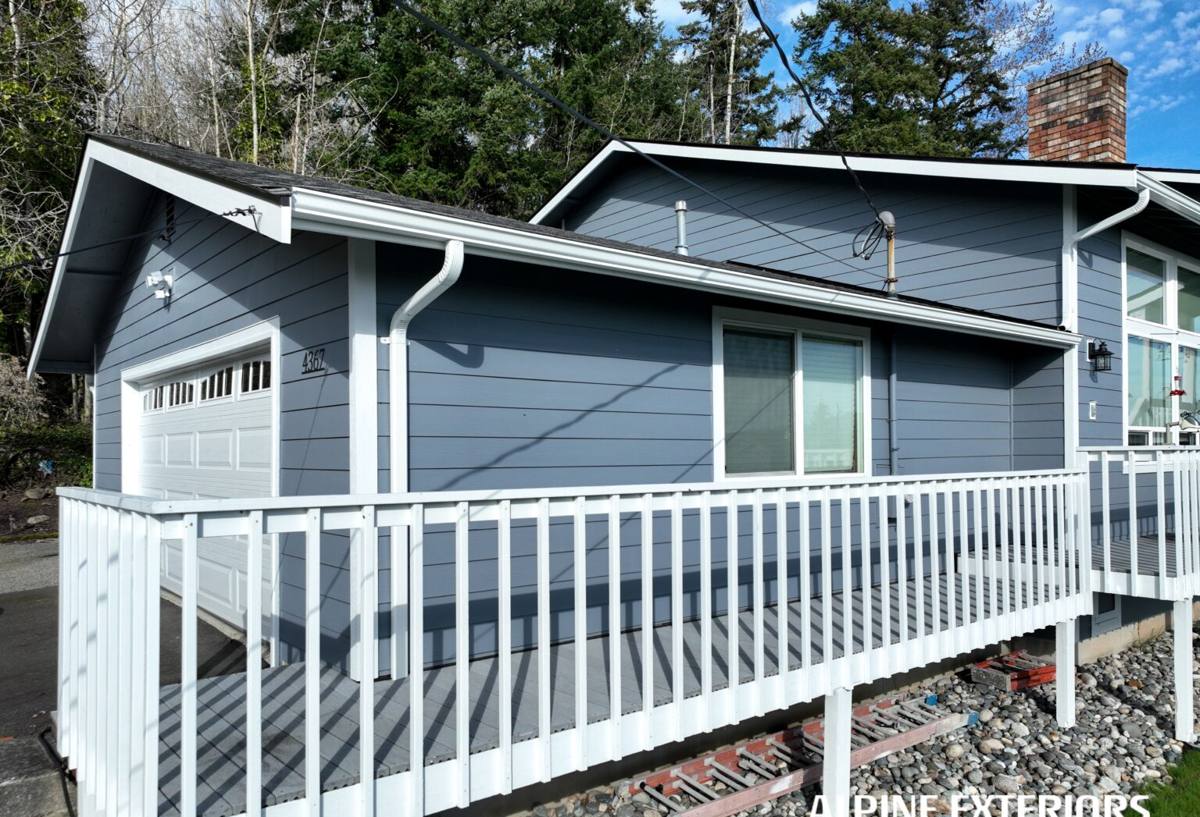
What a Correct Asphalt Shingle Installation Looks Like in This Climate
Underlayment and Water Barrier Coverage
In a marine climate with sustained wind-driven rain, the underlayment is doing more work than people realize — it's the backup plan for the moments when wind pushes water up under a shingle tab. We use synthetic underlayment across the full roof deck and add self-adhered ice-and-water barrier along eaves, valleys, and any low-slope transitions, since those are the spots where water pools or backs up first.
Ventilation That's Actually Balanced
A roof deck that can't breathe traps moisture underneath the shingles, and in a humid coastal climate that trapped moisture is exactly what feeds moss, rot, and premature shingle failure from below. Balanced ventilation — intake at the eaves, exhaust at the ridge, sized correctly for the attic volume — keeps the underside of the deck dry and keeps shingle temperatures more even, which matters for how long the shingles hold their seal.
Flashing Details That Actually Matter
Most roof leaks trace back to flashing, not the shingles themselves. Around chimneys, skylights, dormers, and wall intersections, we use corrosion-resistant flashing and step-flash every course rather than relying on a single bent piece and a bead of sealant. Given the salt air near the water, we favor materials and fasteners rated for coastal exposure over standard-grade hardware that will pit and rust years before the shingles are due for replacement.
Choosing the Right Asphalt Shingle for a Coastal, Wet-Winter Climate
Not every asphalt shingle performs the same way here. The three broad tiers below cover what most La Conner homeowners are choosing between, and the trade-offs that matter in this specific climate.
| Shingle Tier | Typical Lifespan | Wind Rating | Best Fit for La Conner |
|---|---|---|---|
| 3-Tab (economy) | 15–20 years | Lower | Budget-driven projects; least tolerant of driving wind and moss buildup |
| Architectural (dimensional) | 25–30 years | Moderate to high | Best all-around value for coastal wind and rain exposure |
| Premium/Designer | 30+ years | High | Homes wanting maximum durability and a heavier, dimensional look |
We lean toward architectural shingles with algae-resistant granules for most La Conner homes. The algae-resistant treatment doesn't make a roof immune to moss, but it meaningfully slows growth compared to untreated shingles, which matters given how many months out of the year this area stays damp and shaded. We also pay attention to the manufacturer's wind rating and make sure fastening matches it — a shingle rated for high wind only performs that way if it's nailed correctly, with the right nail count and placement, which is an installation issue as much as a product one.
Our Process, Start to Finish
Homeowners deserve to know exactly what happens to their roof and why, so here's how a shingle replacement actually runs:
- Inspection and estimate — we look at the existing roof, decking condition, ventilation setup, and any trouble spots (valleys, chimneys, low-slope sections) before quoting anything.
- Tear-off — full removal of old roofing material down to the deck. We don't install new shingles over old ones; layering traps moisture and hides deck problems.
- Deck inspection and repair — any soft, rotted, or delaminated decking gets replaced before anything new goes down. This is where a lot of hidden moisture damage from a previous under-built roof shows up.
- Underlayment and ice/water barrier — installed per the details above, matched to this climate rather than a generic minimum.
- Flashing — new step flashing, valley flashing, and drip edge, corrosion-resistant given the salt air.
- Shingle installation — nailed to manufacturer spec for the wind rating, with attention to proper exposure and alignment.
- Ventilation check — intake and exhaust confirmed balanced for the attic space.
- Cleanup and final walkthrough — magnetic sweep for nails, debris removal, and a walkthrough so you know what was done and why.
Moss, Algae, and What Long Wet Winters Do to a Roof Over Time
Skagit County's moss season isn't a minor cosmetic issue — left alone, moss holds moisture against the shingle surface, lifts tabs as it grows, and shortens the shingle's usable life. North-facing slopes, roof sections shaded by trees, and areas near the water where humidity stays high longer into the season are the spots that need the most attention. A roof that gets moss removed properly and early tends to outlast one where it's left to spread.
Here's a practical maintenance checklist for keeping a shingle roof in good shape through a La Conner winter:
- Have moss and algae growth removed using methods that don't scrape or damage the granule surface
- Keep gutters clear so water isn't backing up under the eave line during heavy rain
- Trim back overhanging branches to reduce shade and debris buildup on north-facing slopes
- Check attic ventilation isn't blocked by insulation, especially after any attic work
- Have flashing around chimneys, vents, and skylights inspected annually, since these are the first points to fail
- Address small leaks or missing shingles right away rather than waiting for the next dry season
Repair or Replace? Reading the Signs
Not every roof problem means a full replacement. The table below is a general guide, not a diagnosis — a proper inspection is still the only way to know for sure.
| What You're Seeing | Usually Means |
|---|---|
| A handful of missing or cracked shingles, isolated leak | Targeted repair |
| Granules collecting heavily in gutters, shingles curling or cupping | Roof is nearing end of life, replacement worth planning for |
| Widespread moss on multiple slopes with visible shingle lifting | Depends on age — may still be salvageable with cleaning and repair |
| Soft spots in the decking, staining on interior ceilings | Likely deck damage; replacement usually makes more sense than repair |
Why a Crew That Already Works in La Conner Makes a Difference
Roofing crews that mostly work inland don't always account for salt exposure or how much wind-driven rain a waterfront property actually takes on. A crew that regularly works La Conner and the surrounding Skagit County waterfront knows to spec corrosion-resistant fasteners and flashing as a default, not an upgrade, and knows which roof sections in this kind of setting tend to hold moss longest and need extra attention during install and maintenance. That local pattern recognition doesn't show up on a spec sheet — it comes from having repaired and replaced enough roofs in this exact environment to know where they typically fail first.
It also matters for something more basic: showing up. Local crews aren't juggling long drive times from job to job, which means scheduling repairs, follow-up visits, or warranty work is more straightforward.
What Affects the Cost of a Shingle Roof in La Conner
Every roof is priced on its own specifics, but the main variables homeowners should expect to factor in are roof size and pitch, the number of penetrations (chimneys, skylights, vents), the condition of the existing decking, the shingle tier chosen, and how much tear-off and disposal is involved. A steep or complex roofline with multiple valleys and a coastal fastener/flashing upgrade will cost more than a simple gable roof with standard hardware — that's a fair trade for the added durability in this climate, not an upsell. We break all of this down in writing before any work starts, so there are no surprises once the tear-off begins and the deck condition is confirmed.
Get a Straightforward Estimate
If your La Conner roof is showing moss, missing granules, curling shingles, or you just want an honest read on how much life it has left, we're happy to take a look. The estimate is free, there's no pressure attached to it, and you'll get a clear explanation of what we find and what your options actually are. You can request one using the form below.