 Skagit County
 Why La Conner Roofs Wear Out Differently Than Roofs Inland
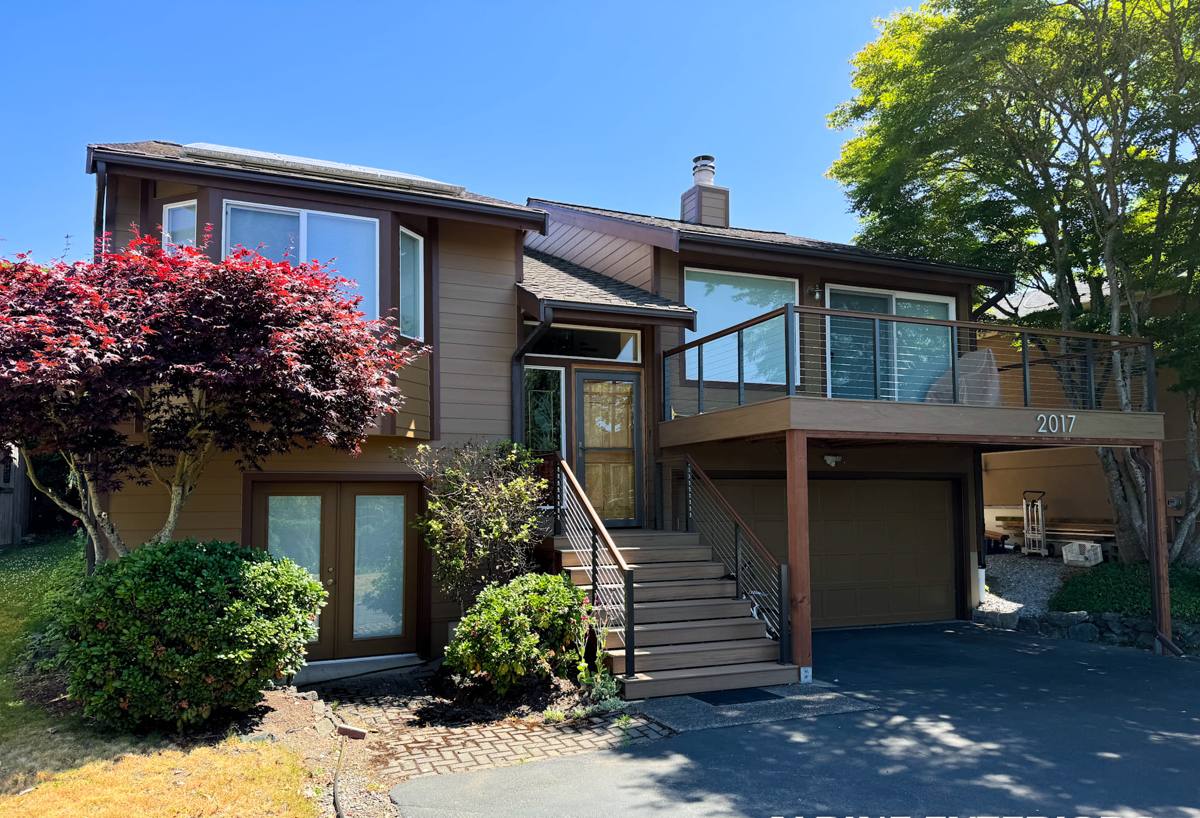
La Conner sits close enough to Puget Sound and the Swinomish Channel that salt-laden air is part of daily life, not an occasional visitor. Add Skagit County's long, wet winters and the shade thrown by mature trees and tight lot lines common in the older parts of town, and you have three forces working against a roof at the same time: corrosion, saturation, and biological growth. Most manufacturer warranties and installation guides are written for a generic climate. They don't account for what happens when a roof spends five or six months a year rarely drying out completely, or when metal fasteners and flashing sit a few miles from open salt water.
A roof replacement done right in La Conner isn't just "put new shingles on." It's a set of decisions about materials, ventilation, and detailing that specifically answer to salt air, driving rain, and moss — the three things that shorten roof life here faster than almost anywhere else in the county.
The Three Local Stressors, and What They Actually Do
Salt Air
Airborne salt accelerates corrosion on exposed metal — nail heads, drip edge, flashing, and any fastener that isn't rated for a coastal or marine environment. Once corrosion starts at a fastener, water finds a path around it, and a roof that looks fine from the ground can be leaking at a hundred small points nobody notices until there's a stain on a ceiling.
Driving Rain
Skagit County storms often come with real wind behind the rain, which pushes water sideways and upward under laps and around penetrations that would stay dry in a straight-down rain. This is why valleys, wall-to-roof transitions, and anything protruding through the roof deck (vents, chimneys, skylights) need more attention here than a basic install would give them.
Moss Season
Shaded, damp roofs in this part of Washington can grow moss for the better part of the year. Moss isn't just cosmetic — it holds moisture against the roofing material, lifts shingle edges as it grows, and works its way under laps over time. A roof replacement is the best chance to build in moss resistance from day one, because retrofitting it later is far less effective.
Signs a La Conner Roof Is Telling You It's Done
Roofs rarely fail all at once. They give warnings first. Homeowners who catch these early save money by replacing on their own timeline instead of after a leak forces the issue.
- Granules collecting in gutters or at downspout outlets, especially after a windy rain
- Shingles that look cupped, curled at the edges, or have lost their flat profile
- Moss or dark algae streaking that keeps coming back within a season of cleaning
- Rusty streaking below metal flashing, vents, or fasteners
- Soft spots underfoot in the attic when walked, or daylight visible through the roof deck
- A roof that's 20+ years old (asphalt) or showing its age in a home that's had multiple owners with no known roof history
- Rising energy bills paired with an attic that feels noticeably hot or damp on inspection
What a Correct Roof Replacement Actually Involves
A roof replacement is really several trades stacked together: tear-off, deck inspection and repair, underlayment, flashing, ventilation, and the final roofing material. Skipping or rushing any one of these is where most premature failures start — and it's rarely the shingle brand that gets blamed, even when it should be the installation.
Tear-Off and Deck Inspection
Full tear-off to bare deck lets us see the plywood or plank sheathing underneath, which is the only way to catch rot, soft spots, or old damage hidden by the existing roofing. In a marine climate, deck moisture damage is common around chimneys, skylights, and low-slope sections where water has had years to find its way in slowly. Any damaged sheathing gets replaced before anything new goes down — layering new roofing over a compromised deck just hides the problem for the next owner to discover.
Underlayment Built for Wet Weather
In a region with Skagit County's rainfall, underlayment is not a formality. We use synthetic underlayment for overall water resistance and ice-and-water shield membrane at the vulnerable spots — eaves, valleys, and around every penetration — where wind-driven rain is most likely to get pushed backward under the roofing material.
Ventilation That Matches the Home
Balanced intake and exhaust ventilation keeps the attic close to outdoor temperature and humidity, which does two things: it slows ice and condensation buildup on the underside of the deck, and it helps shingles last their full expected lifespan instead of cooking and drying out unevenly from beneath. A lot of older La Conner homes were built with minimal or mismatched ventilation, and a roof replacement is the right time to correct that.
Flashing and Penetrations
Every place metal meets roofing — chimneys, sidewalls, skylights, vent stacks — is a place water wants to get in. We flash these with corrosion-resistant materials suited to a salt-air environment and integrate them properly with the underlayment, not just caulked over the top, which is a common shortcut that fails within a few years near the water.
Choosing a Roofing Material for a Marine Climate
There's no single "best" roofing material for every home — it depends on budget, roof pitch, and how much moss and moisture resistance matters for a given lot. Here's how the common options actually compare for a La Conner property.
| Material | Moss / Moisture Resistance | Salt Air Durability | Typical Lifespan Here | Relative Cost |
|---|---|---|---|---|
| Architectural asphalt shingle | Good with algae-resistant granules; needs periodic cleaning | Good with corrosion-resistant fasteners and flashing | 20-30 years | Moderate |
| 3-tab asphalt shingle | Fair; less resistant to moss lift than architectural profile | Fair | 15-20 years | Lowest |
| Standing seam metal | Excellent; moss struggles to hold on smooth metal panels | Very good with proper coastal-rated coatings and fasteners | 40-50+ years | Highest |
| Composite/synthetic shake | Good; resists moisture absorption better than wood | Good | 30-40 years | High |
Most La Conner homeowners land on architectural asphalt shingle with algae-resistant granules as the practical middle ground — it holds up well against moss when paired with proper ventilation, and it's far more forgiving of the area's damp conditions than a basic 3-tab. Where budget allows and the roofline suits it, standing seam metal is genuinely the strongest long-term answer to moss and salt air combined, since there's nothing organic for moss to grip and no shingle laps for wind-driven rain to exploit.
Our Roof Replacement Process
We keep the sequence consistent because consistency is what prevents the callbacks that plague rushed roofing jobs.
- On-site inspection and estimate — we walk the roof and attic, note the pitch, ventilation setup, and any trouble spots, and give a written scope, not a verbal guess.
- Material selection — we walk through the honest trade-offs for your roof and budget rather than pushing one product.
- Tear-off — full removal to bare deck, with daily site protection so an unexpected Skagit County shower doesn't turn into a bigger problem mid-job.
- Deck repair — any rot or soft sheathing is replaced and documented before covering it up.
- Underlayment and flashing — ice-and-water shield at vulnerable points, synthetic underlayment across the field, corrosion-resistant flashing throughout.
- Ventilation correction — intake and exhaust balanced to the home's actual attic volume.
- Final roofing installation — installed to manufacturer spec, which is also what keeps the material warranty valid.
- Cleanup and final walkthrough — magnetic sweep for nails, gutter check, and a walkthrough so you know exactly what was done and why.
What Drives the Cost of a Roof Replacement
Every roof is priced on its own specifics, but the same handful of factors move the number up or down on almost every La Conner job we quote.
| Factor | Why It Matters |
|---|---|
| Roof size and pitch | Steeper roofs take longer to work safely and use more material for the same footprint |
| Number of layers to remove | Older homes sometimes have two roofing layers stacked, which adds tear-off time |
| Deck condition | Rot from years of moisture exposure means sheathing replacement, which isn't known until tear-off |
| Material choice | Asphalt, metal, and composite carry very different material and labor costs |
| Penetrations and complexity | Chimneys, skylights, dormers, and multiple valleys all add flashing labor |
| Ventilation upgrades | Adding or correcting intake/exhaust vents is a smart add-on but does add cost |
We'd rather give you an accurate number after actually seeing the roof than a rough range that changes once we're up there — too many roof estimates in this area get revised upward mid-job because the deck condition or layer count wasn't checked first.
Why Local Experience in La Conner Matters
A roofing crew that already works in and around La Conner has already seen how salt air chews through the wrong fastener, how moss builds up on north-facing slopes shaded by mature trees, and how wind-driven rain behaves differently on a waterfront-adjacent lot than it does further inland in the county. That's not something you can fully substitute with a general contractor working from a standard checklist. It shows up in small decisions — which flashing metal to spec, where to add an extra course of ice-and-water shield, how much ventilation a particular attic actually needs — that a crew without local reps has to learn on your roof instead of before it.
It also matters for permitting and local building department familiarity, and for knowing which parts of Skagit County see the worst wind exposure versus which are more sheltered — details that change the install approach even between two homes a few miles apart.
Protecting Your New Roof After Installation
A correctly installed roof still benefits from basic upkeep, especially given how long moss season runs here.
- Keep gutters clear so water isn't backing up under the lowest course of roofing
- Trim back overhanging branches to reduce shade and debris buildup on the roof surface
- Have moss growth removed gently (not pressure-washed) as soon as it appears rather than left to establish
- Schedule a visual roof check after major windstorms to catch lifted shingles or dislodged flashing early
- Watch attic ventilation isn't blocked by insulation or storage, since that undoes the benefit built in at installation
If your roof is showing wear, or you'd simply like an honest read on how many years you have left before replacement makes sense, we're happy to take a look. Fill out the form below for a free, no-pressure estimate on your La Conner roof.