 Skagit County
 Siding Built for La Conner's Waterfront Climate
La Conner sits along the Swinomish Channel, close enough to saltwater that homes here deal with a combination most inland Skagit County towns don't: salt-laden air, driving rain off the water, and long stretches of shade and humidity that keep moss and algae growing on siding for much of the year. A siding installation that works fine in a drier, more sheltered part of the county can fail early here if it isn't planned around these conditions from the start.
This page is about one thing: installing siding correctly on La Conner homes, using a product built to handle what this specific stretch of Skagit County throws at a house. We don't install every siding product on the market. We install James Hardie fiber cement, and we install it the way it's engineered to be installed. Here's why that combination matters here specifically, and what the work actually involves.
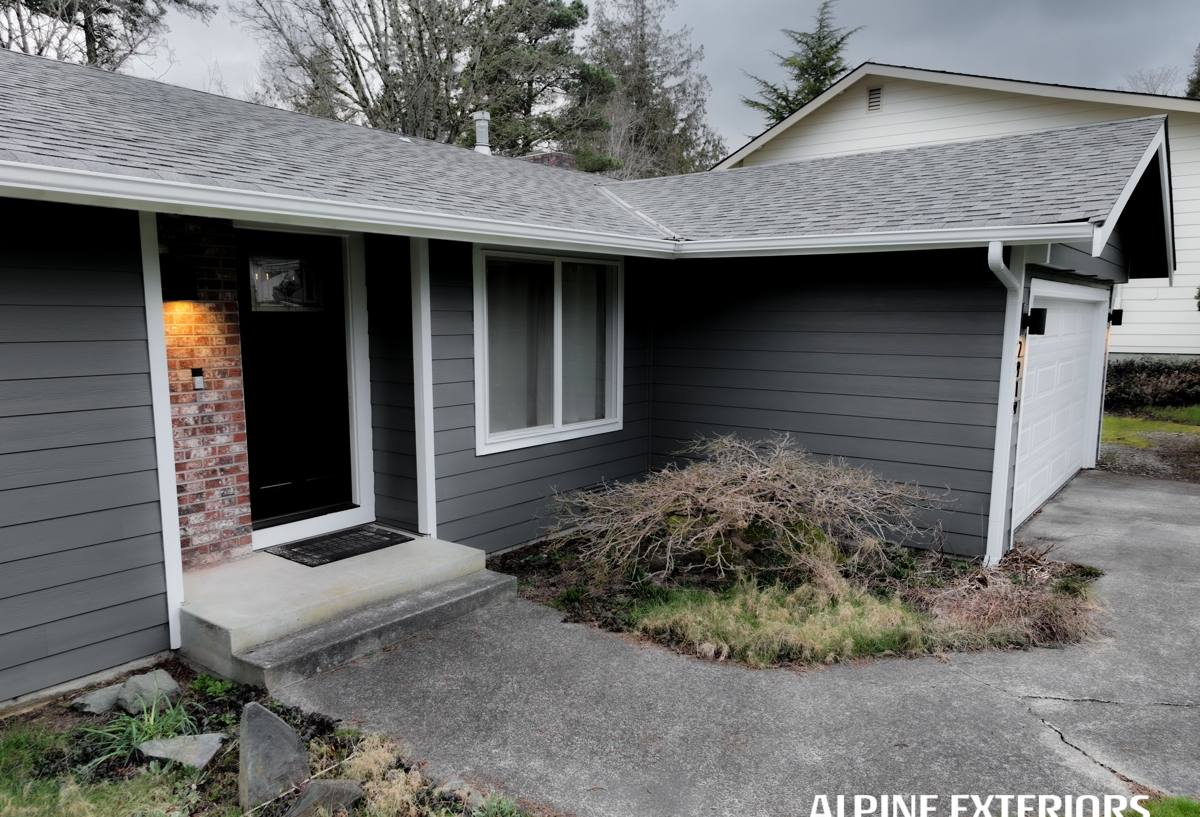
What Salt Air, Rain, and Moss Season Do to Siding Over Time
Three things wear down siding on La Conner homes faster than in a lot of other places:
Salt Air
Airborne salt from the channel and nearby Puget Sound settles on exterior surfaces and accelerates corrosion of anything metal — fasteners, flashing, trim caps. Siding materials that rely heavily on exposed metal components, or on adhesives and coatings that break down under salt exposure, age faster on near-water properties than the same products would a few miles inland.
Driving Rain
Wind off the water doesn't just drop rain straight down — it drives it sideways into wall assemblies, which puts real pressure on seams, laps, and butt joints. Any gap in the weather barrier, any short caulk joint, any siding product that swells or wicks moisture at a cut edge becomes a problem faster under these conditions than under calm, vertical rainfall.
Moss and Algae Season
Skagit County's mild, wet winters and shaded, humid pockets around La Conner give moss and algae a long growing season on north-facing and shaded walls. Siding that holds surface moisture — through a porous finish, absorbent substrate, or poor drainage detailing behind the panels — stays damp longer and grows more organic buildup than siding designed to shed water and dry out quickly.
None of these conditions are unique to La Conner in isolation, but the combination — salt, wind-driven rain, and persistent shade-driven moisture — is a heavier load than most siding products, and most installations, are built to handle indefinitely.
Why We Install Only James Hardie Fiber Cement Here
We made a standing decision not to install vinyl, LP SmartSide, primed wood, or comparable fiber cement alternatives like Cemplank or Allura. That's not a marketing position — it's a practical one, based on what holds up under La Conner's conditions specifically.
- Non-combustible core: James Hardie siding is fiber cement, not an engineered wood or vinyl product, so it doesn't carry the fire risk profile of combustible cladding.
- ColorPlus factory finish: The finish is baked on in a controlled factory process rather than field-applied, which gives it better resistance to UV fading and moisture intrusion at the surface than most site-painted or primed products.
- Climate-engineered HZ product lines: Hardie's HZ5 formulation is specifically engineered for wetter, colder climate zones like ours, with moisture and freeze-thaw performance in mind rather than a one-size-fits-all national product.
- Dimensional stability: Fiber cement doesn't expand and contract with moisture the way wood-based products do, which matters when a wall is getting soaked by driving rain on a regular basis.
- Transferable warranty: A strong, transferable manufacturer warranty backed by a company that's been refining this specific product category for decades.
We're not going to tell you every other product on the market is junk — that's not honest, and it's not our call to make about someone else's home. What we will say is that after years of working on homes in this county, including waterfront and near-water properties, James Hardie is the product we're willing to put our name behind and back with our own workmanship.
What a Correct Siding Installation Actually Involves
The product is only half the equation. A lot of siding failures — moisture behind the wall, rot at the sheathing, premature paint failure — trace back to installation shortcuts, not the material itself. On a La Conner job, we pay particular attention to:
Weather Barrier and Drainage Plane
A continuous, properly lapped weather-resistant barrier behind the siding, with a drainage gap that lets any moisture that does get past the cladding drain and dry out instead of sitting against the sheathing.
Flashing at Every Penetration
Windows, doors, vents, hose bibs, light fixtures — every penetration through the siding is a potential entry point for wind-driven rain. Correct flashing detail at each one matters more here than in a sheltered inland location.
Fastener Selection and Placement
Corrosion-resistant fasteners, driven to the manufacturer's specified depth and spacing. Overdriven or underdriven fasteners are a common source of early siding problems, and near saltwater, fastener corrosion resistance isn't optional.
Clearances and Gaps
Proper clearance from grade, roof lines, decks, and patios keeps siding from sitting in standing water or constant splash-back — a detail that matters more on properties near the water table or with heavy shade and slower drying conditions.
Caulking and Joint Treatment
Butt joints, trim intersections, and panel seams sealed to manufacturer spec, not just where it looks finished from the ground.
Installation Details: Standard Practice vs. Near-Water Adjustments
| Installation Detail | Standard Practice | La Conner / Near-Water Adjustment |
|---|---|---|
| Fastener material | Corrosion-resistant fasteners per code | Upgraded corrosion resistance considered given salt air exposure |
| Flashing at penetrations | Standard flashing at windows, doors, vents | Extra attention to wind-driven rain paths on channel-facing walls |
| Ground clearance | Minimum manufacturer clearance from grade | Verified against site drainage and any low-lying or shaded areas |
| Caulk and sealant schedule | Sealed per manufacturer spec | Product selected with UV and moisture cycling in mind |
| Shaded/north-facing walls | Standard panel installation | Drainage plane and gap details checked closely given longer moss/algae exposure |
Our Process, Start to Finish
- On-site walkthrough: We look at your home's specific exposure — how close you are to the water, how much shade the walls get, current siding condition, and any moisture or rot signs.
- Honest scope and estimate: A written estimate that reflects what your home actually needs, not a generic per-square-foot number.
- Tear-off and inspection: Removing the old siding is also when we find out what's really going on underneath — sheathing condition, existing moisture damage, and anything that needs to be addressed before new siding goes on.
- Weather barrier and flashing installation: The unglamorous part of the job that determines whether the siding performs for the next 30-plus years.
- James Hardie installation to manufacturer spec: Fastening, clearances, and joint treatment done to the standard the warranty actually requires — not just to what passes a quick look.
- Final walkthrough: We go over the finished work with you before we consider the job done.
What to Ask Before You Hire Anyone for a Siding Job in Skagit County
Whether you go with us or someone else, these are worth asking any contractor bidding on siding work near the water:
- Do you carry current Washington contractor licensing and liability insurance, and can you provide proof?
- Who is manufacturer-certified to install the siding product you're proposing?
- What's your plan for the weather barrier and flashing, not just the visible siding panels?
- Have you worked on homes with similar water exposure or shade conditions in this area before?
- What does the warranty actually cover — product only, or labor too — and is it transferable if you sell the home?
- Will you put the fastener type, clearances, and sealant plan in writing before work starts?
Why Local Experience in La Conner Matters
A crew that only works a few jobs a year near saltwater doesn't build the same instincts as one that regularly handles it. Knowing which walls in this area take the worst of the wind-driven rain, which properties need extra attention to drainage and shade, and how Skagit County's moss season behaves over a full year isn't something you get from a spec sheet — it comes from doing the work here repeatedly and paying attention to how it holds up.
That's the value of hiring a contractor who already works this specific area, rather than a crew that treats every job the same regardless of where the house sits.
Ready to Talk About Your Home?
If you're planning a siding project on a La Conner home, we're happy to take a look, walk you through what your home's specific exposure calls for, and give you a straightforward, no-pressure estimate. There's no obligation — just an honest read on what your siding actually needs. Fill out the form below to get started.