 Skagit County
 Composite Decking in Lyman: Built for Skagit County's Wet Valley Climate
Lyman sits up the Skagit River valley, in a quieter, greener corner of Skagit County than the coastal towns closer to Puget Sound. That setting is easy on the eyes and hard on exterior wood. Tree cover, valley humidity, and a rain season that runs long put more sustained moisture load on a deck than on almost any other part of a house — a deck is horizontal, it's walked on, and it holds water and debris in ways a wall never has to.
We build and install composite decking for homeowners in Lyman and throughout Skagit County. This page covers what a deck in this specific setting actually needs, what a correctly built composite deck involves, and how we approach the job from first look to final walkthrough.
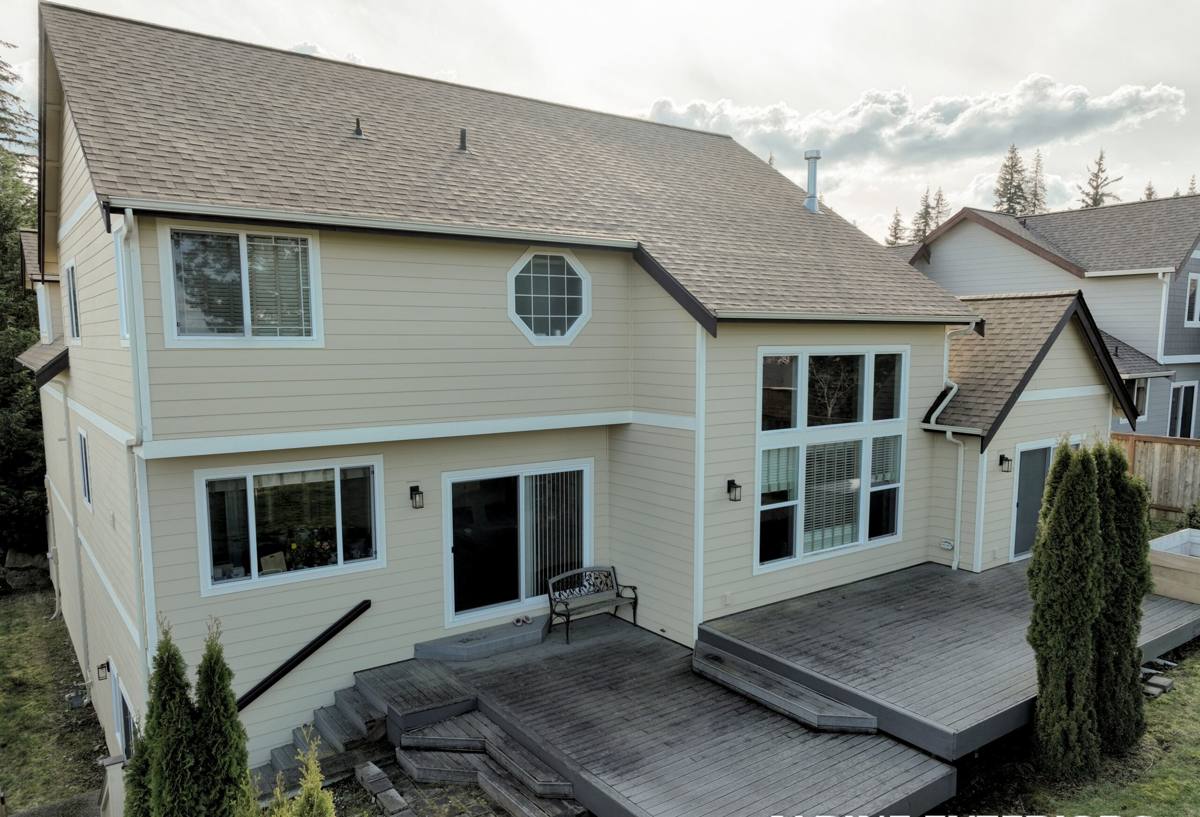
What Skagit County's Climate Does to a Deck
Driving Rain and Standing Water
Skagit County gets a lot of rain, and in a river valley setting like Lyman, that moisture tends to hang around longer than it does in more open, wind-exposed parts of the county. On a deck, that means water sitting between boards, pooling at low spots, and soaking into any exposed end grain or fastener hole that isn't properly sealed or spaced. Framing lumber underneath the deck surface takes the worst of it, since it rarely gets the sun and airflow that would let it dry out between storms.
A Long Moss and Algae Season
Shade from surrounding trees, damp ground-level air, and mild year-round temperatures add up to a moss and algae season that runs longer here than in sunnier, more open parts of the county. A horizontal decking surface collects falling leaves, needles, and organic debris directly on top of the boards, which holds moisture against the surface far more than a vertical wall ever would. Homeowners in and around Lyman often see green staining and a slick, slippery film develop on shaded deck sections well before it shows up anywhere else on the property.
Salt Air as a Regional Factor
Parts of Skagit County closer to Puget Sound and the coastal towns deal directly with salt-laden air, which speeds up corrosion in fasteners, hardware, and metal railing components. Lyman, further inland up the valley, sees a lot less of that direct salt exposure. Even so, we spec fastening and structural hardware to the same county-wide standard on every job, because homes change hands, weather patterns shift year to year, and under-spec hardware on a structural connection is never a place to cut corners.
Freeze-Thaw and Temperature Swings
Skagit County winters are mild by national standards, but Lyman's valley setting still sees periodic freezing temperatures, and a wet deck surface that freezes overnight can turn genuinely slick by morning. Composite decking's consistent surface texture holds up to repeated freeze-thaw cycling better than wood that's already absorbed moisture, but no decking material removes the need for basic winter caution on a shaded, damp surface.
Why We Recommend Composite Decking for This Climate
Wood decking has its place, and we still build wood decks for homeowners who want that specific look and understand what it takes to maintain. But when the ask is a deck that holds up to Skagit County's rain and moss load without constant upkeep, composite is what we steer people toward, and it's a professional call based on the trade-offs, not a sales pitch.
The Trade-Offs, Honestly
- Moisture behavior: Composite decking doesn't absorb water the way wood does, so it isn't as prone to swelling, cupping, or splintering after a long wet season.
- Maintenance: Wood decking in this climate generally needs sealing or staining every one to two years to keep moisture and moss from taking hold. Composite needs periodic cleaning, but no sealing or refinishing.
- Upfront cost: Composite materials cost more than standard pressure-treated wood at the outset — that's a real trade-off, not something we gloss over.
- Long-term cost: Over a full ownership period, composite typically costs less to maintain, since there's no recurring sealing, staining, or board replacement from rot.
- Appearance over time: Wood needs consistent refinishing to keep its look; composite holds its color and surface texture with far less intervention.
Neither material is wrong. The decision comes down to how much ongoing maintenance a homeowner actually wants to commit to, and in a climate that gives a deck this much moisture and moss exposure, we think composite is usually the more honest recommendation.
What a Correctly Built Composite Deck Requires
Substructure and Framing
Most deck failures we see don't start in the decking boards themselves — they start in the framing underneath. Composite decking manufacturers generally call for tighter joist spacing than traditional wood decking, and skipping that spec is one of the most common shortcuts that leads to a springy, underperforming deck a few years down the line. We frame to the specification the decking product actually requires, not a generic one.
Fastening and Board Movement
Composite boards expand and contract with temperature more than solid wood does, so proper gapping between boards and around fixed objects matters more than it might seem. We use fastening systems designed for composite decking, whether that's a hidden clip system or manufacturer-approved face fasteners, set with the spacing the product needs to move without buckling or gapping unevenly over time.
Drainage and Ground Clearance
A deck needs airflow underneath it as much as it needs a solid walking surface on top. We grade and clear the space below the joists so water moves away from the structure instead of sitting against it, and we pay close attention to the ledger board where the deck attaches to the house — that connection needs proper flashing to keep water from working its way into the house framing behind it, which is one of the most damaging and least visible failure points on any deck.
Railings, Stairs, and Trim
Railings and stairs take direct weather exposure and structural load at the same time, so baluster spacing, post attachment, and stair stringer sizing all get built to code, not to whatever looks close enough. Composite fascia and trim boards get finished the same way as the decking field, so the whole structure ages evenly instead of showing a mismatched wood trim line a year or two in.
Our Process, Start to Finish
- Site assessment: We look at the property, existing structure if there is one, sun and shade exposure, drainage, and how the deck will tie into the house.
- Design and material selection: We talk through layout, size, railing style, and composite color and grade options based on budget and how the space will actually be used.
- Permitting: Deck projects in Skagit County often require permitting depending on size and height — we handle that as part of the process rather than leaving it to the homeowner.
- Framing and structural work: Ledger attachment, footings, and joist framing get built to the decking manufacturer's specification before any composite board goes down.
- Decking installation: Boards go down with correct spacing and fastening, followed by railings, stairs, and trim.
- Final walkthrough: We walk the finished deck with the homeowner, check fastening, gaps, and railing stability, and go over basic long-term care before calling the job done.
Comparing Decking Materials for a Lyman Property
| Material | Moisture Resistance | Maintenance | Typical Lifespan Here |
|---|---|---|---|
| Composite Decking | High — resists absorption and swelling | Low — periodic cleaning, no sealing or staining | 25-30+ years with correct framing and install |
| Pressure-Treated Wood | Moderate — treatment slows but doesn't prevent rot | Moderate to high — sealing/staining every 1-2 years | 10-20 years, shorter in shaded, damp areas |
| Cedar | Moderate — naturally rot-resistant but still absorbs moisture | High — regular refinishing to prevent graying and moss | 10-20 years without diligent upkeep |
These figures are general industry ranges, not guarantees. Actual performance always depends on framing quality, installation, and how consistently a deck gets maintained.
Cost Factors on a Lyman Deck Project
We don't publish fixed prices because every deck project is different, but the variables that drive cost on a composite deck build in this area are consistent:
- Total square footage and the shape of the deck, including multi-level or wraparound designs
- Height off the ground, which affects footing requirements, stair count, and railing code requirements
- Condition of an existing structure, if this is a rebuild rather than a new build
- Ledger attachment and any structural work required at the house connection point
- Composite board grade and color selection
- Site access, including tree cover and grade changes common on Lyman's more rural, wooded properties
Signs an Existing Deck Needs Attention
- Soft or spongy boards, especially near the house connection or stair landings
- Gaps, warping, or unevenness between boards
- Rust staining or visible corrosion around fasteners and hardware
- Moss or algae film that returns quickly after cleaning, especially on shaded sections
- Any visible separation between the deck's ledger board and the house
- Wobbly railings, posts, or stair stringers
Any one of these on its own might be minor. Several at once, especially on an older wood deck, usually means the substructure needs a closer look before it's worth investing in new surface boards.
Why a Local Skagit County Crew Matters for This Job
A deck built correctly for a windy, salt-exposed lot near Puget Sound isn't necessarily built the same way as one for a shaded river valley property like Lyman, and vice versa. A crew that works across Skagit County day to day knows which orientations dry out slowest, where moss establishes first, and how local moisture patterns behave across a full year rather than just on install day. That's the kind of knowledge that shapes framing decisions, drainage details, and hardware choices — not something a generic national crew passing through the area is going to have dialed in.
That local knowledge also shows up in the practical, unglamorous side of a build. Permitting requirements can vary depending on deck height and distance from property lines, and rural Lyman lots often mean longer driveways, tree-lined access, and staging space considerations that don't come up on a flat, open in-town lot. We plan around those realities from the first site visit instead of running into them mid-project.
If your Lyman property could use a new deck, or an existing one is showing signs it's past due for attention, we're happy to come take a look and give you a straight, no-pressure assessment. Reach out using the form below to schedule a free estimate.