 Skagit County
 Siding Built for Lyman's Wet, Wooded Climate
Lyman sits in the Skagit River valley, where dense tree cover, river humidity, and a marine-influenced climate combine to keep exterior surfaces damp for long stretches of the year. Homes here don't just get rained on — they stay wet. Morning fog off the river, shade from surrounding conifers, and Skagit County's long, gray winters mean siding often doesn't get a real chance to fully dry out between storms. Add in salt-tinged air carried up the valley from Puget Sound on wind events, and you have a climate that is genuinely hard on exterior building materials.
Over a full season, that combination shows up as moss and algae growth on north-facing walls, paint that fails years ahead of schedule, and — on the wrong siding product — swelling, delamination, or rot at seams and butt joints. None of this is unusual for the area. It's simply what siding in Lyman has to be built to handle.
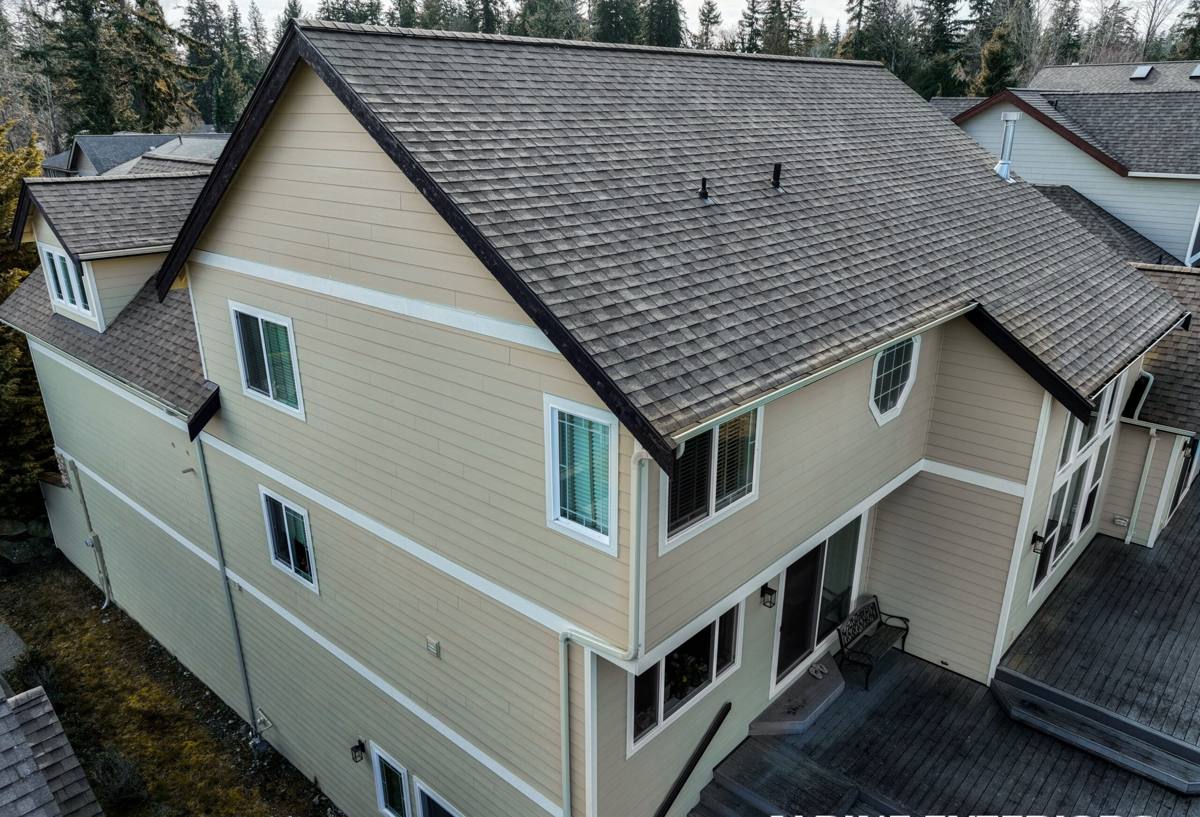
Why Fiber Cement Is the Right Material Here
Fiber cement siding is a mix of cement, sand, and cellulose fiber, engineered specifically to resist moisture-driven failure. Unlike wood-based products, it doesn't absorb water into its core the same way, so it isn't prone to swelling and warping when it stays damp for days at a time — a common condition on shaded, tree-lined lots like the ones found throughout Lyman and the surrounding upriver communities. It also won't support rot, and it's non-combustible, which matters in a county where wildfire risk in the foothills has become a real planning consideration for homeowners.
What Moss Season Does to the Wrong Siding
Moss and algae need three things to take hold: shade, moisture, and a surface they can grip. Wood siding and wood-based composite products give organic growth an easier foothold, and repeated moisture cycling accelerates their breakdown at the fiber level. Fiber cement gives moss and algae less to work with, and because it's factory-finished rather than field-painted, the surface holds up better under the power-washing and gentle cleaning that Lyman homes typically need once or twice a year to stay ahead of growth.
Why We Install Only James Hardie
Fiber cement is a category, not a single product, and the quality of the cladding on your home depends heavily on which manufacturer made it and how well it was engineered for this specific climate. We install exclusively James Hardie products because Hardie engineers regional HZ5 formulations built for the Pacific Northwest's moisture load, backs its boards with a factory-applied ColorPlus finish that resists fading and chipping far better than field paint, and stands behind the work with a strong, transferable limited warranty. We don't install LP SmartSide, vinyl, Cemplank, Allura, or unfinished wood products — not because those materials have no merit, but because after years of doing this work in Skagit County's climate, Hardie is what we're willing to warranty our labor against.
What a Correct Installation Actually Involves
Fiber cement siding performs exactly as well as the installation behind it — and in a high-moisture area like Lyman, installation quality is the difference between siding that lasts decades and siding that fails at the seams within a few years. A correct job isn't just nailing boards to the wall. It starts with the water management system underneath.
- A properly lapped weather-resistive barrier installed shingle-style so water sheds outward, not behind the cladding
- Rainscreen or drainage gap where conditions call for it, giving trapped moisture a path to escape instead of sitting against the wall assembly
- Correctly flashed windows, doors, and penetrations — the single most common failure point on poorly installed siding jobs
- Proper fastener placement and spacing per James Hardie's published installation instructions, not generic carpentry guesswork
- Minimum clearance from grade, decks, and roof lines so siding isn't sitting in standing water or splash-back
- Factory-mitered or properly caulked and painted field-cut edges, since cut edges are where moisture intrusion starts
- Correct joint treatment at butt seams — tight, backed, and sealed per manufacturer spec, not just butted and caulked
Skip any one of these steps and you can end up with water intrusion behind siding that looks fine from the driveway. This is why we treat the installation details as seriously as the material choice itself.
How Fiber Cement Compares to Other Siding Options in This Climate
| Material | Moisture Resistance in Wet Shade | Moss/Algae Resistance | Long-Term Maintenance |
|---|---|---|---|
| James Hardie Fiber Cement | Strong — engineered core, factory finish | Good, especially with periodic washing | Low — occasional cleaning, no repainting for years |
| Vinyl | Moderate — doesn't rot but can warp, and seams can let moisture behind panels | Moderate | Low, but limited repair options and can crack in cold snaps |
| LP SmartSide / Wood-Based Composite | Weaker in constant shade/damp conditions — wood core is moisture-sensitive | Moderate to weak | Higher — edge sealing and monitoring needed |
| Cedar / Primed Wood | Weakest without diligent upkeep — absorbs moisture directly | Weak — organic material feeds growth | Highest — regular repainting/staining and rot inspection |
This isn't a knock on every alternative — vinyl and wood-based products have their place in drier climates or on budget-driven projects. But for a shaded, river-valley lot in Lyman that stays damp for days after a storm, the moisture behavior of the material matters more than almost anywhere else in the county.
Our Process for Lyman Homeowners
Because we already work regularly throughout Skagit County, we know what this specific area needs before we ever get on a ladder.
1. On-Site Assessment
We walk the exterior, check current siding and trim for moisture damage or rot (especially at the north and shaded elevations, where damage tends to be worst), and evaluate the existing water management layer.
2. Product and Color Selection
We walk you through James Hardie's plank, shingle, and panel lines, along with ColorPlus finish options, so you get a look that fits the home and a product line matched to this climate.
3. Tear-Off and Water Barrier Work
Old siding comes off, sheathing is inspected for hidden moisture damage, and a new weather-resistive barrier (with rainscreen where appropriate) goes in before a single new board is hung.
4. Installation to Manufacturer Spec
Fastening, flashing, and joint treatment follow James Hardie's published instructions exactly — this is what keeps the transferable warranty intact and keeps water out for the long run.
5. Final Walkthrough
We go over the finished job with you, including basic care and what to expect during the first wet season.
Living With Fiber Cement Through Skagit County's Wet Season
Even the right material benefits from a little seasonal attention. Fiber cement is low-maintenance, not no-maintenance, and a little care goes a long way in a moss-prone area like Lyman.
- Rinse siding gently once or twice a year, focusing on shaded north- and east-facing walls where moss takes hold first
- Keep gutters clear so overflow doesn't run down the siding face during heavy rain events
- Trim back vegetation and tree limbs that keep siding in constant shade and restrict airflow
- Inspect caulking at trim and penetrations every couple of years and touch up as needed
- Address any impact damage or chipping promptly so the water-resistant core stays protected
What Fiber Cement Siding Costs to Consider
| Cost Factor | Why It Matters in Lyman |
|---|---|
| Home size and elevation complexity | More corners, gables, and trim details mean more cutting, flashing, and labor time |
| Condition of existing sheathing | Moisture-damaged sheathing found during tear-off may need repair before new siding goes on |
| Product line and finish | Plank, shingle, and panel styles carry different material costs; ColorPlus finishes vary by color |
| Access and site conditions | Tree-covered, sloped, or river-adjacent lots can affect staging and scaffolding needs |
| Trim and accessory work | Fascia, soffit, and window trim replacement alongside siding affects total project scope |
Every home is different, which is why we price projects after an in-person assessment rather than off a generic square-footage number.
Why It Matters to Hire a Crew That Already Works This Area
Siding companies that mostly work drier, more urban parts of Skagit County can underestimate what a river-valley, tree-shaded property in Lyman actually needs — the drainage details, the moss cycle, the way moisture lingers under a forest canopy. We work throughout Skagit County, including the smaller upriver communities, and we build every installation around the conditions the home is actually going to face, not a generic spec sheet. That local familiarity shows up in the water management details that don't show up in a photo but determine whether your siding is still performing well in fifteen years.
If you're considering fiber cement siding for a home in Lyman, we're happy to take a look and walk you through what we'd recommend — no pressure, no obligation. Fill out the form below to schedule a free estimate.