 Skagit County
 New Roof Installation in Lyman: What the Climate Demands
Lyman sits in the Skagit River valley, tucked between tree-covered hillsides and farmland east of Sedro-Woolley. It's a quieter corner of Skagit County, but the roofs here work just as hard as anywhere else in Western Washington — arguably harder in some ways. Heavy tree cover means more shade, more falling debris, and slower drying times after a storm. Add in the long stretch of driving rain that defines a typical Skagit County winter and you get roofing conditions that punish shortcuts: undersized underlayment, poor flashing, or ventilation that was an afterthought.
A new roof installed correctly for this environment isn't just about keeping water out on day one. It's about how the assembly performs over the next 20 to 30 years of wet falls, cold snaps, and the long moss season that follows once shade and moisture settle in for the year. We install roofs in Lyman and the surrounding valley the same way we'd want one installed on our own house — built for the actual conditions, not a generic spec sheet.
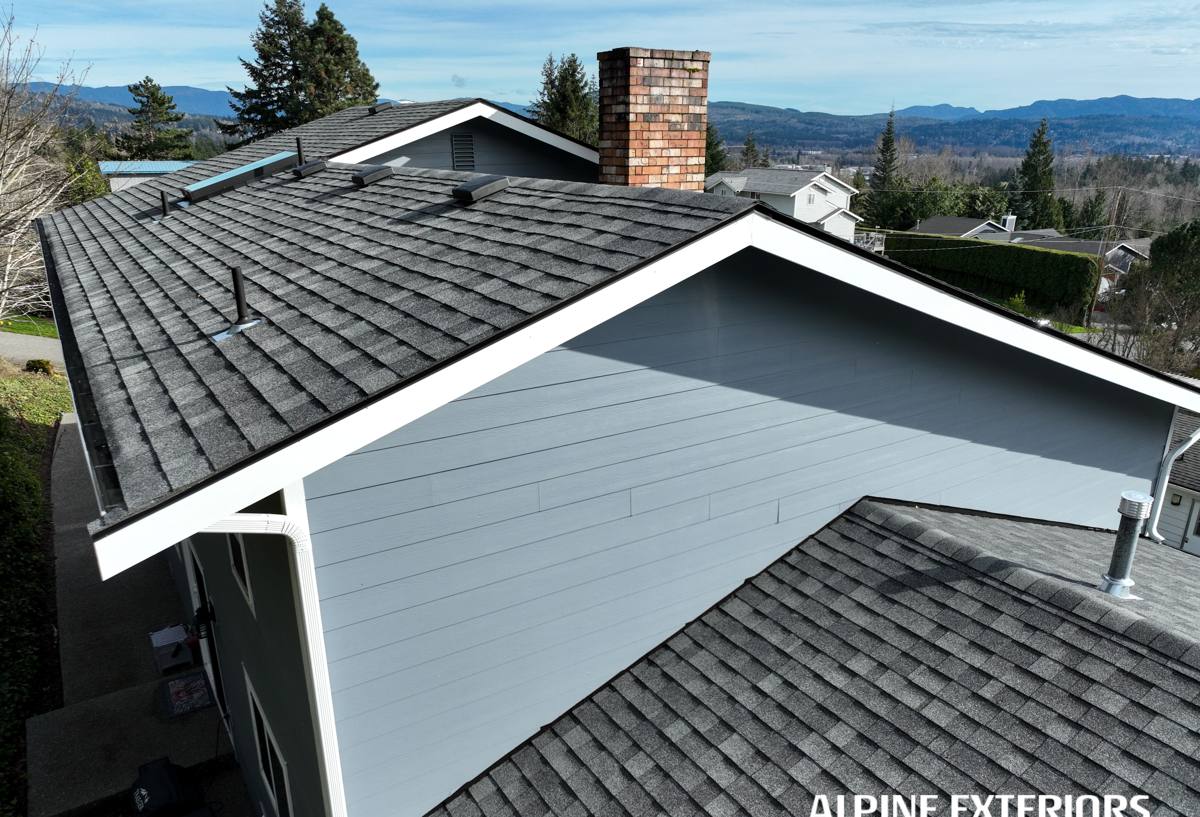
Signs a Lyman Home Actually Needs a New Roof
Not every roofing problem calls for full replacement, and we'll tell you honestly when a repair is the smarter move. But there are signs that point toward the roof being past the point where patching makes sense:
- Shingles that are cupping, cracking, or losing granules in patches rather than isolated spots
- Soft or spongy decking felt underfoot, especially near valleys or eaves
- Daylight visible through the attic roof deck, or water staining on attic sheathing
- Moss and algae that keep coming back within a season or two of cleaning
- A roof approaching or past 20-25 years old (typical lifespan for asphalt shingle in this climate)
- Multiple past repairs in different areas rather than one contained issue
If your roof shows one or two of these, a repair may buy you real years. If it shows several at once, replacement usually costs less over time than chasing leaks one at a time.
What a Correct New Roof Installation Actually Involves
Tear-Off and Deck Inspection
We remove the old roofing down to the deck rather than layering over it. Layering hides problems and voids most manufacturer warranties. Once the deck is exposed, we check for soft spots, rot, or delamination — common where old flashing failed or ventilation was inadequate — and replace any bad sheathing before anything new goes down.
Underlayment and Ice/Water Protection
In a valley climate with regular wind-driven rain, underlayment choice matters more than most homeowners realize. We use synthetic underlayment across the field of the roof and self-adhering ice-and-water membrane at eaves, valleys, and around penetrations — the areas most exposed to wind-driven moisture and the slowest to dry after a storm.
Flashing
Flashing failure, not shingle failure, is the most common cause of roof leaks we find during tear-offs. Chimneys, skylights, sidewalls, and roof-to-wall transitions all need properly formed and step-flashed metal, not just sealant. Sealant is a backup, not a strategy.
Ventilation
Balanced intake and exhaust ventilation keeps the attic close to outside temperature and lets moisture escape instead of condensing on the underside of the deck. Under heavy tree cover, poor ventilation also feeds the moss and algae growth that shortens shingle life. We size ventilation to the actual attic, not a rule of thumb.
Roofing Material Options for a Lyman Property
Most homes in this part of Skagit County are roofed in architectural asphalt shingle, and for good reason — it's a proven, reasonably priced product with strong warranty support and a wide range of styles. Metal roofing is a smaller but growing share, especially on homes with steep pitches or owners planning to stay long term. Here's how they compare for a valley climate like Lyman's:
| Factor | Architectural Asphalt Shingle | Standing Seam Metal |
|---|---|---|
| Typical lifespan here | 20-30 years | 40-50+ years |
| Upfront cost | Lower | Higher, often 1.5-2.5x shingle |
| Moss/algae resistance | Moderate; algae-resistant granules help but don't eliminate the issue under heavy shade | Better; smooth surface sheds debris and dries faster |
| Performance in driving rain | Good with correct underlayment and flashing | Excellent; fewer seams and laps |
| Repair/insurance work | Widely serviced, easy to match and patch | Requires a metal-experienced crew for repairs |
| Noise in heavy rain | Minimal, typical shingle sound | Noticeable unless solid decking and underlayment are used (standard on new installs) |
We don't push one product over the other — the right call depends on your budget, how long you plan to stay in the home, and how much shade your roof sits under. We'll walk through the honest trade-offs for your specific roof during the estimate.
Our Installation Process
- On-site assessment: We inspect the existing roof, attic, and ventilation, and talk through what we find before recommending anything.
- Written estimate: A clear scope of work and price — materials, labor, disposal, and any deck repair allowance — with no vague line items.
- Scheduling around weather: Given how much rain this valley sees, we plan installs for stretches of dry weather where possible and stage materials to keep the deck covered if conditions turn.
- Tear-off and deck repair: Old roofing removed, deck inspected and repaired as needed.
- Underlayment, flashing, and ventilation installed to spec — not shortcuts, not guesswork.
- Final roofing material installed per manufacturer requirements, which is also what keeps material warranties valid.
- Cleanup and walk-through: Site is cleared of debris and nails, and we walk the finished roof with you.
Moisture, Moss, and Ventilation: The Real Long-Game Issue
The single biggest difference between a roof that looks good for five years and one that performs well for twenty-five is what's happening you can't see — ventilation and moisture management. In a shaded, river-valley setting like Lyman, roofs stay damp longer after rain, which is exactly the condition moss and algae need to establish. Once moss takes hold, it holds moisture against the shingle surface and works its way under tabs and edges, which accelerates wear well beyond normal weathering.
Good ventilation, proper underlayment at vulnerable points, and keeping nearby tree limbs trimmed back from the roofline are the three things that do the most to slow this cycle. None of them are glamorous, and none of them show up in a quick visual estimate — which is part of why we spend time in the attic, not just on the roof, before we quote a job.
What Affects the Cost of a New Roof
| Factor | Why It Matters |
|---|---|
| Roof size and complexity | More valleys, dormers, and penetrations mean more flashing and labor time |
| Deck condition | Rotted sheathing found at tear-off adds material and labor to replace |
| Material choice | Asphalt shingle vs. metal is typically the largest single cost driver |
| Roof pitch and access | Steep or hard-to-access roofs take longer and require more safety setup |
| Ventilation upgrades | Adding proper intake/exhaust venting where none existed is a worthwhile add, not a hidden fee |
| Layers to remove | Tearing off multiple old layers costs more in labor and disposal than a single layer |
We don't publish a flat per-square price because these factors genuinely change the number from one Lyman roof to the next. What we do commit to is a written estimate that spells out exactly what's included before any work starts.
Why a Crew That Already Works in Lyman Matters
Roofing crews who mostly work in denser, more urban parts of Skagit County don't always account for what a heavily treed, river-valley property needs — more attention to moisture cycling, debris management, and access on rural lots. A crew that's already familiar with Lyman and the surrounding area knows what these roofs are up against because we've seen the pattern repeat: shade-driven moss, wind-driven rain finding weak flashing, and ventilation that was adequate when the trees around a house were smaller. That local pattern recognition shapes how we spec every new roof we install here — not from a manual, but from having done the work in this specific climate.
Checklist: What to Ask Before You Sign a Roofing Contract
- Is the estimate in writing, with materials, labor, and disposal broken out separately?
- Does the contractor carry current WA state contractor licensing and liability insurance, and will they provide proof?
- Will the deck be inspected and repaired as needed, with pricing for that spelled out ahead of time?
- What underlayment and ice/water shield are specified, and where will they be used?
- Is attic ventilation being assessed, not just assumed to be fine?
- What's covered under workmanship warranty versus manufacturer material warranty, and for how long?
- Who's the point of contact if something needs attention after the job is done?
If a contractor can't answer these plainly, that's worth noticing before you sign anything.
Get a Straight Answer on Your Roof
If you're weighing a new roof for your Lyman property, we're glad to come take a look and give you an honest assessment — including telling you if a repair still has life left in it. There's no pressure and no obligation. Use the form below to request a free estimate.