 Skagit County
 Why Roofs in Lyman Wear on Their Own Schedule
Lyman sits in the tree-lined Skagit River valley, and that setting shapes how a roof ages here. Between the conifer cover, the shade much of the property line holds through the day, and the steady flow of marine air that moves up the valley from the Salish Sea, roofs in this part of Skagit County stay damp longer after a storm than roofs out in open, sunnier ground. That extra drying time is the whole story behind most of the early roof failures we see out this way.
It isn't one thing working against a roof here — it's three, stacked on top of each other. Driving rain off the Pacific soaks the roof deck repeatedly through the fall and winter. Salt-laden air drifting in from the Sound accelerates corrosion on fasteners, flashing, and any exposed metal. And a long moss season, fed by shade and moisture, works its way under shingle edges and holds water against the surface for months at a time. None of these alone would wreck a roof fast. Together, they cut years off a roof that was installed without them in mind.
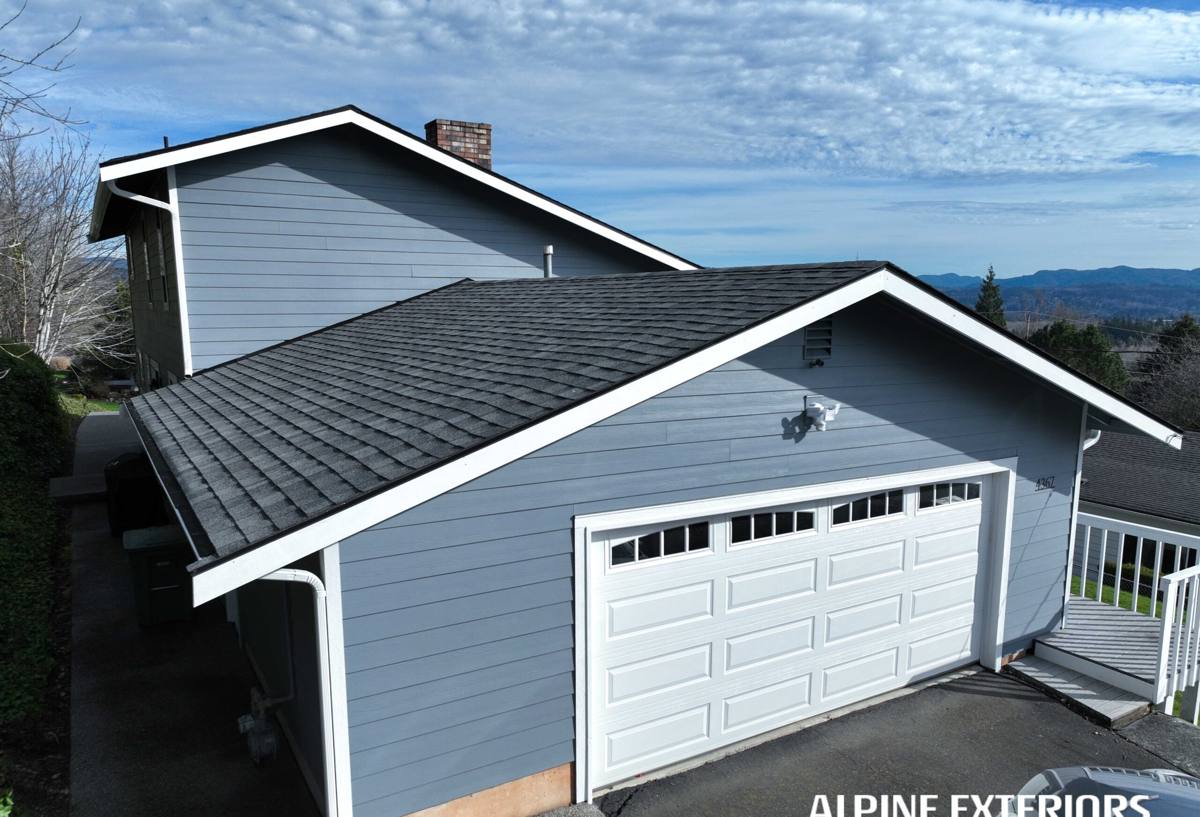
Signs a Lyman Roof Needs Replacing, Not Just Patching
A lot of roofs get repaired past the point where repair is the smart move. Here's what tells us a full replacement is the honest recommendation rather than another patch:
- Moss mats thick enough that you can't see the shingle surface underneath, especially on north-facing slopes
- Granule loss heavy enough that shingles look bald or blotchy, or your gutters are filling with grit
- Soft, spongy decking you can feel when walking the roof, or sagging visible from the ground
- Daylight, water stains, or a musty smell in the attic
- Shingles that are curling, cupping, or cracking at the tabs
- Three or more past repairs to the same section within a few years
- A roof already past 20-25 years old, even if it looks okay from the driveway
One or two of these might still be repairable. Several at once usually means the underlayment and decking have been absorbing moisture for a while, and a patch just delays a bigger problem.
What an Honest Roof Replacement Actually Involves
A correct tear-off and replacement isn't just stripping old shingles and nailing down new ones. It's a sequence, and skipping steps is exactly how a roof ends up back on the repair list in five years instead of twenty.
Down to the Deck
We remove existing roofing down to the sheathing so the deck can actually be inspected, not just assumed. In a shaded, moisture-heavy setting like Lyman, this step matters more than it does elsewhere — trapped moisture under old roofing softens plywood or plank decking in ways you can't see from a walkthrough alone. Any soft or delaminated sheathing gets replaced before anything new goes down on top of it.
Underlayment and Water Barriers
Ice-and-water shield goes at eaves, valleys, and around penetrations — the spots where wind-driven rain and standing moisture do the most damage. A synthetic underlayment covers the rest of the deck as a second line of defense under the shingles themselves.
Flashing and Ventilation
New flashing at chimneys, sidewalls, and skylights, tied in correctly rather than caulked over old metal. And a ventilation system that actually balances intake at the eaves with exhaust at the ridge — more on why that specific detail matters below.
Choosing a Roofing Material for This Climate
There's no single "best" roofing material — there's the right material for your roof's pitch, your budget, and how much shade and moss pressure your particular property deals with. Here's how the common options stack up for a home in a shaded, moisture-heavy setting like Lyman:
| Material | Moss/Moisture Resistance | Typical Lifespan | Maintenance |
|---|---|---|---|
| Architectural (laminate) asphalt shingle | Good, especially with algae-resistant granules | 25-30 years | Low — periodic moss treatment on shaded slopes |
| 3-tab asphalt shingle | Fair | 15-20 years | Low, but wears faster under heavy moss pressure |
| Standing seam metal | Excellent — moss struggles to hold on smooth metal | 40-50+ years | Very low |
| Cedar shake | Poor without diligent upkeep | 20-30 years with maintenance | High — regular treatment needed in wet, shaded settings |
We'll install cedar shake if that's what a homeowner wants for the look, but we're upfront about the trade-off: in a shaded river-valley setting, untreated wood shake holds moisture and grows moss faster than most people expect, and the maintenance schedule needed to keep it performing is a real commitment, not a one-time thing. For most Lyman properties dealing with heavy tree cover, an algae-resistant architectural shingle or a metal roof gives you a better moisture-and-moss track record for the money.
Our Roof Replacement Process
- On-site assessment — we walk the roof and the attic, not just look from the ground, and check the deck condition where it's accessible.
- Written scope — materials, underlayment, ventilation plan, flashing details, and any decking allowance, spelled out before work starts.
- Material selection — matched to your roof's pitch, sun/shade exposure, and budget, with the trade-offs explained plainly.
- Scheduling around weather — we plan tear-off days around dry windows, since an open roof deck and Skagit rain don't mix.
- Tear-off and deck inspection — old roofing removed, deck inspected, any rot or soft sheathing shown to you before it's covered up.
- Install — underlayment, flashing, ventilation, and roofing material installed per manufacturer specification, not shortcuts.
- Cleanup and magnetic sweep — job site and yard cleared of debris and stray fasteners.
- Final walk-through — we go over the finished roof with you before we consider the job done.
Moss and Ventilation: The Two Details Most Re-Roofs Get Wrong
Moss Isn't Just Cosmetic
Moss holds water against the shingle surface long after the rest of the roof has dried, which softens granules and shortens the material's working life. On a re-roof, we can install zinc or copper strips near the ridge that slowly discourage regrowth as rain washes over them, and we'll flag any low tree limbs shading the roof that keep a section perpetually damp. Moss prevention is a design decision made at install time — not something you fix after the fact with a pressure washer.
Balanced Ventilation Prevents the Damage You Don't See
A roof needs intake at the eaves and exhaust at the ridge, balanced against each other, or moisture from inside the attic condenses against the underside of the deck. In a shaded valley home where the roof already dries slowly from the outside, poor attic ventilation adds moisture pressure from the inside too — a combination that rots decking from both directions at once. We size and balance ventilation as part of every replacement, not as an afterthought.
What Affects the Cost
We don't quote a number without seeing the roof, but these are the factors that move the price up or down on most Lyman jobs:
| Factor | Why It Matters |
|---|---|
| Roof pitch and complexity | Steep or cut-up rooflines take longer and need more safety staging |
| Number of tear-off layers | Removing two layers of old roofing costs more than one |
| Decking condition | Rotten sheathing found during tear-off is replaced, which adds material and labor |
| Material choice | Asphalt, metal, and cedar carry different material and install costs |
| Tree cover and access | Heavy shade and tight rural driveways can add setup time and safety measures |
| Permit requirements | Skagit County permitting adds a fixed cost and timeline step |
Why Hiring a Crew That Already Works in Lyman Matters
A crew that works this stretch of the Skagit Valley regularly already knows the pattern: which slopes hold moss longest, how the local weather windows run through fall and winter, and what Skagit County's permitting process actually requires before work starts. That familiarity shows up in fewer surprises mid-job and a schedule that accounts for the rain rather than getting derailed by it. It also means if something needs a follow-up look after the job is done, you're calling a crew that's still working nearby, not chasing down someone who did one job in the area and left.
Before You Sign: A Homeowner's Checklist
- Contractor is licensed and bonded to do roofing work in Washington State
- Proof of current liability insurance and workers' comp coverage, provided in writing
- Written scope names the underlayment, ventilation plan, and flashing details — not just "shingles"
- Decking repair is billed transparently, with rotten sections shown to you, not assumed away
- Warranty terms — both material and labor — are in writing, with the difference between them explained
- Tear-off, disposal, and cleanup (including a nail sweep) are included in the scope
- References or completed local work you can ask about
A roof replacement done right in Lyman's climate should hold up for decades, not just until the next long moss season. If you'd like a straightforward, no-pressure look at what your roof actually needs, use the form below to request a free estimate.