 Skagit County
 Siding Repair in Lyman: Why the Skagit Valley Climate Makes It Different
Lyman sits up the Skagit River valley, in a part of Skagit County where surrounding hills, tree cover, and river-driven humidity keep the air damp longer than in more open, wind-swept stretches of the county. That combination of driving rain, a long moss season, and moisture that lingers against exterior walls is exactly what determines whether a siding repair holds for another decade or fails again within a year or two. A repair that works fine on a dry, sun-exposed wall in another part of the county can behave very differently on a shaded, slow-drying wall in Lyman.
Repair work is also where shortcuts show up fastest. A full siding installation gets inspected as a whole system; a repair is often a smaller, more isolated fix, which makes it tempting to patch the visible problem and skip the underlying cause. In a climate like this one, that's how a $400 repair turns into a $4,000 repair two years later. We treat every repair call in Lyman as a diagnostic job first and a patch job second.
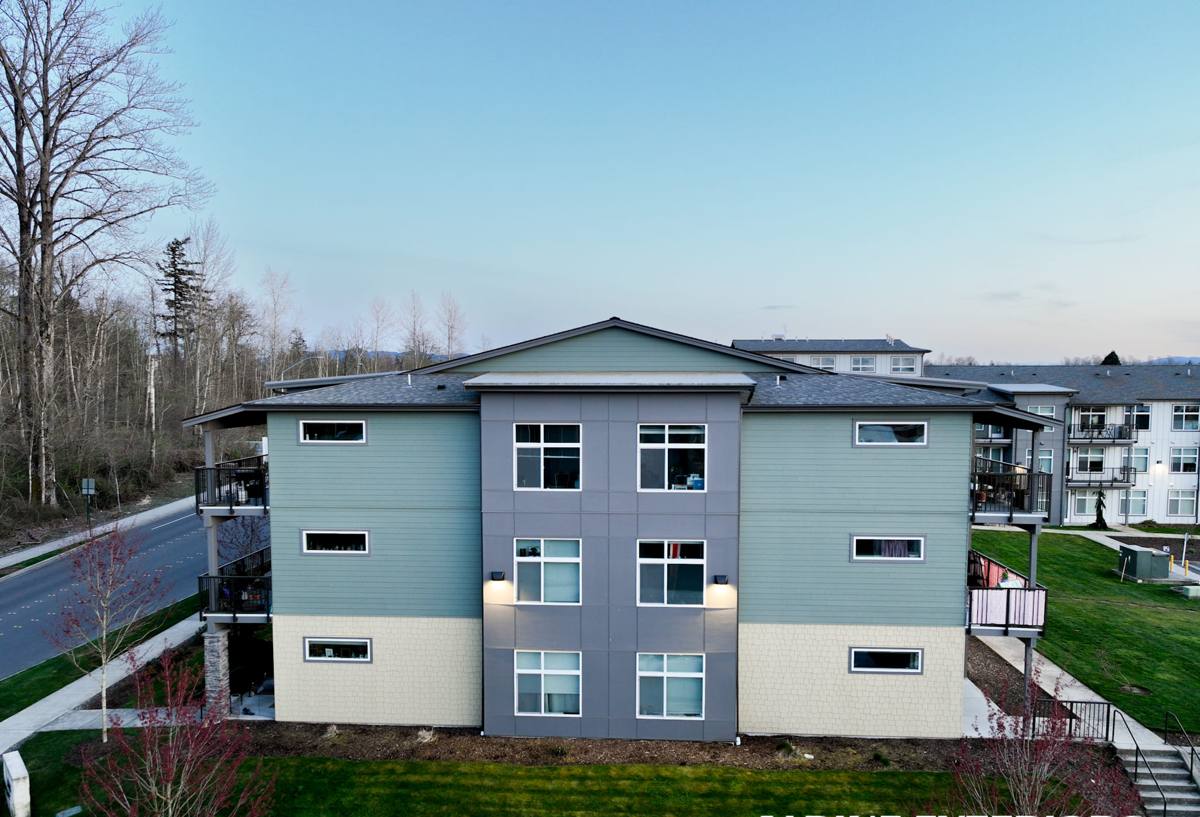
What Actually Damages Siding in This Part of Skagit County
Driving Rain and Prolonged Moisture
Storms coming up the valley don't just rain on a house — they drive water sideways into seams, laps, and trim joints. On homes without properly maintained caulking or flashing, that water finds its way behind the siding plane, where it does damage long before it's visible from the outside. Because the valley air stays humid after a storm passes, wet siding and wet framing underneath it don't dry out quickly, which extends the window for rot and material breakdown.
Moss, Mildew, and Organic Growth
Shade from surrounding trees and mild year-round temperatures add up to a moss season that runs longer here than in sunnier, more exposed parts of Skagit County. Moss and mildew aren't just cosmetic — moss holds moisture directly against the siding surface, and on porous or damaged material that constant dampness accelerates rot at seams, fastener holes, and cut edges. North-facing walls and areas near mature trees are usually where we find the earliest and worst damage.
Salt Air — A Regional Factor
Coastal parts of Skagit County closer to Puget Sound deal with salt-laden air that corrodes fasteners and trim faster than inland areas. Lyman's position further up the valley means less of that direct salt exposure, but it's still part of the broader regional climate that makes off-the-shelf, generic siding repairs a poor fit here. Whatever a home's exact exposure, repairs need to be built for Pacific Northwest moisture, not a national-average climate.
Signs Your Lyman Home Needs Siding Repair
Most siding damage doesn't announce itself. It shows up as small, easy-to-dismiss signs long before a problem becomes obvious from the curb. Homeowners in Lyman should watch for:
- Soft or spongy spots when you press on the siding, especially near the bottom courses or under windows
- Dark staining or moss that keeps coming back within weeks of being cleaned off
- Peeling, bubbling, or cracked paint, particularly on shaded or north-facing walls
- Visible gaps, separation, or cracking at seams, corners, and trim joints
- Warping, cupping, or swelling in individual boards or panels
- A musty smell near exterior walls, or interior wall staining that lines up with an exterior trouble spot
- Fastener heads that have popped, backed out, or left rust streaks
Any one of these on its own might be minor. Two or more in the same area, especially combined with recurring moss, usually means water has been getting behind the cladding for a while.
Repair or Replace? How We Make the Call
Not every siding problem needs a full replacement, and not every problem should be patched. The decision comes down to how much of the wall is affected and what's happening underneath the surface, not just how bad it looks from the driveway.
| Factor | Favors Repair | Favors Replacement |
|---|---|---|
| Extent of damage | Isolated to one or two wall sections | Spread across multiple elevations |
| Substrate condition | Sheathing and framing underneath are sound | Water has damaged sheathing or framing broadly |
| Siding material | James Hardie fiber cement in otherwise good condition | Non-Hardie product with widespread age-related failure |
| Age of existing siding | Relatively recent, still within expected service life | Near or past typical lifespan for its material |
| Recurring problems | First occurrence in that location | Same spot has needed repair more than once |
We'll always tell you honestly which side of that table your home falls on. If a targeted repair will genuinely solve the problem, that's what we recommend — there's no reason to sell a full replacement when it isn't needed.
What a Correct Siding Repair Actually Involves
Opening Up, Not Just Covering Over
A repair that only addresses the visible surface is not a repair — it's a delay. Before any new material goes on, we open up the damaged area enough to see what's happening behind it: whether the sheathing is dry and sound, whether water has been tracking sideways from a different entry point, and whether the framing itself needs attention. Covering a wet or rotted substrate with new siding just moves the problem behind a fresh surface.
Matching Material and Finish
Because we only work with James Hardie fiber cement, repairs on a Hardie-sided home can be matched closely in profile, texture, and factory-applied ColorPlus finish, so the repaired section blends into the surrounding wall rather than standing out as an obvious patch. On homes with older or discontinued color runs, we're upfront if an exact match isn't available and talk through the best realistic option before starting.
Flashing and Water Management
Most siding failures we find during repair calls trace back to a flashing or clearance problem, not a defect in the siding material itself — a window head flashing that was never properly integrated, a kick-out flashing missing where a roofline meets a wall, or siding installed with too little clearance above a deck or grade. A repair that replaces the damaged boards but ignores the water path that caused the damage will fail again in the same spot.
Fastening and Sealant Details
Fiber cement has specific nailing and sealant requirements, and repair work has to follow the same specifications as new installation — correct fastener type and placement, proper gaps at butt joints, and sealant used only where the manufacturer calls for it rather than as a catch-all fix for a poor fit.
Our Siding Repair Process in Lyman
1. On-Site Inspection
We start by walking the exterior with the homeowner, looking at the damaged area and also checking nearby sections, trim, and flashing that could be contributing to the problem. In a shaded, valley setting like Lyman, we pay close attention to walls near mature trees and any area that stays damp longer after rain.
2. Diagnosis
Once we know the extent of the damage, we determine the cause — moisture intrusion, a flashing failure, impact damage, or material fatigue — and confirm whether the substrate underneath is sound. This step decides whether repair is the right call or whether the problem is bigger than it looks from outside.
3. Sourcing Matching Material
For Hardie siding, we source matching profile and ColorPlus color where possible so the repair reads as part of the original wall, not an obvious add-on.
4. Repair Execution
Damaged boards or panels are removed, the substrate is repaired or replaced as needed, and new material is installed to the same nailing, clearance, and flashing specifications as a full installation — no shortcuts because it's "just a repair."
5. Final Walkthrough
We walk the finished repair with the homeowner, point out what caused the original damage, and talk through anything worth watching going forward so small issues get caught early next time.
Why We Only Repair With James Hardie Fiber Cement
We used to work with a wider range of siding products. We don't anymore, and repair calls are a big part of why. Fiber cement gives us a material we can stand behind on a repair, not just a new install:
- Non-combustible core: Fiber cement doesn't feed a fire the way wood-based siding can.
- Factory-applied ColorPlus finish: A controlled factory finish holds color and weather resistance more consistently than field-applied paint, which matters when trying to match a repair to existing siding.
- Dimensional stability: Fiber cement doesn't swell, warp, or cup when it absorbs moisture the way engineered wood products can — a real advantage in a damp valley climate.
- Climate-engineered product lines: Hardie's HZ5 formulation is built for regions with the moisture exposure and freeze-thaw cycling common in the Pacific Northwest.
- Strong transferable warranty: Repairs done to manufacturer spec keep the underlying warranty intact rather than voiding it with an improper fix.
We won't patch a repair with vinyl, LP SmartSide, Cemplank, Allura, primed spruce, or cedar, even if that's what's already on a house. Each has legitimate uses and plenty of satisfied owners, but we've made a professional call: in this climate, we don't want to stand behind a repair method that requires more ongoing maintenance vigilance than we think a homeowner should have to commit to.
Cost Factors for Siding Repair in Lyman
We don't publish flat repair prices because every job is different, but the variables that actually drive cost are consistent from house to house:
- Size of the affected area and how many separate spots need attention
- Whether the substrate underneath needs repair, not just the visible siding
- Availability of a close color and profile match for the existing siding
- Whether the root cause is a simple fastener or sealant issue versus a flashing or drainage problem
- Access and site conditions, including tree cover, height, and staging space common on Skagit Valley properties
Why a Local Lyman Crew Matters
A repair that's correct for a coastal, wind-exposed part of Skagit County isn't necessarily correct for a shaded river valley setting like Lyman, and the reverse is also true. A crew that works this area regularly knows where moss establishes first, which wall orientations stay wet longest after a storm, and how the valley's moisture patterns actually play out over a full year rather than on the one afternoon of the estimate. That familiarity shapes real decisions on a repair — where to check for hidden water damage, how much clearance to leave, and which flashing details are worth double-checking before closing the wall back up.
If your Lyman home has siding that's showing damage, or you're not sure whether it needs a repair or something more, we're happy to take a look and give you an honest assessment — no pressure, no upsell. Reach out using the form below to schedule a free estimate.