 Skagit County
 Siding Built for a Bayside Corner of Skagit County
March Point sits on the water, and that changes what a siding job needs to hold up to. Homes here catch salt-laden air off the bay, wind-driven rain that comes in sideways rather than straight down, and the kind of persistent damp that keeps moss and algae growing on north-facing walls for most of the year. Siding that would be perfectly adequate a few miles inland can fail early out here — not because it was installed badly, but because it was never designed for this exposure in the first place.
We install siding throughout Skagit County, and March Point is one of the areas where the difference between a correct installation and an average one shows up fastest. Salt air accelerates corrosion on fasteners and trim. Constant moisture pushes water into any gap a sloppy installer left open. And the shoulder seasons — when temperatures hover near freezing overnight and homes see repeated wet-dry cycles — are hard on any material that swells, cups, or delaminates when it absorbs water.
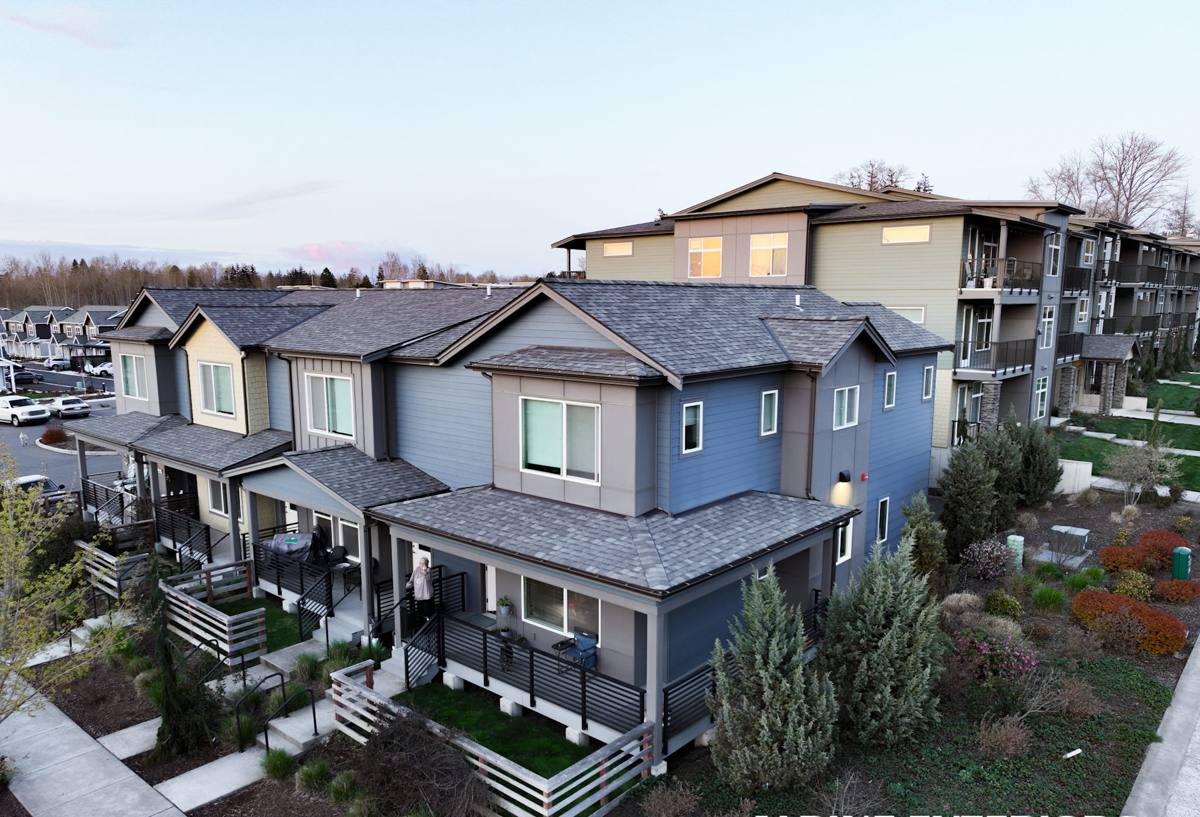
Why We Only Install James Hardie Fiber Cement Here
We made a decision a while back to install one siding system, on every job, everywhere in Skagit County: James Hardie fiber cement. That is not a marketing position — it is a practical one, and it matters more in a place like March Point than almost anywhere else we work.
Fiber cement is made from cement, sand, and cellulose fiber. It does not have wood fibers exposed at the surface the way engineered wood siding does, so it does not absorb and swell the way wood-based products can when they take on repeated moisture. In a bayside microclimate where siding is wet more often than it is dry, that difference in how the material handles water is the single biggest factor in how long a paint job and a siding job actually last.
What James Hardie Specifically Offers
- ColorPlus factory finish: baked-on color that resists fading and chipping far better than field-applied paint, which matters when salt air is already working against any coating.
- HZ5 engineered product line: Hardie's climate-specific formulation built for regions with freeze-thaw cycles and heavy moisture exposure — the Pacific Northwest coast is exactly what it was designed for.
- Non-combustible core: fiber cement does not burn, which matters for insurance considerations and for peace of mind generally.
- A transferable warranty backed by a manufacturer with a long track record, not a smaller regional brand.
We do not install vinyl, LP SmartSide, primed spruce, cedar, or other fiber cement brands like Cemplank or Allura. Each of those products has legitimate uses somewhere, but none of them is the product we are willing to put our name behind in a marine-exposed environment like March Point. Vinyl can warp and fade under sustained UV and salt exposure. Engineered wood siding is only as good as the moisture management around every seam and cut edge, and one missed detail can lead to swelling years down the road. We would rather install one system correctly, every time, than juggle several products with different tolerances for the conditions out here.
Signs a March Point Home Needs New Siding
Because of the exposure here, siding problems tend to show up in specific ways. Homeowners often notice one or more of the following before they call:
- Persistent black or green streaking on north- and west-facing walls that pressure washing only temporarily removes
- Soft or spongy spots when you press on the siding, especially near the bottom courses or around window trim
- Visible cupping, bowing, or separation at panel seams
- Paint that is peeling or bubbling rather than just fading evenly
- Rust streaks bleeding from fastener heads or trim corners
- Rising energy bills that point to water-compromised insulation behind the siding
Any one of these is worth a look. Several together usually mean water has been getting behind the siding for a while, and the fix is more than a repaint.
What a Correct Installation Actually Involves
The siding itself only does half the job. The other half is everything underneath it and around it, and this is where an installation either holds up to Skagit County weather or quietly fails a few years in.
Weather Barrier and Flashing
Before any panel goes up, the wall needs a continuous weather-resistant barrier with properly lapped seams, and every penetration — windows, doors, vents, hose bibs — needs flashing that directs water outward and down, never behind the barrier. In a location that gets driving, wind-pushed rain, sloppy flashing work is the single most common cause of hidden rot.
Clearances and Fastening
James Hardie specifies minimum clearances from grade, roof lines, and decks, and specific fastener types and spacing for the region's wind exposure. We follow the manufacturer's installation instructions to the letter, because clearance and fastening errors are also the errors that most often void a warranty claim down the road.
Caulking and Joint Treatment
Panel joints, trim intersections, and butt seams need the right sealant, applied correctly, at the right coverage. Left undone or done poorly, these are the exact points where wind-driven rain finds its way in.
Our Process, Start to Finish
| Step | What Happens |
|---|---|
| 1. On-site assessment | We walk the exterior, check current siding and water damage, and note anything specific to the home's exposure to wind and bay-facing walls |
| 2. Estimate and product selection | You get a written scope covering the HZ5 product line, ColorPlus color, trim details, and timeline |
| 3. Tear-off and inspection | Old siding comes off and we inspect sheathing for existing moisture damage before anything new goes up |
| 4. Weather barrier and flashing | New barrier installed with correct laps; flashing detailed at every window, door, and penetration |
| 5. Siding installation | Panels installed to Hardie's fastening and clearance specifications |
| 6. Trim, caulking, and final inspection | Joints sealed, trim finished, and a final walkthrough with you before we call it done |
What Affects the Cost of a Siding Job in March Point
Every home is different, so we do not quote prices without seeing the property, but the same handful of factors drive cost on most jobs in this area:
| Factor | Why It Matters |
|---|---|
| Extent of existing water damage | Rotted sheathing found during tear-off has to be replaced before new siding goes on |
| Home size and wall complexity | More corners, dormers, and trim details mean more labor and material cuts |
| Siding profile and accessories | Lap siding, shingle-style panels, and trim boards each carry different material costs |
| Access and site conditions | Waterfront lots, slopes, and limited staging space can affect equipment and labor time |
| Full replacement vs. partial repair | A full re-side resolves hidden moisture issues; a patch may leave underlying problems unaddressed |
Why Local Installation Experience Matters
Siding manufacturers publish installation specs, but applying them correctly to a specific site's wind exposure, moisture load, and seasonal weather pattern takes judgment that comes from working in that environment repeatedly. A crew that regularly works Skagit County's waterfront communities already knows how much clearance to leave, where to pay extra attention to flashing, and which details matter most on a home exposed to bay winds and salt air, because we have seen what happens when those details are skipped on similar homes nearby.
That local familiarity also shows up in smaller ways: knowing how the area's moss and algae growth patterns affect where extra ventilation or trim detailing helps, and understanding how quickly an exposed wall here can go from "fine" to "compromised" if water gets behind it.
Caring for Your Siding After Installation
James Hardie siding is low-maintenance, not no-maintenance. In a bayside location like March Point, a little regular attention keeps it performing the way it should for decades:
- Rinse the exterior periodically to clear salt residue and organic buildup, especially on shaded or north-facing walls
- Keep gutters clear so water isn't overflowing directly onto siding and trim
- Trim back vegetation and tree cover that keeps walls shaded and damp longer than necessary
- Inspect caulking at trim and window joints every year or two and have any cracked sealant redone
- Address any soft spots, staining, or fastener rust early, before water has a chance to reach the sheathing
If your March Point home is due for new siding, or you're not sure whether what you're seeing is cosmetic or something more, we're happy to take a look and walk you through what we find. Fill out the form below for a free, no-pressure estimate.