 Skagit County
 Why Bow's Climate Is Hard on a Roof
Bow sits in one of the more exposed pockets of Skagit County — close enough to Samish Bay and the Puget Sound shoreline to catch salt-laden air off the water, and shaded enough by the surrounding fir and cedar cover to stay damp long after the rest of the county has dried out. That combination is tougher on a roof than either factor alone. Salt air accelerates corrosion on metal fasteners and flashing. Shade and moisture together create ideal conditions for moss, which doesn't just look bad — it holds water against the roofing material and works into seams over time. Add the region's long, driving rain events, often coming in sideways off the water during winter storms, and you have a roof that needs more than a good-looking surface. It needs a system engineered for water shedding, corrosion resistance, and organic growth control, installed correctly the first time.
A lot of roofing problems we see in this part of Skagit County aren't failures of the material itself — they're failures of installation detail. Metal roofing is one of the most durable products available for this climate, but only when the underlayment, fastening pattern, flashing, and ventilation are done right for local conditions. Get any of those wrong and even a premium metal roof will underperform an asphalt roof installed correctly.
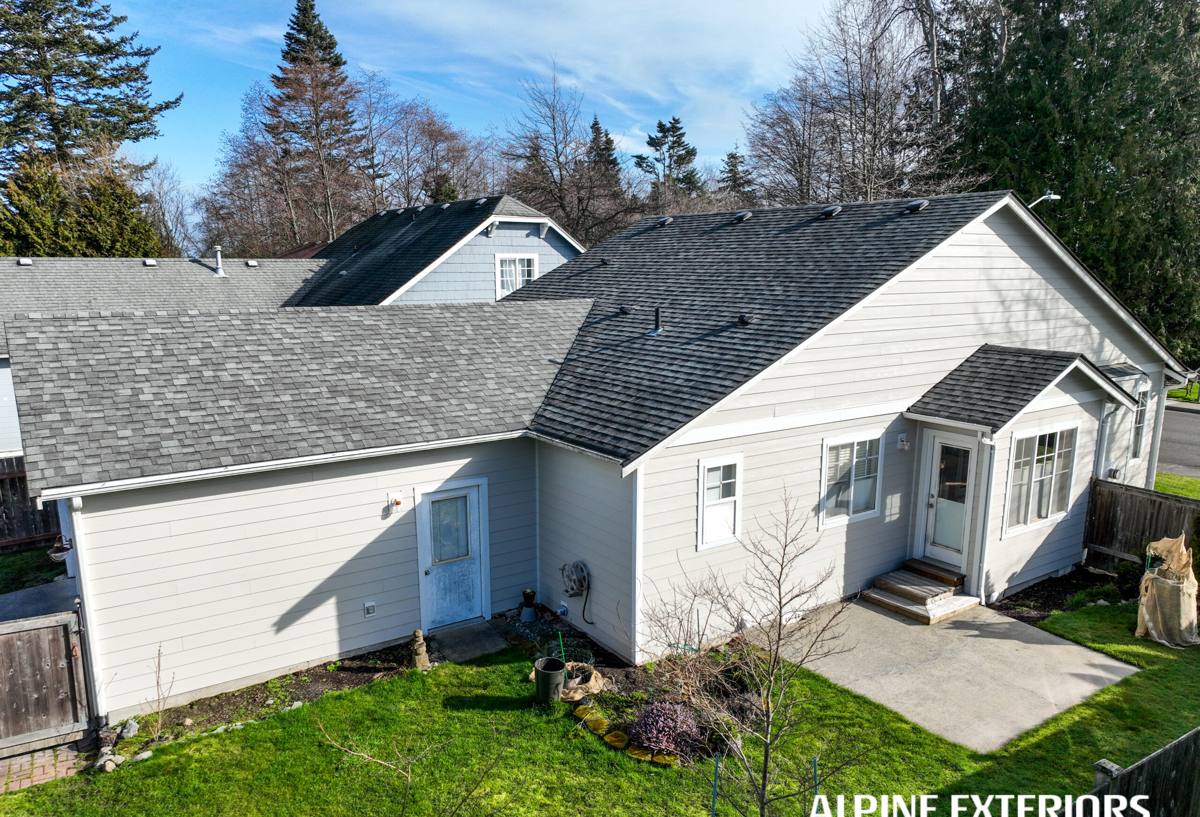
What a Correct Metal Roof Installation Involves
Underlayment That Handles Wind-Driven Rain
Standard felt underlayment isn't enough for a property exposed to the kind of driving rain that comes through the Bow area off the water. We use synthetic or self-adhering underlayment at eaves, valleys, and any low-slope transitions, giving the roof a secondary water barrier if wind ever pushes moisture past the metal panels themselves — which happens more often in exposed coastal locations than most homeowners realize.
Fastening and Panel Attachment
Exposed-fastener systems rely on screws with rubber washers that compress against the panel. In salt air, the metal in cheap fasteners corrodes faster than the roof panel around it, and a failed washer is one of the most common sources of leaks we find on older metal roofs in this area. We fasten with corrosion-resistant hardware rated for coastal exposure, and on standing seam systems, we use concealed clips that eliminate exposed fastener penetrations almost entirely — a real advantage this close to the water.
Flashing at Every Transition
Valleys, chimneys, skylights, and wall intersections are where roofs actually fail, not the open field of panels. Flashing has to be formed and layered so water is directed out and away at every transition, not caulked as an afterthought. Caulk is a maintenance item, not a waterproofing strategy — it degrades faster than the metal around it, especially with salt air breaking down sealant over time.
Ventilation That Matches the Local Moisture Load
A metal roof over a poorly ventilated attic can trap moisture underneath it, leading to condensation on the underside of the panels. In a climate as consistently damp as Skagit County's, balanced intake and exhaust ventilation isn't optional — it protects the roof deck and the metal from the inside out, not just the outside in.
Choosing the Right Metal Roofing System for a Bow Home
Not every metal roofing profile performs the same in a coastal, moss-prone environment. Here's how the common options compare for a property in this area:
| System | Fasteners | Best For | Coastal Durability |
|---|---|---|---|
| Standing seam | Concealed clips, no exposed screws | Full roof replacements, waterfront or exposed lots | Highest — no exposed fasteners to corrode |
| Exposed-fastener panel | Screws through the panel face | Budget-conscious projects, outbuildings, shops | Moderate — depends heavily on fastener quality and maintenance |
| Metal shingle/shake profile | Concealed or interlocking | Homes wanting a traditional look with metal performance | Good — check manufacturer coating rating for salt exposure |
For most homes we work on in the Bow area, we recommend standing seam when the budget allows, specifically because it removes the weakest point in a coastal metal roof — the exposed fastener. Exposed-fastener panels aren't a bad product, but they carry a real maintenance obligation in salt air that homeowners should go in understanding, not discover later.
Salt Air, Moss, and Coastal Corrosion — What Actually Protects a Roof
Coating and Gauge Matter More Than Brand Name
Two metal roofs can look identical and perform very differently in this climate depending on their coating system and base metal gauge. A heavier gauge resists denting and holds its coating better over decades. For coastal exposure like Bow's, we favor coatings rated specifically for marine or salt-air environments over standard residential-grade finishes — it's a detail that doesn't show up in a sales brochure but matters a great deal fifteen years in.
Moss Doesn't Grow the Same Way on Metal as It Does on Shingles
Moss struggles to root directly on a smooth metal panel the way it does in the granules of an asphalt shingle, which is one of metal roofing's real advantages here. But moss and debris can still collect in valleys, at panel laps, and around penetrations, especially on roofs with heavy tree overhang. Left alone, that buildup holds moisture against the metal and its fasteners longer than the surrounding open panel area, which is exactly where we see early corrosion start.
Dissimilar Metal Contact
Corrosion also accelerates when incompatible metals touch — a copper vent flashing against a steel panel, for example. It's a detail that's easy to overlook and expensive to ignore, since galvanic corrosion can eat through a panel from a single contact point over several years.
Our Process From Estimate to Cleanup
- On-site assessment — we inspect the existing roof deck, ventilation, flashing points, and tree exposure specific to your property, not a generic checklist.
- Honest scope and system recommendation — we walk through panel profile, coating, and fastening options suited to your home's exposure and budget, including the trade-offs of each.
- Written estimate — clear line items, no vague allowances, so you know what you're paying for before work starts.
- Tear-off and deck inspection — we check the roof deck for rot or soft spots once the old roofing is removed, and address any deck repairs before installation, not after.
- Underlayment, panel installation, and flashing — done to the standard described above, with attention to every transition point.
- Final walkthrough and cleanup — magnetic sweep for debris, a full walk-through of the finished roof, and a clear explanation of any maintenance the system will need going forward.
Metal Roofing Cost Factors in Skagit County
Metal roofing costs more upfront than asphalt shingles, and the range depends on several factors specific to the property, not just square footage. Broadly:
| Factor | Impact on Cost |
|---|---|
| Panel system (exposed-fastener vs. standing seam) | Standing seam typically runs higher due to labor and concealed clip hardware |
| Roof complexity (valleys, dormers, penetrations) | More cuts, flashing, and labor time increase cost |
| Tear-off vs. re-roof over existing layer | Tear-off adds labor but allows a full deck inspection, which we recommend for coastal properties |
| Coating/gauge upgrade for salt exposure | Marine-grade coatings and heavier gauge add material cost but extend service life |
| Access and site conditions | Steep pitch, tree cover, or limited equipment access can affect labor time |
We'd rather give you a real number after seeing the roof than a rough figure that doesn't hold up once we're on the ladder. A free estimate walks through exactly which of these factors apply to your home.
Maintenance Checklist for Metal Roofs Near Bow
Metal roofing needs less maintenance than shingles, but "less" isn't "none" — especially this close to the water. A short annual routine goes a long way:
- Clear debris and needles from valleys and panel laps, particularly after fall storms
- Check fastener heads on exposed-fastener systems for early rust or loose washers
- Inspect flashing around chimneys, skylights, and vents for gaps or sealant wear
- Look for moss or algae buildup in shaded valleys and low-slope sections
- Confirm gutters and downspouts are flowing freely so water isn't backing up under the eave edge
- After any major windstorm, do a visual check for lifted panels or displaced flashing
Signs Your Current Roof Is Ready for a Metal Upgrade
Homeowners in this part of Skagit County usually start looking at metal roofing for one of a few reasons: repeated moss treatments that never fully solve the problem, asphalt shingles losing granules faster than expected due to the constant damp, or simply wanting a roof they won't be thinking about again for decades. If you're re-roofing after storm damage, replacing an aging asphalt roof, or building new construction on an exposed lot, it's worth having a straight conversation about whether metal makes sense for your specific property — pitch, tree cover, and exposure all factor into that answer, and it isn't the right fit for every home.
Why Hiring a Crew That Already Works Bow Matters
Roofing crews who haven't worked much in coastal Skagit County tend to install roofs the way they would inland — standard fasteners, standard underlayment, standard ventilation assumptions. On a property exposed to salt air and heavy shade, those defaults shorten the life of an otherwise good roofing system. A crew that already works in and around Bow knows which details to upgrade before they become callbacks: fastener grade, flashing sequencing, and where moss is likely to collect based on how the property sits relative to tree lines and prevailing wind and rain. That local knowledge doesn't show up as a line item on an estimate, but it's the difference between a metal roof that needs attention in eight years and one that doesn't need attention in twenty-five.
If you're weighing metal roofing for a home in Bow, we're glad to take a look and give you a straight, no-pressure estimate — what your roof actually needs, what it would cost, and whether metal is the right fit for your property. There's a form below to get that conversation started.