 Skagit County
 Roofing Built for Mount Vernon's Weather, Not Just Any Weather
Mount Vernon sits in the Skagit Valley, close enough to Puget Sound and the Skagit River delta that homes here deal with a specific mix of punishment: salt-tinged air moving in off the water, long stretches of driving rain from fall through spring, and shaded, damp conditions that keep moss and moisture active for most of the year. A roof that works fine in a drier inland climate can fail early here if it wasn't installed with these conditions in mind. When we install a new roof in Mount Vernon, we're not just covering a house — we're building a system that has to shed water fast, resist moss colonization, and hold up to salt-laden air without corroding fasteners or flashing.
That's the difference between a roof that looks right on installation day and one that's still performing correctly ten or twenty years later. Skagit County's climate doesn't forgive shortcuts, and the homes that hold up best are the ones where every layer — deck, underlayment, flashing, fasteners, and the roofing material itself — was chosen and installed with local conditions as the starting point.
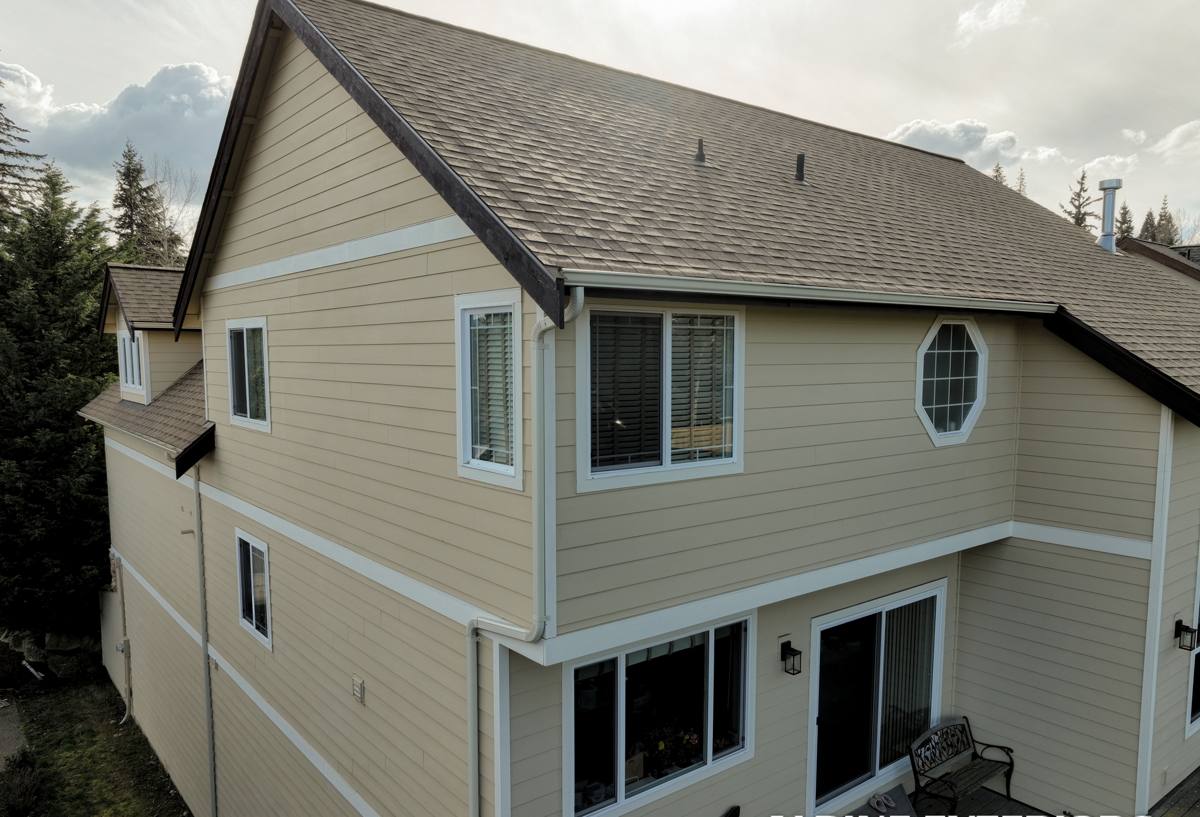
What Skagit County's Climate Actually Does to a Roof
Salt Air and Corrosion
Proximity to Puget Sound and the Skagit River estuary means airborne salt is a real factor for roofing hardware. Standard fasteners, flashing, and vent components can corrode faster here than they would inland. We spec corrosion-resistant fasteners and flashing on every install in this area, not as an upsell, but because it's what the environment requires.
Driving Rain and Wind-Driven Water
Rain in this region doesn't just fall straight down — winter storms push it sideways under wind, which means water finds its way into gaps that a calm-weather rain would never reach. Roof valleys, chimney flashing, skylight curbs, and any place two roof planes meet are the most common failure points during a driving rain event. These details need to be installed correctly the first time, because they're the hardest parts of a roof to inspect and repair once shingles or panels are on top of them.
Moss and Sustained Moisture
Mount Vernon gets a long moss season. Shaded roof sections, north-facing slopes, and areas under overhanging trees stay damp for extended periods, which is exactly what moss needs to establish itself. Moss isn't just a cosmetic issue — as it grows, it lifts shingle edges, holds moisture against the roofing surface, and accelerates granule loss and rot in the decking underneath. A new roof installation is the best time to address moss-prone conditions, because ventilation, material choice, and even minor design adjustments can meaningfully reduce how bad it gets over time.
What a Correct New Roof Installation Actually Involves
A roof replacement is more than stripping old material and nailing down new shingles. Each layer plays a specific role, and skipping or rushing any of them is where premature failures start.
Tear-Off and Deck Inspection
We remove the existing roofing down to the deck and inspect every square foot of sheathing. Damaged, soft, or delaminated decking gets replaced — installing new roofing over a compromised deck just guarantees problems later, and in a climate this wet, a weak deck won't get better with time.
Underlayment Selection
Underlayment is your roof's backup layer if wind or ice ever gets under the primary roofing material. In a region with sustained rain and occasional freeze events, we lean toward synthetic or self-adhered underlayment in vulnerable areas like eaves and valleys, since it holds up better against extended moisture exposure than older felt products.
Flashing at Every Transition
Chimneys, skylights, sidewalls, valleys, and roof-to-wall transitions all need properly formed and sealed flashing. This is the single most common source of leaks on any roof, and it's where driving rain from Skagit County storms tends to find weaknesses first.
Ventilation
Proper intake and exhaust ventilation keeps the attic space dry and temperature-regulated, which reduces condensation buildup on the underside of the deck and helps control the conditions that let moss and mold thrive. Ventilation is easy to overlook because it's invisible once the job is done, but it has a direct effect on how long the whole system lasts.
Final Material Installation and Detail Work
Whatever roofing material is chosen, correct exposure, fastening patterns, and starter/ridge details matter as much as the material itself. Two roofs with identical shingles can perform very differently based on how carefully these details were executed.
Roofing Material Options for Mount Vernon Homes
There's no single "best" roofing material for every home — it depends on your roof's pitch, sun and shade exposure, budget, and how long you plan to stay in the house. Here's how the common options compare for this specific climate.
| Material | How It Handles Local Climate | Maintenance Considerations |
|---|---|---|
| Architectural Asphalt Shingles | Solid performance against wind-driven rain when installed with proper underlayment and flashing; widely used and cost-effective | Benefits from periodic moss treatment on shaded slopes; granule loss over time |
| Metal Roofing | Sheds water and moss buildup better than most materials due to its smooth surface; performs well in driving rain | Requires corrosion-resistant fasteners near salt air exposure; higher upfront cost |
| Composite/Synthetic Shingles | Resists moisture absorption well; consistent performance in wet, shaded conditions | Product-specific installation requirements; verify local contractor experience with the brand |
| Cedar Shake | Traditional look, but sustained moisture and moss pressure in this region mean it needs more diligence to avoid rot | Higher maintenance burden in shaded, damp areas; not our default recommendation for heavily shaded lots |
We'll walk through these trade-offs honestly during your estimate. Our job is to tell you what will actually hold up on your specific roof, not to steer you toward whatever's easiest to install.
Signs Your Mount Vernon Home May Need a New Roof
- Granules collecting in gutters or at downspout outlets
- Shingles curling, cracking, or visibly lifting at the edges
- Moss growth that keeps coming back after cleaning
- Daylight visible through the roof deck from inside the attic
- Water stains on interior ceilings, especially after a windy rainstorm
- Sagging areas anywhere on the roof plane
- Flashing that's rusted, lifted, or separating from the roof surface
- Roof age approaching or past the material's expected service life
If you're seeing more than one of these, it's worth having someone take a real look rather than waiting for a leak to force the decision.
Our Installation Process
1. On-Site Assessment
We inspect the existing roof, deck condition, ventilation, and any problem areas specific to your home's exposure and layout before recommending anything.
2. Straightforward Estimate
You get a clear breakdown of materials, scope, and cost — no pressure tactics, no inflated urgency. We want you to make this decision with full information.
3. Scheduling Around Skagit County Weather
Given how much rain this area gets, timing matters. We plan installations around weather windows and take steps to protect the home if conditions shift mid-project.
4. Tear-Off, Deck Repair, and Installation
Full removal of old material, deck inspection and repair as needed, then installation of underlayment, flashing, ventilation components, and the finish roofing material in that order.
5. Final Walkthrough
We review the completed roof with you, point out what was done and why, and make sure you understand any maintenance recommendations specific to your property's sun and shade exposure.
Cost Factors to Understand Before You Get Quotes
| Factor | Why It Affects Price |
|---|---|
| Roof size and complexity | More valleys, dormers, and transitions mean more flashing work and labor time |
| Deck condition | Rot or soft decking found during tear-off requires repair before new roofing goes on |
| Material choice | Asphalt, metal, and composite options carry different material and labor costs |
| Ventilation upgrades | Adding or improving intake/exhaust ventilation is worth budgeting for if your attic currently lacks it |
| Access and pitch | Steep or hard-to-access roofs take longer and require additional safety measures |
Broadly, homeowners in this region should expect a wide range depending on these factors — anywhere from a modest mid four-figure job on a small, simple roof to a much larger investment on a big, complex one. We'll give you real numbers based on your actual roof, not a generic estimate.
Why Local Experience in Skagit County Matters
A contractor who works Mount Vernon and the surrounding Skagit County area regularly knows which details actually matter here: where moss tends to establish first, which flashing details fail under driving rain, and how to sequence a job around a wet forecast without cutting corners. That familiarity isn't something you get from a crew that mostly works drier inland regions and occasionally takes a job out this way. It shows up in the small decisions — underlayment choices at eaves, fastener selection near salt air exposure, ventilation sized correctly for a shaded lot — that determine whether a roof lasts its full expected lifespan or starts showing problems years early.
We also stand behind the work with clear warranty terms on both materials and labor, explained plainly before the job starts, so you know exactly what's covered and for how long.
Maintenance After Installation
A new roof still needs periodic attention, especially in a climate this wet. We recommend annual inspections, particularly after major windstorms, and moss treatment on shaded or north-facing slopes before it has a chance to establish. Keeping gutters and downspouts clear also matters more here than in drier climates, since a clogged gutter during a heavy Skagit County rain event can back water up under roof edges. None of this is complicated, but staying on top of it is what protects the investment you just made.
If your roof in Mount Vernon is showing its age or you're just planning ahead, we're happy to take a look and give you a straightforward, no-pressure estimate. Use the form below to get started.