 Skagit County
 New-Construction Windows Are a Different Job Than Replacement Windows
A lot of homeowners and even some builders use "new windows" as a catch-all term, but new-construction windows are a distinct product and a distinct install method from replacement windows. New-construction windows have a nailing flange (or fin) built into the frame that gets fastened directly to the sheathing before siding or stucco goes on. That flange is then integrated into the water-resistive barrier (WRB) and flashing system in a specific order, so the whole wall assembly sheds water correctly. Replacement windows, by contrast, get inserted into an existing frame with the exterior finish already in place.
On a new build or a full wall-opening addition in Mount Vernon, you want new-construction units installed correctly the first time. Once the siding and trim go on, fixing a flashing mistake means tearing back exterior finish work — a much bigger job than it needed to be.
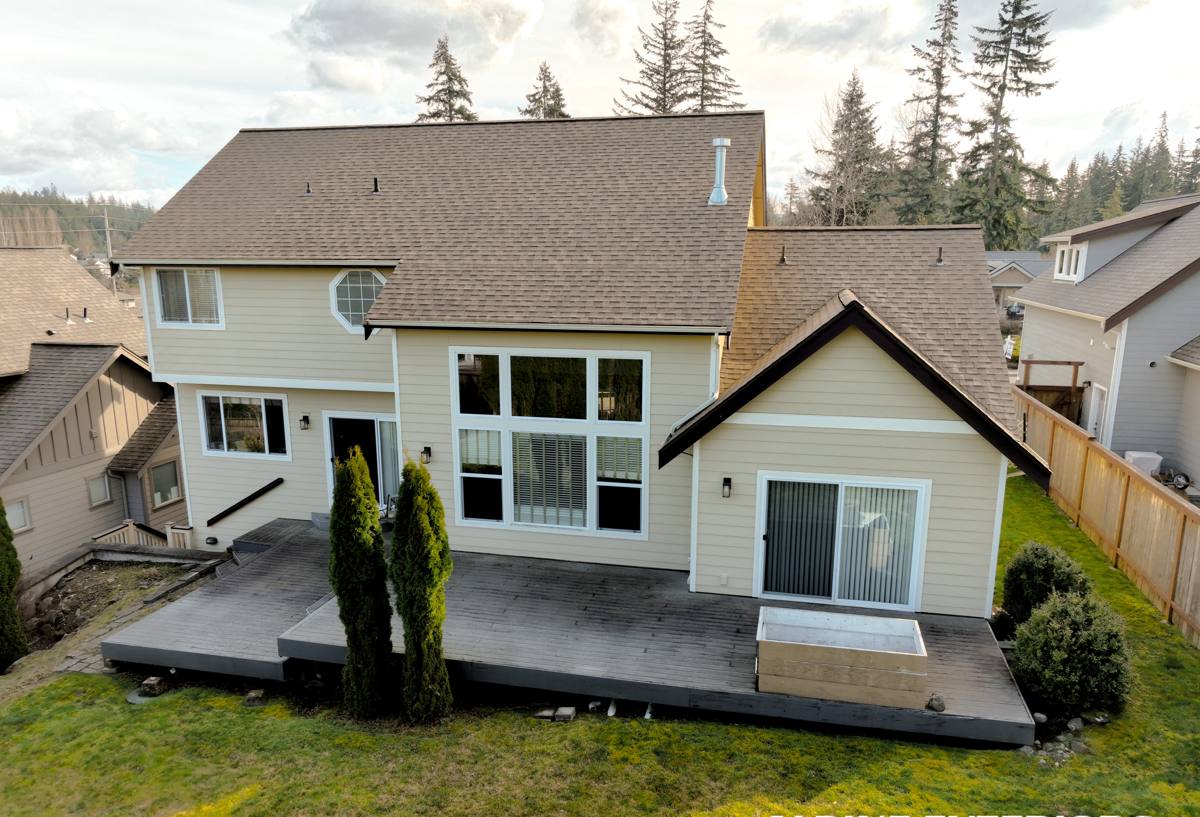
Why Mount Vernon's Climate Changes What "Correct" Looks Like
Skagit County sits close enough to Puget Sound and the Skagit River delta that new construction here deals with a specific combination of exposures: salt-laden air moving in off the water, long stretches of driving, wind-blown rain rather than gentle vertical rain, and a moss and algae season that runs most of the year thanks to shade, moisture, and mild temperatures. None of that is unusual for western Washington, but it does mean a window install that would pass fine in a dry inland climate can fail here within a few years.
Driving Rain and Wind-Blown Water
Wind-driven rain doesn't just hit a window head-on — it gets pushed sideways and upward against sills, jambs, and the top of the flashing. That's why lapping order (how each layer of flashing and WRB overlaps the one below it) matters more here than in calmer climates. A sill pan flashing detail that some crews skip on a "quick" install is not optional on an exposed Mount Vernon elevation.
Salt Air and Hardware Corrosion
Salt-laden air accelerates corrosion on lower-grade fasteners, hinges, and locking hardware faster than most manufacturers' standard warranty testing accounts for. This is one of the reasons we pay attention to hardware finish and fastener spec, not just glass and frame, when we talk through window selection with a builder or homeowner.
Moss, Algae, and Sill Drainage
Persistent moisture supports moss and algae growth on sills, trim, and anywhere water sits instead of draining. A window with a sill that doesn't shed water cleanly becomes a spot where organic growth takes hold, which stains finishes and, over time, holds moisture against the frame. Sill slope and clear weep paths matter as much here as anywhere in the county.
What a Correct New-Construction Window Install Actually Involves
There's no shortcut version of this that holds up long-term in this climate. A correct install, in order, looks like this:
- Rough opening is checked for square, level, and correct dimension before the window ever shows up on site.
- Sill pan flashing is installed first, sloped to drain outward, with end dams to keep water from migrating sideways into the wall cavity.
- WRB (house wrap) is cut and lapped so that anything above the opening laps over anything below it — never the reverse.
- The window is set, shimmed level and plumb, and the nailing flange is fastened per the manufacturer's schedule — not just "enough nails to hold it."
- Flashing tape or flexible flashing goes over the side and head flanges, again lapped correctly, tying back into the WRB above.
- Interior sealant and insulation are placed around the frame without over-compressing it, which can bow a frame and cause operational issues later.
- Exterior trim and sealant joints are finished last, with sealant used at joints — never as a substitute for proper flashing.
Every one of those steps is inspectable before siding covers it up, which is exactly why timing and sequencing with the builder or GC matters as much as the window install itself.
Choosing a Window for New Construction in This Climate
Material choice affects how a window holds up to salt air and constant moisture exposure over time, and it affects cost. There's no single "right" answer for every project — it depends on budget, exposure, and how the rest of the exterior is being finished.
| Frame Material | Upfront Cost | Moisture / Salt-Air Behavior | Maintenance |
|---|---|---|---|
| Vinyl | Lowest | Good — won't rot or corrode, but can expand/contract more with temperature swings | Low |
| Fiberglass | Mid to higher | Very good — dimensionally stable, holds paint and finish well in wet climates | Low to moderate |
| Wood-clad (exterior clad) | Highest | Good if clad joints and sealant are maintained; exposed end grain is a moisture risk point | Higher — clad seams and any exposed wood need periodic checks |
We're honest with clients about trade-offs rather than pushing one material as universally best. Wood-clad windows look great and perform well, but only if the clad-to-wood transitions are detailed and maintained — that's a maintenance commitment, not a defect, and it's worth knowing about before you commit to a whole house full of them on an exposed elevation.
Glass and Performance Specs Worth Asking About
For a Skagit County new build, the two numbers worth understanding are U-factor (how well the window resists heat loss — lower is better in our climate) and SHGC, or solar heat gain coefficient (how much solar heat passes through — this matters more on south and west-facing glazing). Washington's state energy code sets minimum performance requirements for new construction, and your window supplier or the plans reviewer at the county will confirm what's required for your specific project. We help clients pick glass packages that clear code comfortably rather than just barely squeaking by.
Egress, Safety Glazing, and Other Code Details
New construction triggers a fresh code review, which existing-home replacement work often doesn't. A few things that come up regularly on Mount Vernon builds:
- Bedrooms need an egress-sized window — minimum opening dimensions and sill height are set by code, and this affects which window styles and sizes are usable in sleeping rooms.
- Windows near stairs, tubs, showers, and low to the floor typically require tempered (safety) glass.
- Window placement near property lines can trigger fire-rating requirements depending on setback distance.
- Energy code compliance is documented as part of the building permit, not added on afterward.
None of this is exotic, but it needs to be caught at the plan and ordering stage — not discovered after windows arrive on a truck that don't meet code for the room they're going into.
Our Process for New-Construction Window Projects
For a Mount Vernon new build or addition, our process is built around staying in sync with the framing and siding schedule, since window install sits in the middle of that sequence:
1. Plan Review and Take-off
We review the plan set, confirm rough opening sizes, egress requirements, and glazing specs, and put together a window schedule that matches what the plans call for.
2. Ordering and Lead-Time Coordination
Windows are ordered with enough lead time to hit the framing schedule, since a late window order is one of the most common causes of a stalled exterior schedule on a new build.
3. Rough Opening Verification
Before install day, we check that framed openings actually match the ordered window sizes — catching a framing error before the window shows up saves everyone a delay.
4. Install
Sill pan, flashing, and window set following the sequence described above, with photos taken at each flashing stage before it's covered by siding — useful documentation for the builder, the homeowner, and any future inspection.
5. Final Check
Every window gets operated, checked for square and smooth function, and inspected for consistent sealant lines before we call the job complete.
Working Alongside Builders and General Contractors
Most new-construction window jobs in Mount Vernon involve us as a sub to a builder or GC, not a homeowner calling us directly — though we do work directly with owner-builders too. Either way, the same discipline applies: we show up on the day the schedule calls for it, we flag rough opening problems immediately instead of forcing a window into an opening that's slightly off, and we don't hold up the siding crew behind us. On a tight build schedule, a window sub who causes delays costs everyone money, and we take that seriously.
Why a Local Skagit County Crew Matters for This Work
New-construction window work rewards familiarity with local conditions in ways that are easy to overlook. A crew that works Mount Vernon and greater Skagit County regularly already knows how exposed a given elevation typically is to wind-driven rain, understands the county's permitting and inspection expectations, and has already built working relationships with the framers, siding crews, and GCs they'll be coordinating with on-site. That familiarity shows up as fewer surprises — on scheduling, on inspection sign-off, and on how the finished install actually performs once the house has been through a full wet season.
It also means we're not guessing about climate exposure. We're specifying sill flashing, sealant, and hardware based on what actually holds up through a Skagit County winter, not a generic install method that happens to work fine somewhere drier.
After Move-In: A Simple Maintenance Checklist
New-construction windows are close to maintenance-free for the first several years, but a little attention keeps them performing well through Skagit County's wet seasons:
- Clear debris and organic buildup from sills and tracks a couple of times a year, especially after fall leaf-drop and through moss season.
- Check exterior sealant joints annually for cracking or separation, particularly on south and west-facing walls that see the most weather.
- Operate every window at least once each season so hardware doesn't seize from disuse.
- Watch for any staining or soft spots at the sill or bottom corners, which can be an early sign a flashing detail needs a look.
- Keep gutters and downspouts clear near window openings — overflow water is a common source of avoidable window damage.
If you're building new or adding on in Mount Vernon or elsewhere in Skagit County and want windows installed right the first time, we're happy to walk the plans with you and put together a straightforward, no-pressure estimate — just fill out the form below.