 Skagit County
 Roof Replacement Built for Clear Lake's Conditions
Clear Lake sits in a pocket of Skagit County where tall conifers, lake humidity, and long wet stretches all work against a roof at the same time. Homes here don't fail the same way a roof in a dry, open subdivision does. The damage shows up as moss creeping between courses, gutters plugged with needles by November, and decking that stays damp long after the rain stops because the tree canopy blocks the sun that would normally dry things out. A roof replacement in this area has to account for all of that, not just meet code minimums.
We've replaced roofs throughout Skagit County long enough to know that a system that performs fine in Mount Vernon or Burlington can still struggle in Clear Lake if it wasn't chosen with the shade and moisture load in mind. This page covers what actually matters for a Clear Lake roof replacement: the local stresses, the materials that hold up, and the process we follow from tear-off to final walkthrough.
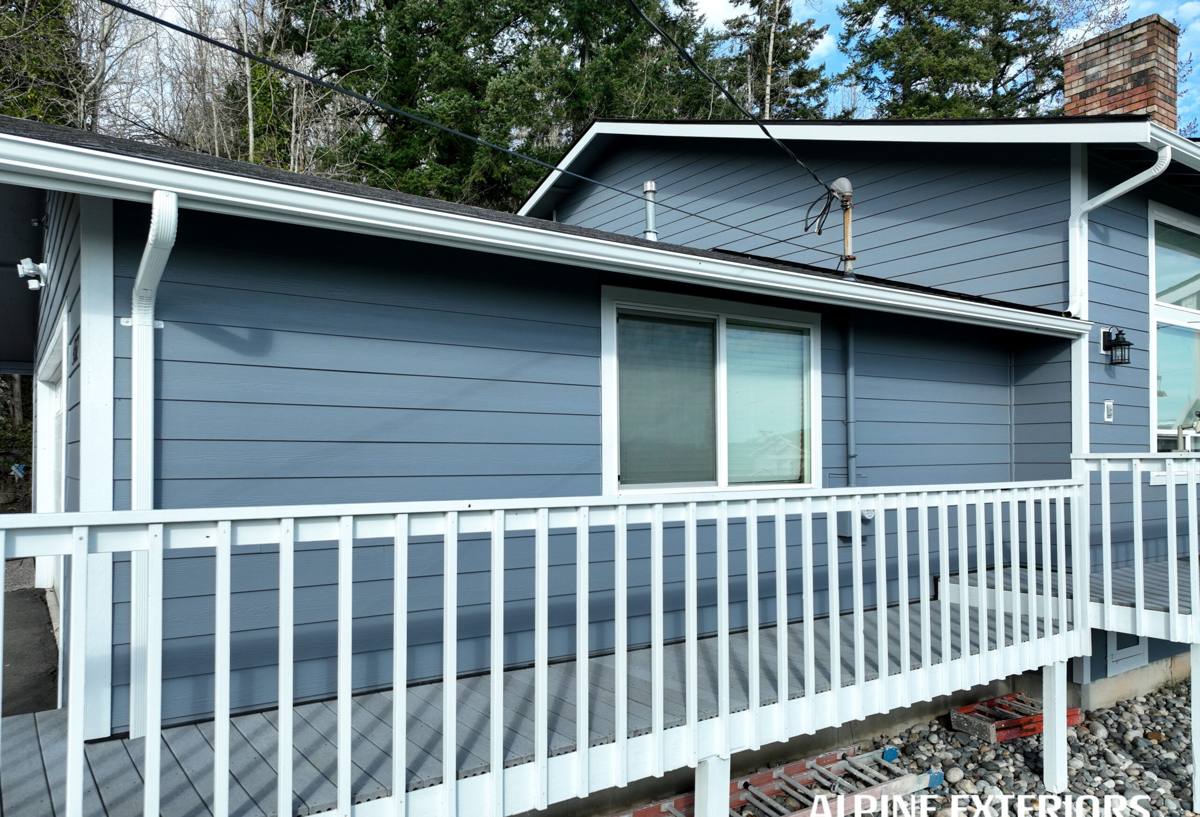
What Clear Lake's Climate Does to a Roof
Moss and Organic Growth
The combination of shade, humidity, and standing moisture around Clear Lake makes it one of the more moss-prone pockets in the county. Moss isn't just cosmetic. As it establishes itself under shingle tabs and along ridge lines, it holds water against the roofing material and lifts edges, which lets wind-driven rain find its way underneath. Left unaddressed for a few seasons, moss growth can shorten a roof's usable life significantly compared to an identical roof in a sunnier, more open location.
Driving Rain and Wind-Driven Moisture
Skagit County gets long stretches of steady rain, and storms off the Sound can push that rain sideways rather than straight down. That matters at every penetration point on a roof — vents, chimneys, skylights, valleys — because flashing that's adequate for vertical rain can still leak under wind-driven conditions. Roof replacements here need flashing details and underlayment choices that assume the rain won't always fall straight.
Salt Air and Metal Fatigue
Clear Lake's proximity to Puget Sound air currents means homes here see more airborne salt than roofs further inland. Salt exposure accelerates corrosion on exposed fasteners, flashing, and any unpainted or unfinished metal components. It's a slower process than the moisture issues above, but over a roof's 25-30 year life it adds up, which is why fastener and flashing material selection matters more here than it would in a drier, inland part of the state.
Tree Debris and Gutter Load
Heavy tree cover means constant needle and leaf drop, which affects how a roof drains. Debris that collects in valleys or against roof-to-wall transitions holds moisture in place and gives moss a head start. A roof replacement is a good opportunity to correct drainage paths that have been fighting years of buildup.
What a Correct Roof Replacement Involves
Tear-Off and Deck Inspection
We remove the existing roofing down to the deck rather than layering over old material. That's the only way to see what's actually happening underneath — soft spots, rot around penetrations, or ventilation gaps that have been trapping moisture for years. In a shaded, damp property like many in Clear Lake, deck damage around valleys and eaves is common enough that we always plan for some plywood or sheathing replacement rather than assume the deck is sound.
Underlayment
Given the rain and moisture load in this area, we use synthetic or self-adhered underlayment appropriate to the roof pitch and exposure, with extra attention to valleys, eaves, and any low-slope transitions where water sits longest. This is the layer that protects the home if anything ever gets past the roofing surface, so it's not a place to cut corners.
Flashing and Penetrations
Every chimney, vent pipe, and skylight is a potential entry point. We replace flashing rather than reuse old pieces, and we pay particular attention to step flashing along walls and dormers, since wind-driven rain finds gaps in old or improperly lapped flashing before it finds anywhere else.
Ventilation
Proper intake and exhaust ventilation keeps the underside of the deck dry and helps control moss growth from below by reducing condensation. On heavily shaded roofs, ventilation is one of the most overlooked factors in how long a new roof actually lasts.
Ridge, Valleys, and Detail Work
The parts of a roof that fail first are almost never the open field of shingles — they're the transitions. We treat ridge caps, valleys, and roof-to-wall intersections as the details that determine whether a roof performs for 10 years or 30.
Choosing Materials for a Shaded, Wet Property
There's no single "best" roofing material for every home — it depends on the roof's pitch, how much shade it sits under, and what the homeowner wants for maintenance and lifespan. Here's how the common options compare for a property like the ones around Clear Lake:
| Material | Moss/Moisture Resistance | Maintenance | Typical Lifespan |
|---|---|---|---|
| Architectural asphalt shingle (algae-resistant) | Good, especially with copper or zinc strips | Periodic moss treatment recommended | 25-30 years |
| Standard 3-tab asphalt shingle | Fair — more moss-prone without treatment | Regular cleaning needed in shaded areas | 15-20 years |
| Standing seam metal | Excellent — moss struggles to hold on smooth metal | Low, occasional fastener/coating check | 40-50+ years |
| Composite/synthetic shake | Good with proper ventilation | Moderate | 30-40 years |
We steer most Clear Lake homeowners toward algae-resistant architectural shingles or standing seam metal because both handle sustained shade and moisture better than budget options. That's a maintenance and moisture-performance recommendation based on how these materials behave under tree cover — not a claim that other products are defective, just that they demand more upkeep in this specific environment.
Zinc and Copper Strips
On shaded roofs, we often recommend zinc or copper strips near the ridge. Rain washing over these metals releases trace amounts that inhibit moss and algae growth down the slope. It's a low-cost addition that meaningfully extends the interval between moss treatments on a property that gets as little direct sun as parts of Clear Lake do.
Our Process, Start to Finish
- On-site inspection. We walk the roof, check the attic or crawlspace for ventilation and moisture signs, and look at how the property's tree cover and drainage affect the existing roof.
- Written estimate. You get a clear scope — materials, expected deck repair allowance, ventilation plan, and timeline — with no vague line items.
- Material selection. We walk through the options above based on your roof's actual shade and pitch, not a one-size-fits-all recommendation.
- Tear-off and deck repair. Old roofing comes off, the deck is inspected, and any soft or damaged sheathing is replaced before anything new goes down.
- Underlayment, flashing, and roofing installation. Installed in the sequence that actually sheds water, with valleys and penetrations detailed first.
- Final walkthrough. We review the completed roof with you, including gutter and drainage condition, before calling the job done.
Why Local Experience in Clear Lake Matters
A crew that mostly works drier, more open parts of Skagit County can still do competent work, but they may not default to the ventilation, flashing, and moss-prevention details that a shaded lakeside property actually needs unless they're prompted to think about it. Working this area regularly means we already know to check attic ventilation more carefully, plan for extra deck repair around valleys, and default to moss-resistant materials rather than treat them as an upsell.
It also means we understand the practical side of working here — narrower driveways and tree-lined lots that affect how we stage material delivery and dumpster placement, and a permitting process that runs through Skagit County rather than a city building department.
Signs Your Clear Lake Roof May Need Replacement
- Moss or dark algae streaking that returns quickly after cleaning
- Shingles that are cupping, curling, or missing granules in patches
- Soft spots or sagging visible from the ground or in the attic
- Daylight visible through the roof deck from inside the attic
- Water stains on ceilings or in the attic near valleys or chimneys
- A roof over 20 years old that hasn't had a full inspection recently
- Granules collecting in gutters in noticeably larger amounts each year
Any one of these on its own might just call for a repair. Several together, especially on an older roof, usually mean replacement is the more cost-effective path.
Cost Factors Specific to This Area
Every roof is priced on its own specifics, but a few things tend to move the number for Clear Lake properties in particular: the amount of deck repair typically found once old roofing is removed on a shaded, moisture-exposed roof; the added cost of moss-resistant materials or zinc/copper strips; roof complexity (valleys, dormers, multiple pitches common on lake-view homes); and site access for material delivery and debris removal on wooded or narrow lots. We walk through all of this in the estimate so there are no surprises once tear-off starts.
If your roof is showing wear, or you just want an honest read on how many years it has left, we're happy to take a look. Reach out for a free, no-pressure estimate using the form below — we'll walk the roof, answer your questions, and give you a straight answer either way.