 Skagit County
 Why Roofs in Mount Vernon Wear Out Differently
A roof in Mount Vernon doesn't fail the same way a roof does in a drier inland climate. The Skagit Valley sits low, flat, and close to Skagit Bay and the Salish Sea, which means homes here deal with a nearly constant supply of moist marine air, long stretches of overcast wet weather, and a moss and algae season that can run most of the year. None of that is dramatic on any given day. It's the accumulation — season after season — that shortens a roof's real service life well below what the shingle wrapper promises.
Salt Air and Marine Moisture
Homes closer to the bay and the river delta pick up airborne salt and moisture that accelerates corrosion on exposed metal — flashing, fasteners, vent caps, and gutter hardware. Cheap or undersized metal components in these locations rust and fail years before the shingles around them do, which is why fastener and flashing quality matters more here than in a dry inland climate.
Moss, Algae, and the Long Wet Season
Skagit Valley's damp, shaded, slow-to-dry conditions are close to ideal for moss and algae growth on roofing. Moss isn't just cosmetic. It holds water against the roof surface, works into shingle laps, and lifts granules and edges as it grows — turning a maintenance issue into a leak issue if it's left alone for a few seasons.
Signs You Need a Replacement, Not Another Repair
Repairs make sense when the damage is isolated and the roof underneath is still sound. Replacement becomes the honest answer once the roof is failing broadly rather than in one spot. Common signs we look for on Mount Vernon homes include:
- Granule loss heavy enough that you can see bare, shiny patches on multiple slopes, not just one
- Shingles that are curling, cupping, or cracking across large sections rather than a single storm-damaged area
- Persistent moss regrowth within a season or two of cleaning, which usually means the shingle surface is already degraded underneath it
- Soft or springy decking felt underfoot, or daylight visible through the roof deck from the attic
- Repeated leaks in different locations each wet season, rather than one recurring spot
- A roof at or past 20–25 years old for asphalt shingle, even if it "looks okay" from the ground
If a roof is only showing one or two of these, a repair or partial resection is often the right call — we'll tell you that directly rather than push a full tear-off you don't need yet.
Choosing a Roofing System Built for the Skagit Valley
There's no single "best" roofing material — the right choice depends on your budget, your roof's pitch and exposure, and how much moss and moisture resistance you want to pay for. Here's how the common options compare for a Mount Vernon home:
| Material | Typical Lifespan Here | Moss/Moisture Behavior | Trade-offs |
|---|---|---|---|
| Architectural asphalt shingle | 20–30 years | Good with proper ventilation and periodic cleaning; algae-resistant granules help but don't eliminate moss | Best cost-to-performance balance; most common choice locally |
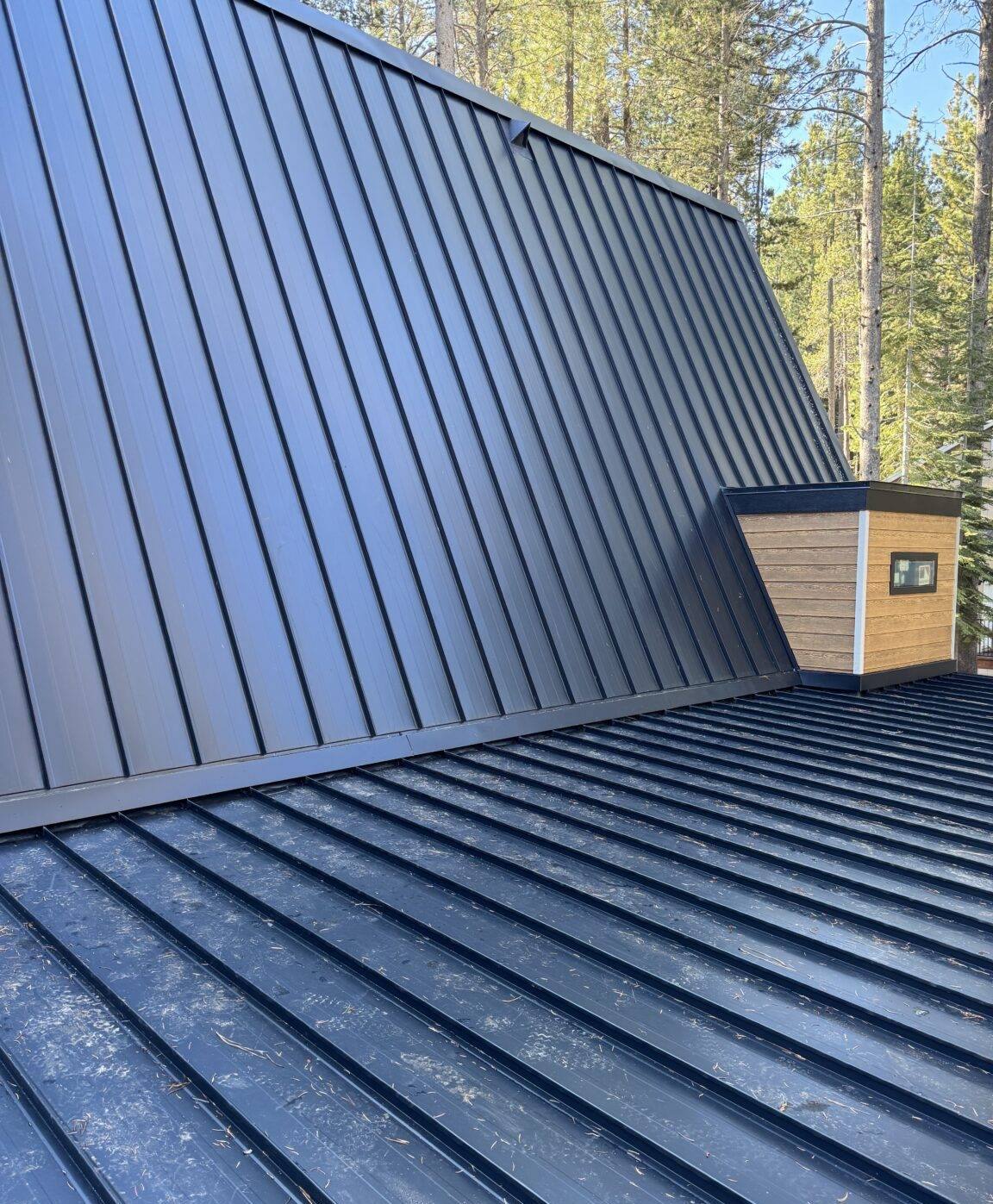
| Standing seam metal | 40–50+ years | Sheds moisture fast, very poor moss purchase; excellent in this climate | Higher upfront cost; needs a crew experienced with metal detailing |
| Composite/synthetic shake | 30–40 years | Moisture-resistant, resists moss better than wood | Mid-to-upper cost; fewer local installers than asphalt |
| Cedar shake (untreated) | 20–25 years realistic | Absorbs moisture, needs regular treatment to resist moss and rot | Highest maintenance burden in this climate; we're upfront about that before you commit |
For most Mount Vernon homes, an architectural asphalt shingle rated for algae resistance is the practical choice. Metal is worth serious consideration on steep-slope homes or for owners planning to stay long-term and wanting to minimize moss maintenance for good.
What a Correct Roof Replacement Includes
A roof replacement is only as good as what's underneath the shingles. This is where corners get cut, and it's also where a roof either handles Skagit Valley weather for decades or starts leaking again in a few years.
Tear-Off and Deck Inspection
We remove the old roofing down to the deck rather than layering over it. That's the only way to actually see what's there — soft plywood, old leaks, rot around vent stacks or chimneys. Any damaged decking gets replaced before anything new goes down; skipping this step is the single most common reason a "new" roof fails early.
Underlayment and Flashing
A synthetic or self-adhered underlayment goes down as the roof's real waterproofing layer — the shingles are the wear surface, but the underlayment and flashing are what actually keep water out during driving rain and wind-driven storms. Flashing at valleys, chimneys, skylights, and roof-to-wall transitions gets replaced with new metal, not reused, since this is the metal most exposed to the marine air we mentioned earlier.
Ventilation
Balanced intake and exhaust ventilation lets the attic and roof deck dry out between wet spells instead of staying damp. Poor ventilation is one of the biggest hidden contributors to moss growth and premature shingle failure in this climate — trapped moisture works from underneath, not just from rain hitting the surface.
Cost Factors for Mount Vernon Roof Replacements
Every roof is priced individually, but the same handful of factors drive most of the difference between quotes:
| Factor | Why It Matters |
|---|---|
| Roof size and number of planes | More squares and more valleys/hips mean more material and labor |
| Pitch and access | Steep or hard-to-access roofs take longer and require more safety setup |
| Deck condition | Rot or soft decking discovered at tear-off adds material and labor that can't be known until the old roof is off |
| Material choice | Asphalt, metal, and composite carry different material and installation costs, as shown above |
| Layers being removed | Tearing off multiple old layers costs more than a single-layer tear-off |
| Ventilation and flashing upgrades | Bringing older ventilation up to a proper balanced system adds some cost but pays off in roof life here |
We give a firm, written number after we've actually looked at your roof — not a phone estimate — because deck condition and layer count can swing the price meaningfully once we're up there.
Timing the Job Around Skagit Valley Weather
Roofing can be done here nearly year-round, but a driving-rain event mid-tear-off is the scenario every roofer wants to avoid. We watch the forecast closely, work in sections so no more roof is opened up than can be dried in and protected the same day, and keep tarping and emergency cover on hand for anything that doesn't get finished before weather moves in. Late spring through early fall tends to give the widest dry windows, but a well-run crew can install correctly through the wetter months too — it just takes more careful sequencing.
Our Process, Start to Finish
- On-site inspection — we get on the roof, check the deck where accessible, and look at ventilation, flashing, and moss/moisture history before quoting anything.
- Written estimate — a clear scope and price, with material options explained rather than upsold.
- Permit and scheduling — we handle the local permit and plan the job around a realistic weather window.
- Tear-off and deck repair — old roofing removed, deck inspected and repaired as needed, with the site protected the same day.
- Underlayment, flashing, and ventilation install — the waterproofing layer that actually determines how the roof performs long-term.
- Shingle or metal installation — installed to manufacturer spec so your warranty is valid, not just installed "close enough."
- Final walkthrough — we go over the finished roof, gutters, and cleanup with you before calling the job done.
What to Ask Before You Hire a Roofing Crew
- Are you licensed and insured to work in Washington, and can you show current proof?
- Will you inspect and replace damaged decking, or just roof over whatever's there?
- What underlayment and ventilation are included, not just the shingle brand?
- Who pulls the permit, and is that included in the quote?
- How do you handle weather delays mid-job, and what's protecting my house if rain moves in?
- Is the estimate based on an actual roof inspection, or a drive-by guess?
- What's the manufacturer's warranty, and does your installation qualify for it?
Why Local Experience Matters
A roofing crew that already works Mount Vernon and the wider Skagit Valley knows which details actually matter here — the ventilation that fights moss, the flashing grade that holds up to marine air, and how to sequence a tear-off so it isn't caught open when rain rolls in off the bay. That's not something a crew passing through the county for one job tends to get right on the first try, and your roof is not a good place to find that out.
If you're weighing repair versus replacement, or just want an honest look at what your roof actually needs, we're happy to come take a look. The estimate is free, there's no pressure to sign anything on the spot, and you'll get a straight answer either way — use the form below to get started.