 Skagit County
 Roof Repair Built for Sedro-Woolley's Weather, Not a Generic Climate
Sedro-Woolley sits where the Skagit Valley starts climbing into the Cascade foothills, and that location means your roof deals with a mix of problems that a roof twenty miles away might not see in the same combination. Moisture-laden marine air drifts inland off Puget Sound and settles into the valley, driving rain comes in sideways during fall and winter storms, and the tree cover and damp shade around much of Sedro-Woolley keep roofs wet longer after every rain than they would be in a drier, more open part of the county. That combination is exactly what moss, algae, and slow-forming leaks feed on.
A roof repair here isn't just "patch the leak and move on." It has to account for why the leak happened in the first place, and whether the surrounding roof is still healthy enough that a repair is the right call instead of a stopgap. That's the approach we bring to every repair call in Sedro-Woolley.
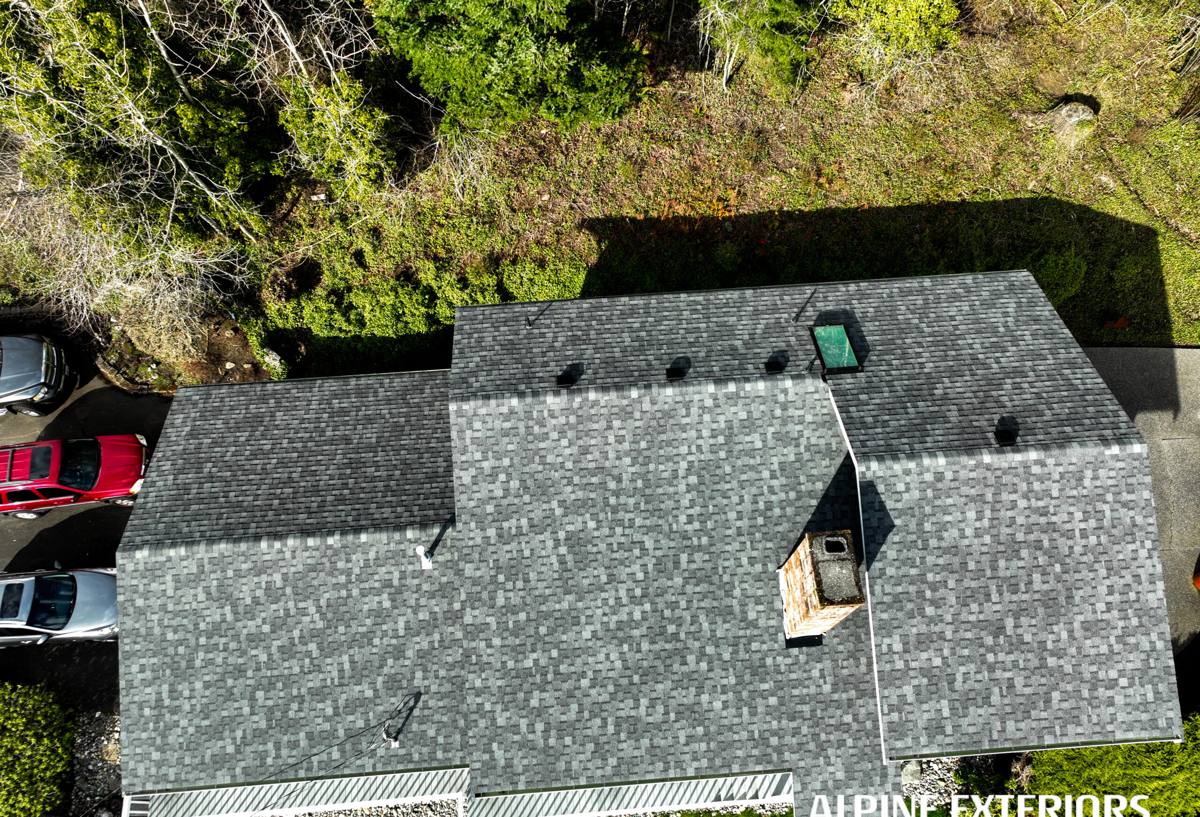
What Skagit County Climate Does to a Roof Over Time
Moss and Organic Growth
Shaded roof sections, north-facing slopes, and areas under overhanging trees stay damp for days after a storm passes. Moss and lichen take hold in that moisture, and as they spread they lift shingle edges, hold water against the roof deck, and work their way into fastener lines. Left alone through a full moss season, what starts as a cosmetic issue turns into granule loss and eventually a soft, leaking deck.
Driving Rain and Wind-Driven Water
Storms moving through the valley often bring rain at an angle instead of straight down. Wind-driven rain finds its way under shingles that are lifted even slightly, through nail holes that have backed out, and into valleys and flashing joints that were installed with too little lap or the wrong sealant. This is a different failure pattern than a simple worn-out shingle, and it needs a different repair approach.
Salt-Influenced Air and Metal Corrosion
Even away from the immediate waterfront, Skagit County's proximity to Puget Sound means metal roofing components — flashing, fasteners, vent boots, gutter hardware — see more corrosion pressure than they would inland in a drier state. Cheap or mismatched metal shows rust and pinholing years before it should, and that's frequently where a "mystery leak" actually starts.
Common Roof Repair Calls We See Around Sedro-Woolley
- Moss buildup along ridges and in shaded valleys causing shingle lift and slow leaks
- Flashing failures at chimneys, skylights, and wall-to-roof transitions
- Valley leaks where water volume during heavy rain overwhelms old or undersized flashing
- Wind-lifted or torn shingles after a fall or winter storm
- Rusted or failing pipe boots and vent flashing
- Gutter and edge-metal issues that push water back under the roof edge instead of off it
- Soft or stained decking discovered during a leak investigation, requiring a deck repair before the roof covering goes back on
Diagnosing the Real Problem Before We Touch a Shingle
The single biggest mistake in roof repair is treating the visible symptom instead of the actual entry point. Water travels. A stain on a bedroom ceiling might trace back to a flashing gap ten feet away, following a rafter or sheathing seam before it drips through drywall. A repair that only addresses where the water showed up inside the house, without finding where it's actually getting in, will fail again — often within one season.
Our process starts with a full inspection of the affected area and everything upslope from it: the roofing material itself, the flashing details, the underlayment where it's exposed, and the decking condition if there's any sign of water intrusion. We also look at the roof as a whole, not just the spot that's leaking, because a roof old enough to have one flashing failure often has others close behind it.
What a Correct Repair Involves
Matching Materials, Not Just Covering the Hole
A repair should blend into the roof it's part of, both in material and in how it sheds water. That means matching shingle type, profile, and as close a color match as the weathered original allows, and tying new underlayment and flashing into the existing roof system correctly rather than just caulking over a gap.
Fixing the Cause, Not Just the Symptom
If moss lifted the shingles, the repair includes addressing the moss and the moisture source, not just replacing the lifted shingles. If a flashing detail failed because it was undersized or poorly lapped originally, the repair corrects that detail — otherwise the same failure just happens again in the same spot.
Checking the Deck
Any repair involving a leak that's been active for a while includes an honest check of the roof decking underneath. Soft or delaminated sheathing needs to be replaced before new roofing goes down over it — skipping that step is how a "repaired" roof ends up with a sagging spot two years later.
Our Roof Repair Process
- Inspection and diagnosis — We identify the actual water entry point and check the surrounding roof area, not just the spot that's visibly leaking.
- Honest assessment — We tell you plainly whether this is a repair situation or whether the roof's overall age and condition mean a repair would just be a temporary fix. No upselling a repair into a replacement, and no patching over a roof that's genuinely done.
- Written scope and estimate — You know what's being repaired, with what materials, and roughly what it costs before work starts.
- The repair itself — Removal of damaged material back to solid, dry decking; deck repair if needed; correct flashing and underlayment detailing; matched roofing material installed to manufacturer specifications.
- Cleanup and check — Debris and old material removed, work area cleaned, and the repair area reviewed with you before we call it done.
Repair or Replacement? How to Think About It
Not every leak means a new roof, and not every roof past a certain age is worth continuing to patch. This is the kind of decision that depends on specifics — age, extent of damage, how many separate issues are showing up — more than any single rule of thumb.
| Factor | Repair Usually Makes Sense | Replacement Worth Considering |
|---|---|---|
| Roof age | Under roughly 15-20 years for asphalt shingle | Approaching or past the material's expected lifespan |
| Extent of damage | Isolated to one area or detail | Multiple unrelated leaks or widespread granule loss |
| Moss/organic growth | Surface growth without deck damage | Growth has caused sustained moisture intrusion in several areas |
| Decking condition | Solid, dry sheathing found during inspection | Soft or delaminated decking in more than a small, isolated spot |
| Prior repair history | First or infrequent repair need | Repeated repairs to the same or nearby areas over a few years |
We'll walk you through where your roof falls on this before recommending either path — the goal is the right call for your house, not the bigger invoice.
Materials We Use for Repairs
For most Sedro-Woolley repairs, that means quality asphalt composition shingles matched to what's already on the roof, corrosion-resistant flashing metal sized correctly for the detail it's protecting, and underlayment rated for the exposure the repaired section will see. On roofs with metal roofing or higher-end shingle products, we match to the existing system's specifications so warranty coverage isn't put at risk by mismatched materials.
We're selective about lower-grade flashing metals and thin, unrated underlayment products in this climate — not because a given brand is bad in the abstract, but because our standard is to use materials that hold up to sustained damp exposure and driving rain without needing to be revisited in a few years. That's a maintenance and moisture-performance call, not a brand opinion.
Signs Your Roof Needs a Repair Call
- Visible moss or heavy algae staining on the roof surface
- Shingles that look lifted, curled, or are missing granules in patches
- Water stains on interior ceilings or upper walls, especially after a storm
- Rusted, cracked, or visibly failing flashing around chimneys, skylights, or vents
- Sagging or soft-feeling spots when walked on (have this checked, don't walk the roof yourself)
- Granules collecting in gutters or at downspout outlets
- A roof that's had more than one repair in the last few years in the same general area
Why a Crew That Already Works Sedro-Woolley Matters
Roof repair diagnosis is largely pattern recognition — knowing that a particular flashing detail tends to fail on homes of a certain age, that shaded valley sections in this part of Skagit County hold moisture longer than open, sun-exposed slopes, and that a leak showing up after the first hard fall storm often traces back to a specific type of wear. A crew that repairs roofs across Sedro-Woolley regularly builds that pattern recognition from repeated, direct experience with this area's weather and building stock, rather than starting from a blank slate on every job.
There's also a practical side: local response time matters when a repair is time-sensitive, like an active leak during a storm system. Being familiar with the area means less time spent locating the property and assessing the situation, and more time spent actually fixing the problem.
Get an Honest Look at Your Roof
If you're dealing with a leak, moss buildup, or storm damage on a Sedro-Woolley roof, we're happy to come take a look and give you a straight answer on what it needs — repair or otherwise — with no pressure either way. Use the form below to request a free estimate.