 Skagit County
 Anacortes Siding Takes a Different Kind of Beating
Anacortes sits on Fidalgo Island, surrounded by Puget Sound and the tidal waters of Rosario Strait, which means homes here deal with a marine climate that inland Skagit County simply doesn't see in the same concentration. Salt-laden air corrodes exposed fasteners and dulls factory finishes faster than a dry-climate product spec ever anticipated. Add driving rain that comes in sideways off the water during winter storms, and you have moisture finding its way into seams, laps, and fastener holes that would stay dry on a more sheltered inland lot.
Then there's the moss. Anacortes gets a long, wet shoulder season on either side of summer, and homes tucked under mature trees or facing north rarely get enough sun to dry out between rains. That combination — persistent dampness plus shade — is exactly what moss, algae, and mildew need to take hold on siding, trim, and roof lines. None of this means Anacortes homes are doomed to constant repair. It means the repair work has to account for salt exposure, wind-driven water, and prolonged moisture in a way that a generic patch job doesn't.
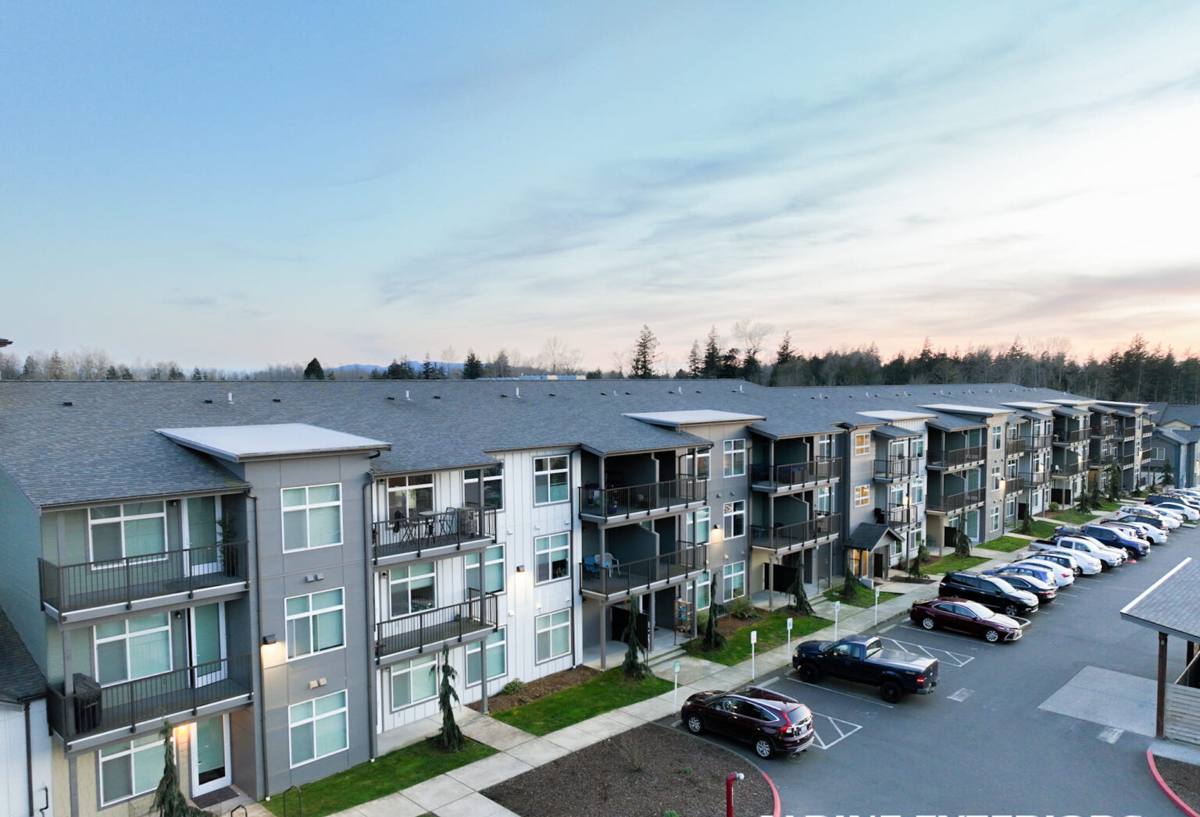
Signs Your Anacortes Home Needs Siding Repair
Most siding failures don't show up as one dramatic problem — they show up as small signals that get ignored until the damage spreads to the wall assembly behind the cladding. Homeowners in Anacortes should watch for:
- Soft or spongy spots when you press on the siding, especially near the bottom courses or under windows
- Paint that's bubbling, peeling, or flaking in patches rather than evenly across a wall
- Dark streaking or staining that keeps coming back even after cleaning
- Visible gaps opening up at seams, corners, or where siding meets trim
- A persistent green or black film (moss, algae, or mildew) that returns quickly after being cleaned off
- Warped, cupped, or separating boards, particularly on north- and west-facing walls
- Rust streaks running down from fastener heads or metal trim
- An unexplained jump in heating bills, which can point to wet, compressed insulation behind the siding
- Insect activity or soft wood at the base of walls, a sign moisture has been sitting there a while
Any one of these on its own might be minor. Several showing up on the same wall usually means water has been getting behind the cladding for longer than it looks from the ground.
What a Correct Repair Actually Involves
Inspecting What You Can't See From the Ground
A repair that only addresses the visible siding and ignores what's behind it is a temporary fix at best. A proper inspection includes probing suspect areas, checking moisture content in the sheathing where boards have been pulled, and confirming whether the house wrap or building paper behind the siding is still doing its job. In a climate that drives rain sideways off the water for months at a time, this step is not optional — it's the difference between fixing the actual problem and covering it up.
Matching Existing Siding Without a Patchwork Look
Profile, exposure, and color all have to line up with what's already on the wall, or a repair ends up looking like exactly what it is — a patch. This matters more on older Anacortes homes where the original siding may be discontinued or weathered to a shade that no longer matches anything off the shelf. Sometimes the honest answer is that a small section can't be blended invisibly, and a full wall or elevation needs to be redone instead of chasing a perfect match.
Flashing and Water Management First, Cosmetics Second
Most siding failures near windows, doors, and roof-to-wall intersections trace back to flashing that was missing, undersized, or installed in the wrong order relative to the housewrap. Replacing the siding without correcting the flashing underneath it just resets the clock on the same failure. Anacortes' wind-driven rain finds these weak points faster than a calmer inland climate would.
Fastening and Clearances to Manufacturer Spec
Fastener type, spacing, and penetration depth all affect how siding holds up to wind and moisture cycling. Ground clearance and gaps at trim also matter more here than in a drier climate, since standing water and prolonged dampness at the bottom edge of a wall is one of the most common places we find rot in Skagit County homes.
Repair vs. Replacement: How We Make That Call
Not every damaged wall needs a full re-side, and not every problem area can be responsibly patched. The table below is a general guide — the actual decision depends on what we find once we open up the wall.
| Factor | Repair Often Makes Sense | Replacement Often Makes More Sense |
|---|---|---|
| Extent of damage | Isolated to one wall section or a handful of boards | Spread across multiple elevations or the whole house |
| Underlying sheathing | Dry, solid, no rot found on inspection | Soft, delaminated, or showing rot beyond the surface |
| Age of existing siding | Newer product still within its expected service life | Original siding is decades old and failing broadly |
| Material match | Current profile and color are still available or easily blended | Product discontinued or too weathered to match |
| Root cause | A single identifiable flashing or fastener issue | Systemic moisture intrusion from multiple points |
Why Product Choice Matters When You Repair
What you repair a wall with matters as much as how carefully the labor is done, especially in a coastal climate like Anacortes. Vinyl siding expands and contracts with temperature swings and can crack or bow over time, and once a seam opens up it gives wind-driven rain a direct path behind the cladding. Engineered wood products built on an OSB substrate hold up well when everything goes right, but they're sensitive to repeated moisture exposure at cut edges and seams — exactly the conditions salt air and driving rain create. Cedar and primed spruce can look great, but they demand disciplined, ongoing refinishing to fight the moss and mildew that thrive in Skagit County's shaded, damp microclimates; skip a maintenance cycle and the wood pays for it.
That's the honest trade-off calculation that led us to install only James Hardie fiber cement siding. It's non-combustible, doesn't swell or rot the way wood-based products can, and Hardie's HZ5 product line is engineered specifically for climates with heavy moisture exposure like ours. The factory-applied ColorPlus finish holds color and resists the kind of fading and moisture damage that field-applied paint struggles with over years of salt air and rain. It also carries a strong transferable warranty, which matters to homeowners who plan to sell. We won't tell you those other products are junk — plenty of them perform fine under the right conditions and maintenance discipline. We just won't put our name on a repair or install using a product we don't think holds up to what this particular stretch of coastline throws at it year after year.
Our Process for an Anacortes Siding Repair Call
- Initial conversation and photos. A quick description and a few photos of the affected area help us understand scope before we ever schedule a visit.
- On-site inspection. We look at the visible damage, probe suspect boards, and check moisture levels behind the siding where needed.
- Honest scope and written estimate. You get a clear explanation of what we found, what caused it, and whether repair or partial replacement is the right call — with a written price before any work starts.
- The repair itself. Flashing and water management get corrected first, then siding is replaced or matched to spec, fastened correctly, and finished.
- Cleanup and walkthrough. We walk the completed area with you so you know exactly what was done and why.
Why Hiring a Crew That Already Works Anacortes Matters
A contractor who works Skagit County regularly already knows which wall orientations take the worst of the wind-driven rain, how differently a shaded, moss-prone lot behaves compared to an open, sunny one a few miles away, and what local permitting and inspection expects for exterior work. That local familiarity shortens the guesswork on diagnosis and keeps the repair from becoming a return visit six months later. It also means scheduling that accounts for our wet season rather than treating every week of the year the same way a contractor from outside the area might.
Salt air, driving rain, and a long moss season aren't going away, but a repair done right — with the water management fixed first and a product built for this climate — should hold up to all three for years, not months. If you're seeing any of the warning signs above on your Anacortes home, we're happy to take a look and give you a straight answer about what it needs. Reach out for a free, no-pressure estimate using the form below.