 Skagit County
 Siding Repair Built Around Cedardale's Weather, Not a Generic Checklist
Cedardale sits in the part of Skagit County where marine air off Puget Sound, wind-driven rain, and a long, damp shoulder season all work on a house at the same time. Siding here doesn't fail the way it does in drier parts of the state. It fails at the seams, the corners, and the low, shaded sides of a house where moisture lingers instead of drying out. A repair crew that treats every job the same — patch the visible crack, caulk the gap, move on — ends up back at the same house a year later.
We do siding repair specifically for homes in and around Cedardale, and the diagnosis matters as much as the fix. Before we touch a board, we're trying to answer one question: is this damage isolated, or is it a symptom of something happening behind the siding that will keep coming back?
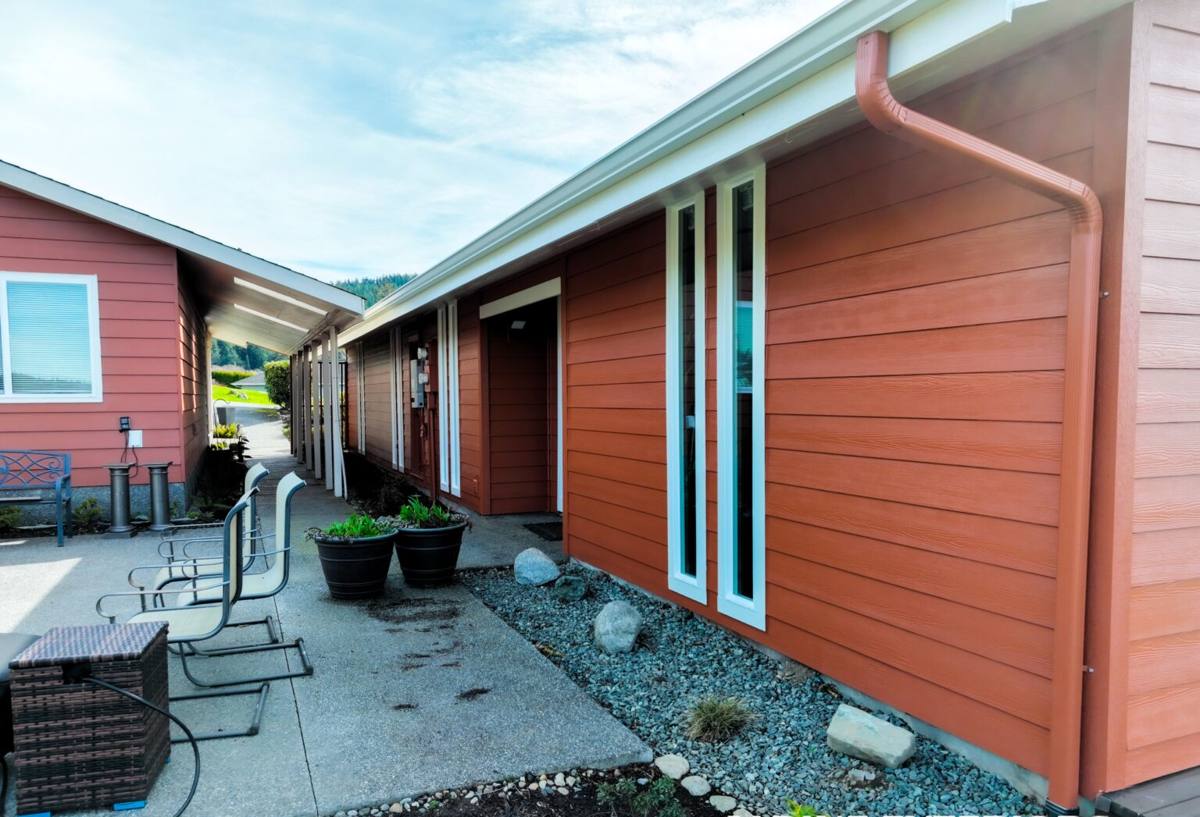
Why This Climate Is Hard on Siding
Three conditions do most of the damage to siding in this part of Skagit County:
Salt Air and Marine Moisture
Even away from the immediate waterfront, marine air moves inland through the Skagit Valley and carries moisture that settles on exterior surfaces daily. Over years, that constant low-grade dampness accelerates paint failure, softens wood-based products, and corrodes exposed fasteners faster than a drier inland climate would.
Driving Rain
Rain here rarely falls straight down. Wind pushes it sideways into wall assemblies, which means the real test of siding isn't whether it sheds water in a light shower — it's whether it holds up when rain is being driven horizontally into laps, seams, and trim joints for hours at a time. Poorly lapped siding or under-caulked trim that would survive a calm rain often fails under driving rain.
A Long Moss Season
Cool, wet weather here stretches over much of the year, and shaded north- and west-facing walls stay damp long enough for moss and algae to take hold. Moss isn't just cosmetic — it holds moisture directly against the siding surface, and on wood-based or improperly sealed products, that sustained contact is often where rot starts.
Signs Your Siding Actually Needs Repair
Homeowners in Cedardale usually call us for one of a handful of recurring issues. Some are urgent, some can wait for a scheduled visit, but all of them are worth a look before winter's driving rain finds the weak spot.
- Soft or spongy spots when you press on a wall, especially near the bottom courses or under windows
- Visible gaps, cracks, or separation at butt joints and corner boards
- Paint that's bubbling, peeling, or flaking in patches rather than evenly across the wall
- Persistent moss or dark streaking on shaded sides that keeps returning after cleaning
- Warped, cupped, or bowed boards, particularly on wood-based or engineered wood siding
- Staining or discoloration below window sills, at the roofline, or at deck and porch attachment points
- A musty smell or visible staining on interior walls that back up to exterior siding
Any one of these can be minor. Several of them together, especially near the same wall, usually means water has been getting behind the siding for a while.
Common Failure Points We Find in Cedardale Homes
Butt Joints and Seams
Where two pieces of siding meet is the single most common place we find active water intrusion. If joints weren't properly flashed or sealed during the original install, driving rain finds that seam repeatedly, and the damage tends to spread along the joint rather than staying contained.
Trim, Corner Boards, and Penetrations
Anywhere siding meets something else — a window, a light fixture, a hose bib, a deck ledger — is a penetration point that depends on caulking and flashing to stay watertight. Caulk has a service life, and once it fails, water tracks behind the siding along the path of least resistance, often showing up as damage well below where the actual gap is.
Low, Shaded Walls
North-facing and heavily shaded walls dry out slower after every rain event, which is exactly why they're where we see the most moss growth and the most sustained moisture damage. These walls often need attention on a shorter cycle than the sunnier sides of the same house.
Wood-Based and Engineered Products
Homes with older wood siding, primed spruce trim, or engineered wood panel products are more sensitive to this climate than fiber cement. Once the factory coating or field-applied paint is compromised, these materials absorb moisture readily, and repair on them is often a race against how far the damage has already spread beneath the surface.
Repair vs. Replacement: How We Actually Decide
Not every damaged section needs to come off the house. But not every damaged section should be patched, either. We walk through the same factors on every Cedardale job:
| Factor | Repair Is Usually Right | Replacement Is Usually Right |
|---|---|---|
| Extent of damage | Isolated to one board, panel, or joint | Spread across multiple boards or an entire wall section |
| Sheathing condition | Sheathing behind the siding is still sound and dry | Sheathing shows rot, softness, or sustained water staining |
| Cause of failure | A single failed seal, joint, or fastener | A systemic issue — wrong lap, missing flashing, product-wide degradation |
| Material condition nearby | Surrounding siding is structurally sound, just cosmetically worn | Surrounding siding is aging out or was a product prone to this failure |
| Color/profile match | Existing product or a close match is still available | Product discontinued or so weathered a patch would visibly mismatch |
When the damage is contained and the wall behind it is dry, a targeted repair is the honest recommendation — we're not going to sell a full re-side when a section repair will hold. When we find soft sheathing, repeated failure at the same wall, or a material that's simply reached the end of what it can take in this climate, we'll say so plainly and lay out what replacement looks like instead.
What a Correct Repair Actually Involves
A siding repair that lasts isn't just cutting out the bad piece and nailing in a new one. Our process on every Cedardale repair includes:
1. Full Diagnosis Before Any Cutting
We inspect beyond the visibly damaged area — checking adjacent boards, the wall below and above, and where possible, what's happening behind the siding — before deciding on the scope of the repair.
2. Checking Water-Resistive Barrier and Flashing
If siding is coming off, we check the condition of the house wrap or weather barrier underneath and the flashing at any nearby penetrations. Replacing siding over a compromised barrier just resets the clock on the same failure.
3. Matching Material and Fastening Correctly
Repairs are only as good as how well the new material integrates with the old — correct lap, correct fastener type and spacing, and proper sealing at every new joint, not just caulk smeared over the seam.
4. Addressing the Cause, Not Just the Symptom
If moss or algae growth contributed to the failure, we address the moisture source where we can — trimming back vegetation contact, correcting a drainage issue, or noting ongoing maintenance the homeowner should keep up with, since a repair on a wall that stays chronically damp won't hold as long as one that gets a chance to dry.
Why Our Standard Is James Hardie Fiber Cement
When a repair calls for replacing more than a small patch, or when a homeowner asks what we'd put back on the wall given a choice, our answer is consistent: James Hardie fiber cement. It's the only siding product we install, and in a climate like this one, that's a deliberate standard, not a sales preference.
Fiber cement doesn't absorb and swell with moisture the way wood-based and many engineered products do, which matters directly for the failure patterns we see in Cedardale — joint separation, warping, and rot at damp, shaded walls. Hardie's ColorPlus factory finish is baked on and warranted against peeling and cracking, which addresses the paint-failure problem that shows up early on field-painted wood trim in marine air. And Hardie's HZ5 product line is engineered specifically for climates like the Pacific Northwest's — freeze-thaw cycling, sustained moisture, and the kind of driving rain this region gets every winter.
None of that means every repair turns into a Hardie conversation. Plenty of jobs are a clean, contained fix on the existing material. But when we're replacing a full wall section or a homeowner is deciding what to reside with, we'll tell you honestly what we've seen hold up here and what hasn't — and it's why fiber cement is the only product we stand behind with our own install.
Why It Matters That We Already Work in Cedardale
A repair crew that hasn't worked this specific area is guessing at things a local crew already knows: which wall orientations dry out slowest, how far marine moisture travels up the valley, and what a joint failure two winters into driving rain actually looks like versus one that's just cosmetic. That local pattern recognition is the difference between a repair that gets diagnosed correctly the first visit and one that gets re-opened a year later because the real cause was never addressed.
It also matters for something simpler: being available. Siding damage that starts small in Skagit County's wet months doesn't wait politely for a contractor's schedule to open up from out of the area. Working this county regularly means we can get eyes on a problem before one wet season turns an isolated repair into a full wall replacement.
Keeping a Repaired Wall Repaired
Once a repair is done right, a little ongoing attention keeps it that way through Cedardale's wet seasons:
- Rinse moss and algae off shaded walls before it builds up thick enough to hold moisture against the siding
- Trim back plants and shrubs that keep siding shaded and damp longer than it needs to be
- Re-check caulking at trim, windows, and penetrations every couple of years — it's a wear item, not a one-time fix
- Watch the same spot the following winter after any repair to confirm the underlying cause was actually resolved
If you're seeing soft spots, recurring moss, peeling paint, or staining on your siding anywhere in the Cedardale area, we're glad to take a look and give you a straight answer on whether it's a repair or something bigger — no pressure, just an honest assessment and a free estimate.