 Skagit County
 Deck Building in Skyline: Built for What This Climate Actually Does to Wood
Skyline sits in a part of Skagit County where the weather isn't subtle. Salt-laden air off the water, long stretches of driving rain through fall and winter, and a moss season that seems to start earlier every year all put real, measurable stress on an outdoor deck. A deck built the way it would be built inland — standard fasteners, minimal drainage planning, whatever decking looks nice in the showroom — tends to show its age fast here. Boards cup, hardware rusts, and moss gets a foothold in the shaded, damp corners within a couple of seasons.
We build decks for Skagit County homeowners with that reality built into every decision, not bolted on afterward. That means material selection, fastener grade, framing details, and drainage all get chosen for a marine climate — not a generic one.
What Skyline Homes Need From a Deck
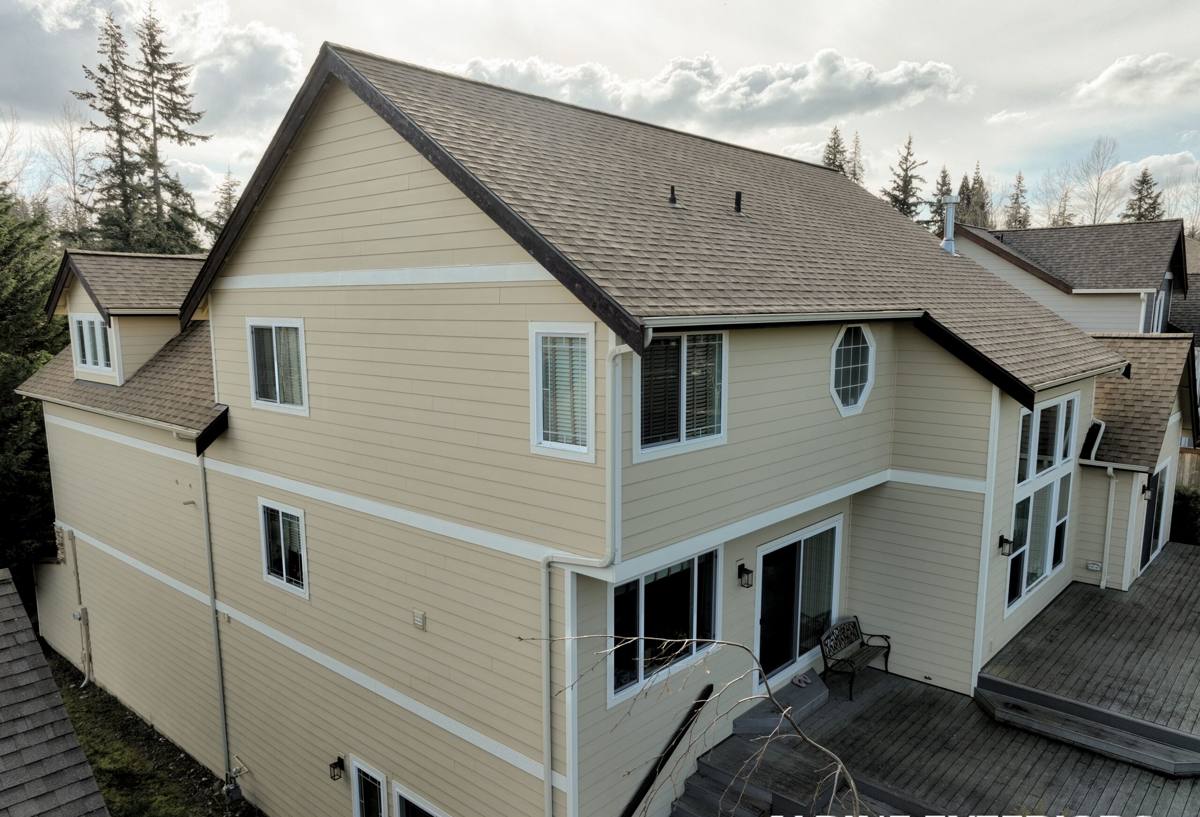
Lots in and around Skyline tend to fall into a few categories: waterfront or near-waterfront properties with direct wind and salt exposure, wooded or partially wooded lots with more shade and moisture retention, and sloped sites where the deck is doing real structural work to create usable outdoor space. Each of these changes what "correct" looks like.
- Waterfront-adjacent decks need corrosion-resistant hardware and railing systems from day one — not as an upgrade.
- Shaded, tree-lined lots need decking and framing choices that resist moss and mildew, plus airflow underneath to help things dry out between storms.
- Sloped lots often need engineered footings and additional bracing, since the deck may be carrying more structural load than a simple ground-level platform.
- Any deck near mature trees needs drainage planned around debris — clogged gaps between boards hold moisture and speed up rot.
A deck design that ignores which of these situations applies to your property is a deck that will need earlier repairs, regardless of how good the decking material itself is.
Choosing the Right Decking Material
There's no single "best" decking material for Skagit County — there's a best material for your specific site, budget, and how much maintenance you actually want to do. Here's how the common options compare under our conditions:
| Material | Moisture & Moss Resistance | Maintenance | Typical Lifespan | General Cost Range |
|---|---|---|---|---|
| Pressure-Treated Wood | Fair — needs sealing to perform well | Annual cleaning and periodic re-sealing | 10–15 years with upkeep | Lowest upfront cost |
| Cedar | Good natural resistance, but surface still needs care | Regular cleaning, occasional refinishing | 15–20 years with upkeep | Mid-range |
| Composite Decking | Very good — doesn't absorb moisture like wood | Periodic washing to prevent surface moss/algae | 25–30+ years | Higher upfront, lower lifetime maintenance |
| PVC/Capped Decking | Excellent — fully moisture-sealed surface | Lowest — occasional washing | 30+ years | Highest upfront cost |
Composite and capped PVC products have gotten a lot better at shedding moisture and resisting the surface algae that's common in shaded, damp Skagit County yards, which is why we recommend them for most Skyline projects where budget allows. That said, a well-built and properly maintained wood deck is still a legitimate, honest choice — it just asks more of the homeowner over time. We'll walk you through the real trade-offs for your site rather than pushing one product line.
Why We're Selective About Certain Products
Not every decking or railing product on the market holds up well in a wet, salty coastal environment, even when it's marketed as low-maintenance. Some composite formulations are more prone to moisture wicking at cut ends if they aren't properly sealed during installation; some lower-grade fastener coatings corrode faster under salt exposure than their spec sheets suggest. Our standard is to use products with track records in Pacific Northwest coastal conditions specifically, and to install them the way the manufacturer's warranty actually requires — end caps sealed, proper fastener spacing, correct ventilation — because a warranty only protects you if the installation matches the spec.
Framing and Substructure: Where Decks in This Area Actually Fail
Homeowners usually focus on the decking surface, but the substructure is where most deck failures start in Skagit County — and it's almost always invisible until something goes wrong. The three most common failure points we see on older or poorly built decks are:
- Ledger board attachment and flashing. Where a deck attaches to the house is the single most common source of hidden water damage. Without proper flashing, water tracks behind the ledger and rots the rim joist and sheathing over years — often undetected until a deck starts to feel spongy or pull away from the house.
- Joist protection. Untreated or unprotected joist tops trap water in the fastener holes where decking screws pass through, which is a slow but steady path to rot from the inside out.
- Footing depth and drainage. Footings that aren't set below frost depth or that sit in poorly draining soil can shift over time, especially on the sloped lots common around Skyline.
We address all three as standard practice: proper ledger flashing and house-wrap integration, joist tape or equivalent protection on framing members, and footings sized and placed for the actual soil and drainage conditions on your lot — not just code minimums.
Fasteners and Railings: The Salt Air Detail Most Contractors Skip
Salt air corrodes standard fasteners faster than people expect, even on properties that aren't directly waterfront — moisture carries inland on wind more than most homeowners realize. We use stainless steel or otherwise corrosion-rated fasteners and hardware on Skyline projects as a default, not an upsell, along with hidden fastener systems where the decking product supports them. Hidden fasteners do double duty here: they eliminate the small surface holes where water pools around screw heads, which is one of the more common early failure points on face-screwed decks in wet climates.
For railings, we look at the same corrosion resistance standard, plus wind load — waterfront and elevated decks in this area can see real wind pressure, and railing posts need to be attached to blocking or framing that's actually engineered to take that load, not just screwed into decking boards.
Our Deck Building Process
- On-site assessment. We look at sun exposure, tree cover, drainage patterns, and how close the site is to salt water, since all of these change the right material and framing approach.
- Design and material selection. We walk through decking, railing, and fastener options honestly, including maintenance expectations for each, so the choice matches how you actually want to live with the deck.
- Permitting. We handle the permit application and coordinate any required inspections through Skagit County.
- Site prep and footings. Footings are placed to the depth and spacing the design and soil conditions call for, not the bare minimum.
- Framing. Ledger flashing, joist protection, and structural connections are installed to hold up under repeated wet-dry cycles.
- Decking and railing installation. Installed per manufacturer spec so any material warranty stays valid, with attention to drainage gaps and end-cut sealing.
- Final walkthrough. We go over basic care for your specific decking material so you know what upkeep is actually needed — and what isn't.
Permits and Codes in Skagit County
Most new decks and significant deck rebuilds in Skagit County require a building permit, and elevated decks typically need engineered footing and railing details reviewed as part of that process. Requirements can vary depending on deck height, size, and proximity to property lines or shoreline setback areas, which matters for some Skyline properties depending on how close they sit to the water. We handle the permit process as part of the job rather than leaving it for the homeowner to sort out, and we won't cut corners on footing depth or railing attachment just to save a step in inspection — those are exactly the details that cause problems five or ten years down the road.
Maintaining Your Deck Once It's Built
The maintenance burden varies a lot by material, but every deck in this climate benefits from a basic seasonal routine. A simple checklist we give homeowners:
- Sweep debris off the deck regularly, especially under trees — trapped leaves and needles hold moisture and feed moss growth.
- Rinse or wash the surface a couple of times a year to clear early moss and algae before it gets established.
- Check gaps between boards each fall and clear out debris so water can drain properly through winter.
- Inspect railing posts and fasteners annually for looseness or early rust — catching it early is a small fix; catching it late isn't.
- For wood decking, re-seal on the schedule the product actually needs — skipping a cycle in a wet year does more damage than skipping one in a dry year.
- Keep an eye on the area where the deck meets the house — this is the first place to check if you ever notice soft spots or gaps.
Why Hire a Crew That Already Works in Skyline
Deck building isn't complicated in theory, but building one that holds up through years of Skagit County weather takes judgment calls that only come from working this specific climate repeatedly — how much drainage slope is actually enough, which fastener grade is worth the extra cost on a given site, where moss tends to establish first on a shaded lot. A crew that's built decks around Skyline and the surrounding area knows the wind patterns, the moisture behavior, and the kind of framing details that hold up here specifically, rather than applying a generic playbook.
If you're planning a new deck or replacing one that's showing its age, we're happy to take a look at your property and talk through honest options for your site and budget. There's a free, no-pressure estimate form below — reach out and we'll walk through what makes sense for your Skyline home.