 Skagit County
 Building New in Skyline? Get the Window Install Right the First Time
New construction is the one chance to install windows correctly from the studs out, before siding, trim, and interior finishes lock everything in place. In Skyline, that first-pass accuracy matters more than in a lot of places. This part of Skagit County sits close enough to saltwater to deal with salt-laden air, gets pounded by driving, wind-blown rain off the water for months at a time, and stays damp enough in the shoulder seasons to grow moss on anything that doesn't shed water well. A window opening that's flashed wrong or a unit that's shimmed out of square won't show a problem on day one. It'll show up in year three or four, as staining, soft trim, or a draft that wasn't there when the house was new.
We build new-construction window openings for Skyline projects the way we'd want them built on our own house: proper flashing sequence, correct nailing fin installation, and window units matched to what this climate actually does to a house over twenty or thirty years.
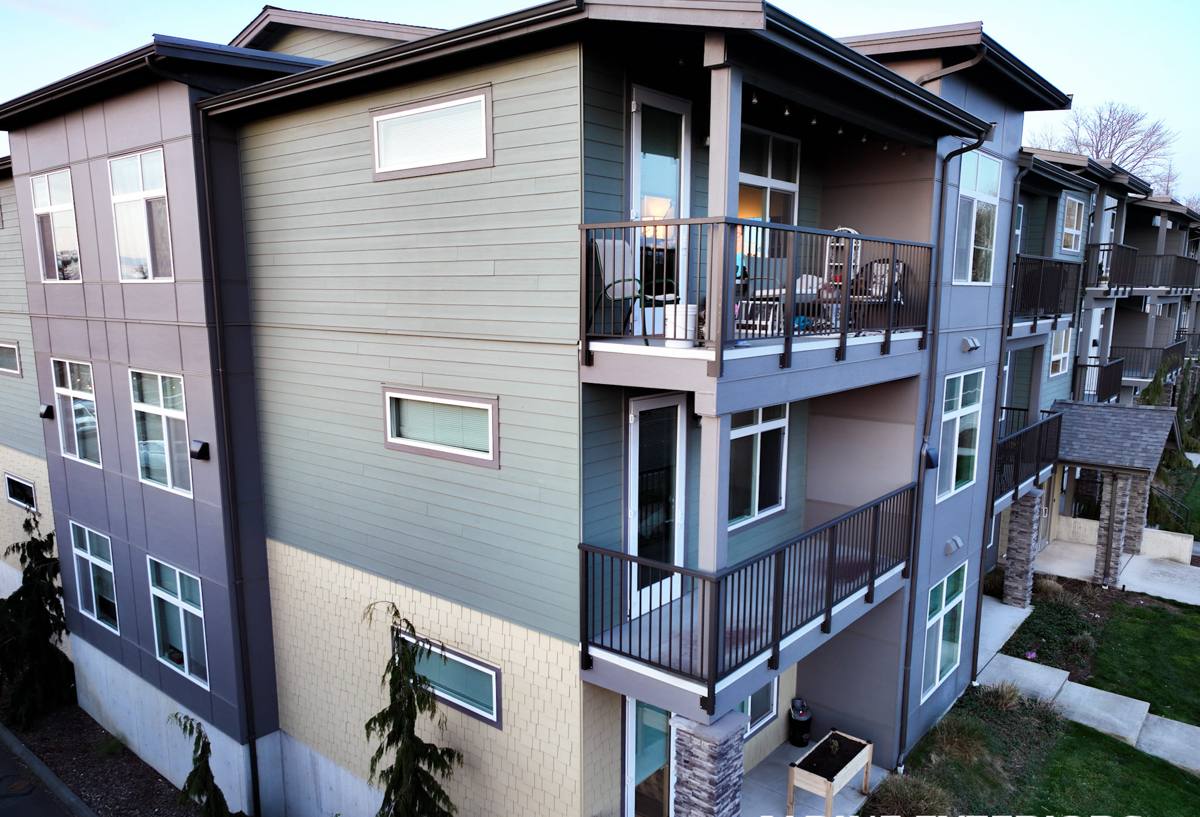
Why Skyline's Climate Changes How a Window Should Go In
Skagit County's exposure varies a lot block to block, but Skyline's position means most homes see a real combination of salt air and sustained wind-driven rain, especially through fall and winter storms. That combination is harder on a building envelope than either factor alone.
- Salt air accelerates corrosion on exposed fasteners, hinges, and lower-quality cladding or trim materials over time.
- Driving rain doesn't just fall straight down — it gets pushed sideways into wall assemblies, which means flashing details at the head, jambs, and especially the sill have to actually work, not just look right.
- Moss and constant dampness during the long wet season keep exterior surfaces damp for extended stretches, which is hard on any material or finish that isn't built to handle repeated wet-dry cycling.
None of this means new construction here is unusually difficult. It means the install sequence has to be followed correctly, every time, with no shortcuts on the water-management details — because this is the kind of climate that finds the shortcuts.
What a Correct New-Construction Window Install Actually Involves
1. Rough Opening and Flashing Prep
Before a window ever gets set, the rough opening needs to be square, properly sized, and prepped with a sill pan flashing that directs any water that gets past the window back out — not into the wall cavity. This is the single detail that matters most in a climate with sustained driving rain. A sill pan isn't optional in our process; it's the baseline.
2. Weather-Resistive Barrier Integration
The window flashing has to integrate with the house wrap or weather-resistive barrier in the correct shingle-lap order — head flashing over the wrap, side flashing lapped correctly, sill flashing under the wrap and over the pan. Get this sequence backwards anywhere and you've built a spot for water to collect instead of drain.
3. Setting the Window Plumb, Level, and Square
A window that's slightly racked won't seal or operate correctly, and it puts uneven stress on the frame that shows up later as failed seals or hardware that binds. We shim and fasten to the nailing fin manufacturer specs, not by eye.
4. Sealing and Insulating the Gap
The gap between the rough opening and the window frame gets sealed and insulated correctly — not overpacked with expanding foam that bows the frame, and not left open enough to become an air and moisture path.
5. Exterior Trim and Final Weatherproofing
Once siding and trim go on around the window, the final flashing and sealant details finish the water-management path from roofline down to foundation. This is also where cheap or mismatched materials tend to show their age fastest in a salt-air, high-moisture environment.
Choosing Window Materials for Skyline's Conditions
New construction gives you a real choice of frame material, and that choice matters more here than in a drier, inland climate. We talk through trade-offs honestly rather than pushing whatever's easiest to install.
| Frame Material | How It Handles Salt Air & Moisture | Maintenance | Typical Fit |
|---|---|---|---|
| Vinyl | Doesn't corrode; performs well in coastal-adjacent air | Low — occasional cleaning | Most new-construction budgets |
| Fiberglass | Very stable in wet/dry cycling and salt exposure; low expansion/contraction | Low | Higher-end new builds, larger openings |
| Wood-clad | Handles the elements only as well as the cladding and seals are maintained | Higher — finish and seal upkeep | Homeowners prioritizing a specific interior look |
| Aluminum | Prone to corrosion near salt air unless properly coated/finished | Moderate to high near the water | We use it selectively, matched to the application |
We're not going to tell you one material is "the best" for every project — it depends on your budget, the exposure of the specific elevation, and how much upkeep you want to sign up for. What we will do is flag when a material choice is going to fight the climate instead of working with it, so that's a decision you make with full information, not after the fact.
Glass and Performance Specs Worth Getting Right
For new construction, you're not stuck matching an existing window style — you get to spec glass and performance from scratch. In this region, that generally means:
- Low-E glass coatings to manage heat loss through Skagit County's long, mild-but-damp winters
- Argon or other gas fill between panes for added insulating value
- Weatherstripping and hardware rated for repeated exposure to moisture and salt-tinged air
- Proper U-factor and Solar Heat Gain Coefficient (SHGC) selection based on the elevation's sun and wind exposure
These aren't upgrades we push for the sake of upselling — they're the difference between a window that performs for its full warranty life in this climate and one that starts underperforming within a few years because it was speced for a milder or drier location.
Our Process for Skyline New-Construction Projects
- Plan review and window schedule walkthrough — we go through the architectural plans or builder's window schedule and flag any openings or elevations that need extra flashing attention given wind and rain exposure.
- Material and glass selection — honest conversation about frame material, glass package, and budget, with trade-offs laid out plainly.
- Rough opening prep and flashing — sill pans, correct shingle-lap sequencing with the weather-resistive barrier, before a single window is set.
- Window installation — plumb, level, square, fastened to spec.
- Exterior integration — trim, final flashing, and sealant details coordinated with siding installation so the whole envelope works as one system, not a set of disconnected trades.
- Final inspection — checking operation, seals, and flashing details before we consider the opening finished.
Why It Matters to Hire a Crew That Already Works This Area
Window installation instructions and building code minimums are the same everywhere, on paper. What's different is judgment — knowing which elevations on a Skyline lot are going to take the worst of the driving rain, how much salt exposure a given site actually sees based on its position and tree cover, and which flashing details are worth extra time because this is the kind of climate that will expose a shortcut eventually. A crew that works Skagit County regularly has already seen what happens when those details get skipped, on other people's houses, and builds accordingly.
We also know the practical side: permitting norms, typical builder sequencing in this area, and how to coordinate window installation with siding crews and other trades so nobody's redoing someone else's work.
Common New-Construction Window Mistakes We Watch For
- Skipping or improperly installing sill pan flashing
- Flashing tape or house wrap lapped in the wrong order, creating a path for water to get behind the barrier instead of over it
- Over-foaming the shim gap, which can bow the frame and cause the window to bind or leak
- Using fasteners or trim materials that corrode quickly in salt-adjacent air
- Speccing glass or frame performance for a milder climate than what a given elevation actually sees
- Poor coordination between window install and siding, leaving gaps in the final weatherproofing at the trim line
What This Means for Your Budget and Timeline
New-construction window costs vary widely based on the number and size of openings, frame material, glass package, and how many elevations need extra flashing attention due to exposure. Rather than quoting a number that won't mean much without seeing your plans, we'd rather walk your window schedule with you, point out anything specific to your lot's exposure in Skyline, and give you a real range based on what's actually being built.
If you're building new in Skyline and want the windows done right from the rough opening out, we'd be glad to take a look at your plans and offer a free, no-pressure estimate — no obligation, just a straight answer on what your project needs.