 Skagit County
 Skyline's Climate Puts Real Demands on Exterior Siding
Homes in the Skyline area sit close enough to the water and open air of Skagit County that their siding takes a different kind of beating than a house twenty miles inland. Salt-laden air, wind-driven rain off the Sound, and a long stretch of the year spent under damp, shaded conditions all work against whatever material is nailed to the wall. Siding here isn't just a cosmetic layer — it's the first line of defense against moisture intrusion, and it needs to be chosen and installed with that in mind, not treated as an afterthought.
Salt Air and Marine Exposure
Airborne salt is corrosive to metal fasteners, flashing, and trim, and it accelerates the breakdown of finishes that weren't formulated to handle it. On a Skyline-area home, that means fastener selection, flashing metal, and paint or factory finish all matter more than they would on a siding job outside the marine air zone. Materials that hold up fine in a dry inland climate can fail faster here simply because the air itself is more aggressive.
Driving, Wind-Blown Rain
Skagit County doesn't just get rain — it gets rain pushed sideways by wind off the water, which means water finds gaps that a straight-down rain never would. Seams, laps, penetrations, and trim joints all see more direct wind pressure here, and any weakness in the water management system behind the siding shows up faster than it would in a calmer microclimate.
A Long Moss Season
Between the tree cover common to this part of Skagit County and the extended damp season, north- and shade-facing walls stay wet longer than sun-exposed ones. That's ideal growing conditions for moss, algae, and mildew, all of which hold moisture against the siding surface and can slowly degrade paint, caulk, and even the substrate underneath if left unaddressed for years.
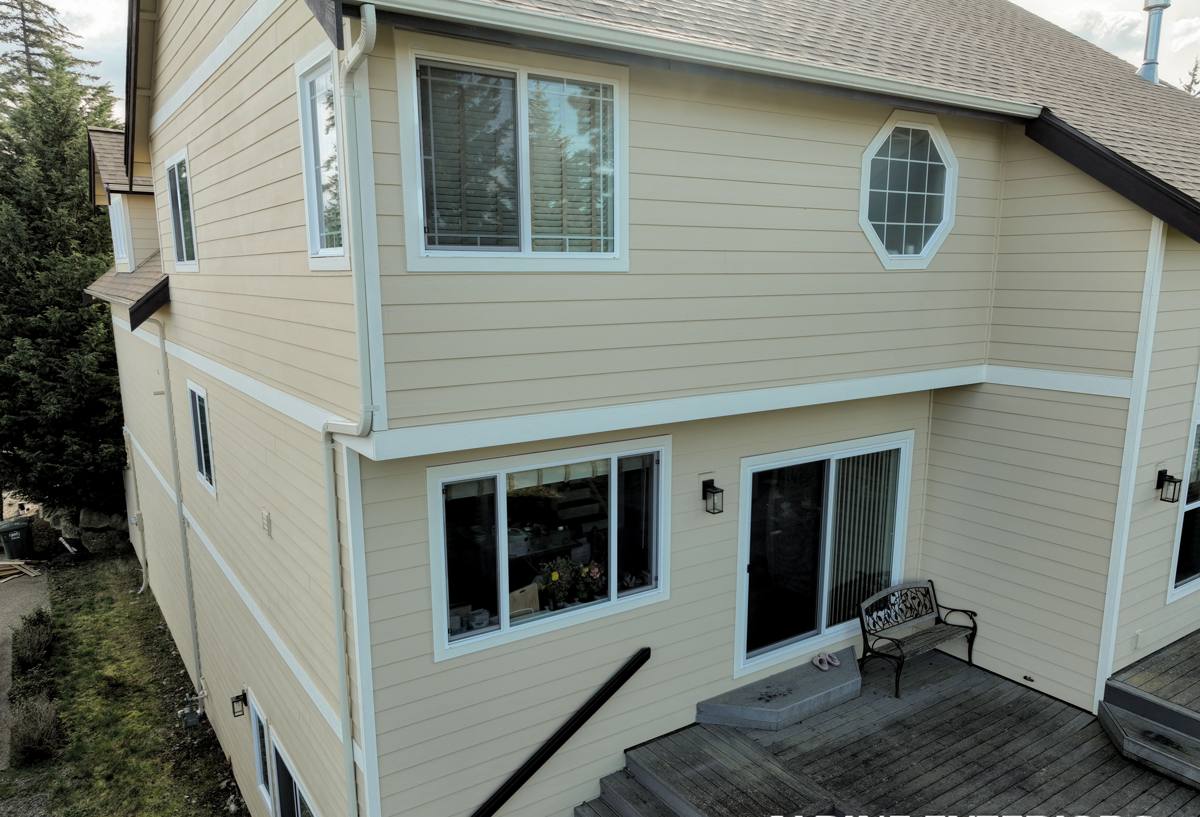
What "Correct" Siding Installation Actually Means
Most siding failures aren't really material failures — they're installation failures. The siding itself is the visible layer; the parts that actually keep water out of the wall assembly are mostly hidden once the job is done. A correct installation gets those hidden layers right first, then finishes with a siding product that can handle the surface exposure.
The Water Management Layer Comes First
Before any siding goes up, the wall needs a continuous weather-resistive barrier, properly lapped so water sheds downward and outward rather than working its way behind the barrier at every seam. On a home exposed to the kind of wind-driven rain Skyline sees, sloppy barrier work is the single most common root cause of siding-related water damage — and it's completely invisible once the siding is installed, which is exactly why it has to be done right the first time.
Fastening, Clearances, and Expansion
Fiber cement siding has specific fastening requirements — correct nail or screw type, spacing, and penetration depth — that differ from wood or vinyl. Getting this wrong doesn't just risk cosmetic issues like nail pops; it can compromise the siding's ability to shed water at the laps. Ground clearance and clearance from roof lines, decks, and hardscaping also matter more in a wet climate, since siding installed too close to grade or to a roof surface stays wet longer and is more likely to wick moisture.
Flashing and Trim Details
Windows, doors, penetrations, and butt joints are where the majority of real-world leaks originate. Correct step flashing, kick-out flashing at roof-to-wall intersections, and properly sequenced window flashing all have to be integrated with the water-resistive barrier and the siding itself — not just caulked over. Caulk is a maintenance item, not a substitute for correct flashing sequence.
Why We Install Only James Hardie Fiber Cement
We standardized on James Hardie fiber cement siding and don't install vinyl, LP SmartSide, cedar, primed spruce, or other fiber cement brands. That's a deliberate choice based on how these products perform over time in exactly the kind of climate Skyline sits in — not a sales position.
HZ5 Engineering for Pacific Northwest Conditions
James Hardie engineers its HardieZone products for specific regional exposure levels, and the HZ5 line is built for climates with significant moisture exposure, which fits Skagit County's marine-influenced weather. Fiber cement itself is non-combustible and dimensionally stable — it doesn't swell, warp, or rot the way wood-based products can when they take on repeated moisture exposure.
ColorPlus Factory Finish
Rather than relying on field-applied paint as the primary defense, Hardie's ColorPlus finish is baked on at the factory under controlled conditions, which gives more consistent coverage and better long-term color and finish performance than most job-site paint jobs — a real advantage in an environment where UV, salt air, and moisture are all working against a painted surface at once.
A Warranty Built Around the Whole System
James Hardie backs its siding with a strong, transferable limited warranty when it's installed to manufacturer specification. That warranty structure is part of why correct installation isn't optional for us — cutting corners on flashing or fastening doesn't just risk a callback, it can jeopardize the protection the homeowner is paying for.
How Common Siding Materials Hold Up in Skyline's Climate
Every siding material involves trade-offs. The honest comparison, specific to the conditions homes in this area actually face, looks like this:
| Material | Salt Air / Moisture Resistance | Moss & Mildew Behavior | Ongoing Maintenance |
|---|---|---|---|
| Vinyl | Doesn't rot, but can warp or become brittle with age and UV exposure | Moss and algae grow on the surface; limited breathability behind panels | Low, but panels can crack or blow off in high wind and are hard to color-match if replaced later |
| Cedar / primed spruce | Attractive but moisture-sensitive; salt air and driving rain accelerate weathering | Prone to moss and mildew, especially on shaded elevations | Regular refinishing or re-staining needed to protect against rot |
| LP SmartSide (engineered wood) | Treated to resist moisture, but still wood-based and sensitive to sustained wet exposure at cut edges and seams | Can support moss/algae growth if finish is compromised | Requires diligent caulking and finish maintenance to protect exposed edges |
| James Hardie fiber cement | Non-combustible, dimensionally stable, engineered HZ5 line for marine-influenced climates | Factory finish resists moss/mildew better than field-painted surfaces | Occasional washing; finish holds up longer before repainting is needed |
None of these materials are without any maintenance needs — even Hardie siding benefits from periodic cleaning in a moss-prone area. The difference is what happens when maintenance slips for a season or two, which is common in real life. Fiber cement tolerates that gap far better than wood-based products do.
Our Installation Process, Start to Finish
A siding installation on a Skyline-area home generally follows the same sequence, though the details shift depending on the home's exposure, existing wall condition, and layout.
- On-site assessment of the existing siding, trim, and any visible signs of moisture damage or rot in the sheathing.
- Removal of old siding and trim, with sheathing inspected and any damaged sections repaired before anything new goes on.
- Installation of a continuous, properly lapped weather-resistive barrier and correctly sequenced flashing at all windows, doors, and penetrations.
- Installation of James Hardie siding per manufacturer fastening specifications, with attention to clearances at grade, roof lines, and decks.
- Trim, caulking, and touch-up finishing at joints and fastener locations.
- Final walkthrough and cleanup, including a check of flashing and clearances before the crew leaves the site.
Timelines vary with home size and how much of the wall assembly needs repair before new siding can go up, so we walk through the specifics during the estimate rather than quoting a generic number up front.
What Drives the Cost of a Skyline Siding Project
| Cost Factor | Why It Matters |
|---|---|
| Home size and wall complexity | More square footage and more corners, gables, and dormers mean more material and labor |
| Condition of the existing wall assembly | Rot or moisture damage found during tear-off requires sheathing repair before siding can go on |
| Tear-off vs. overlay | Full removal of old siding costs more up front but allows a proper inspection of the water-resistive barrier |
| Trim and detail work | Homes with more window and door openings, or custom trim profiles, take more time to flash and finish correctly |
| Access and story height | Multi-story sections or difficult site access increase equipment and labor time |
| Color and finish selection | ColorPlus factory finishes vs. field-applied options can shift material cost |
We provide a detailed, itemized estimate after walking the property, since the two biggest cost swings — hidden moisture damage and site access — can't be accurately judged from a photo or a phone call.
Signs Your Current Siding Is Already Losing the Fight
Given how much moisture exposure Skyline-area homes deal with, it's worth knowing what to watch for before small issues become structural ones.
- Soft or spongy spots when you press on the siding, especially near the bottom courses or below windows
- Persistent moss or algae growth that returns quickly after cleaning
- Paint that's peeling, bubbling, or chalking heavily rather than just fading
- Visible gaps, cracks, or separation at seams, corners, and trim joints
- Staining or discoloration on interior walls near exterior corners, which can indicate water getting behind the siding
- Warping, cupping, or buckling panels, particularly on shaded or north-facing walls
Why Hiring a Crew That Already Works Skyline Matters
A crew that regularly works homes in and around Skyline has already seen how this specific stretch of Skagit County behaves — which elevations tend to hold moisture longest, how much of a factor wind-driven rain really is on a given exposure, and what level of moss growth is normal wear versus a sign of an underlying problem. That local pattern recognition doesn't replace following manufacturer installation specs, but it does mean fewer surprises during tear-off and a better read on where extra flashing attention or ventilation detail is worth the effort on a given house.
It also matters for practical reasons: familiarity with local permitting expectations, realistic scheduling around the wetter months, and material logistics all go smoother when a crew isn't learning the area for the first time on your project.
Maintaining Hardie Siding Through Skagit County's Moss Season
Even the right product benefits from basic upkeep in this climate. A periodic gentle wash — not high-pressure blasting, which can drive water behind laps and damage caulking — keeps moss and algae from establishing on shaded walls. Checking caulked joints annually and keeping gutters and downspouts clear reduces the amount of water running down the wall surface in the first place. None of this is heavy maintenance, but skipping it entirely for years at a time is where even good siding starts to show its age faster than it should.
If you'd like a straightforward, no-pressure look at what your Skyline-area home's siding actually needs, we're happy to walk the property and put together a detailed estimate — just fill out the form below to get started.