 Skagit County
 Building a Deck That Can Handle Alger's Climate
Alger sits in a part of Skagit County where the weather doesn't do decks any favors. You've got moisture blowing in off the water, rain that comes sideways more often than straight down, and enough tree cover on most lots to keep yards shaded and damp long after the rain itself has stopped. A deck built here has to stand up to all three at once, year after year, not just look good on the day it's finished.
We've built and repaired decks throughout this stretch of Skagit County long enough to know which shortcuts show up as problems in year three, not year one. This page walks through what a deck actually needs to hold up in Alger, what our process looks like from first visit to final walkthrough, and why the details matter more here than they would in a drier, sunnier part of the state.
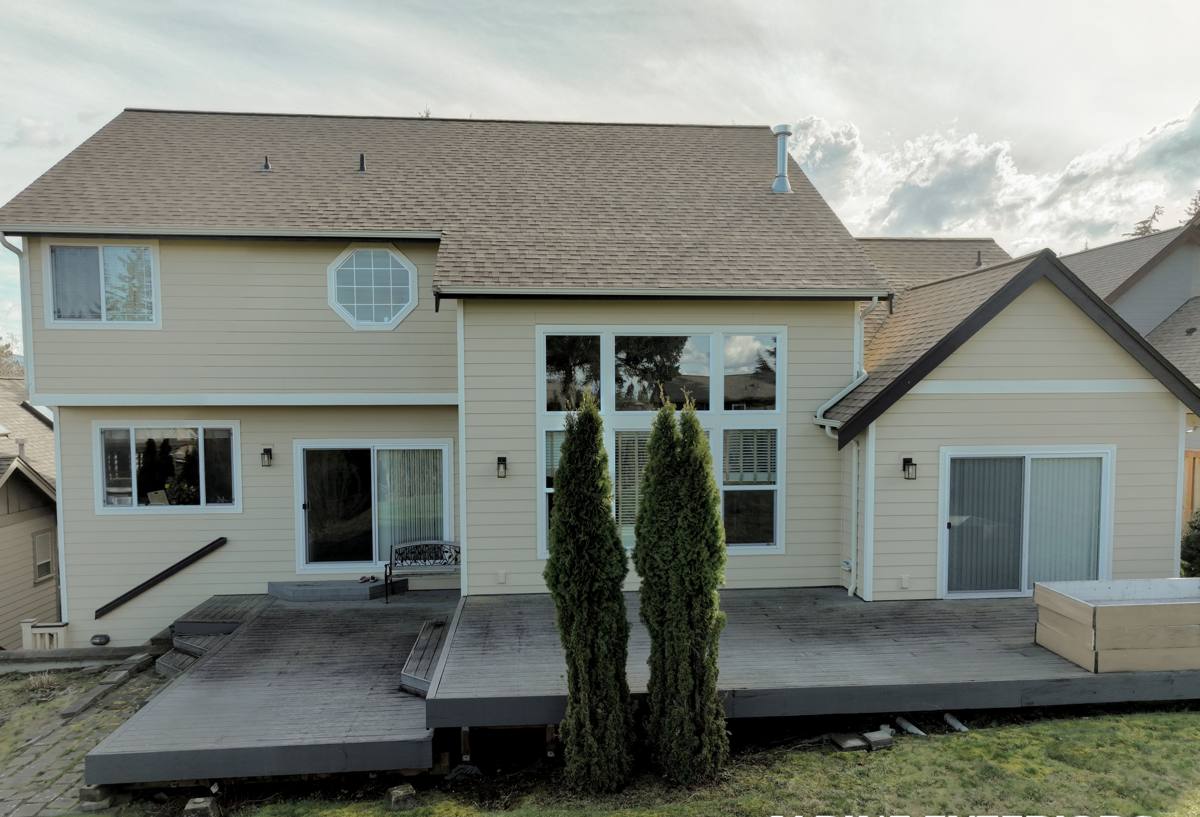
What Makes Alger Different From a Typical Backyard Deck
Plenty of deck contractors work from the same playbook no matter where the job is. That's fine in a dry climate. It doesn't hold up as well here, where the combination of salt-laden air, near-constant rain, and heavy moss growth puts extra stress on materials and hardware that a generic build doesn't plan for.
Salt Air and Metal Corrosion
Alger's proximity to the water means a steady trace of salt in the air, even on lots set back from the shoreline. That salt settles on exposed metal — screws, joist hangers, bolts, railing brackets — and speeds up corrosion in ways that aren't always visible until a fastener fails. Standard galvanized hardware can hold up for a while, but in a salt-air environment it's often the first thing to let go, sometimes years before the wood around it shows any obvious wear.
Driving Rain and Drainage
Rain in this area rarely falls straight down. Wind-driven rain gets pushed sideways and up under railings, ledger boards, and stair stringers — spots that a deck built for calmer weather doesn't always protect. If water can get behind a ledger board or pool where a post meets a footing, it will, and it'll find that same spot every wet season for the life of the structure.
Moss, Shade, and a Long Wet Season
Many Alger properties sit under or near mature evergreens, which is part of what makes the area a nice place to live and part of what makes deck maintenance harder. Shade keeps decking boards damp long after a storm passes, and that lingering moisture is exactly what moss, algae, and mildew need to take hold. The moss season here runs long compared to drier parts of the state, and once moss gets a foothold on a deck surface, it holds even more water against the boards and turns the whole thing slick and slippery underfoot — a real slip hazard on stairs and ramps, not just a cosmetic issue.
Getting the Structure Right From the Ground Up
None of the surface-level choices matter much if the structure underneath isn't right. This is the part of the build that doesn't show once the decking goes down, and it's also the most expensive and disruptive part to fix later if it was done wrong the first time.
A few things we pay close attention to on every Alger deck:
- Footing depth and drainage: Footings need to sit below frost depth and on stable, well-draining soil. Skagit County's mix of clay-heavy and saturated soils in some yards means we check ground conditions on-site rather than assuming a standard footing spec will work everywhere.
- Ledger board flashing: Where the deck attaches to the house, proper flashing keeps water from tracking behind the siding and into the wall framing. This is one of the most common failure points we see on older decks in wet climates, and it isn't optional on anything we build.
- Joist spacing and beam sizing: Correct spacing keeps the deck surface from flexing over time, which matters more with composite and PVC decking than with solid wood, since synthetic boards behave differently under load than lumber.
- Post-to-footing connections: Posts need a hardware connection that lifts the wood off standing water and resists uplift in wind, not just a post set directly into concrete.
Get these right and the deck will still be structurally sound decades from now, regardless of what's happening on the surface. Get them wrong and no amount of nice decking material will make up for it later.
Choosing Decking Material for a Wet, Shaded Yard
Material choice matters more in Alger than in a drier part of the state, because moisture and shade change how each option actually performs over time — not just how it looks the day it's installed.
| Material | Upfront Cost | Moisture & Moss Resistance | Maintenance | Realistic Lifespan Here |
|---|---|---|---|---|
| Pressure-treated pine | Lowest | Fair — needs sealing to perform | Annual cleaning and resealing | 10-15 years |
| Cedar | Moderate | Good naturally, but softens without upkeep | Cleaning and oiling every 1-2 years | 15-20 years |
| Composite (capped) | Higher | Very good — won't rot or absorb water | Periodic washing to keep moss from gripping the surface | 25-30 years |
| PVC | Highest | Best — fully synthetic, no wood fiber to feed mold | Occasional washing | 30+ years |
We're not going to tell you composite or PVC is the only right answer — plenty of Alger homeowners want the look and feel of real wood, and cedar can absolutely work here if you're honest with yourself about the upkeep it needs. What we won't do is install pressure-treated decking without walking you through what that maintenance schedule actually looks like in a yard that stays shaded and damp for much of the year. A board that needs yearly sealing to keep shedding water is a real ongoing commitment, not a one-time purchase, and we'd rather you know that going in.
Railings, Fasteners, and Hardware That Won't Fail Early
Hardware is the part of a deck that gets the least attention from most homeowners and causes the most trouble in a salt-air environment. We spec stainless steel or heavy-duty coated fasteners for anything exposed to weather, and we're deliberate about which grade goes where — the hardware holding a ledger board to the house has different demands than a surface screw fastening decking.
Railings deserve the same attention. Wood railings need the same maintenance schedule as wood decking, while metal railing systems need a finish that's actually rated for coastal exposure, not just a standard powder coat that looks fine for a season or two before it starts to pit. We'll talk through railing material honestly during design, including what it costs to maintain over ten years, not just what it costs to install on day one.
Signs an Existing Deck Is Already Losing the Battle
A lot of our Alger calls aren't for new construction — they're for decks that were built years ago and are now showing exactly the kind of wear this climate causes. Worth checking your own deck for these before deciding whether it needs repair or full replacement:
- Soft or spongy spots underfoot, especially near the house where the ledger board attaches.
- Persistent green or black staining that comes right back after cleaning.
- Rust streaks running down from screws, joist hangers, or railing brackets.
- Railings or stair posts that wiggle more than they used to.
- Gaps opening up between decking boards and the house, or visible daylight where the ledger meets the siding.
Some of these are cosmetic and fixable with cleaning and minor repair. Others — soft framing, a compromised ledger connection, or corroded structural hardware — are safety issues that need to be addressed before the deck sees another wet season. We'll always tell you honestly which category your deck falls into rather than pushing a full rebuild when a targeted repair will do the job.
Our Deck Building Process
Every deck we build in Alger goes through the same process, whether it's a small ground-level platform or a full multi-level deck off the back of the house.
- On-site assessment: We look at your yard's drainage, sun and shade exposure, soil conditions, and how the new deck will tie into the house before we design anything.
- Design and material walkthrough: We go over layout, decking and railing options, and give you honest cost and maintenance trade-offs for each — we don't default to upselling the most expensive material.
- Permitting: We handle the Skagit County permit application and inspections that apply to your project, so you're not tracking that down yourself.
- Footings and framing: This is where we spend the extra time on drainage, flashing, and hardware grade described above — it's the part of the job that determines how the deck ages.
- Decking, railing, and finish work: Surface installation, railings, stairs, and any trim or skirting go on once the structure is inspected and sound.
- Final walkthrough: We go over the finished deck with you in person, including a straightforward maintenance schedule for whatever material you chose.
Permits and Building Code in Skagit County
Most decks attached to a house, or built above a certain height off the ground, require a permit in Skagit County, and inspections typically cover footings, framing, and guardrail height and spacing before the project is signed off. Skipping this step is tempting on a smaller project, but it matters for two practical reasons: an unpermitted deck can complicate a home sale down the road, and the inspection process catches structural issues — like undersized footings or missing ledger flashing — while they're still cheap to fix. We handle the permit process as a standard part of the job rather than treating it as optional paperwork to skip when it's inconvenient.
Keeping Your Alger Deck in Good Shape Year-Round
Even the best-built deck needs some seasonal attention in this climate. Here's a realistic maintenance checklist for most Alger yards:
- Sweep leaves and debris off the surface regularly through fall — trapped organic matter is what feeds moss and mildew growth.
- Rinse or lightly scrub decking a couple of times a year to keep algae and moss from establishing, especially in shaded corners and under railings.
- Check and clear drainage gaps between boards so water isn't pooling against the surface after every rain.
- Inspect railings and stair connections annually for movement or corrosion at the hardware.
- Reseal or refinish wood decking on the schedule appropriate to the species — don't wait until it's visibly gray and dried out to start.
- Trim back overhanging branches where practical to get more sun and airflow onto the deck surface through the wet months.
None of this is complicated, but staying on top of it is the difference between a deck that still looks good in thirty years and one that needs major repair in ten.
Why Hiring a Crew That Already Works in Alger Matters
Deck building isn't exotic work, but building one that holds up in this specific corner of Skagit County takes local knowledge a contractor from a drier region won't have out of the box. Knowing which hardware grade to spec because of salt exposure, how to flash a ledger board against wind-driven rain, and which decking materials actually perform under heavy tree cover isn't something you learn from a spec sheet — it's something you learn from building and maintaining decks in this exact climate, season after season.
We're also familiar with the permitting process specific to Skagit County, which keeps your project moving instead of stalled waiting on paperwork we've never handled before. And because we're local, we're the ones you call if something needs a look five or ten years down the road — not a contractor who's moved on to a different region entirely.
If you're planning a new deck or replacing one that hasn't held up to Alger's weather, we're happy to come take a look and give you a straightforward, no-pressure estimate. There's no obligation — just an honest read on what your yard and budget call for.