 Skagit County
 Composite Decking Built for Bow's Weather, Not Just Its View
Bow sits close enough to the water that homes here deal with a mix most inland Skagit County properties don't: salt-tinged air off the bay, long stretches of driving rain through fall and winter, and a moss season that seems to start earlier and last longer every year. A deck built here has to handle all three at once, year after year, without turning into a maintenance chore every spring. That's the specific problem composite decking solves when it's installed correctly — and the specific problem it creates when it isn't.
This page is about composite decking as it applies to Bow specifically: what the local conditions demand from the material and the installation, what a correct job actually involves, and how we approach it differently than a crew coming in from outside the county for a one-off job.
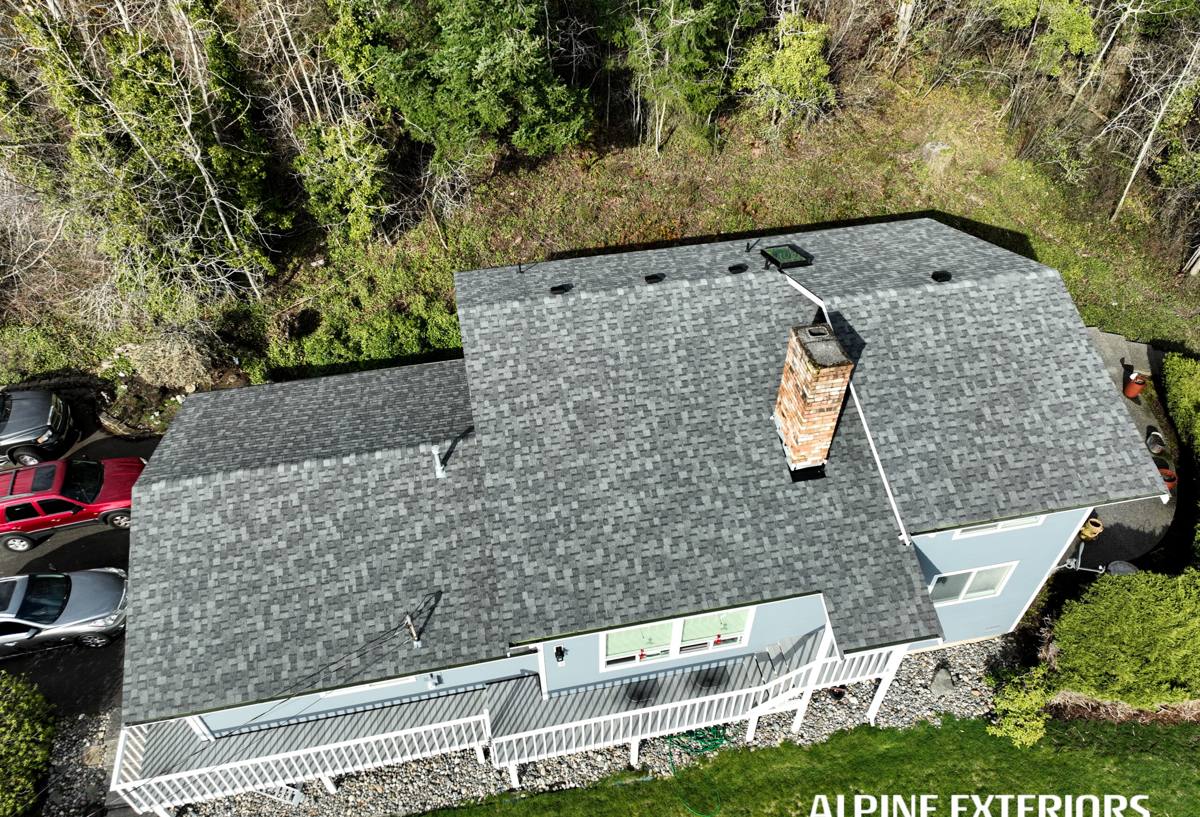
What Skagit County's Climate Actually Does to a Deck
It helps to be specific about what's working against a deck in this part of the county, because it changes how the job should be built, not just what material sits on top.
Salt Air
Even a few miles inland from Samish Bay, airborne salt accelerates corrosion on anything metal — fasteners, joist hangers, railing hardware. A composite board can be rated for decades, but if the fasteners and structural hardware underneath it aren't matched to that environment, the hidden parts of the deck fail long before the visible boards do.
Driving Rain
Western Skagit County doesn't just get rain, it gets wind-driven rain that pushes moisture sideways under railings, around post bases, and into any gap that wasn't flashed or sloped correctly. Composite decking doesn't rot the way wood does, but the framing underneath it still can if water isn't given a clear path off the structure.
Moss and Algae
Shade, moisture, and mild temperatures are exactly what moss wants, and a lot of Bow properties have at least one side of the house that stays damp for days after a storm. Moss and algae growth on a deck surface isn't just cosmetic — left unchecked it holds moisture against the board and makes the surface genuinely slick underfoot.
Composite vs. Wood: An Honest Comparison for This Area
Wood decking still has a place, and we'll install it if that's what a homeowner wants. But given what Bow's climate does to a deck, composite generally holds up with less ongoing work. Here's the honest trade-off breakdown:
| Factor | Composite Decking | Pressure-Treated Wood |
|---|---|---|
| Moisture & rot resistance | Won't rot; some early-generation boards could absorb moisture at cut ends if not capped | Rot-resistant when treated, but performance depends on sealing and drainage |
| Moss & algae resistance | Better on capped, textured boards; still needs occasional cleaning | More porous surface, tends to hold moss and grime more readily |
| Maintenance | Periodic washing; no sanding, staining, or sealing | Sealing or staining every 1-3 years to keep performance up |
| Upfront cost | Higher material cost | Lower material cost |
| Long-term cost | Lower over the life of the deck if maintenance is skipped elsewhere | Adds up with repeated sealing, board replacement, and labor |
| Appearance consistency | Consistent color and grain, doesn't gray or splinter | Natural look but grays and weathers unevenly over time |
Neither is objectively "correct" for every homeowner — it depends on how much upkeep you want to do and how long you plan to be in the house. What we won't do is install either one without accounting for what this specific climate does to it.
What a Correct Composite Deck Installation Actually Involves
The board itself is the easy part. Most of what determines whether a composite deck lasts is underneath it, and it's also the part a homeowner can't easily inspect after the fact.
Framing and Structure
Composite boards are heavier than wood in many product lines, and joist spacing has to match the manufacturer's specification for the board you're using — not just whatever spacing was used on the last job. Undersized or overspanned framing shows up later as bounce, sag, or fastener pull-through.
Ledger Attachment and Flashing
Where the deck attaches to the house is the single most common failure point on any deck, composite or wood. In a climate that pushes rain sideways as often as it falls straight down, the ledger board needs proper flashing that directs water away from the house framing, not just a lag bolt pattern and caulk.
Fasteners and Hardware
Given the salt air issue noted above, we use fasteners and structural hardware rated for coastal or corrosive environments, not standard interior-grade hardware. This is one of those details that's invisible once the deck is finished and expensive to fix later if it was done wrong.
Drainage and Airflow Underneath
A deck built low to the ground or without ventilation underneath traps moisture against the framing, which defeats the purpose of using a rot-resistant surface board on top of a structure that's still vulnerable. Proper grading, gapping, and in some cases underdeck drainage systems keep water moving away from the structure instead of pooling under it.
Choosing the Right Board for a Bow Property
Not all composite decking is built the same way, and the differences matter more here than in a drier climate.
- Capped composite: Has a protective shell around the core, which resists moisture absorption at the surface and holds up better against moss staining. This is what we recommend for most properties in this area.
- Uncapped composite: Less expensive but more porous, meaning it can absorb moisture and stain more easily in a wet climate. Cut ends need to be sealed carefully during installation.
- Color and heat: Darker boards handle Skagit County's mild summers fine, but lighter and mid-tone colors tend to show less algae staining over time, which is worth factoring in for a shaded, damp lot.
- Surface texture: A textured, wood-grain finish provides more slip resistance than a smooth board, which matters on a deck that's wet more often than it's dry.
How We Approach a Composite Decking Project
Every deck starts with a walk-through of the site, not a generic quote. We look at how water currently moves across the yard and off the roofline near the deck location, what the existing structure (if any) is attached to, and how much sun or shade the area gets, since that affects both moss risk and board color choice.
From there, the process generally looks like this:
- On-site assessment of the deck location, drainage, and any existing structure to remove or reuse
- Framing plan sized to the specific composite product and local snow/live-load requirements
- Proper ledger flashing and structural connection to the house
- Installation of joists, blocking, and hardware rated for a coastal, high-moisture environment
- Composite board installation with correct fastening and expansion gaps
- Railing, stairs, and any lighting or fascia work
- Final walk-through so you know what maintenance, if any, the specific board you chose actually needs
Keeping a Composite Deck Looking Right in This Climate
Composite decking is low-maintenance, not no-maintenance. In Bow's climate, a little seasonal attention goes a long way toward keeping moss and grime from getting a foothold.
- Sweep debris off regularly, especially in fall when leaves and needles collect in corners and against railings
- Wash the surface with a soft-bristle brush and mild soap or a composite-safe cleaner a couple times a year, more often on shaded sections
- Avoid pressure washing at close range or high PSI, which can damage the board's surface texture or cap layer
- Check that gaps between boards stay clear so water can drain through rather than sitting on the surface
- Keep nearby shrubs and trees trimmed back so more sun and airflow reach shaded sections of the deck
- Inspect railing posts and stair connections annually for movement, which can signal a hardware or framing issue underneath
Why It Matters That We Already Work in Bow
A lot of decking problems in this area trace back to a design that would work fine in a drier part of the state but wasn't built for what Skagit County actually throws at it. A crew that works this area regularly already knows to spec coastal-rated hardware without being asked, already accounts for wind-driven rain at the ledger connection, and already has a sense of which board colors and textures hold up against moss on a shaded Bow lot. That's not something you can fully capture in a generic install checklist — it comes from building decks in this specific climate, repeatedly.
If you're weighing composite decking for a home in Bow, we're happy to take a look at your property, talk through what the site actually needs, and put together a free, no-pressure estimate. There's a form below to get started whenever you're ready.