 Skagit County
 Big Lake sits in a pocket of Skagit County where the weather doesn't do anything by half measures. Homes here get long stretches of wet, gray months, thick tree cover that keeps siding and window sills in the shade for weeks at a time, and driving rain that comes in sideways during fall and winter storms. Windows take the brunt of it. A window that's fine in a dry inland climate can fail early here if it wasn't built, sized, or installed with this specific set of conditions in mind.
This page covers what custom window work actually means for a home around Big Lake — what the climate does to windows over time, what a correct installation involves, and why it matters to hire a crew that already understands this part of Skagit County rather than a general contractor working from a standard checklist.
What Skagit County Weather Does to Windows Around Big Lake
Window failure rarely happens all at once. It's usually a slow process driven by moisture that has nowhere to go, and Big Lake's setting speeds that process up compared to drier parts of the county.
Moisture, Condensation, and Wood Rot
Lake-adjacent air holds more humidity than you'd get further inland, and homes with mature tree cover stay damp longer after a rain because sun and wind don't reach the walls to dry them out. On older wood-framed windows, that constant dampness works into the sill and jamb over years, softening the wood from the inside before you ever see paint failure on the surface. On newer vinyl or aluminum windows, poor flashing lets the same moisture behind the frame instead of the wood itself, where it rots sheathing and framing you can't see until there's a soft spot on the interior wall.
Moss, Algae, and Shaded North Sides
Skagit County's moss season isn't a minor cosmetic issue — it's a sign of how long surfaces stay wet. Windows on the north and west sides of a home under tree canopy, which describes a lot of Big Lake properties, collect moss and algae on sills and in the corners of the frame. That growth holds moisture against the window even after the rest of the house has dried, and it accelerates the same rot and seal failure described above. Left alone, it also creeps into weep holes and drainage channels, which stops the window from draining the way it's designed to.
Wind-Driven Rain and Sill Failure
Storms off the water push rain into a home horizontally, not straight down, which means the top of a window opening and the seams around trim take more water than most homeowners expect. A window that's caulked well but not properly flashed underneath will look fine for a season or two, then start leaking during exactly the kind of storm Skagit County gets every winter. This is one of the most common causes of interior water stains below windows in this area, and it's almost always an installation problem, not a product defect.
Why "Custom" Is the Right Word for Big Lake Homes
A lot of window companies sell standard-size retrofit units and expect the opening to work with them. Around Big Lake, that assumption falls apart more often than not.
Older Cabins and Additions
Big Lake has a mix of older lake cabins that have been winterized into year-round homes, plus additions and remodels built over the decades without matching the original framing dimensions. Openings in these homes are frequently out of square, non-standard sizes, or framed to fit windows that haven't been manufactured in years. Forcing a stock window into an opening like that means shimming out gaps, which creates weak points for water to get behind the frame — exactly what you don't want in this climate.
Larger Openings for Lake Views
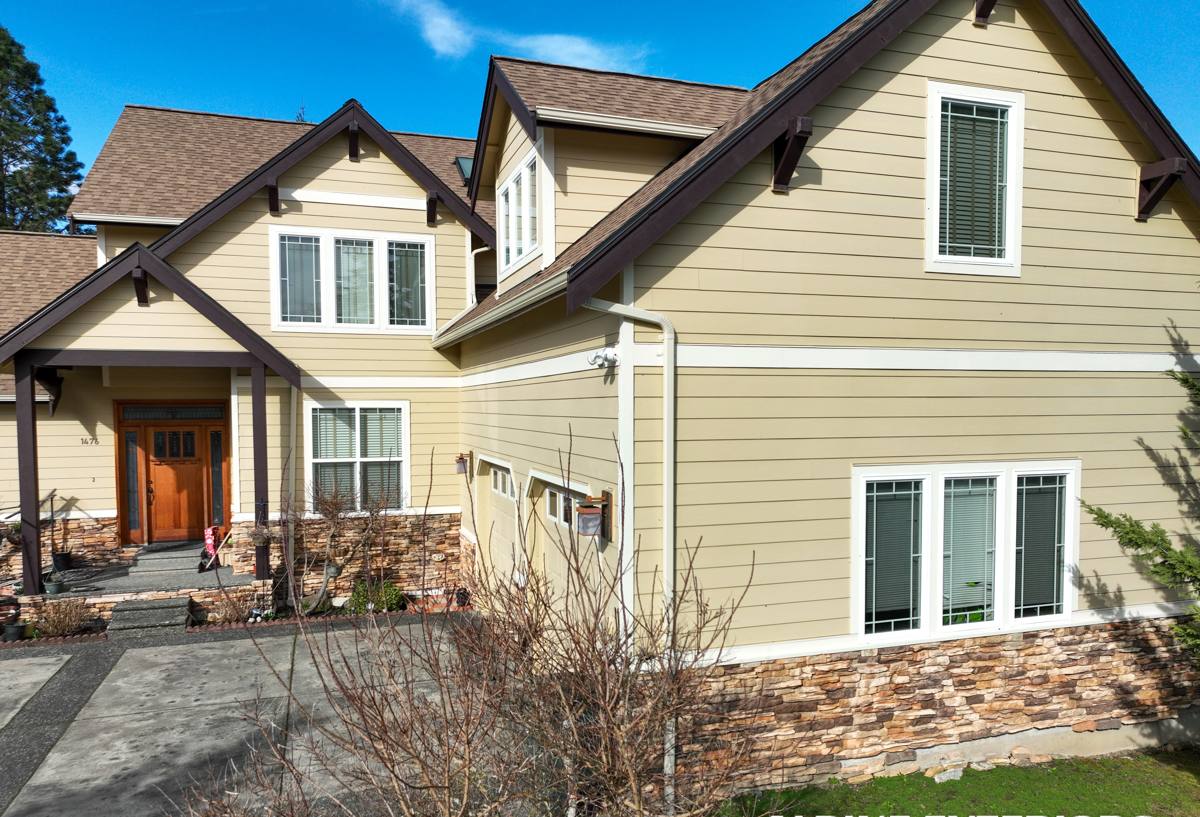
Homes oriented toward the water often have picture windows, larger sliders, or grouped window units sized to take advantage of the view. These openings carry more structural load and more surface area exposed to wind-driven rain, so the flashing, header support, and drainage detailing all have to be built for that specific opening rather than assumed from a catalog spec sheet. Custom sizing isn't an upsell here — it's what correct installation actually requires for a lot of these homes.
What a Correct Window Installation Actually Involves
The window unit itself is only part of the job. Most of the long-term performance comes from what happens around it before the trim ever goes back on.
Flashing and Weatherproofing Details
A correct install uses flashing tape or a pan flashing at the sill, house wrap integrated properly at the head and jambs, and a drainage path so any water that does get past the exterior surface has somewhere to go besides your wall cavity. This layering matters more in a driving-rain climate than in a mild one, because the assumption has to be "some water will get in" rather than "no water will get in." Skipping this step is invisible on install day and shows up as a leak two or three winters later.
Fit, Shimming, and Insulation
The window has to be shimmed square and plumb at the right points around the frame — not just at the corners — so it operates correctly and doesn't rack over time as the house settles. The gap between the frame and the rough opening needs low-expansion foam or backer rod and sealant, not just insulation stuffed in loosely, or you end up with both an air leak and a moisture trap. This is detail work that's easy to rush and hard to inspect after the trim is back on, which is part of why it matters who's doing it.
Choosing Window Materials and Glass for This Climate
There's no single "best" window material — it depends on the exposure, the home's age, and how much upkeep you want to take on. Here's how the common options hold up specifically in a wet, shaded, lake-adjacent setting like Big Lake.
| Frame Material | How It Handles This Climate | Maintenance Load |
|---|---|---|
| Vinyl | Won't rot; handles moisture well if properly flashed; can expand/contract with temperature swings | Low — occasional cleaning, no painting |
| Fiberglass | Very stable in wet, variable conditions; strong resistance to warping | Low — durable finish, minimal upkeep |
| Wood-clad | Good insulating properties and appearance, but the interior wood core is vulnerable if any seal fails and moisture gets in | Moderate to high — seals and finish need monitoring, especially in shaded exposures |
| Aluminum | Durable but conducts cold and can condense heavily in humid, cool conditions common near the lake | Low, but condensation issues can affect surrounding trim over time |
For most Big Lake homes, especially anything under tree cover or facing prevailing weather, vinyl or fiberglass frames tend to hold up with the least ongoing maintenance. Wood-clad windows can still be the right call on homes where the look matters and the owner is willing to keep an eye on the seals, but we'll tell you honestly if a given elevation is a poor candidate for it rather than sell it to everyone the same way.
How Our Process Works, From First Call to Final Walkthrough
- On-site assessment. We look at the actual openings, the exposure of each elevation, and any existing signs of moisture or rot before recommending anything — not a phone-quote based on square footage alone.
- Honest scope and options. If some windows need full custom sizing and others can take a standard retrofit unit, we'll tell you which is which and why, along with a realistic cost range for each.
- Precise measurement and ordering. Custom units are measured to the actual opening, not a nominal size, which is especially important on the older or additions-era openings common around Big Lake.
- Removal and opening inspection. Old windows come out carefully so we can check the sheathing and framing underneath for hidden rot before anything new goes in — this is often where a "just replace the window" job turns into a small repair, and we'll always show you what we find.
- Flashing, install, and insulation. Full weatherproofing detail as described above, done to hold up through Skagit County's wet season, not just pass a quick visual check.
- Trim, cleanup, and walkthrough. We finish the exterior and interior trim, clean up the site, and walk the job with you so you know how the new windows operate and what to expect from them.
Signs Your Current Windows Are Already Failing
Because moisture damage builds slowly, a lot of homeowners around Big Lake don't realize how far along the problem is until it shows up as a bigger repair. Worth checking for:
- Soft or spongy wood at the sill, especially on north-facing or shaded windows
- Moss or algae buildup in the corners of the frame or along the bottom track
- Fogging or moisture between panes of double-glazed glass — a sign the seal has failed
- Paint peeling or bubbling on interior trim below a window
- Drafts you can feel with a hand near the frame on a windy day
- Windows that stick, won't latch fully, or have visibly sagged in the frame
- Water staining on the wall or ceiling below a window after a heavy storm
Any one of these on its own might be minor. Several together, especially on the same elevation, usually means water has been getting behind the frame for a while.
Keeping Windows Performing in a Wet, Shaded Climate
Even a correctly installed window benefits from a little seasonal attention in a climate like this. Clearing moss and debris from sills and weep holes before the wet season sets in keeps drainage paths open. Checking exterior caulking once a year, especially where trim meets siding, catches small gaps before they become winter leaks. On lake-facing or heavily shaded windows, it's worth a visual check after major storms just to confirm nothing has shifted or opened up. None of this is complicated, but it's the kind of maintenance that's easy to skip until there's a problem — and it's a lot cheaper than dealing with sill rot later.
Why It Matters to Hire a Crew That Already Works Big Lake
Window installation looks similar on paper everywhere, but the details that actually matter change with the site. A crew that regularly works Big Lake and the surrounding Skagit County area already knows which elevations take the worst of the driving rain, how much shade and moss exposure to plan for, and what older lake-area framing tends to look like once the old window comes out. That's the difference between a crew following a generic install checklist and one that's already seen the specific failure points this climate produces — and builds the job to avoid them from the start.
If you're weighing whether your current windows need attention, or planning ahead for a remodel or addition, we're glad to take a look and give you a straight answer. Use the form below to request a free, no-pressure estimate — we'll walk the openings with you and tell you honestly what we see.