 Skagit County
 Board & Batten in Bow: A Style Built for This Landscape
Bow sits in the quieter stretch of Skagit County, where farmland runs down toward Samish Bay and the homes reflect that mix of agricultural and coastal life — barns, farmhouses, and modest single-story homes with clean, simple lines. Board and batten siding fits that setting naturally. The vertical boards and raised battens read as both a nod to old farm buildings and a clean, modern look, and it holds up visually against the open, exposed sites that are common out here.
But board and batten is also one of the least forgiving siding styles to install badly, and Bow's location — close to open water, exposed to weather moving in off the Sound, and shaded by mature trees in a lot of yards — puts real stress on a vertical siding system. This page is about what that combination means for your home, and what a correct board and batten job actually involves.
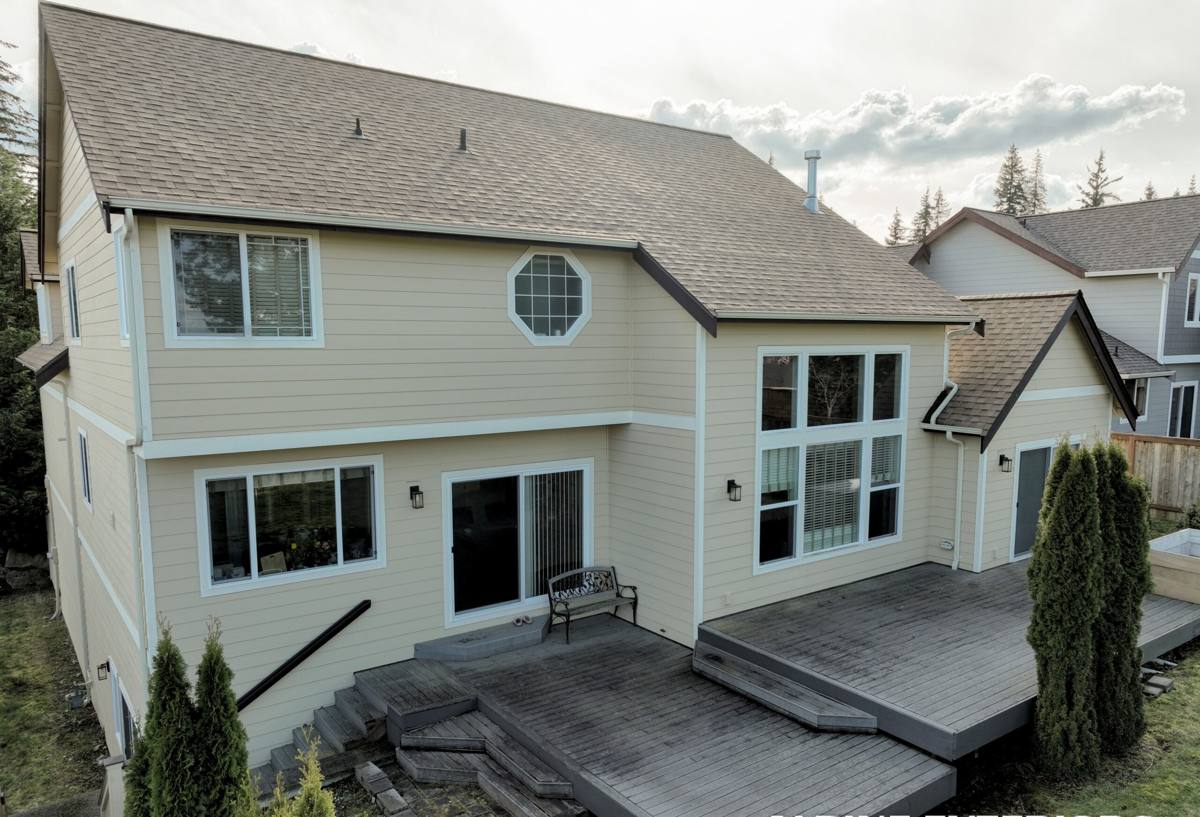
What Skagit County's Climate Asks of a Vertical Siding Job
Every siding style has to deal with Western Washington's wet winters, but board and batten's vertical seams and exposed battens make it more sensitive to a few specific conditions that show up around Bow.
Salt Air Off Samish Bay
Homes closer to the water pick up a steady low level of salt in the air, and salt is hard on anything metal. Fasteners, flashing, and trim that aren't rated for coastal exposure will corrode faster here than they would twenty miles inland, and a corroding fastener under a batten is invisible until it fails. This is one of the reasons material and fastener choice matters more in board and batten than in most other styles — there's less siding covering each fastener line, and less margin for a bad one.
Driving Rain
Storms moving in off the water tend to drive rain sideways rather than straight down, and board and batten has more vertical seams per square foot than horizontal lap siding does. Every one of those seams is a potential path for wind-driven water if the panel joints, battens, and flashing details weren't done correctly. A board and batten wall isn't inherently leakier than a lap siding wall — but it has less room for installation error.
A Long Moss Season
Mild, wet winters and shaded lots — common on wooded properties around Bow — mean moss and algae have a long growing season on any north-facing or tree-shaded wall. Moss holds moisture against the siding surface long after a rain has passed, which is a bigger problem for a product that can absorb and swell than for one engineered to resist it.
Why Board & Batten Requires More Precision Than Lap Siding
With horizontal lap siding, each course overlaps the one below it, and gravity does a lot of the work of shedding water. Board and batten runs vertically, so the system relies almost entirely on correct panel spacing, batten placement, and flashing to keep water out — there's no overlap doing the job for you.
Done right, board and batten needs:
- A drainage gap behind the panels so any moisture that gets past the surface can dry out instead of sitting against the wall
- Battens fastened into structural framing, not just into the panel or sheathing
- Correct panel-to-panel spacing that allows for expansion without stressing the caulk joint
- Properly lapped and sealed flashing at every window, door, and roofline intersection
- Fasteners and trim rated for the exposure — coastal air deserves better hardware than a standard inland install
Skip any one of these and the wall will probably look fine for a year or two. The problems that show up later — trapped moisture, swelling, staining at seams — are expensive to trace back to their source once the siding is closed up.
What's Underneath Matters More Than What Shows
A board and batten wall looks like clean vertical lines from the street, but the work that actually determines whether it lasts is hidden behind it. Before a single panel goes up, the wall needs a continuous weather-resistant barrier, correctly lapped so water always drains outward and down, never inward. Every penetration — windows, doors, hose bibs, vents — needs flashing that ties back into that barrier, not just caulk applied over the top of it.
On a lot of Bow properties, we're also dealing with older homes where the original sheathing or trim has already taken some water damage from decades of exposure. Part of a correct board and batten job is inspecting what's underneath before we close anything up, and repairing or replacing damaged sheathing rather than covering it and hoping. This is also where a lot of cost estimates go wrong — a wall that needs sheathing repair costs more than one that doesn't, and you want to know that before the job starts, not after.
James Hardie Board & Batten Options
We install James Hardie fiber cement exclusively, and board and batten is one of the styles where that decision matters most. Fiber cement doesn't absorb water the way wood-based or wood-look products can, which is a direct answer to both the driving rain and the moss problem — it isn't feeding either one the way a more moisture-sensitive material would.
| Option | Look | Best fit |
|---|---|---|
| HardiePanel Vertical Siding with battens | Traditional board and batten — smooth or cedar-textured panels with raised battens over the seams | Full board and batten exteriors, farmhouse and modern-farmhouse styles |
| Hardie Artisan V-Groove or Board & Batten Collection | Deeper reveals, tighter tolerances, a more custom, high-end appearance | Feature walls, entries, or homeowners wanting a sharper, more refined finish |
| Board & batten as an accent | Vertical panels on gables or a portion of the home, paired with HardiePlank lap siding elsewhere | Homes wanting visual contrast without full vertical siding |
All of it comes factory-finished with ColorPlus — baked-on color that resists the fading and chalking that field-applied paint struggles with, which matters on a wall that's going to see steady sun on one side and shade and moss pressure on the other.
Our Process for a Bow Board & Batten Job
- On-site assessment. We look at wall orientation, tree cover, drainage, and existing siding condition before quoting anything, since those factors change what the job actually needs.
- Tear-off and sheathing check. Old siding comes off and we inspect the sheathing underneath, flagging any rot or water damage for repair before moving forward.
- Weather barrier and flashing. A new weather-resistant barrier goes on, correctly lapped, with flashing installed at every window, door, and roof intersection.
- Drainage gap. Furring strips or a rainscreen product create the gap panels need to drain and dry properly behind the siding.
- Panel installation. Hardie panels go up plumb and correctly spaced, fastened per manufacturer spec into framing.
- Battens and trim. Battens are set over the seams and fastened into structural framing, with corrosion-resistant hardware given the proximity to salt air.
- Final seal and inspection. Joints are sealed where required, and we walk the finished wall with the homeowner before calling it done.
Board & Batten vs Other Siding Styles for This Climate
| Style | Moisture handling | Maintenance in moss/salt conditions | Typical cost factor |
|---|---|---|---|
| Board & batten (Hardie) | Good, if drainage gap and flashing are done correctly — relies entirely on installation quality | Occasional wash; factory finish resists staining | Moderate-to-higher labor due to precision required |
| Lap siding (Hardie) | Very good — horizontal overlap sheds water naturally | Occasional wash; lowest maintenance of the two | Moderate |
| Shingle/shake-style siding | More seams and edges than either option above | Higher — more surface area for moss to hold moisture | Higher |
None of these is objectively "better" — they're different looks with different maintenance profiles. Board and batten is a great choice for Bow homes as long as the installation accounts for the seams it introduces.
Maintenance Homeowners in Bow Should Expect
Fiber cement is low-maintenance compared to wood-based sidings, but "low-maintenance" isn't "no-maintenance," especially in a climate with a long wet season and salt in the air.
- Rinse the exterior once or twice a year, with extra attention to shaded, moss-prone walls
- Walk the caulk lines at battens and trim every year or two and note any cracking or gaps
- Keep gutters clear so water isn't sheeting down the wall behind the siding
- Trim back vegetation and tree cover that keeps a wall damp and shaded longer than necessary
- Have any visible corrosion at fasteners or trim looked at early — it's a small fix caught early, a bigger one caught late
Why Hiring a Crew That Already Works Bow Matters
Board and batten's margin for error is smaller than most siding styles, and the fastest way to close that margin is to hire people who already understand the conditions your wall is going to face. A crew that works Skagit County regularly knows which orientations take the worst of the driving rain, which lots hold onto moss the longest, and what salt-air exposure actually does to hardware over time — not as a generic rule, but from having seen it on homes near yours. That local knowledge shows up in small decisions during the install — fastener selection, flashing detail, where extra care on the drainage gap actually matters — that a crew unfamiliar with the area might not think twice about.
It also means straightforward permitting and scheduling, since we're not learning the county's process on your job.
Get a Free Estimate for Your Bow Home
If you're weighing board and batten for a home in Bow, we're happy to walk the property, look at your walls' exposure and existing siding condition, and give you an honest, no-pressure estimate for a James Hardie board and batten install built for what this climate actually does to a house. Use the form below to get started.