 Skagit County
 Siding Repair Built for Burlington's Weather, Not a Generic Climate
Burlington sits low in the Skagit River valley, close enough to Padilla Bay and the Skagit Bay tideflats that homes here deal with a mix of weather most siding never gets tested against elsewhere: salt-tinged air moving in off the water, driving rain that comes sideways during winter storms, and long stretches of gray, damp weather that keep exterior walls wet far longer than a sunnier climate would. None of that is dramatic on its own. It's the accumulation that causes problems — moisture that never fully dries out, siding seams that get tested year after year, and a moss and algae season that, in this part of Skagit County, can run most of the year on shaded or north-facing walls.
Siding repair here isn't just about patching whatever looks bad. It's about understanding why that spot failed in the first place, so the repair doesn't just fail again in a season or two.
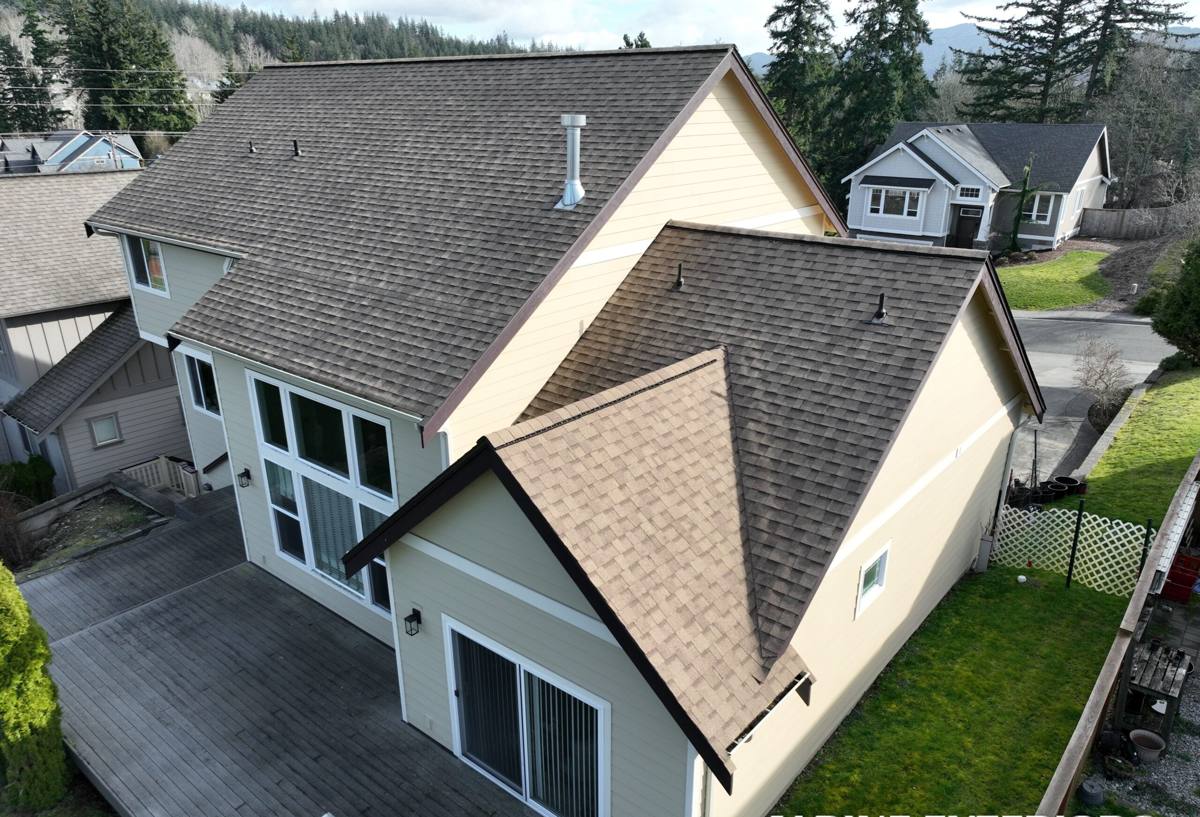
Why Siding Fails Faster in This Part of Skagit County
Salt Air and Moisture-Loving Wood
Homes closer to the bay pick up airborne salt that accelerates corrosion on fasteners, trim, and any exposed metal flashing. On wood-based or wood-composite sidings, that salt-laden moisture also speeds up swelling, cupping, and paint failure at the surface — problems that start small and spread if they're not caught early.
Driving Rain and Wind-Driven Water
Rain that falls straight down is manageable for almost any siding system. Rain that's pushed sideways by wind off the valley or the Sound finds every gap, lap joint, and unsealed penetration. Over time, that's how water gets behind siding rather than just running down the face of it — and water behind the siding is where real damage starts.
A Moss and Algae Season That Doesn't Really End
Skagit County's mild, wet climate is close to ideal for moss and algae growth. Shaded walls, tree-lined lots, and the persistent humidity common through fall, winter, and spring all give moss the conditions it needs to establish itself on siding surfaces, in butt joints, and around trim — and once it takes hold, it holds moisture against the siding constantly, which is a slow but steady path to rot.
The Damage Patterns We Actually See on Burlington Homes
Repair calls in this area tend to fall into a handful of recurring categories:
- Butt joint failure — the horizontal seams where siding boards meet are a common entry point for water once caulking ages or was never detailed correctly.
- Corner and trim rot — outside corners and window/door trim take the brunt of wind-driven rain and are often where rot is found first, even when the field of the siding looks fine.
- Moss and algae staining — cosmetic at first, but a sign that a wall isn't drying between rain events, which matters more than the stain itself.
- Impact damage — cracked or dented boards from storms, falling branches, or everyday wear.
- Paint and finish failure — chalking, peeling, or fading that's often a symptom of moisture cycling through the material, not just an aging finish.
- Fastener corrosion — nails or screws that have started to rust or back out, especially closer to the water.
What a Correct Repair Actually Involves
Diagnosing Before Patching
A repair that only addresses the visible damage is a repair that's likely to come back. Before we touch a damaged section, we look at what's underneath it: whether the water-resistive barrier is intact, whether framing or sheathing behind the siding has taken on moisture, and whether the original installation detail (flashing, caulking, fastening) is what let water in to begin with. Replacing a board without fixing the cause just resets the clock.
Matching Material and Finish
Repairs stand out when the replacement piece doesn't match the surrounding siding's profile, reveal, or color. Where the home is already sided in James Hardie fiber cement, matching is straightforward because Hardie's factory-applied ColorPlus finish is manufactured to a consistent standard — a same-line replacement board blends in rather than becoming a visible patch. Matching older or discontinued siding types is harder, and we'll always tell you honestly if a seamless match isn't realistic.
Getting the Details Right, Not Just the Board
The actual repair work matters less than the details around it: proper flashing above openings, correct fastener placement and type, appropriate gaps and sealant at joints, and making sure the repaired section ties back into the drainage plane the way it's supposed to. This is the part of a repair that's invisible once it's done — and it's the part that determines whether the fix lasts.
Repair or Replace? How We Actually Make That Call
Not every damaged section needs a full re-side, and we're not going to tell you it does. But there's a point where repeated repairs cost more over time than addressing the whole wall or the whole house. Here's how we generally think about it:
| Situation | Repair Usually Makes Sense | Replacement Usually Makes Sense |
|---|---|---|
| Damage extent | Isolated to one or two sections | Spread across multiple walls or elevations |
| Underlying moisture | Localized, framing/sheathing intact | Widespread rot behind multiple areas |
| Siding age and material | Newer, still-supported material | Aging, discontinued, or failure-prone material |
| Match quality | New piece will blend in closely | No realistic match available |
| Repair frequency | First or occasional repair | Same areas failing repeatedly |
If we get on a roof or up a ladder and find that a "small repair" is actually a symptom of a bigger moisture problem, we'll tell you plainly and lay out the honest options — including the option to just fix what's asked and monitor the rest.
Our Repair Process in Burlington
- On-site inspection — we look at the damaged area and the surrounding siding, not just the spot you called about.
- Probe for hidden moisture — where rot is suspected, we check how far it extends behind the siding before quoting the scope.
- Honest scope and estimate — a clear explanation of what needs to happen and why, with no upsell pressure.
- Repair to spec — correct flashing, fastening, and sealing, not just a new board nailed over the old problem.
- Finish match — matching profile and color as closely as the existing material allows.
- Walkthrough — we show you what was found and what was done before we consider the job finished.
Why We Repair and Rebuild With James Hardie
When a repair calls for new siding material — whether it's a patch, a full wall, or eventually a full re-side — we use James Hardie fiber cement, and only James Hardie. It's a standard we hold across every job, not just new construction. A few reasons that matters specifically for repair work in a climate like this:
- It doesn't feed the moss problem the way some materials do. Fiber cement doesn't provide the organic surface that wood-based products do, which matters in a county where moss season runs long.
- It's engineered for climates like this one. Hardie's HZ5 product line is formulated for wetter, harsher climate zones — which the Pacific Northwest, including inland Skagit County, falls into.
- ColorPlus finish makes patch repairs blend in. Factory-applied, baked-on color means a replacement board from the same product line matches without a field-painted patch standing out.
- It carries a strong transferable warranty when installed to Hardie's specifications — which is part of why installation detail isn't something we cut corners on.
We don't install LP SmartSide, vinyl, Cemplank, Allura, primed spruce, or cedar, and we won't quote a repair patched into one of those systems using a different product. If your home is currently sided in one of those materials, we'll still repair it honestly and explain your options clearly — but when it comes to what we stand behind long-term, Hardie fiber cement is what goes back on the wall.
Why a Local Skagit County Crew Matters for This Kind of Work
Siding repair is detail work, and details vary by climate. A crew that works Burlington and the surrounding Skagit County area regularly already knows which walls take the worst of the driving rain, how aggressive moss growth gets on shaded north sides, and how salt air closer to the bay affects fasteners and trim differently than it does further inland. That's not something you can fully substitute with a general checklist — it's pattern recognition built from working the same climate repeatedly.
It also matters for response time and accountability. A local crew can get to a damaged section before a small leak becomes a bigger repair, and stands behind the work because they're not driving in from out of the area for a one-time job.
Maintenance Checklist to Extend Siding Life Between Repairs
A little seasonal attention goes a long way toward avoiding repair calls in the first place:
- Walk the exterior once or twice a year, paying extra attention to north-facing and shaded walls where moss establishes fastest.
- Keep gutters clear so overflow isn't running down the siding face during heavy rain.
- Trim back vegetation and branches that keep siding shaded and damp.
- Check caulking at butt joints, trim, and penetrations (vents, hose bibs, light fixtures) for cracking or gaps.
- Look for soft spots, staining, or bubbling paint near the bottom of walls and around window sills — common early signs of moisture intrusion.
- Address small issues (a cracked board, a gap in caulking) before the next wet season rather than after.
What Affects the Cost of a Siding Repair
| Factor | Why It Matters |
|---|---|
| Extent of hidden damage | Rot found behind the siding adds scope beyond the visible patch |
| Access and wall height | Second-story or hard-to-reach sections take more time and equipment |
| Material match | Matching an existing product line is faster than sourcing a close substitute |
| Trim and flashing involved | Repairs near corners, windows, or doors often involve more than the siding itself |
| Number of separate areas | Several small repairs across a house can cost more in aggregate than one focused fix |
We won't quote a number without seeing the damage in person — anyone who does is either guessing or underscoping the job. What we can tell you honestly, on-site, is what's driving the cost and where you have real choices.
Get an Honest Look at Your Siding
If you're dealing with a damaged section, a moss-covered wall, or siding that's just starting to look tired, it's worth getting eyes on it before the next wet season makes it worse. We'll give you a straightforward, no-pressure estimate and tell you plainly whether you're looking at a simple repair or something bigger — use the form below to get started.