 Skagit County
 Building New in Cedardale? Get the Windows Right the First Time
New construction gives you one real chance to install windows correctly before siding, trim, and interior finishes cover up the details that matter most. In Cedardale, that first chance carries more weight than it would somewhere drier. This part of Skagit County deals with salt-laden air off the water, wind-driven rain that comes in sideways during winter storms, and a long stretch of the year when shaded, damp conditions favor moss and mildew growth on anything that isn't detailed to shed water. Windows installed without those conditions in mind tend to show problems within a few years — not because the window itself failed, but because the installation didn't account for the environment it was going into.
This page covers what new-construction window installation actually requires in Cedardale, what a correct job looks like from rough opening to finished trim, and why local installation experience changes the outcome.
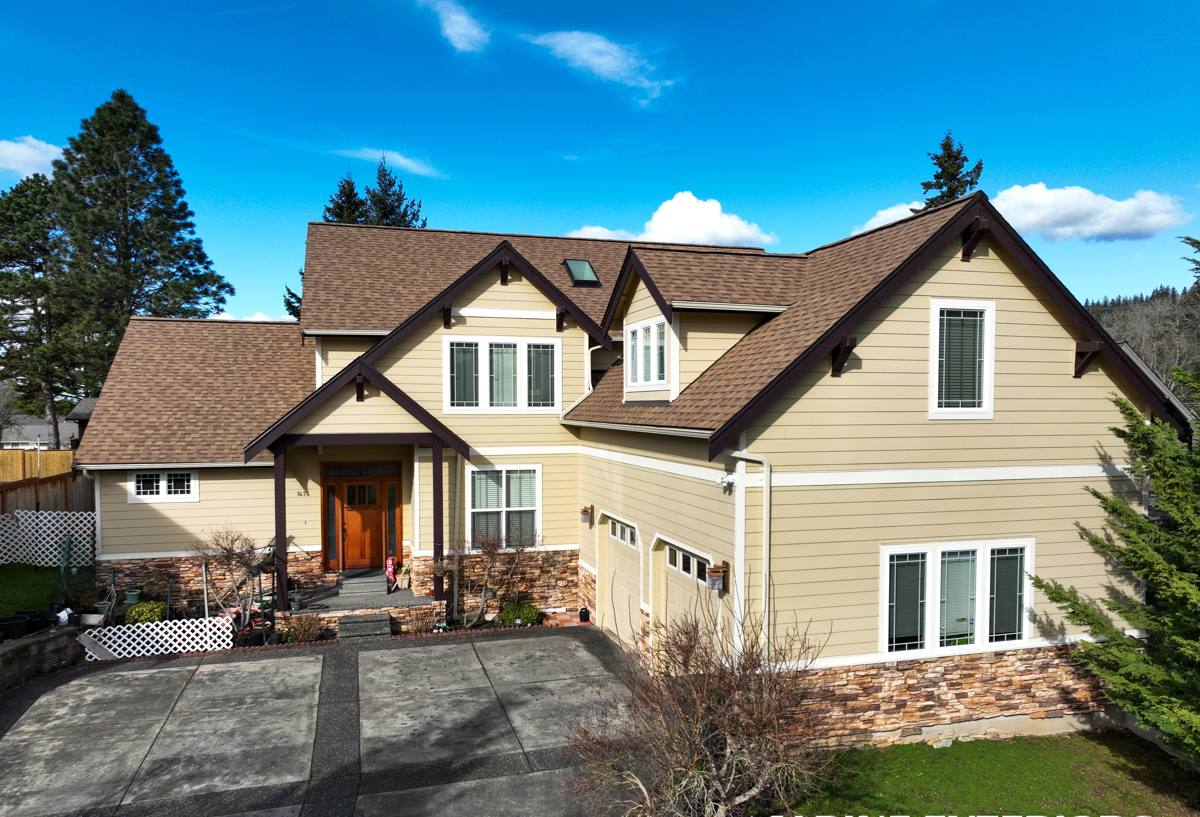
What Skagit County's Climate Does to New-Construction Windows
Every region has its own stressors. Cedardale's are a specific combination that shows up in how windows age, not necessarily in how they perform on day one.
Salt Air and Metal Components
Proximity to Puget Sound and the surrounding waterways means airborne salt is a real factor here, even for homes that aren't right on the water. Salt air accelerates corrosion on fasteners, hinge hardware, and lesser-grade cladding over time. It's a slow process, so it's easy to overlook during construction — but it's exactly why fastener choice and hardware quality matter more here than in an inland build.
Wind-Driven Rain and Flashing
Storms coming off the water don't just drop rain straight down — they push it sideways into wall assemblies. A window that's flashed correctly sheds that water back out before it reaches the sheathing. A window that's flashed even slightly wrong can let water track behind the frame, where it won't show up as a visible leak for months or years. By then it's a sheathing and framing repair, not a window repair.
Moss, Shade, and Trapped Moisture
Cedardale's tree cover and long wet season create the same conditions that grow moss on roofs and north-facing siding: shade, moisture, and slow drying. Window sills, trim, and the small ledges created by poor flashing detail are exactly where that moss and mildew take hold first. On a new build, getting drainage and slope right at the window opening is a lot easier than trying to manage moss buildup on a finished house later.
What Correct New-Construction Window Installation Involves
New construction is different from a retrofit or replacement job — you're building the water management system into the wall from scratch, not working around what's already there. That's an advantage if it's done right, and a liability if it's rushed.
Sill Pans and Flashing Sequence
Every rough opening should get a sloped sill pan before the window ever goes in, so any water that gets past the window has somewhere to go besides the framing below it. Flashing tape then needs to be applied in the correct shingle-lap order — sill first, then jambs, then head flashing — so each layer overlaps the one below it. Get that sequence backwards and you've built a path for water to travel behind the wall instead of over it.
Nailing Fin vs. Block Frame Integration
Most new-construction vinyl and fiberglass windows use a nailing fin that gets integrated directly with the weather-resistive barrier (WRB) — the fin sits on top of the sill flashing and under the WRB at the head, again following proper shingle-lap order. Block-frame windows, more common in certain wood-frame or masonry applications, need a different flashing approach entirely. Mixing up the details between these two systems is one of the most common sources of long-term leaks in new builds.
Shimming, Squaring, and Fastening
A window that's out of square by even a small margin will bind, won't seal fully, and puts uneven stress on the frame. Correct shimming at the right points — not just anywhere convenient — keeps the frame true and lets the sash operate smoothly for the life of the window. Fasteners need to be corrosion-resistant given the salt air here, and driven at manufacturer-specified spacing so the frame isn't over- or under-secured.
Choosing the Right Window Material for a Cedardale New Build
There's no single "best" window material — the right choice depends on budget, maintenance tolerance, and how much exposure the home will see. Here's how the common options compare for this climate specifically.
| Material | How It Handles Salt Air & Moisture | Maintenance | Typical Fit |
|---|---|---|---|
| Vinyl | Won't corrode or rot; performs well with good drainage details | Low — occasional cleaning | Most new-construction budgets |
| Fiberglass | Very stable in wet, salt-exposed conditions; minimal expansion/contraction | Low | Higher-end new builds, larger openings |
| Wood-Clad | Good performance if cladding and flashing are done right, but any breach exposes wood to moisture | Higher — finish and joints need monitoring | Homeowners prioritizing interior wood appearance |
| Aluminum | Prone to condensation and corrosion issues near salt air unless thermally broken | Moderate to high | Limited use; usually specified for specific architectural needs |
Our standard when we quote a new build in Cedardale is to steer homeowners toward vinyl or fiberglass for most applications, simply because the maintenance burden and moisture tolerance line up better with the local climate. That's a practical recommendation based on trade-offs, not a claim that other materials can't work — wood-clad windows can perform well for decades when the cladding and flashing details are done correctly and maintained.
Our New-Construction Window Process in Cedardale
Working on new construction means coordinating with the framing and siding schedule, not just showing up to set windows. Here's how a typical job runs:
- Rough opening verification — we check that every opening is sized, square, and plumb before flashing begins, and flag framing issues to the builder early rather than working around them.
- Sill pan and flashing installation — sloped sill pans go in first, followed by jamb and head flashing in the correct sequence, integrated with the WRB.
- Window setting — units are shimmed, squared, and fastened per manufacturer specification, with corrosion-resistant fasteners throughout.
- Sealant and backer rod — appropriate sealants are applied at the right joints, with backer rod used where gaps require it rather than sealant alone.
- Pre-siding inspection — every opening is checked before siding closes it in, since this is the last point where flashing errors are easy to fix.
- Interior trim and final operation check — every window is tested for smooth operation, tight seal, and proper lock engagement before we call the job done.
Common Mistakes We Correct on New Builds
Some of the calls we get in Cedardale are for brand-new homes, not older ones — because a window install went in fast during a busy framing schedule and the details got skipped. These are the issues we watch for on every job:
- Sill pans skipped or installed flat instead of sloped toward the exterior
- Flashing tape applied out of shingle-lap order, creating a path for water to get behind the WRB
- Standard fasteners used instead of corrosion-resistant hardware in a salt-air environment
- Windows shimmed only at the corners, leaving the frame free to rack out of square
- Sealant used to bridge gaps that should have been filled with backer rod first
- No pre-siding inspection, so flashing errors get buried and become hidden problems
Energy Performance for Skagit County's Climate
Washington's building code sets minimum energy performance requirements for new-construction windows, and your Skagit County permit will require documentation showing compliance. Beyond meeting the minimum, though, a few performance factors matter more here than in a drier, sunnier climate:
U-Factor
Lower U-factor means better resistance to heat loss — important through Cedardale's long, damp winters when the temperature differential between inside and outside runs for months at a time, not just a few weeks.
Condensation Resistance
High humidity and cooler temperatures make condensation resistance a practical concern, not just a comfort issue. Windows that condense heavily on the interior can contribute to the same moisture and mildew conditions that show up outside during moss season.
Solar Heat Gain Coefficient (SHGC)
Cedardale doesn't get the intense, sustained sun exposure that drives SHGC decisions in warmer climates, so this factor is usually secondary here to U-factor and moisture performance — but it still matters for south- and west-facing glazing.
Why Hire a Crew That Already Works in Cedardale
A window installer who works elsewhere in the country and treats every job the same will apply generic details that may not account for what this specific area throws at a building envelope. A crew that regularly works Cedardale and the rest of Skagit County brings a few practical advantages:
- Familiarity with local building department expectations and inspection sequencing for new construction
- An eye for how salt air and driving rain affect fastener and flashing choices specific to this area
- Experience coordinating with framers and siding crews on local job sites, so scheduling doesn't stall the build
- Direct knowledge of how moss and shade patterns in this area affect long-term window and trim performance
None of that shows up on a spec sheet — it shows up in how the finished window performs five or ten years down the road.
After Move-In: Keeping New Windows Performing Through Moss Season
A correctly installed window in Cedardale still benefits from a little seasonal attention. Keep weep holes clear of debris so sills can drain properly, rinse pollen and organic buildup off sills and trim before it has a chance to hold moisture, and take a look at exterior caulking lines once a year for any separation. These are small tasks, but they extend the life of an installation that was already done right the first time.
If you're planning a new build in Cedardale and want windows installed with this climate in mind from the start, we're glad to walk the plans with you and provide a free, no-pressure estimate — just fill out the form below.