 Skagit County
 Building Decks for Clear Lake's Climate, Not Just Any Climate
Clear Lake sits inland from the saltwater influence that hits the coastal parts of Skagit County, but it still gets the same long, wet Pacific Northwest season that wears decks down faster than homeowners expect. Between the driving rain that blows in off and on from October through May, the shade cover from mature trees around many Clear Lake properties, and the moss and algae growth that follows any surface that stays damp too long, a deck here is under more moisture stress than the same deck would be in a drier climate. A deck built without that in mind will look fine for a year or two and then start showing rot, cupping boards, slick moss patches, and failing fasteners well before it should.
Building decks correctly for this area isn't about using fancier materials — it's about detailing the structure so water sheds instead of sitting, choosing fasteners and hardware that won't corrode in a damp climate, and spacing and ventilating the deck so it can actually dry out between storms. That's the difference between a deck that needs major repair in year six and one that's still solid at year twenty-five.
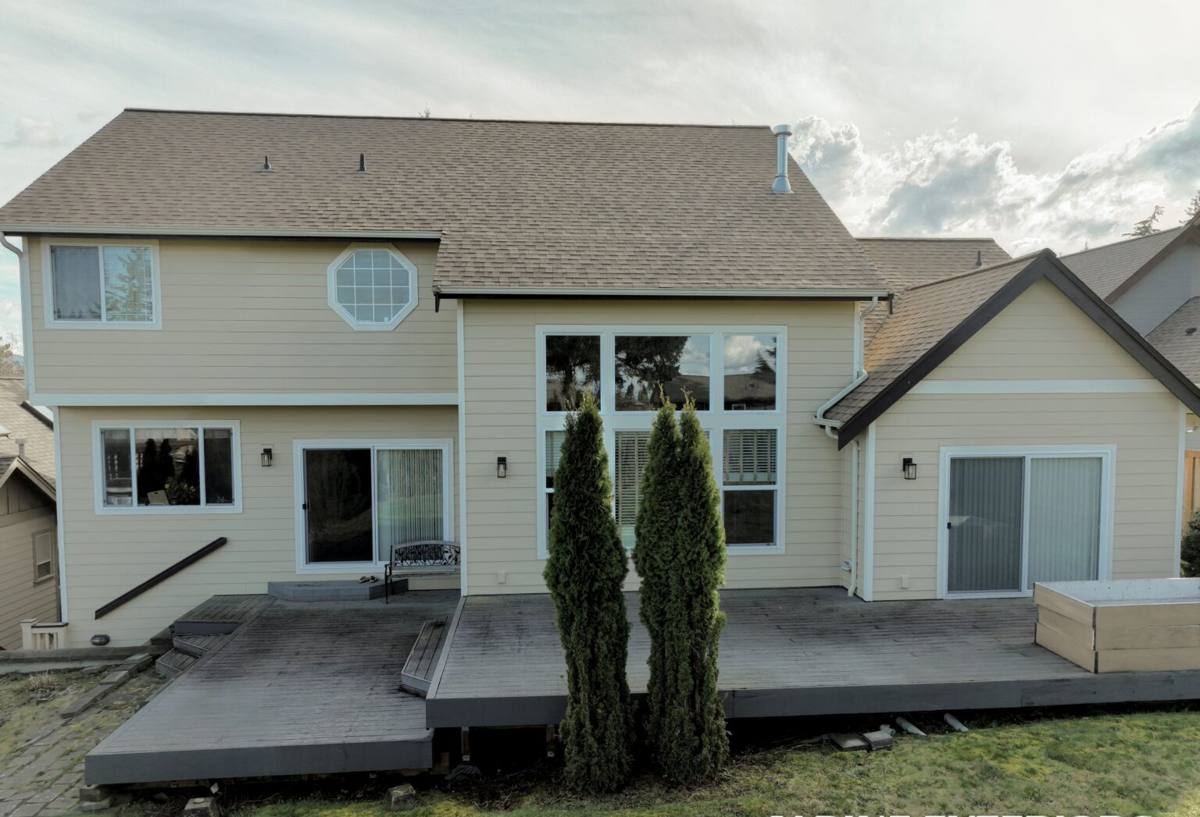
What Clear Lake Homes Actually Need From a Deck
Most homes around Clear Lake are set back from the road with tree cover nearby, which is great for privacy and shade in summer but means decks often sit in partial shade for a good part of the day. Shade plus rain is the exact combination that grows moss and keeps wood damp longer than it should be. A few things matter more here than they would in a sunnier, drier location:
- Airflow underneath the deck so the framing can dry out between rain events instead of staying wet for weeks
- Gaps between boards sized correctly for the decking material so water drains through rather than pooling on the surface
- Ledger board and rim joist flashing that actually sheds water away from the house framing, not just a bead of caulk
- Footings and post bases set to keep wood off wet soil and away from standing water after heavy rain
- Fastener and hardware choices rated for prolonged wet exposure, not just "exterior grade"
Skip any one of these and the deck will still get built — it just won't last the way it should, and the failure usually shows up in the framing, where it's expensive and disruptive to fix, rather than on the surface where it would be easy to spot.
The Moss Problem Specifically
Moss on a deck isn't just cosmetic. It holds moisture against the wood surface, and on painted or sealed surfaces it can trap water underneath the finish, which accelerates rot instead of the finish protecting against it. The parts of a deck most prone to moss are the shaded sections, north-facing stair treads, and any spot where debris collects and doesn't dry out — under railings, in corners, and where the deck meets the house. Board spacing, surface texture, and finish choice all affect how much moss buildup you'll deal with over the life of the deck, and it's worth talking through those trade-offs before material selection, not after.
Decking Material Options for This Area
There's no single "best" decking material — there's the material that fits your budget, your maintenance appetite, and how much shade and moisture your specific site sees. Here's how the common options actually compare for a Clear Lake property:
| Material | Moisture/Moss Behavior | Maintenance | Rough Lifespan |
|---|---|---|---|
| Pressure-treated lumber | Prone to moss and graying if not sealed regularly; needs good airflow underneath | Annual cleaning and periodic sealing | 10-15 years with upkeep |
| Cedar | Naturally more rot-resistant but still needs sealing to shed water and resist moss in shade | Sealing every 1-2 years | 15-20 years with upkeep |
| Composite decking | Doesn't rot, but can still grow surface moss/algae in shaded, damp spots — needs periodic washing | Occasional washing, no sealing | 25+ years, varies by product warranty |
| PVC/capped composite | Best moisture resistance of the group, sheds water cleanest, least prone to trapped moisture | Lowest — occasional washing | 25+ years, varies by product warranty |
We'll walk through these honestly based on your budget and how shaded your site is — a deck in full sun has very different needs than one tucked under trees, and we're not going to push a premium material on a site that doesn't need it.
What a Correct Deck Build Involves
Framing and Structure
The framing is where a deck's real lifespan gets decided, even though it's the part nobody sees once the decking goes down. Proper ledger flashing that directs water away from the house, joist hardware sized and rated for the load, post footings set below frost depth and clear of standing water, and enough clearance under the deck for air to move — these are non-negotiable in a climate this wet. We also use fasteners and structural hardware rated for the moisture exposure here, not just whatever is cheapest at the yard, because corroding hardware is one of the most common hidden failure points we find on older decks.
Surface Detailing
Board spacing, direction, and drainage matter as much as the material itself. Boards run to shed water toward the edges, correct gapping for expansion and drainage, and stair and railing details that don't create moss traps all add up to a deck that actually handles a Skagit County winter instead of just surviving it.
Railings and Code
Railing height, baluster spacing, and guard requirements are set by code, and we build to those specs as a baseline — not as an upsell. Beyond code minimums, we'll talk through railing material options with the same moisture and maintenance trade-offs as the decking itself.
Our Process for a Clear Lake Deck Project
- On-site assessment — we look at sun and shade exposure, existing drainage on the property, soil conditions, and how the deck ties into the house
- Material and layout discussion — honest trade-offs on decking material, railing style, and layout based on your budget and how the space will be used
- Permitting — most deck projects in Skagit County require a permit; we handle that process so it's not on you to navigate
- Framing and structural work — the part that determines whether the deck lasts 10 years or 30
- Decking, railing, and finish work — installed with the drainage and airflow details that matter for this climate
- Final walkthrough — we go over care and maintenance specific to the material you chose so you know what upkeep actually looks like
What to Check Before You Hire Anyone
- Are they licensed and insured to do structural work in Washington?
- Will they pull the required permit, or are they asking you to skip it?
- Do they explain footing depth and framing hardware, or just talk about decking color?
- Can they speak specifically to drainage and moss issues in shaded, damp sites — not just generic deck talk?
- Do they give you a written, itemized estimate before work starts?
Why a Local Crew Matters for This Project
A deck built by a crew that doesn't regularly work in Skagit County can still follow a blueprint, but they're less likely to catch the site-specific issues that matter here — a shaded corner that will hold moss year-round, a low spot in the yard that pools water against footings, or a ledger connection that needs extra attention because of how much rain this area gets compared to drier parts of the state. We work on homes throughout this area regularly, so we're not guessing at how the local climate treats a deck over time — we've seen what holds up and what doesn't, and we build accordingly.
Local also means we're reachable if something comes up after the build — a question about maintenance, a warranty item, or advice on caring for the material you chose as the seasons change. That kind of ongoing relationship is harder to get from a crew that's just passing through the area for one job.
Maintenance That Actually Extends Deck Life Here
Whatever material you choose, a few habits make a real difference in a climate like this: keep gutters and downspouts clear so runoff isn't dumping onto or near the deck, sweep debris out of corners and off boards regularly so moisture and organic matter don't sit and feed moss growth, and reseal wood decking on the schedule the material actually needs rather than waiting until it looks bad. None of this is complicated, but skipping it is the single biggest reason decks in this area fail early.
If you're planning a new deck or replacing one that's showing its age, we're happy to come take a look and give you a straightforward, no-pressure estimate — just fill out the form below.