 Skagit County
 Why Clear Lake Decks Wear Differently Than You'd Expect
Clear Lake sits inland from Puget Sound, but the weather that moves through this part of Skagit County doesn't stop at the coastline. The same marine air mass that carries salt off the Sound also drives long stretches of steady, driving rain across the rest of the county, and that moisture doesn't dry out quickly once it settles into a deck. Add tree cover common around Clear Lake and the surrounding rural properties, and you get shade, standing dampness, and a moss season that can run from early fall through late spring. That combination is hard on wood, hard on fasteners, and hard on anything built without drainage and airflow in mind.
Most of the deck repair calls we get in this area aren't from one dramatic failure. They're from years of a deck sitting damp more often than it sits dry — moss holding moisture against boards, a ledger board that never fully dries between rains, or fasteners that were fine for a drier climate but weren't rated for constant exposure here. Understanding that slow-moisture pattern is the first step to repairing a deck correctly instead of just patching what's visible.
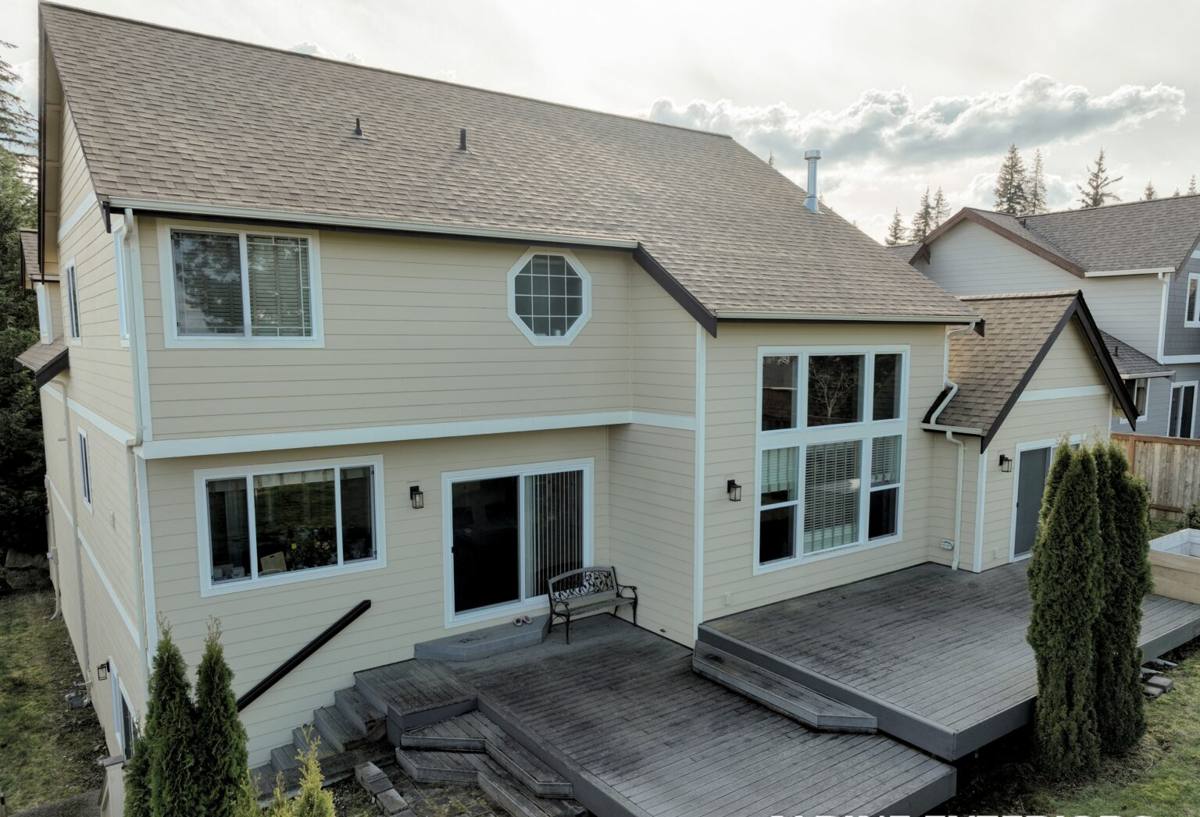
Signs Your Deck Needs Repair — And What They Usually Mean
Cosmetic Wear vs. Structural Concern
Not every rough or discolored board means a major repair. Graying, minor surface checking, and light moss on the surface of decking are largely cosmetic and can often be addressed with cleaning, sanding, and refinishing. What changes the conversation is anything that affects the structure underneath: soft spots, spongy give underfoot, visible gaps opening up between the deck and the house, or fasteners that have backed out or rusted through.
The Signs Worth Calling About
- Boards that flex or feel soft when you walk across them, especially near the house or stair landings
- Persistent moss or dark staining in the same spots year after year, even after cleaning
- Visible gaps or separation where the deck ledger meets the house siding or foundation
- Rust streaks running down from fastener heads or joist hangers
- Railings or stair stringers that feel loose or wobble under normal use
- Standing water that doesn't drain off the surface within an hour or two after rain stops
Any one of these on its own might be a minor fix. Several together, especially near the ledger board or support posts, usually mean it's time for a closer structural look before more decking goes down.
What a Correct Deck Repair Actually Involves
A repair that only replaces what's visible from the top often misses the reason the damage happened in the first place. In Skagit County's climate, that usually means water getting into places it shouldn't and staying there. A repair worth paying for addresses the cause, not just the symptom.
Ledger Board and Flashing
The ledger board — where the deck attaches to the house — is the single most common source of hidden rot we find, because it's the hardest area for water to escape once it gets behind the decking. Proper repair means checking the flashing above and behind the ledger, confirming it actually sheds water away from the house rather than channeling it into the rim joist, and replacing any flashing that's failed rather than caulking over it. Caulk is a stopgap, not a fix.
Joists, Beams, and Framing
Rot rarely stays confined to one board. If a joist has softened, we check the joists on either side and the beam it rests on before deciding how much needs to come out. Sistering a joist — bolting a new piece of lumber alongside a compromised one — is a legitimate repair when the damage is limited and the rest of the frame is sound. It is not the right call when multiple joists in the same area are affected; at that point, replacing the framing section properly is the more honest answer even if it costs more upfront.
Decking Boards and Fasteners
Fastener choice matters more here than in drier climates. Standard exterior screws can corrode faster than the wood around them fails, which leads to a deck that looks fine but has fasteners quietly losing their grip. We use fasteners rated for the moisture exposure the wood will actually see, not just what's rated for general exterior use, and we match fastener type to the decking material rather than defaulting to whatever's on hand.
Repair Approaches by Decking Material
What a correct repair looks like changes depending on what the deck is built from. Here's how the common materials compare when it comes to repair in this climate:
| Material | Common Repair Issue Here | Repair Considerations |
|---|---|---|
| Pressure-treated wood | Surface checking, moss buildup, fastener corrosion | Repairable board-by-board; needs periodic cleaning and sealing to keep pace with moss and rain exposure |
| Cedar or redwood | Graying, softening at fastener points, UV and moisture wear | Can often be sanded and refinished; rot at contact points usually means board replacement, not just resealing |
| Composite decking | Moisture wicking at cut ends, staining in shaded areas, moss on textured surfaces | Boards typically replace whole rather than patch; framing underneath still needs the same structural check as wood decks |
| Older or unknown-species wood | Inconsistent condition board to board, hidden rot at fastener points | Requires board-by-board inspection since wear is rarely uniform across the deck |
Whatever the surface material, the framing underneath is almost always the same pressure-treated lumber, and that's where we focus the structural half of any inspection regardless of what the decking itself is made of.
Our Process for a Clear Lake Deck Repair
- On-site inspection. We check the deck from the top down and, where access allows, from underneath — ledger connection, joists, posts, footings, and the decking surface itself.
- Honest scope of work. We tell you what's cosmetic, what's structural, and what's borderline, so you can decide how far to go rather than being told everything needs replacing.
- Address the water source first. Flashing, drainage, and grading around posts and footings get corrected before new material goes in — otherwise the repair just fails again on the same timeline.
- Framing repairs. Any compromised joists, beams, or posts are sistered or replaced as needed, matched to code-appropriate lumber and connectors.
- Decking and fastening. New boards go down with fasteners rated for sustained moisture exposure, spaced to allow for drainage and airflow underneath.
- Finish and walk-through. Cut ends are sealed, railings and stairs are checked for solid attachment, and we walk the deck with you before we call it done.
Mistakes We See in Past Deck Repairs
Several of the repair calls we get in Skagit County are actually re-repairs — decks where a previous fix didn't hold. The pattern is usually one of the same few shortcuts:
- Caulk or sealant used to cover a flashing failure instead of correcting the flashing itself
- New decking installed directly over old, undocumented framing damage
- Fasteners chosen for cost rather than for the moisture and material they're going into
- Moss and debris left to build up in gaps between boards, trapping moisture against the wood from below
- Posts or footings left in contact with damp soil without proper standoff or drainage
None of these are unusual mistakes — they're common shortcuts that work fine in a drier climate and fail faster here. Part of doing this correctly in Skagit County is simply not taking those shortcuts in the first place.
Keeping a Repaired Deck in Good Shape
A correct repair buys you years, but Clear Lake's shaded lots and long damp season mean a deck still needs occasional attention to get the full life out of that work. A short seasonal routine goes a long way:
- Sweep leaves and debris out of gaps between boards before fall rains set in
- Rinse moss and algae off the surface early in the season, before it has time to embed itself
- Check fastener heads once a year for rust or backing-out, especially near stairs and railings
- Confirm gutters and downspouts near the deck are directing water away, not onto it
- Reseal wood decking on the manufacturer's recommended schedule rather than waiting for visible graying
Why Local Experience Matters for This Repair
Deck repair looks straightforward on paper, but the right call on any given board — sister it, replace it, or leave it — depends on understanding how wood and fasteners actually behave after years of Skagit County's rain and moss cycle, not just how they're rated on a spec sheet. A crew that regularly works in and around Clear Lake has already seen how local shade patterns, soil drainage, and weather exposure play out on real decks in this area, which means less guesswork and fewer surprises once repairs are underway. That local pattern recognition is often the difference between a repair that gets it right the first time and one that has to be redone in a few years.
If you're seeing soft spots, moss that won't quit, or a deck that just doesn't feel as solid as it used to, we're happy to take a look and give you a straight answer about what it needs. Reach out for a free, no-pressure estimate using the form below.